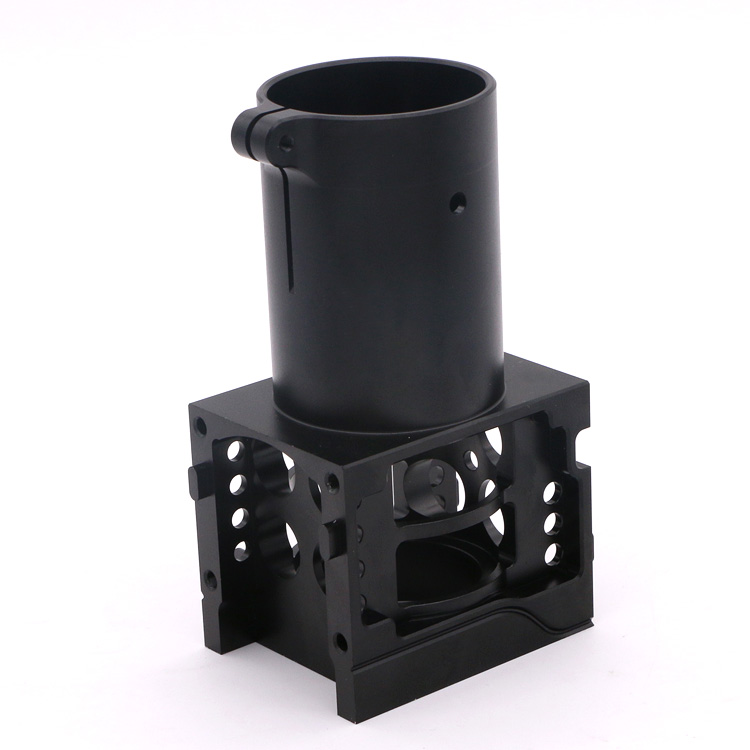
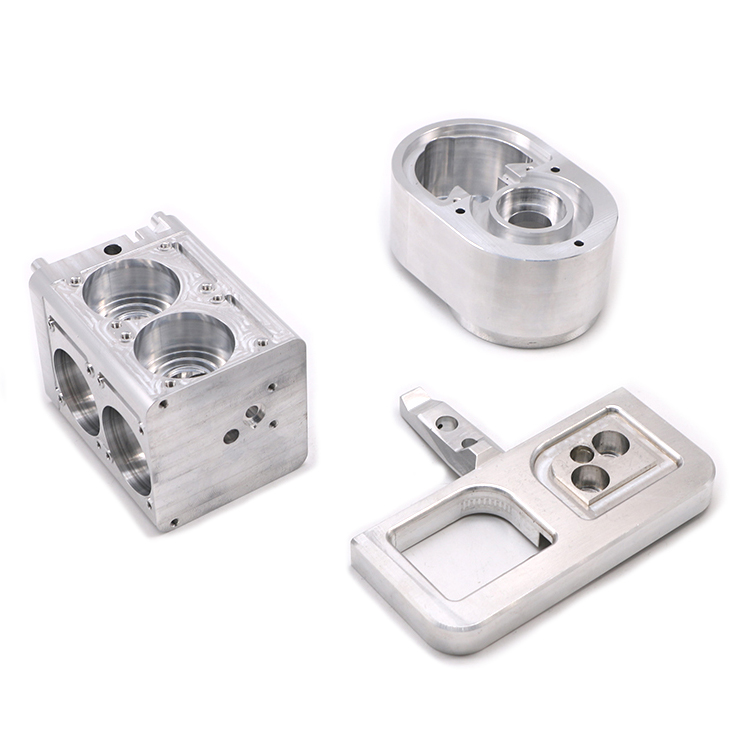
A pull cord handle looks simple because it has few parts, but the manufacturing risk is concentrated in a small number of features: the rope must stay retained, contact edges must not damage the cord, the grip has to feel right, lightweight pockets cannot weaken the structure, visible surfaces must survive finishing, and the approved sample has to be repeatable in production. The best RFQ therefore defines function, geometry, material, finishing and inspection as one system.
1. Start With the Handle Structure, Not the Industry Name
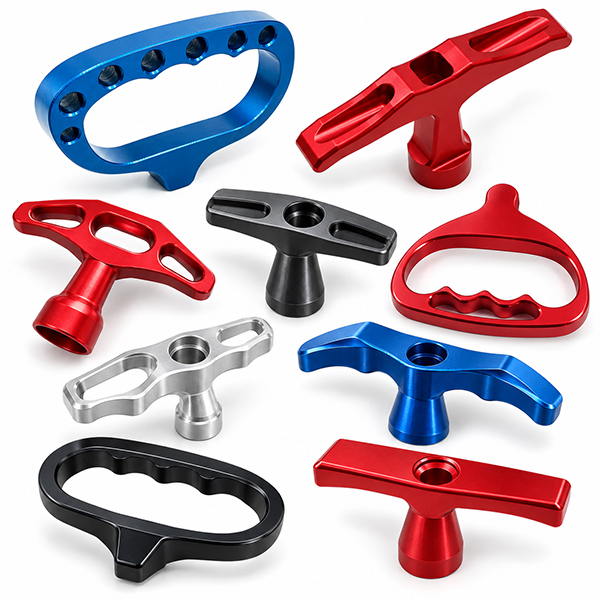
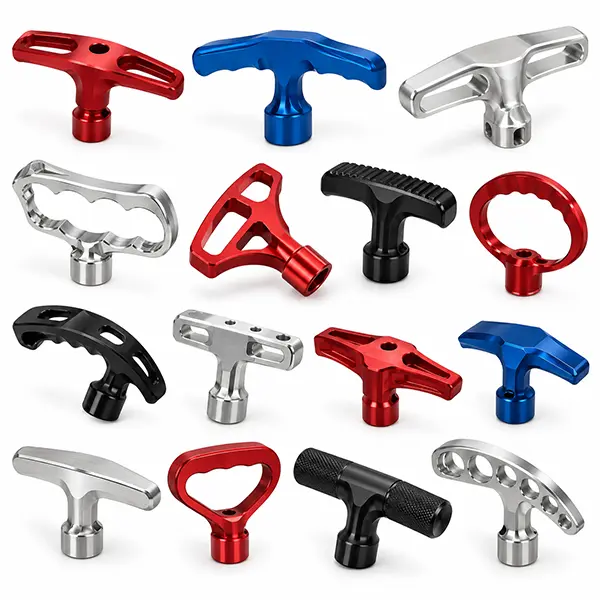
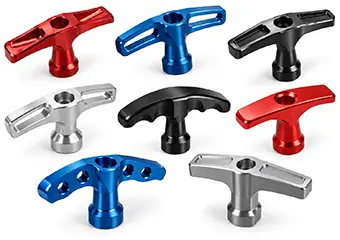
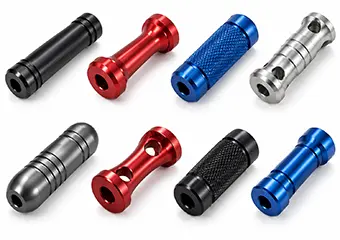
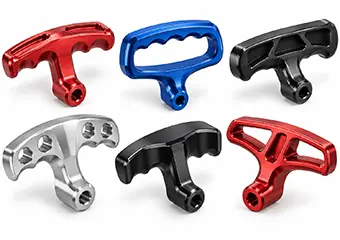
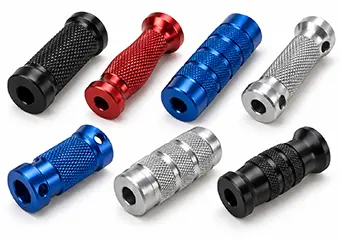
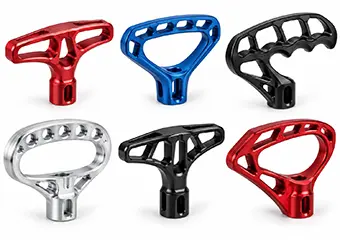
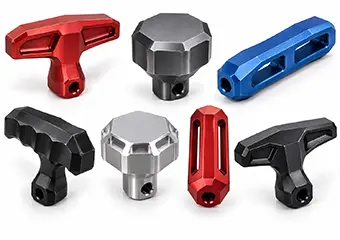
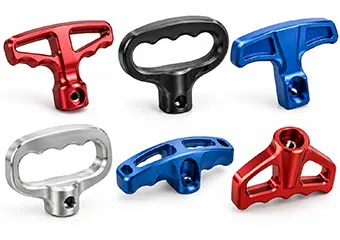
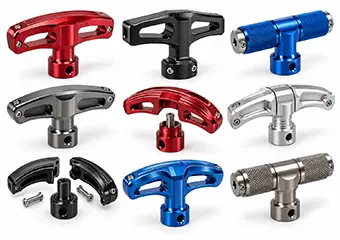
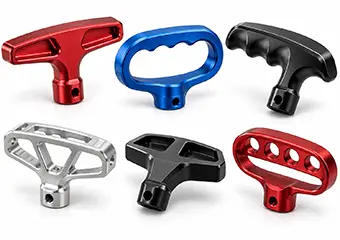
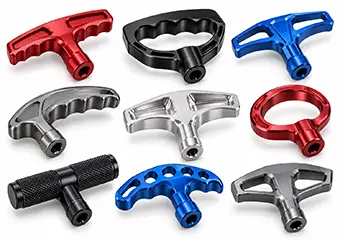
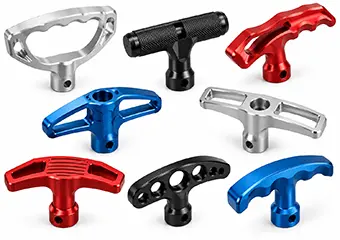
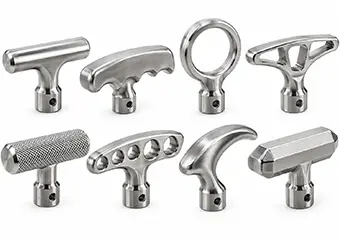
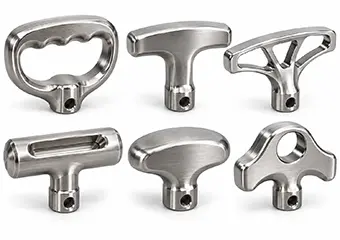
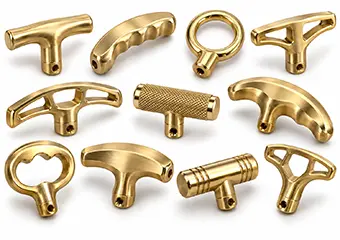
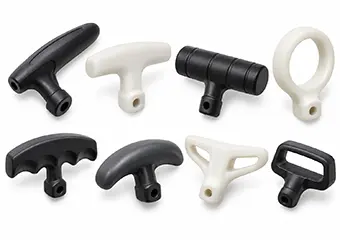
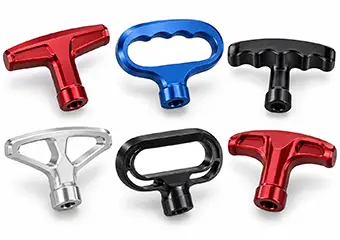
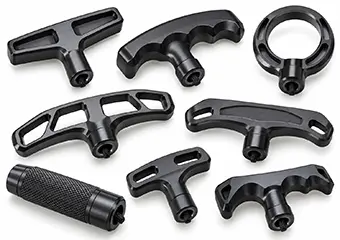
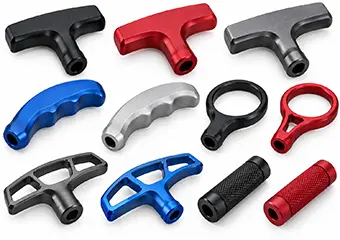
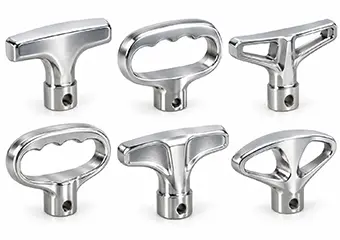
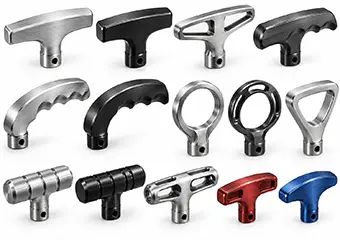
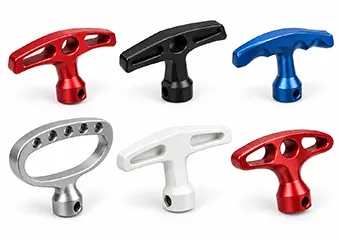
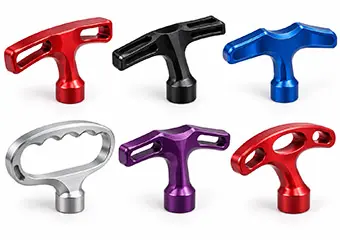
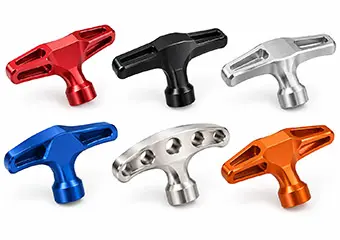
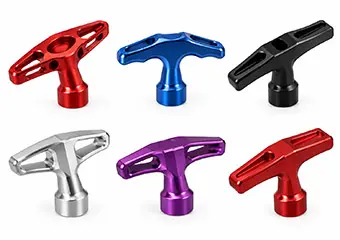
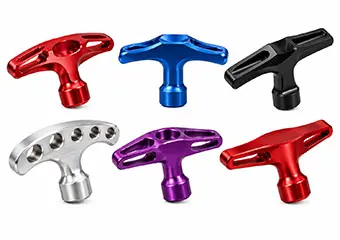
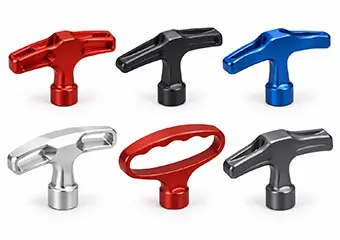
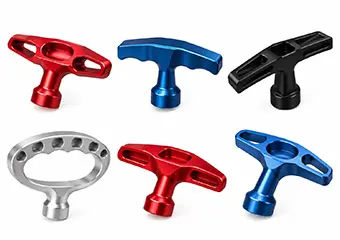
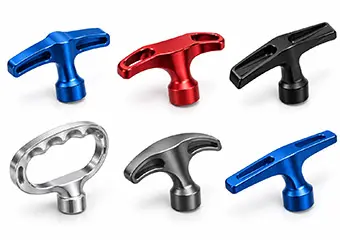
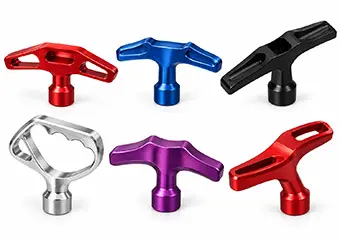
“Snowmobile handle,” “generator handle” or “motorcycle pull handle” describes the application, but it does not tell a machinist how the part should be produced. For manufacturing, the useful questions are structural: Is the grip T-shaped or cylindrical? Is the rope tied through a hole, hidden in a recessed pocket or captured by a second component? Does the handle use thin skeletonized windows, a heavy solid grip, a knurled cylinder or an ergonomic sculpted form?
Classifying the project by structure helps identify the likely process before quotation. A cylindrical grip may begin on a lathe, a multi-sided billet handle may suit 3/4-axis milling, and a sculpted ergonomic grip may justify 5-axis machining if it reduces re-clamping or protects datum relationships.
Вывод для покупателя: send the CAD model together with the application. The application tells VMT what the handle must survive; the structure tells us how it can be manufactured.
2. Design the Rope-Retention Feature as a Functional Interface
The rope interface is usually the highest-risk detail because a visually perfect handle can still fail if the rope slips, pulls through or is cut by a sharp edge. Common designs include through-holes, knot pockets, recessed cavities, side slots, threaded caps and two-piece clamping arrangements.
Dimensions worth defining on the drawing
- Rope diameter or the allowed rope-diameter range.
- Hole / slot diameter and positional tolerance.
- Retention-pocket depth and width where a knot is hidden inside the handle.
- Wall thickness around the hole and between the pocket and outer surface.
- Required edge radius or chamfer at the rope entry and exit.
- Pull direction if the rope changes direction through the handle.
VMT can classify these as critical features during DFM and place them into the inspection plan. Suitable machined features can be controlled to ±0.005 mm after engineering review, while critical dimensions can be 100% inspected where required.
3. Grip Geometry Controls Comfort, Tool Access and Cost at the Same Time
Grip width, finger clearance and edge radius determine how the part feels in the hand, but the same geometry also determines cutter access and fixture strategy. Deep finger grooves and very small internal radii can force small tools and long cycle times; wide open-frame designs can become difficult to clamp after rough machining; a knurled cylindrical grip may be economical on a lathe but expensive if the same texture is specified on a complex 3D surface.
For glove-use applications, the designer should verify the real finger opening with the intended glove rather than relying only on CAD aesthetics. For repeated bare-hand pulling, abrupt edge transitions should be avoided at the contact zones. If a radius is cosmetic rather than functional, increasing it to accept a larger cutter may reduce cycle time without changing the user experience.
4. Choose Material by Load, Weight, Environment and Finish
| Материал |
Почему покупатели выбирают его |
Главный компромисс |
Typical Finish Direction |
| 6061-T6 Алюминий |
Balanced weight, machinability, corrosion resistance and cost |
Более низкая прочность, чем у сплава 7075-T6. |
Type II anodizing, bead + anodizing, polishing |
| 7075-T6 Алюминий |
Higher strength-to-weight for thin or performance-oriented structures |
Higher material cost and different anodizing response |
Anodizing / hard anodizing after review |
| Алюминий 6063 |
Good cosmetic surface quality and compatibility with extrusion-based blanks |
Not selected for maximum strength |
Декоративное анодирование |
| 304 из нержавеющей стали |
Durability and general corrosion resistance |
Heavier and slower to machine than aluminum |
Brushing, polishing, passivation |
| 316 из нержавеющей стали |
Better chloride / marine corrosion resistance |
More difficult machining and higher cost |
Полировка или пассивация |
| Латунь |
Machinability, tactile weight and premium natural color |
Более высокая плотность |
Полировка или гальваническое покрытие |
| Титановый класс 5 |
High strength-to-weight and corrosion resistance |
Более высокая стоимость материала и механической обработки. |
Bead blasting, PVD where appropriate |
| ПОМ |
Lightweight, low friction and economical functional prototypes |
Lower stiffness / temperature capability than metals |
Usually used without coating |
The material decision should be made before the cosmetic finish is locked. For example, aluminum is usually the easiest path to low weight plus colored anodizing, while 316 stainless steel may be the better choice when a marine environment is more important than minimum mass.
5. Match the CNC Route to the Geometry
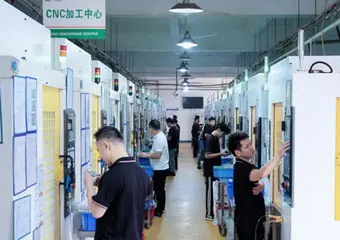
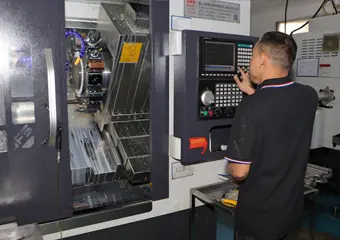
Most pull handles can be produced with a combination of milling and turning. The key is to avoid paying for a complex machine when the geometry does not need it—and to avoid too many separate setups when a more capable machine can preserve datums and visible surfaces.
- 3/4-axis milling: efficient for T-shaped, multi-sided, pocketed and open-frame billet handles.
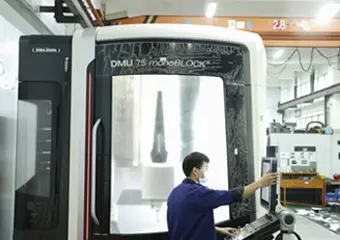
- 5-осевая обработка: useful for sculpted ergonomic grips, angled features and parts where repeated re-clamping would disturb surface continuity or datum relationships.
- Токарная обработка с ЧПУ: efficient for cylindrical handles, threaded caps, inserts, bushings and concentric features.
- Turn-mill: useful when a cylindrical part also needs flats, cross-holes or milled slots in the same process route.
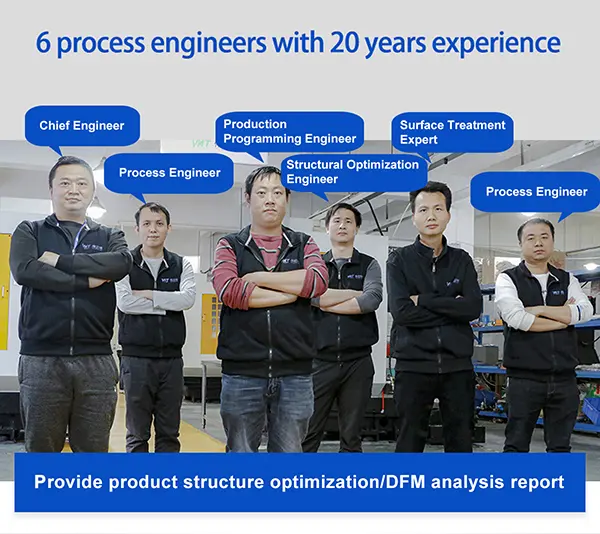
For skeletonized parts, VMT may separate roughing and final finishing. Heavy material removal happens first, then the part is rechecked and the critical grip / rope features are finished after the structure is more stable. Fixture contact is also planned away from the most visible anodized faces where possible.
6. Surface Finishing Must Be Planned Before Final Dimensions Are Released
Type II anodizing, hard anodizing, bead blasting, polishing, brushing, powder coating, laser marking and PVD/DLC can all change how the part should be machined or handled. Hard anodizing and powder coating add thickness; polishing can remove material from edges; blasting can change texture; marking needs a known visual orientation; coating on a rope hole or thread may change fit.
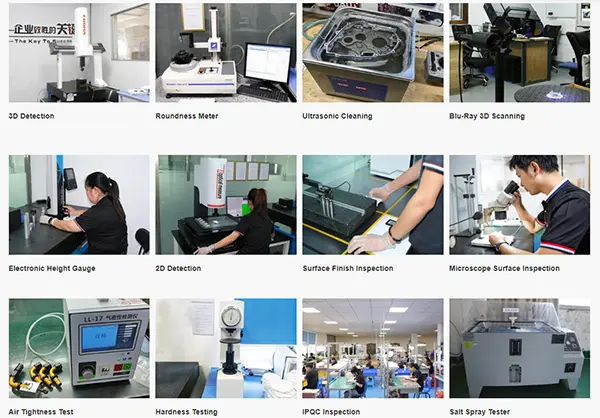
VMT coordinates finishing with partners we have worked with for more than 10 years. Two surface-finishing engineers and a dedicated SQE follow process control, and parts receive 100% appearance inspection after returning from finishing. For critical interfaces, the drawing should clearly identify masked areas, dimensions that apply after finishing, and any features that need post-finish reinspection.
7. Build the Inspection Plan Around Failure Modes
A good inspection plan does not measure everything with the same instrument. It identifies what can actually cause the customer a problem and selects the appropriate method.
| Характеристика |
Риск неудачи |
Типичная проверка |
| Rope hole / pocket |
Loose rope, pull-through, difficult assembly |
Pin gauge, caliper, CMM or 100% critical inspection |
| Профиль рукоятки |
Inconsistent feel / glove clearance |
First article + profile / dimensional checks |
| Datums / mating features |
Несоответствие сборки |
CMM / GD&T report where required |
| Threads / inserts |
Rework or loose assembly |
Thread / pin gauges and fit checks |
| Rope-contact edges |
Cord abrasion |
Radius / chamfer verification plus visual inspection |
| Анодированный внешний вид |
Color or cosmetic rejection |
Approved sample comparison + 100% critical appearance inspection |
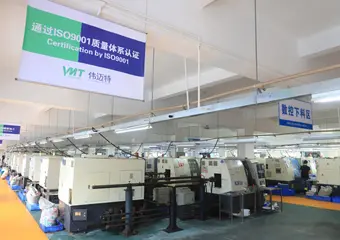
VMT's quality system uses 12 inspection steps across IQC, IPQC, FQC and OQC, with IPQC patrol inspections every two hours. For suitable repeat-production characteristics, SPC/CPK support can be applied, with key process capability targets of CPK 1.68 or higher where specified.
8. What Actually Drives Pull-Handle CNC Cost?
The largest cost drivers are usually not the overall outside dimensions alone. Buyers should review the amount of billet removed, number of machining orientations, smallest internal radius, depth-to-width ratio of recessed pockets, need for 5-axis access, anti-slip texture, coating / masking requirements and inspection level.
Practical cost-reduction questions
- Can a non-functional internal radius be increased to allow a larger cutter?
- Can deep pockets be opened from another side or simplified?
- Can a profile blank or extrusion reduce material removal for production volumes?
- Do all dimensions really need tight tolerances, or only the rope and mating interfaces?
- Can logo marking be moved to a flat, accessible surface?
- Can two cosmetic operations be replaced by one approved finish?
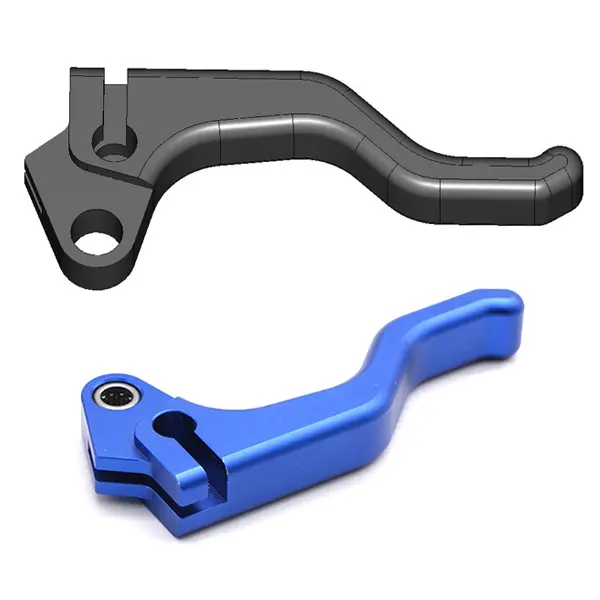
VMT's published motorcycle lever case demonstrates why process selection matters: 2,500 pieces of 6061-T6 were produced with an extrusion + CNC route, combining visible curved geometry with a functional fit requirement instead of simply machining every feature from oversized solid stock.
9. Use the Prototype to Validate the Production Process
The first sample should answer four questions: Does the rope fit correctly? Does the handle feel right? Does the finish meet the cosmetic expectation? Can the same workholding and inspection logic scale into production? If the prototype is made with a slow one-off fixture that cannot be repeated, sample approval does not automatically mean the production process is ready.
After sample approval, VMT can standardize the workholding, machining sequence, tooling, deburring points, inspection plan and surface-finish requirements. These controls are what turn a successful prototype into a repeatable supply program.
10. RFQ Checklist: What Gives You a Faster, More Accurate Manufacturing Review?
- 2D drawing with critical tolerances, threads and finish notes.
- 3D CAD model showing the true grip and pocket geometry.
- Rope diameter and how the rope is retained.
- Mating starter / insert / cap information where relevant.
- Material grade or performance requirement if the grade is undecided.
- Surface finish, color, logo location and cosmetic reference.
- Количество прототипов и ожидаемый объем серийного производства.
- Which dimensions or appearance characteristics must be 100% inspected.
- Any inspection reports, CPK/SPC data or packaging requirements needed by your quality team.
Best RFQ practice: identify the few features that can stop assembly or cause field failure. A clear critical-feature list is more useful than assigning the same tight tolerance to every dimension.
11. Что такое индивидуальная обработка на станке с ЧПУ для изготовления алюминиевой ручки-шнура?
Индивидуальная обработка на станках с ЧПУ включает в себя точное изготовление ручки-шнура, предназначенной для различных применений, с использованием алюминиевой заготовки. Станки с компьютерным управлением обеспечивают точную функциональность, долговечность и возможности настройки.
12. Каковы преимущества индивидуальной обработки на станках с ЧПУ для изготовления алюминиевых заготовок ручек для шнуров?
Индивидуальная обработка на станках с ЧПУ позволяет создавать точно разработанные конструкции, которые гарантируют совместимость, оптимальную производительность и долговечное решение для применения в системах с тросовым приводом.
13. Могу ли я предоставить собственный проект для обработки на станке с ЧПУ?
Да, большинство услуг по обработке на станках с ЧПУ принимают индивидуальные проекты. Клиенты могут предоставить конкретные измерения, файлы CAD или чертежи для персонализированных алюминиевых ручек-шнуровок.
14. Какой тип алюминиевого сплава обычно используется для изготовления ручек-шнуров на станках с ЧПУ?
К наиболее часто используемым алюминиевым сплавам для заготовок относятся сплавы 6061 или 7075, выбранные за их прочность, коррозионную стойкость и пригодность для обработки сложных конструкций.
15. Какие допуски можно получить при обработке на станках с ЧПУ для ручек шнурков?
Обработка на станках с ЧПУ позволяет добиться очень жестких допусков, гарантируя точные размеры для оптимальной функциональности и удобства захвата.
16. Сколько времени занимает изготовление индивидуальных ручек для шнурков на станке с ЧПУ?
Срок изготовления зависит от сложности дизайна и требуемого количества и обычно составляет от нескольких дней до нескольких недель.
17. Могу ли я получить прототипы до начала полномасштабного производства?
Многие службы обработки на станках с ЧПУ предлагают изготовление прототипов для проверки конструкции, соответствия и функциональности перед началом полномасштабного производства.
18. Какие виды отделки поверхности доступны для ручек-шнуров, обработанных на станках с ЧПУ?
Обычные виды отделки включают анодирование, порошковое покрытие или специальные покрытия для улучшения внешнего вида, коррозионной стойкости и общей долговечности.
19. Могут ли услуги по обработке на станках с ЧПУ обеспечить помощь в проектировании?
Во многих службах обработки на станках с ЧПУ имеются специалисты по проектированию, которые помогут оптимизировать конструкцию ручки с вытяжным шнуром с точки зрения функциональности, эргономики и эстетики.
20. Как заказать изготовленные на заказ алюминиевые ручки для шнура, изготовленные на станке с ЧПУ?
Клиенты могут связаться со службой обработки на станках с ЧПУ, сообщить свои предпочтения по конструкции и технические характеристики, обсудить количество, материалы, сроки выполнения и другие важные детали, чтобы начать процесс заказа.
 +86 15099911516
 запрос@vimetal.com.cn





 Связанное предложение