16 years one-stop China custom CNC machining parts factory

Hey there I’m VMT Sam!
With 25 years of CNC machining experience we are committed to helping clients overcome 10000 complex part-processing challenges all to contribute to a better life through intelligent manufacturing. Contact us now
 346 |
Published by VMT at Jul 28 2026 | Reading Time:About 4 minutes
346 |
Published by VMT at Jul 28 2026 | Reading Time:About 4 minutes


In the field of CNC machining part manufacturing, metal plating surface treatment is a crucial technology. It improves the surface performance of metal parts — raising corrosion resistance, wear resistance, and conductivity, and improving appearance. At its core, the technology firmly covers a CNC machined part made of one metal with a thin layer of another metal.
The choice of that thin metal layer decides what you get: zinc plating for better corrosion resistance, chromium plating for wear resistance and appearance, copper or gold plating for conductivity. There are also different ways to deposit these metal layers onto CNC machined parts, and each way carries its own advantages and disadvantages.
This article gives a full overview of metal plating surface treatment — basic principles, steps, common types, advantages and disadvantages, applications, and considerations — to help you choose the most suitable plating process and plating type for your custom parts. The final showcase is about how our factory used the zinc-nickel alloy plating to help our clients with their highly corrosive needs.
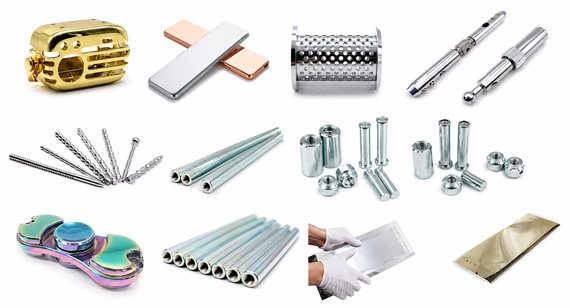
Metal finishing plating is a surface treatment technology that covers the surface of metal substrates with a thin metal layer through an electrolytic process. This thin metal layer can improve the surface performance of metal parts to meet various specific requirements.
Basic Principles of Metal Plating Finishes:
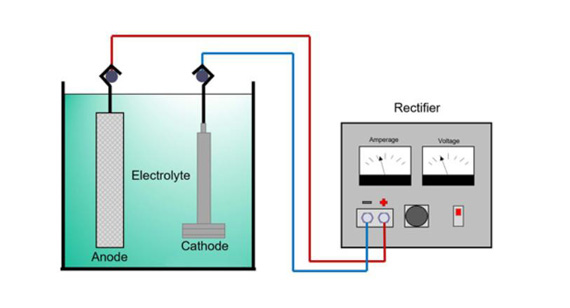
The basic principle of metal plating surface treatment is to use electrolysis to deposit a layer of metal ions from a metal-containing salt solution onto the surface of the substrate metal. This process occurs when the substrate metal acts as the cathode, and metal ions in the plating solution are reduced and deposited onto the substrate surface to form a plating layer. This process requires specific parameters such as current density (for example, when the electroplating method is used, current is what you control), temperature, and electrolyte composition to achieve the desired plating thickness and properties.
Steps of Metal Plating Finishes:
Pre-treatment: Pre-treatment is a critical step in metal plating surface treatment, involving degreasing, rust removal, activation, etc., to remove impurities such as oil, rust, and oxide film from the metal surface and improve the adhesion between the plating layer and the substrate. Common pre-treatment methods include solvent or alkaline degreasing, acid pickling for rust removal, and acid activation just before plating.
Verification of Cleaning Process Effectiveness: After pre-treatment, it's essential to confirm the effectiveness of the cleaning process to ensure that the metal surface is clean and free from impurities, providing a good foundation for the subsequent plating process.
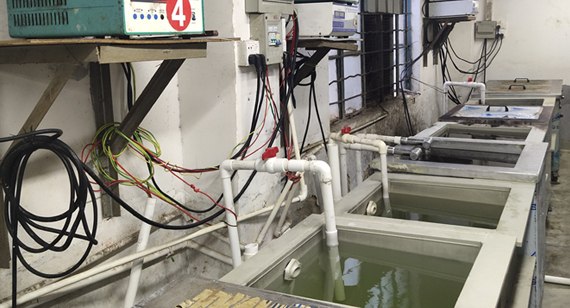
Setting Up Plating Station: Depending on the selected plating type and process requirements, set up the plating station, including plating tanks, power sources, electrodes, etc.
Plating Process: Place the pre-treated metal parts into the plating tank, turn on the power, and start the plating process. During plating, parameters such as current density, temperature, and time need to be controlled to achieve the desired plating layer quality and properties.( Here refers to the Electroplated Metal Coating, or the Electroplating, which is the commonly used one in many factories; External electrical current is needed)
Post-treatment Process: After plating, post-treatment processes such as cleaning, drying, passivation, etc., are carried out to improve the corrosion resistance and aesthetics of the plating layer.
Waste Treatment: Proper treatment of waste liquid and residues generated during the plating process is necessary to prevent environmental pollution and resource waste.
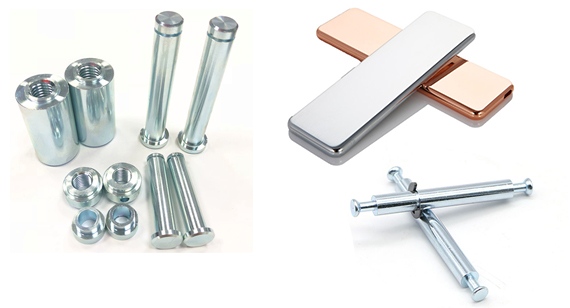
Galvanization: Galvanization is a common metal plating surface treatment that improves corrosion resistance and wear resistance by covering the metal surface with a layer of zinc. The galvanized layer has good adhesion and ductility, suitable for corrosion protection of various metal parts. It works best on steel and iron parts — carbon steel and low-alloy steel fasteners, brackets, and housings. Zinc is a common, fairly economical and efficient electroplating metal, and electroplated zinc parts are widely used in construction hardware, automotive components, and general fasteners.
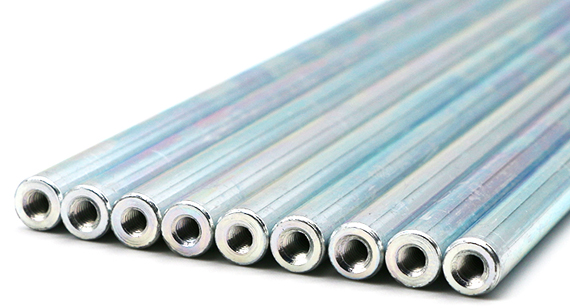
Chromium Plating: Chromium plating is a highly decorative and functional metal plating surface treatment. The chromium layer has characteristics such as high hardness, wear resistance, corrosion resistance, and good reflectivity, commonly used in the decoration and protection of vehicles such as cars, motorcycles, bicycles, etc. It suits steel parts for hard-chrome wear surfaces, and brass, zinc die-cast, or aluminum parts finished with decorative chrome over a copper–nickel undercoat.
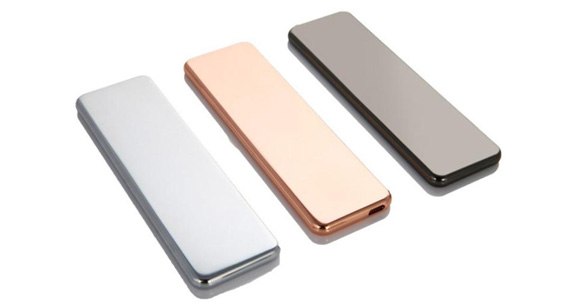
Copper Plating: Copper plating is a metal plating surface treatment with excellent conductivity. The copper layer has good conductivity and thermal conductivity, suitable for metal parts processing in the electronics and electrical industries. It is commonly applied to steel and zinc die-cast parts, and often serves as an undercoat beneath nickel or chromium on those substrates.
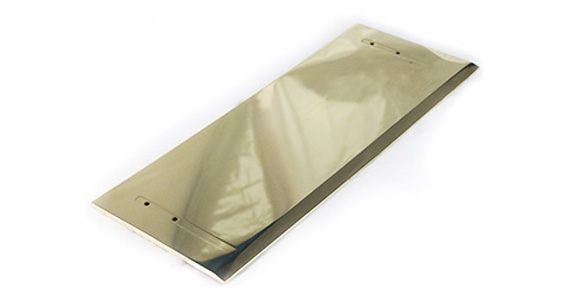
Nickel Plating: Nickel plating is a metal plating surface treatment with good corrosion resistance. The nickel layer has excellent corrosion resistance, wear resistance, and weldability, commonly used in aerospace, electronics, chemical industries, etc. It suits steel, copper, brass, and aluminum parts, and is frequently used as a base layer under gold or chromium.
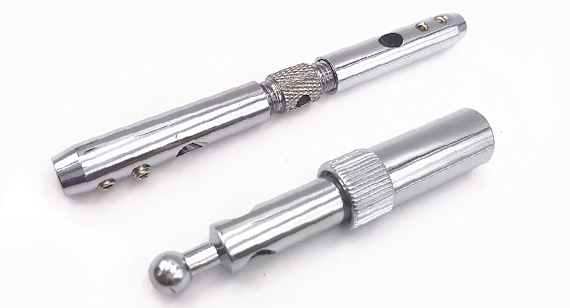
Gold Plating: Gold plating is a decorative and conductive metal plating surface treatment. The gold layer has excellent stability and oxidation resistance, commonly used in jewelry, electronic devices, etc. It is typically applied over a nickel-plated copper, brass, or Kovar part in electronic connectors and contacts. Gold is expensive, though — while it is used on many electronic device parts to boost conductivity, a cheaper route is silver or copper plating, which also conduct well.
Silver Plating: Silver plating is a metal plating surface treatment with excellent conductivity and reflectivity. The silver layer has excellent electrical and optical properties, suitable for metal parts processing in the electronics, optics, etc. It is usually plated onto copper and brass parts for electrical contacts and reflectors. Some jewelry surfaces are also silver-plated to improve appearance, and silver is cheaper than gold.
Electroplated Metal Coating
Electroplated metal coating is a technology that forms a uniform and dense metal plating layer on the metal substrate surface through an electrolytic process. This technology can choose different metals as plating materials according to requirements to meet different performance requirements. Electroplated coatings driven by current are the most common and the fastest route, and they can produce a smooth, high-quality plating surface — though they need an external power supply, which means higher energy consumption and higher cost.(External electrical current is needed)
Electroless Metal Plating Surface Treatment
Electroless metal plating surface treatment is a metal surface treatment technology that does not rely on an external power source. It forms a metal plating layer on the metal substrate surface through chemical reactions. Electroless plating is also called autocatalytic plating: it builds the layer through the solution's own chemical reduction reaction rather than an applied current. Because it depends on that self-catalyzed reaction, it deposits more slowly than electroplating, and the quality and performance of the layer therefore come out slightly below an electroplated layer — though the process is relatively cheap and simple to run.(External electrical current is not needed)
Immersion Metal Plating Surface Treatment
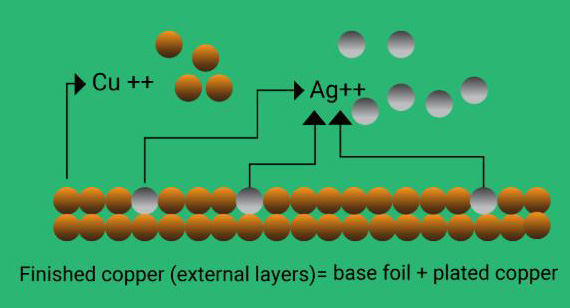
Immersion plating works by displacement rather than by applied current. A common example: a part that already carries a nickel layer from electroless plating is placed in a solution of noble-metal ions. Because those noble-metal ions are more stable, they spontaneously displace the surface metal — the nickel atoms are naturally pulled out and replaced by, for example, gold ions. This gives large-area, efficient coverage, but solution concentration and temperature must be controlled carefully.(External electrical current is not needed)
Metal plating surface treatment has extensive applications in various fields, including but not limited to:
Automotive Manufacturing: Galvanization, chromium plating, etc., are commonly used for corrosion protection and decoration of automotive bodies and components.
Electronics and Electrical: Copper plating, nickel plating, etc., are widely used to improve conductivity and corrosion resistance in the electronics and electrical industries.
Aerospace: Nickel plating, chromium plating, etc., are used to improve the corrosion resistance and wear resistance of metal parts in the aerospace industry.
Hardware Products: Various metal plating surface treatments are used for decoration and corrosion protection of hardware products such as locks, handles, and decorative parts.
Jewelry Industry: Gold plating, silver plating, etc., are used to improve the luster and durability of jewelry.
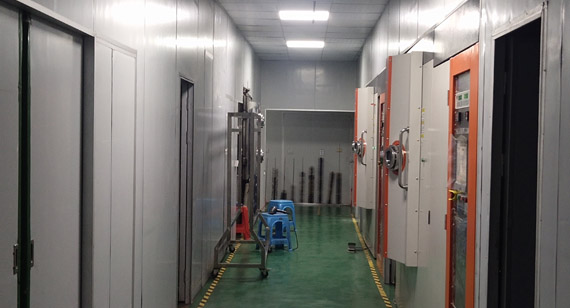
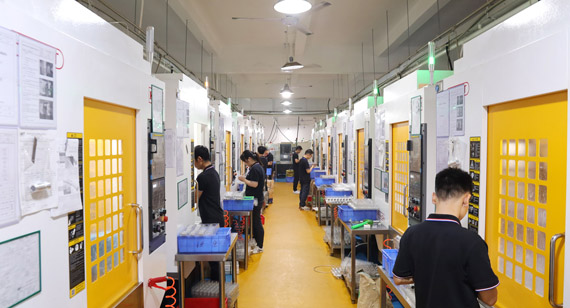
As experts in the field of CNC machining, we provide one-stop metal plating surface treatment solutions. With advanced plating equipment and a professional technical team, we can customize the most suitable plating treatment solutions according to customer requirements. We focus on environmental protection and sustainable development, adopting advanced waste treatment technologies to ensure the environmental friendliness of the production process.
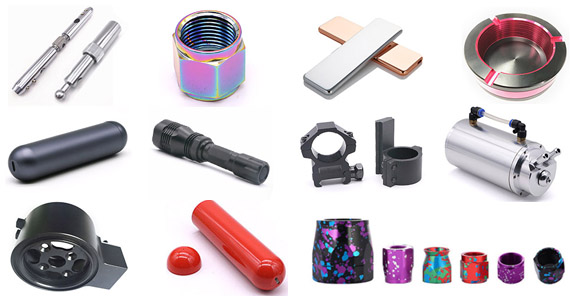
Choose the appropriate plating process based on the material of the parts, performance requirements, and cost budget.
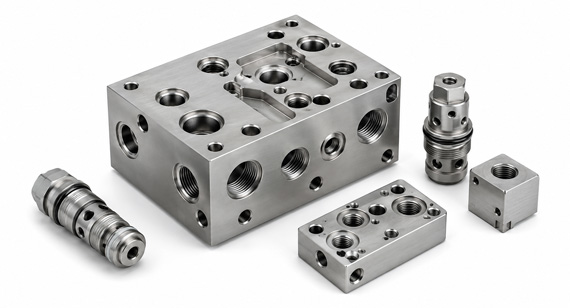
A hydraulics customer in Germany came to us with a batch of carbon steel valve blocks that needed a plated finish. The parts run in an outdoor coastal installation, so the spec called for 480 hours of neutral salt-spray resistance with no red rust — and the plating had to stay thin enough to hold a ±0.02 mm bore tolerance after finishing.
Their previous supplier had used standard bright zinc plating. It passed the dimensional check but failed salt spray at around 150 hours: red rust appeared at the sharp edges of the ports, where the zinc layer had thinned out. The customer was scrapping roughly one block in five at incoming inspection.
We switched the finish to zinc-nickel alloy plating (12–15% nickel) with a trivalent chromium passivation, and adjusted the rack layout so current reached the recessed port faces more evenly. Zinc-nickel holds up far better at edges and corners than plain zinc, and the trivalent passivation kept the process free of hexavalent chromium for the customer's REACH requirements.
The reworked blocks cleared 720 hours of neutral salt spray with no red rust — well past the 480-hour target — and the plated bores stayed inside the ±0.02 mm tolerance. Incoming-inspection scrap on the plated finish dropped to near zero on the following production runs.
Metal plating surface treatment is an important technology for improving the surface performance of metal parts, enhancing their corrosion resistance, wear resistance, aesthetics, and conductivity. Choosing the appropriate plating process and strictly controlling process parameters are key to obtaining high-quality plating layers. As experts in the field of CNC machining, we provide one-stop metal plating surface treatment solutions, dedicated to providing customers with high-quality plating services. At the same time, we focus on environmental protection and sustainable development, ensuring the environmental friendliness of the production process. Have a drawing or a part that needs plating? Send us the substrate material, the finish you want, and your salt-spray or thickness requirement, and our team will recommend the plating process and type that fit — and flag any edge, bore, or thread-tolerance issue before it costs you a batch. Contact us for a plating review on your CNC machined parts.2D Drawings (PDF files), 3D Drawings (IGS/STP/STEP files)
Send your drawings, requirements, and target quantity. VMT will review your project and provide a machining solution and quote.
All information and uploaded files are secure and confidential.
1 Tell us what you need
2 Get solution & quote
3 Approve production
Email: inquiry@vimetal.com.cn
Q: What causes bubbles or spots in the plating layer?
A: It may be caused by impurities in the plating solution, excessive current density, or surface oil contamination on the parts.
Q: What to do if the plating layer thickness is uneven?
A: You can improve it by adjusting the current density, agitating the plating solution, or changing the electrode position.
Q: What to do if parts discolor or corrode after plating?
A: It may be due to poor plating layer quality or improper post-treatment processes, requiring inspection of the plating process and post-treatment processes.
Q: Is the plating layer thicker in some areas than others? What do I need to watch for?
A: Yes. In recessed areas and at inside corners, the plating tends to thin out — often dropping to roughly three-quarters of the nominal thickness — while sharp external edges tend to build up thicker. You need to account for these edge, corner, and groove effects when you set the plating spec, especially on parts with deep pockets or fine features.
Q: What should I consider when electroplating screws and hydraulic fittings?
A: On threaded parts and hydraulic fittings, the plating builds up thicker on the outside — the deposit on external threads and sharp edges can run about four times the thickness on a flat face, so that build-up has to be factored into the plating thickness allowance. Too much plating on a thread changes the fit and can bind the mating part, so on precision threads the plating thickness is usually held to a few microns and checked against the thread tolerance. On hydraulic sealing faces the thickness is kept even and controlled, because an uneven layer there can leak past the seal.
Q: What is the difference between coating and plating?
A: A coating process can be applied to both non-conductive and conductive surfaces, while a plating process can only be run on conductive metal surfaces.
The technical information and manufacturing advice shared on the VMT website are for general guidance only. While we strive for accuracy, VMT does not guarantee that the processes, tolerances, or material properties mentioned are applicable to every specific project. Any reliance you place on such information is strictly at your own risk. It is the buyer's responsibility to provide definitive engineering specifications for any production orders. Final specifications and service terms shall be subject to the formal contract or quotation confirmed by both parties.


 +86 15099911516




 Read more