16 years one-stop China custom CNC machining parts factory

Hey there I’m VMT Sam!
With 25 years of CNC machining experience we are committed to helping clients overcome 10000 complex part-processing challenges all to contribute to a better life through intelligent manufacturing. Contact us now
 423 |
Published by VMT at Jul 29 2026 | Reading Time:About 6 minutes
423 |
Published by VMT at Jul 29 2026 | Reading Time:About 6 minutes


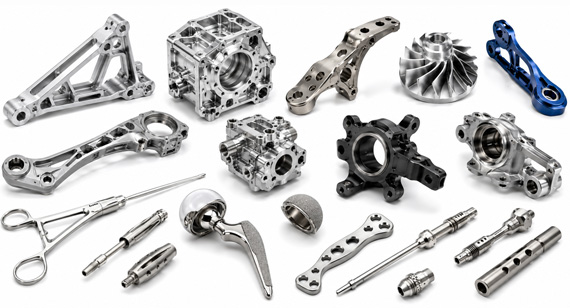
In the world of custom CNC machining, the selection of machine tools plays a crucial role in achieving precision, accuracy, and efficiency. Whether you are producing complex parts for aerospace, automotive, or medical devices, choosing the right type of CNC machine tool is essential for meeting production goals and maintaining high-quality standards. With technological advancements, CNC machine tools have diversified, offering a range of functionalities for different applications.
This detailed guide explores the various types of CNC machine tools, their operations, processes, and applications, giving you insights into how each type can benefit your manufacturing projects.
A CNC machine tool is a device that uses computer numerical control (CNC) to automatically perform tasks such as cutting, milling, drilling, and grinding with high precision. These machines are programmable and can produce intricate, precise parts from metals, plastics, and other materials. The CNC system controls the movements of the tools and workpiece by translating digital instructions into mechanical operations. Before the machine runs, CAD software builds the part design, and CAM software converts that design into the G-code the machine reads.
In CNC machining services, these machines are used to manufacture everything from small, intricate components to large industrial parts. Unlike manual machine tools, CNC machines require minimal human intervention, reducing the margin for error and increasing productivity.
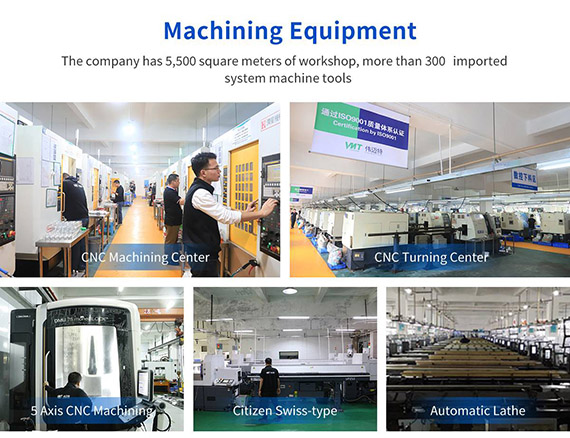
CNC machines consist of several basic components:
There are various types of CNC machine tools available, each designed for specific manufacturing tasks. These machines differ in terms of operations, processes, and applications, allowing manufacturers to choose the best tool based on their production needs. Below, we explore the most common CNC machine tools used in CNC machining factories today.
1. Milling CNC Machine Tools
CNC milling machines are one of the most widely used CNC tools. They use rotating cutting tools to remove material from a workpiece, shaping it into the desired form. Milling machines can handle multiple tasks like cutting, drilling, tapping, and slotting, making them versatile for many industries.
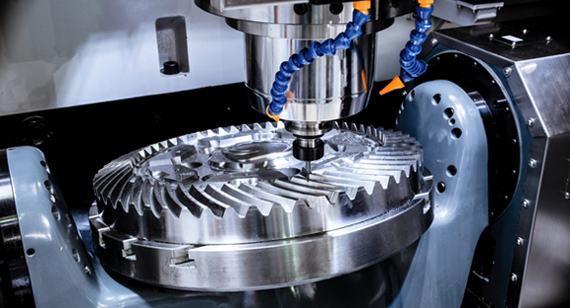
CNC milling machines are used in industries such as automotive, aerospace, and electronics for manufacturing components like engine parts, molds, and mechanical hardware.
While CNC milling is highly efficient, it has its limitations in terms of size, complexity, and cost.
1. Size Limitations
The worktable size and tool reach can limit the dimensions of the parts that can be machined. Large parts may require specialized machines or setups.
2. Operator Skills
Although CNC machines are automated, skilled operators are needed to program, maintain, and monitor the process, especially for complex parts.
3. Costs
High-end CNC milling machines are expensive to purchase and maintain, making them a significant investment for small to medium-sized manufacturers.
The cost of CNC milling machines can range from $50,000 to $250,000 depending on the machine's capabilities, size, and complexity. Custom features and high-end specifications can increase the cost further.
2. Lathe CNC Machine Tools
CNC lathes are used for turning operations, where a cutting tool moves along the surface of a rotating workpiece to remove material. CNC lathes are ideal for creating symmetrical parts such as shafts, bushings, and threaded components.
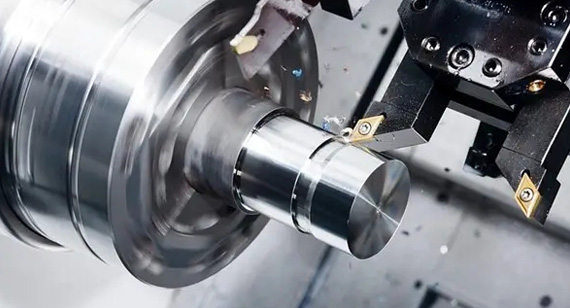
CNC lathes are commonly used in the production of cylindrical components like screws, bolts, and other fasteners, as well as in the automotive and medical industries.
CNC lathes are best suited for producing round parts. Complex geometries may require additional machining processes or hybrid machines that combine turning and milling operations.
CNC lathes typically range from $40,000 to $150,000, depending on their capacity and the complexity of the components they are designed to produce.
3. Drilling CNC Machine Tools
CNC drilling machines are designed specifically to create holes in a workpiece. They are used for tasks such as hole drilling, boring, and reaming, making them critical for parts that require precision drilling.
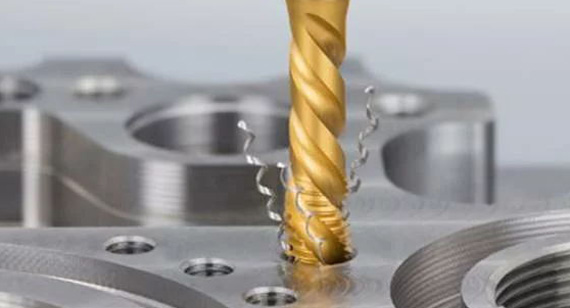
CNC drilling machines are used in industries like electronics (for PCB drilling), aerospace, and automotive to produce parts that require accurately positioned holes.
CNC drilling machines are limited to drilling operations and may not be suitable for more complex machining tasks, making them less versatile than other CNC machines.
The cost of CNC drilling machines varies, typically ranging from $30,000 to $100,000, depending on the machine's capabilities and the specific drilling tasks required.
4. Grinding CNC Machine Tools
CNC grinders use an abrasive wheel to remove material from a workpiece, achieving a fine finish. These machines are often used for precision finishing operations and surface grinding.
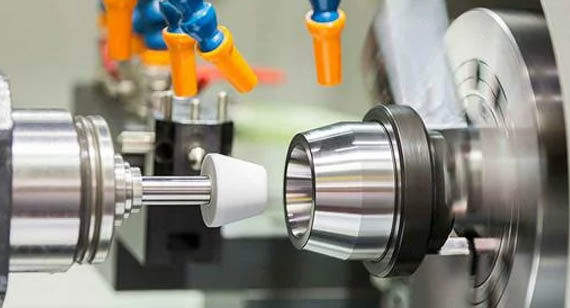
CNC grinding machines are widely used in tool and die making, automotive manufacturing, and the production of medical equipment. They are ideal for achieving high precision and smooth surface finishes.
Grinding machines are often limited to surface or cylindrical grinding and may require multiple setups to achieve complex geometries.
CNC grinders are expensive due to their precision and specialized applications, ranging from $100,000 to $500,000.
5. Laser Cutting CNC Machines
CNC laser cutting machines use a high-powered laser beam to cut through materials such as metal, plastic, or wood. Laser cutting is highly precise and leaves a clean edge, making it ideal for intricate designs.
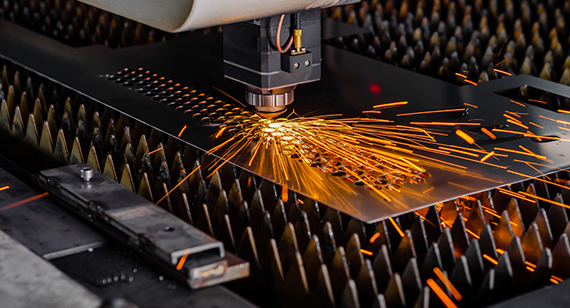
Laser cutting is commonly used in the automotive, aerospace, and electronics industries for creating complex shapes and fine details in metal sheets and plastic components.
Laser cutting can be limited by material thickness and the potential for heat distortion, especially when cutting thicker metal parts (the maximum cutting thickness is around 2.75 inches).
Laser cutting machines are expensive, with prices ranging from $100,000 to $500,000, depending on the power of the laser and the materials they can process.
6. Plasma Cutting CNC Machines
CNC plasma cutting machines use a high-temperature plasma arc to cut through conductive materials such as steel, aluminum, and copper. Plasma cutting is faster and less expensive than laser cutting but can result in rougher edges.
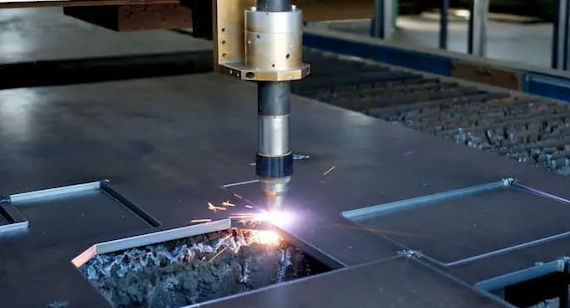
Plasma cutting is commonly used in industrial fabrication, shipbuilding, and automotive repair shops to cut large metal plates and components.
Plasma cutting is effective for many applications, but it has some limitations regarding material thickness and the heat-affected zone.
1. Material
Plasma cutting works best on conductive materials such as metals. It is not suitable for non-metallic materials like wood or plastics.
2. Heat Affected Zone
The heat generated during plasma cutting can lead to material warping or a rough edge, particularly when working with thinner sheets.
CNC plasma cutting machines range from $30,000 to $150,000, depending on the machine's cutting power and capabilities.
7. Water Jet Cutting CNC Machines
CNC water jet cutting machines use a high-pressure stream of water mixed with abrasive particles to cut through a wide variety of materials, including metal, stone, glass, and composite materials.
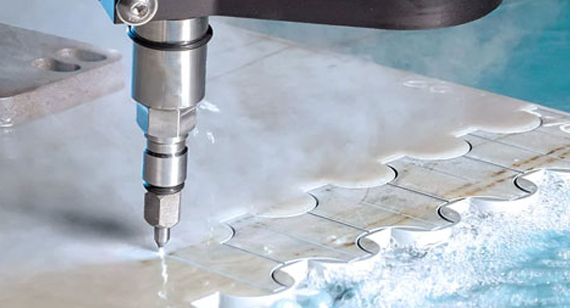
Water jet cutting is ideal for applications where heat distortion is a concern, such as in aerospace and automotive industries, as well as for cutting fragile or heat-sensitive materials like glass and ceramics.
Water jet cutting can be slower than other cutting methods like laser or plasma cutting, and the setup can be more complex.
CNC water jet cutting machines can cost between $100,000 and $500,000, depending on their pressure rating, size, and capabilities.
8. EDM (Electrical Discharge Machining) CNC Machines
Electrical discharge machining (EDM) is a unique CNC process that uses electrical sparks to erode material from a workpiece. EDM is used for creating complex geometries and precise cavities, often in hard materials like steel and titanium.
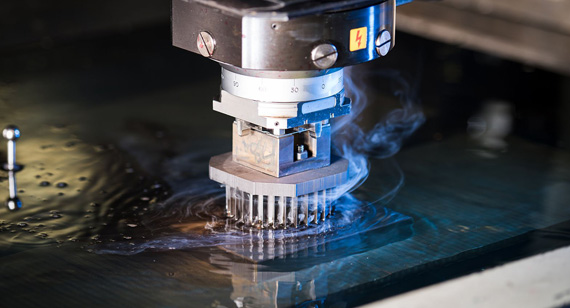
EDM is commonly used in die-making, tool manufacturing, and aerospace applications where precision is critical.
1. Material Limitations
EDM is only effective on electrically conductive materials, which limits its versatility.
2. Slow Cutting Speed
EDM is a slow process compared to other machining methods, making it less suitable for high-volume production.
EDM machines range from $50,000 to $300,000, depending on their precision and capabilities.
9. CNC Engraving Machines
CNC engraving machines are used for creating intricate patterns, logos, or text on surfaces. These machines are commonly used in industries like jewelry making, sign creation, and engraving of nameplates.
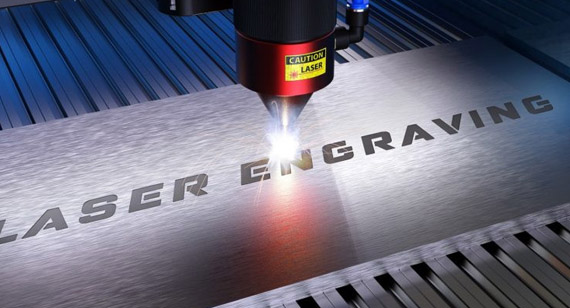
CNC engraving machines are used for detailed work in industries that require customized or decorative finishes, such as electronics and jewelry.
These machines are limited in their cutting depth and are not suitable for heavy-duty machining or cutting through thick materials.
CNC engraving machines are generally more affordable, ranging from $10,000 to $50,000.
10. Swiss CNC Machines
Swiss CNC machines, also called Swiss-type lathes or sliding headstock lathes, feed bar stock through a guide bushing so that the cutting tool works within a few millimetres of the support point. Because the stock is supported right at the cut, deflection stays low on long slender parts, and live tooling lets turning, drilling, and milling run inside one continuous cycle.
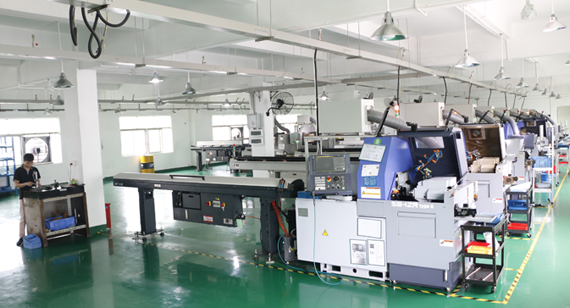
Swiss CNC machining is widely used in medical work such as bone screws and dental abutments, and in watch components, connector pins, sensor bodies, and hydraulic fittings. It suits small-diameter parts with tight diameter control that are needed in volume.
Bar diameter is the main constraint, with most machines working up to 32 mm and some to 42 mm. The process also requires bar stock rather than blanks, and setup takes longer than a standard lathe, so short runs and large parts are better placed elsewhere.
Swiss CNC machines range from $80,000 to $400,000, depending on the number of axes, the live tooling package, and whether a sub-spindle is fitted.
CNC machines are classified based on the number of axes they use to control the movement of the cutting tool or workpiece. The number of axes determines the complexity of the shapes that can be produced.
2-Axis CNC Machines
Basic CNC machines with two axes (X and Y), used primarily for flat surface cutting, drilling, engraving, and efficient compound machining. Some configurations carry dual spindles and dual tool axes, which allows two operations to run at the same time on one machine.
3-Axis CNC Machines
A 3-axis CNC machine is precision automated equipment that works across three directions: front to back, left to right, and up and down, which are the X, Y and Z axes. The workpiece stays fixed while the rotating cutter travels along these three axes to remove the excess material.
This arrangement covers three-dimensional surface milling, drilling, and tapping. Automotive brackets, medical device components, electronic housings, and mould parts are all commonly machined on 3-axis equipment.
4-Axis CNC Machines
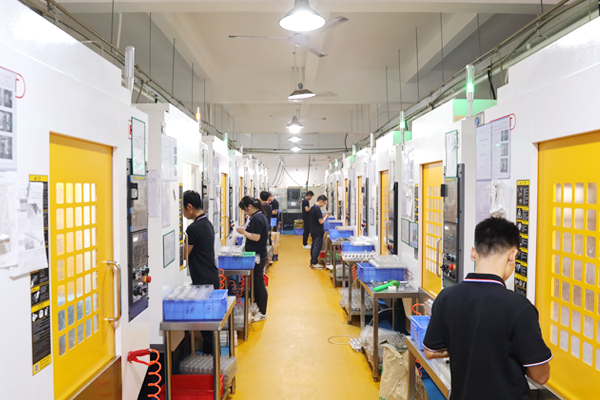
A 4-axis machine adds a rotational axis, allowing for the machining of cylindrical or angled parts. The fourth axis is the A axis, which rotates the fixture and turns the workpiece so that multiple faces or a full cylindrical surface can be reached in one setup. Against a 3-axis route, it raises both throughput and accuracy on parts with complex geometry.
5-Axis CNC Machines
5-axis CNC machines keep the X, Y and Z axes along with the A rotary axis, then add either the B or the C axis to reach five. With these axes moving together, the tool or the workpiece can change orientation at any point in the cycle, which removes the repeated fixturing a 3-axis route would need.
Aerospace impellers, blisks, and blades with complex curved surfaces, high-precision medical implants, and precision medical device components are all machined this way. A single setup covers multiple faces, holds tighter form accuracy across curved surfaces, and shortens the overall cycle.
7-Axis CNC Machines
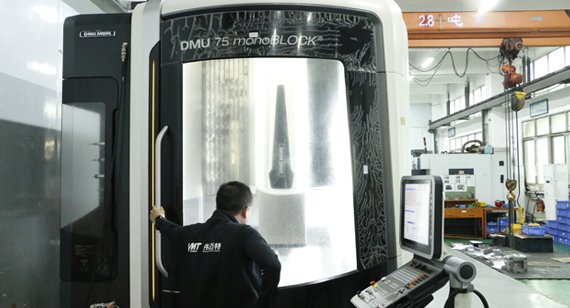
A 7-axis machine combines the three traditional X, Y and Z axes with three A, B and C axes that rotate around the workpiece, plus one further axis that rotates the robotic arm itself. The extra freedom makes the machine considerably more flexible and opens up geometries that lower-axis equipment cannot reach, which is why 7-axis machines are widely used in aerospace, medical, and defence work where the parts are extremely complex.
9-Axis CNC Machines
A 9-axis machine is built from a 5-axis milling unit and a 4-axis lathe working in the same envelope. The milling head cuts internal features, internal geometry, and complex shapes, while the turning side finishes the external surfaces to the required surface finish. One machine therefore closes a part that would otherwise cross two departments.
12-Axis CNC Machines
A 12-axis machine carries two cutting heads, each moving along the X, Y, Z, A, B and C axes. This is the highest axis count in production use today. The second head doubles the cutting available in a cycle, which lifts output speed while holding accuracy across the whole part.
The motion path of the cutting tool in a CNC machine can also be classified into different types:
Point Control
Point control CNC machines move the tool to a precise point before performing any cutting operations. Ideal for drilling and hole punching.
Linear Control
Linear control machines guide the tool along a straight line, suitable for cutting and milling operations.
Contour Control
Contour control allows for complex curved surfaces to be machined by continuously adjusting the position of the cutting tool.
CNC machines use servo systems to control the motion and position of their components. Different types of servo systems are used depending on the level of precision required.
Open-Loop Control System
An open-loop system does not use feedback to adjust the position of the tool, making it less precise but more affordable.
Semi-Closed-Loop Control System
A semi-closed-loop system uses some feedback to improve accuracy but is not as precise as a fully closed-loop system.
Closed-Loop Control System
Closed-loop systems use continuous feedback to adjust the tool's position in real-time, ensuring the highest levels of precision and control.
You do not need to own a machine to make a good sourcing decision. What matters is knowing which machine your part lands on once the drawing reaches the factory floor, because that choice sets the tolerance you can expect, the lead time, and the price.
Simple and Flat Parts
Plates, brackets, covers, and housings with features on one or two faces run on 3-axis milling. The workpiece is clamped once and the cutter reaches everything from above, so the setup is short and the unit price stays low.
Cylindrical and Threaded Parts
Shafts, bushings, pins, and threaded bodies go to a CNC lathe. When the part is small, slender, and needed in volume, they are moved to a Swiss machine instead, where the guide bushing supports the bar right at the cut and holds diameter consistently over long lengths.
Complex Geometry and Free-Form Surfaces
Impellers, blade profiles, deep angled pockets, and organic contours require 5-axis machining. The tool reaches each surface at the correct angle without re-clamping, which removes the form error caused by repeated setups.
Deep Cavities and Sharp Internal Corners
When an internal corner radius is smaller than any cutter that can reach it, or a cavity is too deep to machine without chatter, the feature moves to EDM. The process is slower and costs more per hour, and it is frequently the necessary route to that geometry.
Some materials are soft but the others can be strong or hard. And the parts shapes you want can be simple or complicated which also affected by the materials. The factory will machine the parts with the suitable cnc machines that compatible to your materials, and below are some of the examples:
| Material | Typical route | Why |
|---|---|---|
| Aluminum 6061, 7075 | High-speed 3-axis or 5-axis milling | Soft and free cutting, so high spindle speed and fast feeds pay off |
| Titanium Grade 5 | Rigid 5-axis milling with high-pressure coolant | Low thermal conductivity loads the cutting edge, so rigidity matters more than speed |
| Stainless steel 316 | CNC turning or milling at reduced speeds | Work hardening demands a constant chip load |
| Brass C36000 | CNC turning or Swiss machining | Cuts easily and holds fine detail, which suits connectors and fittings |
| Engineering plastics (PEEK, POM, PTFE) | Milling or turning with sharp uncoated tools | Low melting point, so heat control governs the finish |
| Hardened tool steel, carbide | EDM or grinding | Too hard for conventional cutters, and the conductivity suits EDM |
Tolerance and Surface Finish Requirements
Standard milling and turning hold around ±0.05 mm with a machined finish near an Ra of 1.6 µm, which covers most industrial work. When your drawing calls for ±0.005 mm on a bore, a flatness callout on a sealing face, or a finish below an Ra of 0.4 µm, the part needs a grinding operation after machining.
Background
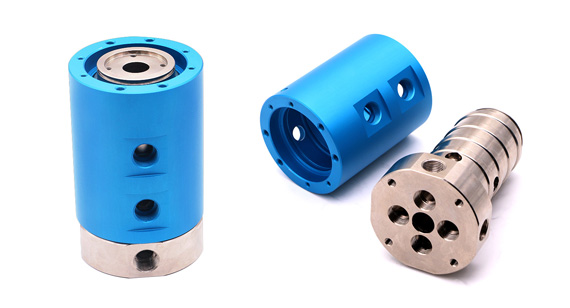
A European hydraulics customer came to our factory with a 316 stainless steel cylindrical body, 42 mm in diameter and 180 mm long, carrying a stepped bore, an external thread, and six M6 threaded holes spread across two faces. Their previous supplier had delivered a 300-piece batch in which the bore ran out of round by up to 0.06 mm and several threaded holes sat outside their true position callout, so the parts would not seal during assembly.
What our engineering team found
The previous route split the job across three machines. The part was turned, moved to a mill for the cross holes, then returned for the second face. Every transfer re-referenced the part against a different datum, so the position error stacked with each move. The bore distortion traced back to clamping pressure applied to a thin wall section after the outer diameter had already been finished.
What we changed
We moved the part onto a turn-mill centre and closed it in two operations rather than four. Turning, drilling, and thread milling all ran from the same datum, which removed the stack caused by re-fixturing. On the thin wall, we finished the bore before the outer diameter rather than after, so the clamping load acted on a full-thickness section. Soft jaws cut to the exact outer profile replaced the standard chuck jaws and spread the clamping force around the full circumference.
Result
Bore roundness held within 0.012 mm, and true position on all six threaded holes measured inside 0.05 mm, verified on a CMM against the customer drawing. Scrap across the 300-piece repeat order was 3 pieces. The two-operation route also cut cycle time by 35% against the previous four-operation process, and the customer moved their follow-on volume to us after the first delivery.
The variety of CNC machine tools available allows manufacturers to choose the best tool for their specific needs, whether they require precision milling, high-speed turning, or complex multi-axis machining. Understanding the operation, process, and application of these machines is key to selecting the right equipment for your project.
At VMT, we offer a wide range of CNC machining services, providing everything from CNC prototype machining to large-scale production for various industries. Our expertise in custom CNC machining ensures that you get the highest quality parts for your specific application. Welcome to contact us with your drawings! [2D Drawings (PDF files), 3D Drawings (IGS/STP/STEP files)]
Send your drawings, material, tolerance requirements, surface finish, quantity, and application details. VMT will review the geometry and recommend the appropriate CNC machine, machining route, and practical quotation.
All information and uploaded files are secure and confidential.
1 Tell us what you need
2 Get solution & quote
3 Approve production
Email: inquiry@vimetal.com.cn
Q: Do multi-axis CNC machines mean CNC milling machines?
No. A multi-axis machine is any CNC equipment with four or more simultaneously controlled axes, which includes turn-mill centres, CNC lathes with live tooling, Swiss machines, and grinders as well as milling machines.
Q: What is a CNC automatic tool changer?
An automatic tool changer (ATC) is a device fitted to a CNC machine that swaps cutting tools without operator intervention, which cuts setup time on parts needing several operations. It is an attachment rather than a machine type, and it adds both cost and programming complexity.
Q: Is a 3D printer a CNC machine tool?
No. 3D printing is an additive process that builds a part layer by layer, while CNC machining is a subtractive process that removes material with a cutting tool. The two are frequently paired for prototyping, but they are not the same category of equipment.
Q: Which type of CNC machine is used for plane curve or space curve contours?
Contour control CNC machines handle them, because the control continuously coordinates two or more axes along the path. Plane curves run on 3-axis milling, while space curves and free-form surfaces need 5-axis machining to keep the tool at the correct angle.
Q: Why are CNC machines so expensive?
CNC machines are expensive due to their precision, complex components, automation features, and the cost of high-quality materials.
Q: What is the cost per hour of CNC machining?
The cost per hour of CNC machining can range from $50 to $150, depending on the machine type, material, and complexity of the part.
Q: How many types of CNC tools are there?
There are multiple types of CNC tools, including cutting tools, drilling bits, grinding wheels, and engraving tips, each designed for a specific machining process.
The technical information and manufacturing advice shared on the VMT website are for general guidance only. While we strive for accuracy, VMT does not guarantee that the processes, tolerances, or material properties mentioned are applicable to every specific project. Any reliance you place on such information is strictly at your own risk. It is the buyer's responsibility to provide definitive engineering specifications for any production orders. Final specifications and service terms shall be subject to the formal contract or quotation confirmed by both parties.


 +86 15099911516




 Read more