Free cookie consent management tool by TermsFeed Cookies
Custom Superalloys CNC Machining Parts Services Custom Superalloys CNC Machining Parts Services

Custom Superalloys CNC Machining Parts Services

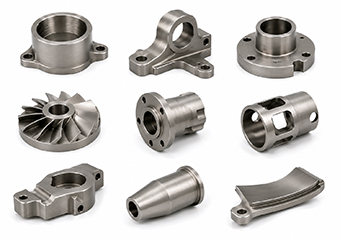
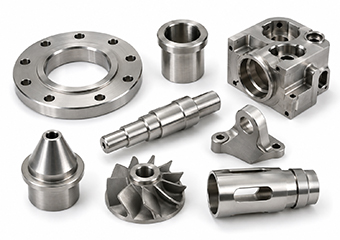
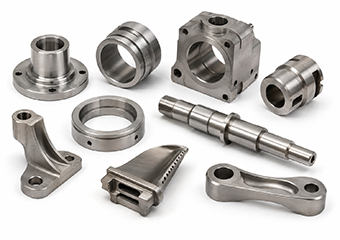
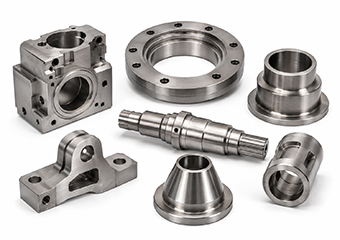
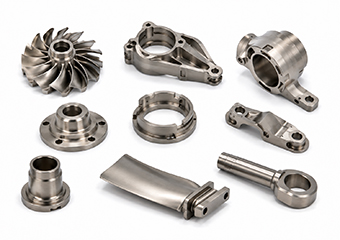
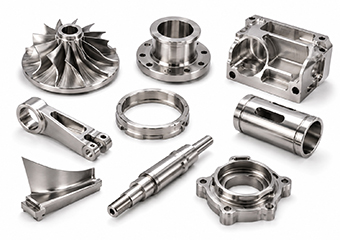
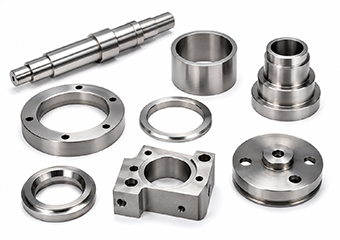
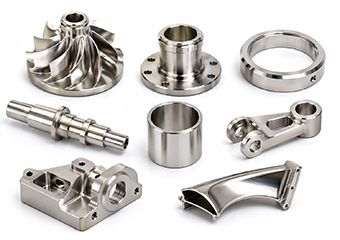
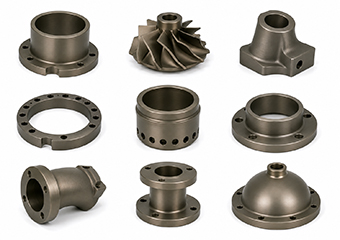
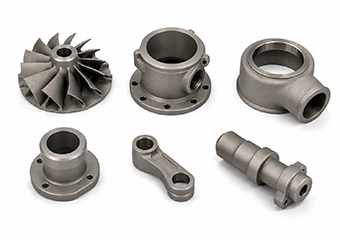
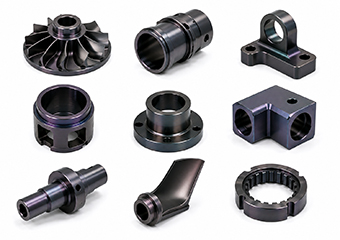
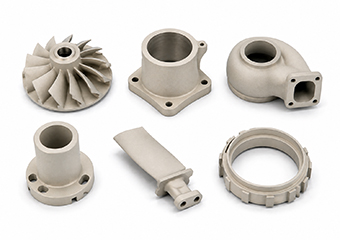
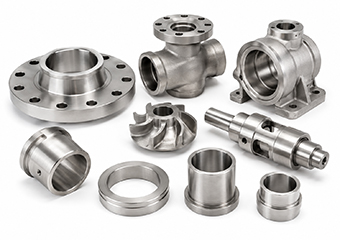
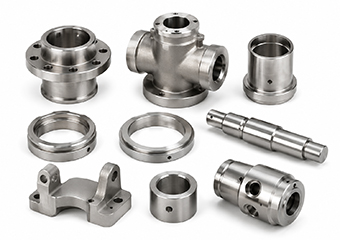
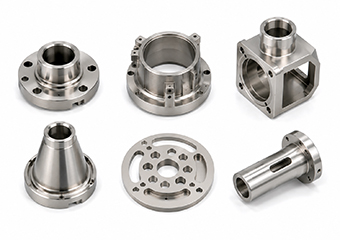
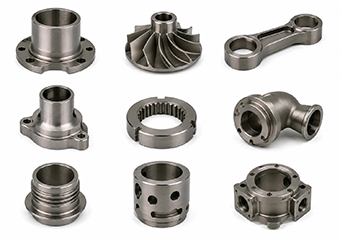
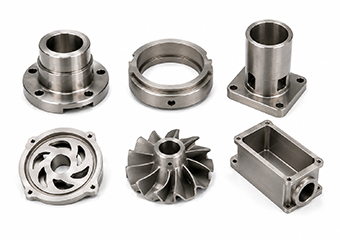
VMT provides custom superalloy CNC machining for Inconel Hastelloy Waspaloy Rene 41 and other high-performance alloys combining DFM multi-axis CNC machining inspection and functional coating support from prototyping to production.

icon Superalloy Grade Verification with MTR Support

icon 1-on-1 DFM Review Before Machining High-Cost Superalloy Material

icon Tool-Life Management + In-Process Inspection for Critical Dimensions

icon 40+ Finishing Options with Critical Surface Masking & Protection

icon One-Stop Manufacturing Support from Prototyping to Mass Production

Upload Your Drawing for a Fast Quote All uploads files are safe and confidential

1 DayPrototyping Machining

2 HoursQuick Quote

0 PcsMinimum Order Qualities

98%Yield

Home / Superalloys CNC Machining /

Custom Superalloys CNC Machining Parts Services


Custom CNC Machining Solutions

Custom Superalloy CNC Machining Factory In China

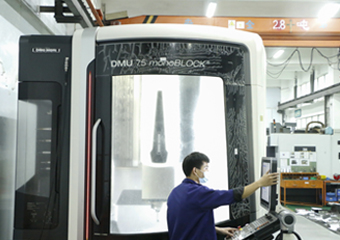
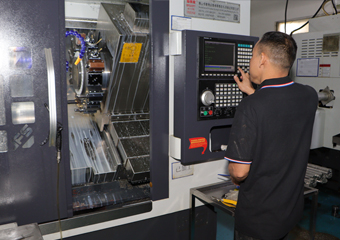
VMT provides drawing-based superalloy CNC machining for high-temperature, corrosion-resistant and high-load components. We review material grade, geometry, critical tolerances, post-machining requirements and inspection before production, then coordinate CNC milling, turning, 5-axis machining, finishing and repeat manufacturing around the functional requirements of your part.

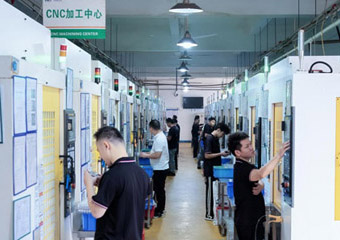
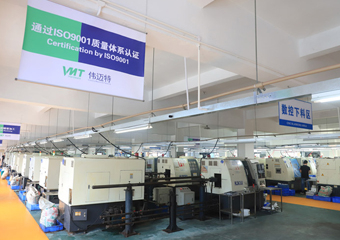
100+CNC & Manufacturing Machines
12-StepQuality Control System
1-on-1Engineering & DFM Support
Prototype → ProductionScale-Up Support
40+Finishing Options Across VMT Manufacturing
Multi-ProcessMilling, Turning, 5-Axis & Secondary Operations
Critical Part Requirements

Critical Requirements for Custom Superalloy CNC Machined Parts

Superalloy parts are normally specified because the application cannot tolerate material mix-ups, dimensional shift after post-processing, damaged functional surfaces, or unstable repeat production. The manufacturing plan therefore has to protect the requirements that determine whether the finished part will actually fit, seal, perform, and remain traceable in service.

01

Specified Alloy Grade, Condition & Traceability

The finished part must match the alloy and material condition defined by the drawing or specification because temperature, corrosion, fatigue, and strength performance depend on the correct material. Required MTRs, supplier documentation, or traceability records can be agreed before production.

02

Final Dimensions After All Machining & Post-Processing

Critical bores, positions, wall thicknesses, datums, and mating dimensions must remain within the drawing after grinding, heat treatment, peening, or coating—not only immediately after CNC machining. Allowances and final inspection are planned around the completed part condition.

03

Reliable Fit, Sealing, Threads & Functional Interfaces

Assemblies depend on more than nominal dimensions. Threads must engage correctly, sealing faces must remain usable, bores and shafts must fit, and ports or flow features must remain clean. VMT controls these interfaces as functional requirements rather than treating them as ordinary geometry.

04

Surface Integrity Suitable for the Service Environment

Hot-section, fatigue-sensitive, corrosive, and high-load parts may be affected by burrs, deep tool marks, damaged edges, excessive polishing, or unsuitable surface treatment. Functional surfaces and no-process areas are identified before finishing so the required surface condition is preserved.

05

Repeatable Results from Approved Sample to Production

An approved prototype must be reproducible when tools wear, fixtures are reloaded, and production quantities increase. The validated datum strategy, tooling, inspection checkpoints, and post-processing route are carried into pilot and repeat production to reduce lot-to-lot variation.

06

Inspection Records & Documentation That Match the Project

Quality and procurement teams may require material records, first-article inspection, CMM reports, thread verification, final inspection, or customer-defined documentation. These requirements are agreed before production so the finished parts arrive with the evidence needed for acceptance.

Have Critical Material, Tolerance or Inspection Requirements?

Send your drawing, alloy grade, post-machining requirements, quantity, and required documentation for engineering review.

Upload Your Drawing
Superalloy Materials

Superalloys We CNC Machine

Different superalloy families are selected for different combinations of high-temperature strength, oxidation resistance, corrosion resistance, fatigue performance, wear, and weight. VMT reviews the exact grade, material condition, geometry, critical tolerances, and post-machining requirements before defining the manufacturing route.

Inconel CNC Machining — 625 & 718

Used for aerospace, energy, oil & gas, marine, and high-temperature components where strength or corrosion resistance drives the material choice. VMT plans tooling, datum control, rough-to-finish allowances, critical-feature inspection, and post-processing around your drawing.

Hastelloy C-276 CNC Machining

Selected for chemical-processing, valve, fluid-handling, and corrosion-resistant components exposed to aggressive media. VMT controls bores, sealing faces, threads, burr-sensitive flow features, finishing sequence, and inspection around the functional requirements of the part.

Waspaloy CNC Machining

Used for selected aerospace and turbine components where high-temperature strength, fatigue, and creep resistance are important. VMT reviews fixture stability, tool condition, material-removal sequence, finishing allowance, surface integrity, and inspection before production.

Rene 41 CNC Machining

Used for selected high-temperature rings, fasteners, and turbine-related hardware where strength and oxidation resistance are important. VMT reviews tool accessibility, workholding, roughing-to-finishing sequence, critical dimensions, and final inspection before machining.

Nickel-Based Superalloys

Nickel-based superalloys include families such as Inconel, Hastelloy, Waspaloy, Nimonic, Rene, and selected Haynes grades. They are widely specified for hot-section, chemical, energy, and pressure-system components requiring high-temperature strength, oxidation resistance, or corrosion resistance.

Cobalt-Based Superalloys

Cobalt-based systems such as Stellite, L-605, and selected Haynes cobalt grades are used where hot wear, oxidation resistance, and elevated-temperature strength are important. Exact machinability, tooling, finishing, and inspection requirements are reviewed by grade and application.

Iron-Based Superalloys

Iron- and iron/nickel-based high-temperature alloys such as A-286 are used where strength, oxidation resistance, and elevated-temperature performance are required with a different material balance from nickel-rich superalloys. The exact grade and material condition are reviewed before quotation.

Titanium-Based Superalloys

Projects specified as titanium-based superalloys or high-temperature titanium alloy systems are typically driven by the need to combine lower density with elevated-temperature performance. Because these grades behave differently from nickel- and cobalt-based superalloys, material specification, condition, tooling, and post-processing are reviewed individually.

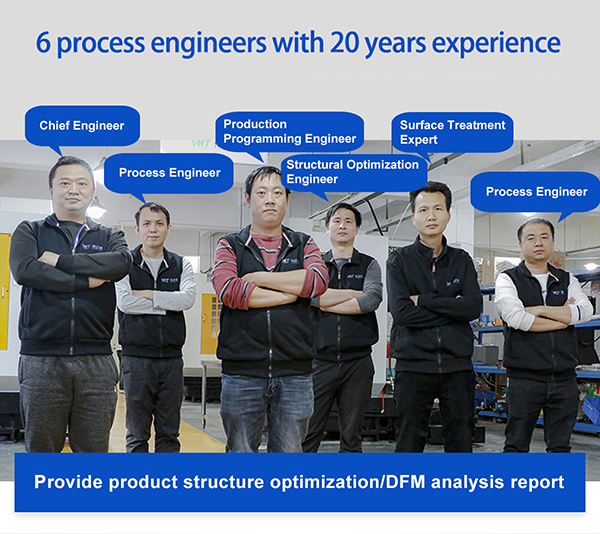
6 People with 20 Years of Experience in DFM Analysis Engineering Support
DFM Review

DFM Review Before Superalloy CNC Machining


Small design decisions can significantly affect machining time, tooling cost, dimensional stability, inspection complexity and scrap risk. VMT reviews the features that create the most avoidable cost before expensive material enters production.


01

Tight Tolerance Review

Identify which dimensions truly require close control and which can use a more practical tolerance without affecting fit or function.

02

Internal Radius & Corner Design

Review small internal radii that force the use of less rigid tools and longer machining time.

03

Deep Pockets, Holes & Cavities

Check depth, tool reach, chip evacuation, cooling access and inspection practicality before machining.

04

Thin Walls & Low-Rigidity Features

Evaluate support, clamping and material-removal sequence where distortion can affect final assembly.

05

Threads & Fine Features

Review thread depth, small holes, narrow slots and other features with higher breakage or inspection risk.

06

Datum & Inspection Planning

Make sure critical dimensions can be machined and measured from a practical datum structure.

CNC Processes

CNC Machining Processes for Custom Superalloy Parts

The process is selected around the geometry and the feature relationships the customer needs to protect—not simply around which machine is available.

CNC Milling Services

Superalloy CNC Milling

Used for housings, valve bodies, flanges, pockets and multi-face structures where pocket depth, wall thickness, hole position and mating surfaces must stay related to the same datum strategy. VMT plans tool reach, chip evacuation and finishing allowance around the features that drive fit and function.

Custom CNC Turning Manufacturing Services

Superalloy CNC Turning

Used for shafts, sleeves, rings, sealing diameters and threaded components where OD/ID relationships, runout, concentricity and thread quality matter. Tool condition and finishing passes are controlled so long cutting cycles do not become dimensional drift.

5 Axis CNC Machining Parts Services

5-Axis Superalloy CNC Machining

Used for angled holes, curved flow surfaces, multi-face aerospace structures and difficult tool-access features. Where geometry allows, fewer setups help protect positional relationships and reduce repeated datum transfer on high-value material.

CNC Milling and Turning Composite Machining

Superalloy Turn-Mill Machining

Used for connectors, valve hardware and cylindrical parts that combine turned diameters with ports, cross holes, flats or milled features. Coordinating turning and milling can reduce part transfers and help maintain the relationship between bores, threads and side features.

Application-Driven Parts

Custom Superalloy CNC Machined Parts We Manufacture

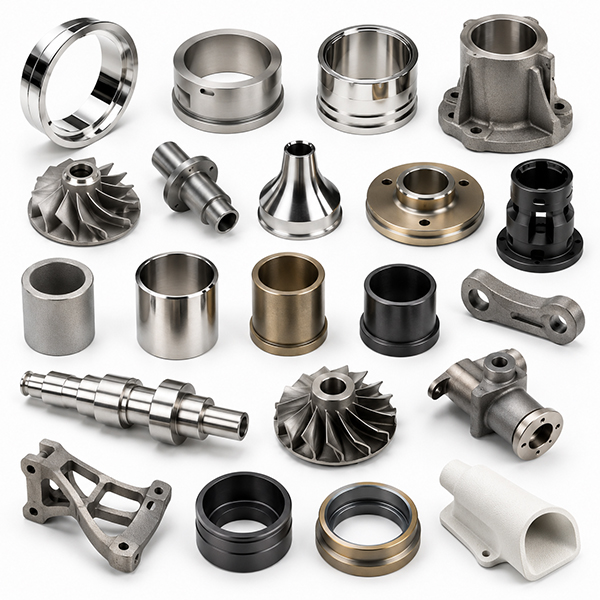
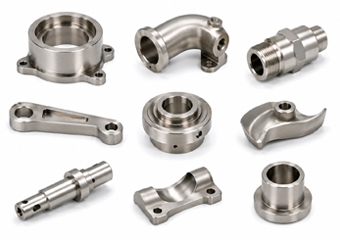
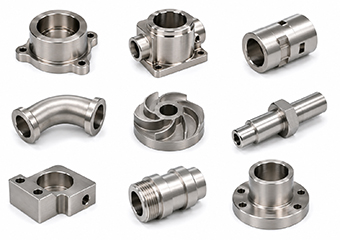
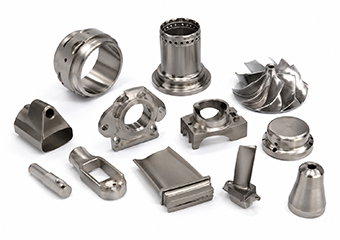
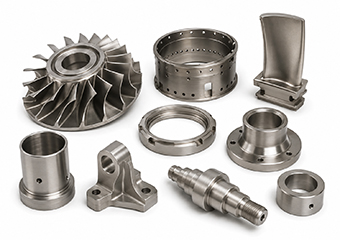
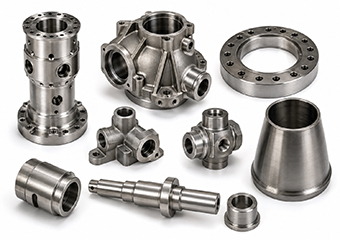
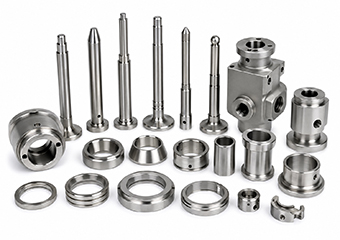
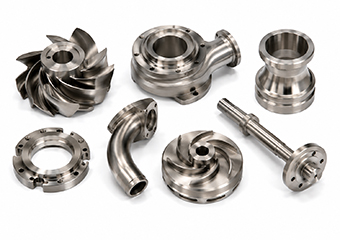
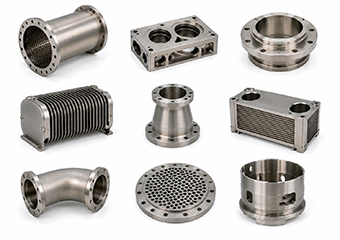
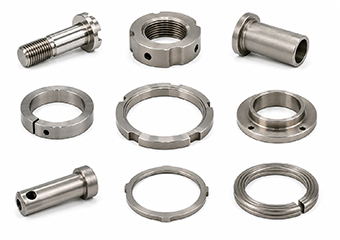
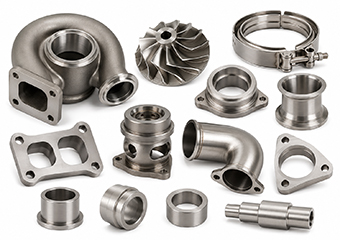
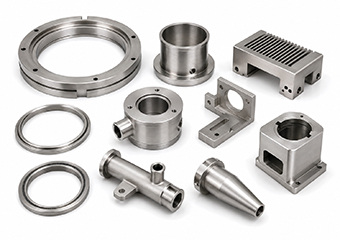
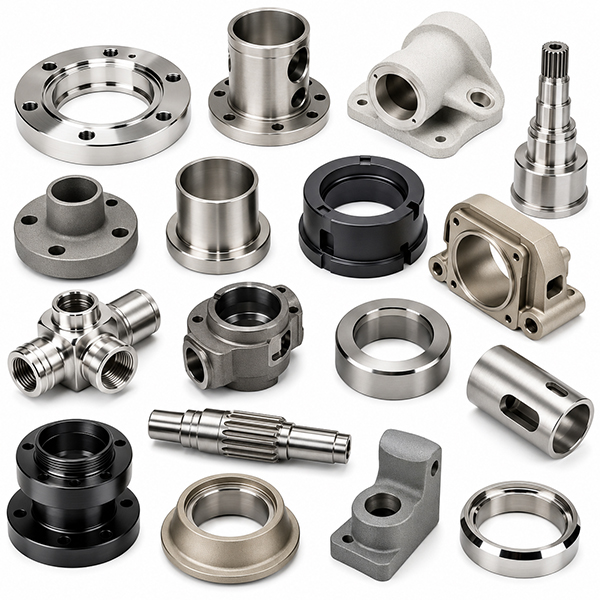
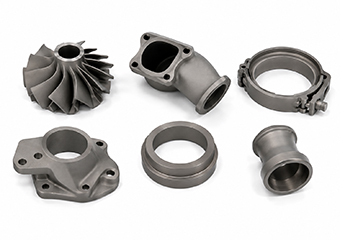
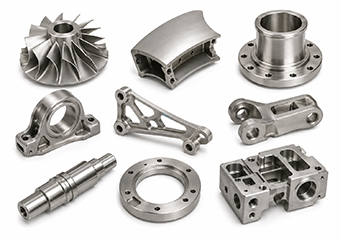
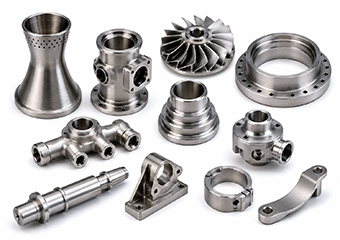
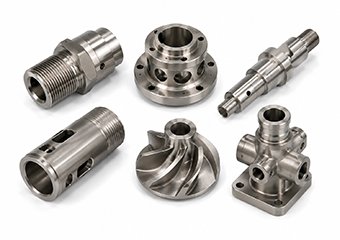
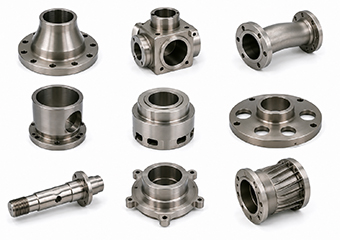
VMT manufactures custom superalloy CNC machined parts for high-temperature, corrosive, and high-load environments based on your drawings and 3D models. Below are examples of CNC superalloy parts manufactured by VMT. Customer-part images shown are used with authorization.

Superalloys Turbine, Combustor & Hot-Section Hardware CNC Machining Parts

Turbine, Combustor & Hot-Section Hardware

Rings, shrouds, combustor hardware, nozzle-support features and related hot-section components use superalloys when strength and oxidation resistance must be maintained under sustained heat. VMT focuses on complex profiles, mounting datums, thin sections and surface integrity.

Superalloys Rocket Propulsion & High-Temperature Fluid Components CNC Machining

Rocket Propulsion & High-Temperature Fluid Components

Injector bodies, manifolds, nozzle-related hardware, combustion-system fittings and high-temperature fluid components may require superalloys for heat, oxidation and pressure resistance. Multi-axis access, small flow features and sealing interfaces are reviewed before machining.

Superalloys Valve Seats, Stems & Flow-Control Parts CNC Machining

Valve Seats, Stems & Flow-Control Parts

Oil & gas, chemical and nuclear systems may specify nickel-based alloys for valve seats, stems, sleeves and flow-control hardware exposed to pressure, corrosive media or elevated temperature. Bores, sealing diameters, threads and burr-free flow paths are treated as functional features.

Superalloys Pump, Impeller & Corrosion-Resistant Fluid Parts CNC Machining

Pump, Impeller & Corrosion-Resistant Fluid Parts

Pump impellers, sleeves, wear components and fluid-handling parts use corrosion-resistant superalloys where seawater, acids or aggressive process media can attack conventional metals. VMT reviews flow surfaces, blade access, balancing-related geometry and post-machining finishing.

Superalloys Heat Exchanger, Furnace & Thermal Hardware CNC Machining Parts

Heat Exchanger, Furnace & Thermal Hardware

Thermal-processing systems may require tubesheet hardware, supports, rings, fixtures and heat-exposed mechanical components that resist oxidation, thermal cycling and creep. Machining allowances and post-heat-treatment requirements are reviewed as part of the route.

Superalloys High-Temperature Fasteners, Rings & Seals CNC Machining Parts

High-Temperature Fasteners, Rings & Seals

Aerospace, defense and turbine assemblies use selected superalloys for bolts, retaining rings, seal carriers and related hardware where strength, fatigue and dimensional reliability matter under heat. Threads, runout, wall thickness and mating diameters require controlled finishing and inspection.

Superalloys Turbocharger & Motorsport Exhaust Components CNC Machining

Turbocharger & Motorsport Exhaust Components

Turbocharger and racing exhaust systems may use Inconel or related superalloys for turbine-side hardware, exhaust valves, manifolds and high-temperature fasteners where heat and oxidation exceed the capability of common alloys.

Superalloys Semiconductor High-Temperature & Vacuum Hardware CNC Machining Parts

Semiconductor High-Temperature & Vacuum Hardware

Selected process equipment may use corrosion- and heat-resistant alloys for gas-delivery components, heater supports, vacuum hardware and high-temperature fixtures where dimensional stability, clean surfaces and controlled interfaces are important.

Quality Control

Quality Inspection for Superalloy CNC Machined Parts

Superalloy parts can accumulate significant material and machining value before completion, so VMT uses staged inspection rather than relying only on final checks.

01

Material Verification

Alloy designation, material condition, supplier documentation, and available material certificates or MTRs can be reviewed according to project requirements.

02

First Article Inspection

The first part helps verify setup, datums, machining sequence, and critical features before larger production quantities continue.

03

In-Process Quality Control

Critical features are checked during appropriate machining stages to identify dimensional drift or process instability before subsequent operations.

04

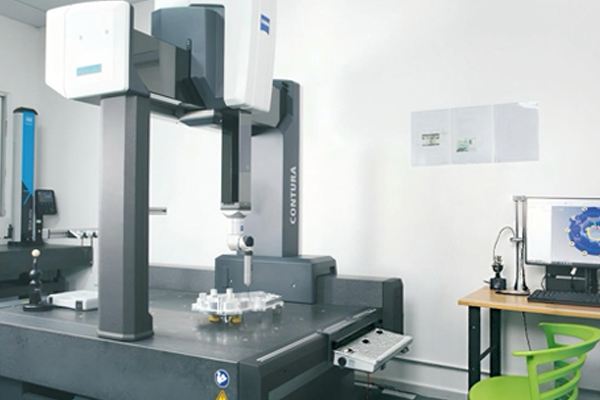
CMM & Dimensional Inspection

CMM and other suitable measurement methods are selected according to geometry, datums, positional relationships, profiles, and drawing tolerances.

05

Threads & Functional Feature Inspection

Threads, bores, sealing diameters, mating surfaces, and functional interfaces are checked using appropriate gauges and measurement methods.

06

Final Inspection & Documentation

Finished parts are verified against applicable drawing and order requirements. Inspection records and material documentation can be supplied according to agreed project requirements.

Custom Superalloys CNC Machining Parts Surface Finishing
Post-Machining Requirements

Surface Finishing and Post-Machining Requirements for Superalloy Parts

Superalloy finishing is usually functional, not decorative. VMT reviews surface requirements together with final dimensions, masking, sealing or flow surfaces, corrosion environment, fatigue requirements and service temperature before coordinating secondary processing.

Descaling & Pickling

Remove heat-treatment oxide scale or process contamination using an alloy-compatible cleaning route, with chemistry and critical surfaces reviewed before treatment.

Functional Plating & Coatings

Select coatings according to wear, friction, corrosion, electrical or temperature requirements instead of treating every superalloy with the same finish.

Masking & Critical Surface Protection

Protect threads, bores, sealing faces, datums and other no-coat or no-blast areas so post-processing does not change final fit or functional geometry.

Polishing Superalloys CNC Machining Parts

Polishing

Used on selected sealing, flow or appearance-sensitive surfaces to reduce tool marks and roughness while protecting critical edges, datums and dimensional features from excessive material removal.

Precision Grinding & Lapping Superalloys CNC Machining Parts

Precision Grinding & Lapping

Used for demanding flatness, OD/ID control, sealing faces and precision interfaces after CNC machining. Grinding allowance, thermal input and final measurement are planned around the drawing.

Electropolishing Superalloys CNC Machining Parts

Electropolishing

Can be evaluated for suitable nickel-based alloys where smoother surfaces, reduced micro-burrs or improved cleanability are required. Alloy chemistry, dimensional change and masking requirements must be reviewed before processing.

Shot Peening Superalloys CNC Machining Parts

Shot Peening

Specified for selected fatigue-sensitive components to introduce beneficial compressive surface stress. Coverage, media, intensity, masking and protection of threads or sealing surfaces must follow the engineering requirement.

Aluminide Coating Superalloys CNC Machining Parts

Aluminide Coating

A diffusion coating used on selected high-temperature nickel-based components to improve oxidation and hot-corrosion resistance. Process temperature, coating zone, masking and dimensional effects must be reviewed before coating.

MCrAlY Coating Superalloys CNC Machining Parts

MCrAlY Coating

Used as a high-temperature protective or bond coating on selected hot-section components. Surface preparation, coating thickness, masked features and later TBC requirements are coordinated with the drawing and service specification.

PVD DLC Coating Superalloys CNC Machining Parts

PVD / DLC Coating

Thin functional coatings can be evaluated where wear, friction or surface durability is required on suitable components. Substrate condition, process temperature, coating thickness and operating environment determine suitability.

Thermal Barrier Coating (TBC) Superalloys CNC Machining Parts

Thermal Barrier Coating (TBC)

Used on selected hot-section superalloy components to reduce substrate heat exposure, typically as part of a defined coating system. Bond coat, ceramic layer, masking, thickness and final inspection must follow the application specification.

Scale-Up

From Superalloy Prototype to Production

A successful prototype must be converted into a repeatable manufacturing process before production quantities increase.

Stage 01

Prototype Validation

Validate geometry, machining feasibility, critical tolerances, tool access, threads, thin walls, and inspection requirements.

Main Goal: Validate the part and manufacturing approach.

Stage 02

Pilot Production & Process Validation

Verify fixture repeatability, tooling strategy, machining sequence, tool-life behavior, inspection checkpoints, finishing operations, and handling under more representative production conditions.

Main Goal: Stabilize the manufacturing process.

Stage 03

Repeatable Production Machining

Control tooling condition, fixture setup, machining sequence, IPQC, finishing, and final verification as quantities increase.

Main Goal: Maintain dimensional and process consistency across repeat orders.

Prototype Question Production Question
Can the geometry be machined? Can it be machined repeatedly?
Can the tolerance be achieved once? Can it remain stable as tools wear?
Does the fixture work? Does it locate consistently?
Can the feature be inspected? What inspection frequency is required?
Can the finish be achieved? Can finishing remain consistent?
Is the design manufacturable? Is the process sustainable for repeat production?
Industry Applications

Industries Using CNC Machined Superalloy Parts

Our business now serves customers in 62 countries worldwide. Our manufacturing services are used to produce a wide range of custom-designed machined parts—including Inconel CNC machined parts, Kovar CNC machined parts, and Invar alloy CNC machined parts—for applications across diverse industries:

Aerospace & Defense Superalloys CNC Machining Components

Aerospace & Defense Superalloy Components

Used where hot-section temperature, fatigue loading, oxidation resistance and weight-sensitive geometry make conventional steels unsuitable. Projects often demand tight feature relationships, thin walls and documented inspection.

Space & Rocket Propulsion Superalloys CNC Machining Parts

Space & Rocket Propulsion

Rocket and propulsion systems use selected superalloys where combustion heat, oxidation, pressure and thermal cycling demand stable high-temperature properties and reliable sealing or fluid-control interfaces.

Superalloys Power Generation & Gas Turbines CNC Machining Parts

Power Generation & Gas Turbines

Gas-turbine and power systems rely on superalloys where long-term heat, creep, oxidation and cyclic loading must be managed across rings, hot-section hardware, flow-control and sealing components.

Superalloys Oil & Gas CNC Machining Parts

Oil & Gas

Nickel-based alloys are used where pressure, chlorides, sour service, corrosion and temperature combine to challenge valves, sleeves, connectors, downhole hardware and sealing interfaces.

Superalloys Chemical & Petrochemical CNC Machining Parts

Chemical & Petrochemical Processing

Hastelloy and other corrosion-resistant alloys are selected for aggressive acids, oxidizing media and process chemicals where long-term corrosion resistance is more important than lowest material cost.

Superalloys Marine & Offshore CNC Machining Parts

Marine & Offshore

Selected nickel alloys are used for seawater, chloride and offshore environments where corrosion resistance, pressure capability and durable threaded or sealing interfaces are required.

Superalloys Nuclear Energy CNC Machining Parts

Nuclear Energy

Selected superalloys and nickel-based alloys are specified in nuclear systems where corrosion, heat, pressure and long service life demand tightly controlled material documentation, surface condition and critical geometry.

Superalloys Semiconductor Equipment CNC Machining Parts

Semiconductor Equipment

High-temperature, corrosive or vacuum process equipment may use advanced nickel alloys for gas delivery, heater hardware, chamber-support and fixture components where clean surfaces and dimensional consistency are important.

Superalloys Automotive & Motorsport CNC Machining Parts

Automotive & Motorsport

High-performance turbocharger, exhaust and racing-engine systems may use Inconel, Nimonic or related alloys where temperature, oxidation and fatigue exceed the capability of conventional stainless or heat-resistant steels.

Superalloys Industrial Heating & Thermal Processing CNC Machining Parts

Industrial Heating & Thermal Processing

Furnaces, heat-treatment systems and thermal-processing equipment use selected superalloys for fixtures, supports and hardware exposed to sustained heat, oxidation and thermal cycling.

Project Experience & Confidentiality

Superalloy Project Experience — With Customer IP Protected

Many superalloy projects involve proprietary aerospace, defense, energy, nuclear, semiconductor or OEM designs. VMT does not publish customer drawings, part names, dimensions, quantities or project results without authorization. Public case studies are shown only when disclosure is permitted; confidential projects can still be discussed at the process and quality-planning level under NDA.

Approved Public Case Studies

Where customer authorization is available, VMT can publish the material, part type, manufacturing challenge, process route, inspection method and verified result without exposing unrelated customer information.

View CNC Machining Cases

NDA-Protected Superalloy Programs

For confidential projects, VMT can discuss machining strategy, fixturing, tolerance control, finishing and inspection requirements without revealing customer identity, drawings or proprietary geometry.

Discuss a Confidential Project

Need a Similar Process Review?

Send your drawing and alloy specification. VMT can review whether an existing machining approach, fixture concept, inspection method or post-processing route can be adapted without sharing another customer's confidential project data.

Upload Your Drawing
Verified Customer Feedback

What Customers Say About Working with VMT

Verified customer emails reflect VMT's part quality, sample approval, production readiness, and continued cooperation from prototype evaluation through repeat orders.

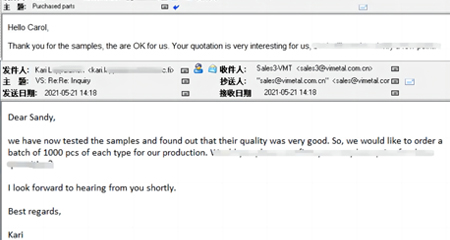
VMT customer email review sample quality production order
Sample Quality → Production Order
“We have now tested the samples and found out that their quality was very good. So, we would like to order a batch of 1000 pcs of each type for our production.”
Samples were tested and approved before the customer moved into production quantities.
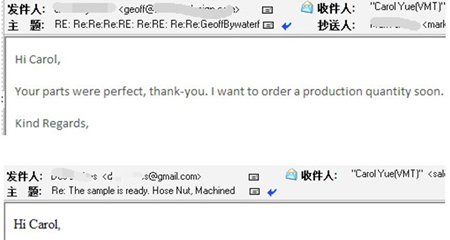
VMT customer email review parts perfect repeat production
Part Quality → Repeat Production
“Your parts were perfect, thank-you. I want to order a production quantity soon.”
Delivered parts were approved, followed by the customer's intent to move into production.
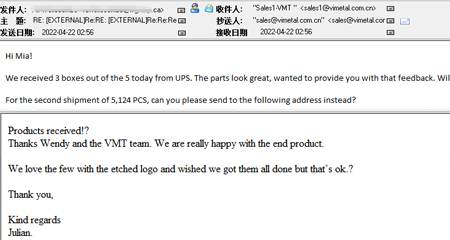
VMT customer email review continued production
Delivered Quality → Continued Production
“The parts look great, wanted to provide you with that feedback.”
The same customer email discusses a second shipment of 5,124 PCS.
FAQ

FAQ About Superalloy CNC Machining

Find practical answers to common project questions about superalloy material verification, critical tolerances, complex features, coating and masking, inspection documentation, repeat production, uncommon alloy grades, RFQ preparation and NDA protection.

Q: How can I verify the superalloy grade and material condition used for my parts?

A: VMT can review the drawing-specified alloy, material condition, supplier documentation and available material certificates or MTRs according to the agreed project requirements. If your project requires a specific specification, mill source or traceability document, include it in the RFQ before quotation.

Q: Can critical tolerances be protected through heat treatment, grinding or coating?

A: Yes, when the complete process sequence is planned before machining. VMT reviews finishing allowance, heat-treatment sequence, coating thickness, masking, datum protection and final inspection so critical dimensions are not treated as an afterthought.

Q: Can VMT machine thin walls, deep pockets, small radii and difficult threads in superalloys?

A: These features can be evaluated from the drawing. VMT reviews tool access, wall support, depth-to-width ratio, internal radii, thread depth, fixture strategy and inspection practicality. Where a feature creates unnecessary risk or cost, an alternative may be proposed before material is cut.

Q: How do you prevent coatings from building up on threads, bores, sealing faces and datums?

A: Critical surfaces can be identified for masking or protected processing before coating. VMT coordinates coating allowance, masking requirements, post-process cleaning and final inspection according to the drawing so functional interfaces are protected.

Q: What inspection records can be provided for critical superalloy parts?

A: Depending on the project, VMT can prepare agreed material documentation, first-article records, CMM or dimensional inspection reports, thread inspection and final inspection documentation. Required records should be specified during RFQ review.

Q: How do you maintain consistency from prototype to repeat production?

A: The validated machining route is transferred into repeat production through controlled fixtures, datums, tooling, roughing and finishing sequence, tool-life management, IPQC checkpoints and agreed inspection methods. Pilot production can be used when the project needs process validation before scale-up.

Q: Can VMT quote uncommon superalloy grades or customer-specified material standards?

A: Yes, uncommon grades can be reviewed after confirming material specification, supply availability, material condition, geometry, quantity and required processing. VMT does not assume that every superalloy grade uses the same machining or finishing route.

Q: What information should I include in my RFQ to avoid quote changes later?

A: Provide 2D and 3D files, alloy grade and condition, quantity, critical tolerances and GD&T, finishing or coating requirements, inspection documentation, application environment and any function-critical surfaces. The more complete the specification, the more accurately process risk and cost can be reviewed.

Q: Can VMT sign an NDA and protect proprietary drawings?

A: Yes. Confidential drawings and project information can be handled under NDA requirements. VMT does not publish customer drawings, part details or project results without authorization.

Technical Guide

Guide to Superalloy CNC Machining

1. What Is a Superalloy?

A superalloy is a high-performance alloy developed to retain useful mechanical strength, corrosion resistance, oxidation resistance or dimensional stability under demanding operating conditions. Many industrial superalloys are nickel-based, while cobalt-based and iron/nickel-based systems are also used for specific applications.

The same properties that make these materials valuable in aerospace, gas turbines, oil & gas, chemical processing, nuclear systems and thermal equipment also make them more demanding to machine than common steels or aluminum alloys.

Discuss Your Superalloy Project

2. Main Types of Superalloys

Nickel-Based Superalloys are the most common group for high-temperature and corrosion-resistant service. Examples include Inconel, Hastelloy, Waspaloy, Rene alloys and Nimonic alloys.

Cobalt-Based Superalloys are used where hot wear, oxidation resistance and high-temperature strength are important. Stellite, Haynes and L-605-type materials are common examples.

Iron/Nickel-Based Superalloys are used where a different balance of cost, strength and temperature capability is required. A-286 is a familiar example.

Material availability and machining feasibility should still be confirmed by exact grade, condition, geometry and specification before quotation.

3. Why Are Superalloys Difficult to Machine?

Superalloys can maintain high strength while generating high cutting loads. Nickel-based materials may work-harden during machining, concentrate heat around the cutting edge, produce difficult chips and accelerate tool wear.

These effects become more significant when parts include deep cavities, small internal radii, thin walls, long tool reach, small threads or multiple critical datums.

Stable machining therefore requires controlled tool engagement, rigid workholding, appropriate cooling, effective chip evacuation, tool-condition management and staged inspection.

4. Choosing the Right CNC Machining Process

CNC milling suits housings, flanges, valve bodies, pockets and multi-sided parts. CNC turning suits shafts, rings, sleeves and rotational sealing features. 5-axis CNC machining is valuable for angled features, curved surfaces and parts where reducing repeated setups can protect feature relationships. Turn-mill machining is useful when turned diameters and milled side features must remain closely related.

5. DFM Tips for Superalloy CNC Machined Parts

  1. Use tight tolerances only where part function requires them.
  2. Allow practical internal corner radii where geometry permits.
  3. Avoid unnecessarily deep and narrow cavities.
  4. Consider support and clamping access for thin walls.
  5. Review deep threads and very small features carefully.
  6. Use clear datums that support both machining and inspection.

The earlier these issues are reviewed, the easier it is to reduce tooling complexity, machining time and avoidable material loss.

6. Superalloy CNC Machining Cost Factors

Cost is influenced by more than raw material price. Alloy grade and condition, material-removal volume, geometry, tool consumption, machining time, setups, fixture complexity, tolerance, inspection, surface finishing and quantity all affect the quotation.

Deep pockets, thin walls, small internal radii, difficult threads and unnecessarily tight tolerances can increase cost because they may require smaller tools, slower cutting, additional finishing or more inspection.

7. Surface Finishing & Inspection

Many superalloy parts are supplied as machined when functional geometry is the priority. Other projects may require polishing, grinding, lapping, electropolishing, peening, aluminide, MCrAlY, PVD/DLC or TBC depending on the application.

Finishing should be planned together with machining because coating thickness, heat-treatment condition, masking and surface preparation can affect final dimensions. Inspection requirements should therefore be defined before the manufacturing route is released.

8. How to Prepare a Superalloy CNC Machining RFQ

For a more accurate engineering review, provide:

  • 2D engineering drawing
  • 3D CAD model
  • Superalloy grade and material condition
  • Required quantity
  • Critical tolerances and GD&T
  • Surface finish, heat treatment or coating requirements
  • Inspection and documentation requirements
  • Application or operating environment
  • Any sealing, mating, threaded or safety-critical features

Ready to Review Your Superalloy CNC Machining Project?

Send your drawing, 3D model, alloy grade, quantity, critical tolerances, post-machining requirements and inspection needs. VMT can review machining risk, DFM, process route and quality requirements before quotation.

Customer Reviews

Bluetooth headset charger housing customer
icon icon icon icon icon 2024-08-02

The manufacturer is strongly recommended. In the past few years of cooperation we have ordered several machined products from aluminum and stainless steel. These products are manufactured in compliance with tolerance requirements and require product finish. Now I have ordered another one. The service is excellent and any questions can be answered and resolved in time.

AN Automotive Oil Cooling Joint Customer
icon icon icon icon icon 2021-05-13

The dimensions are all customized according to my drawings no tolerance issues and the parts are delivered on time. I am very satisfied with it.

Flashlight shell machining customers
icon icon icon icon icon 2021-04-06

I pay much attention to the surface treatment aspect of this product. I was a little worried about the cooperation at the beginning. I am very satisfied with the product now and hope to cooperate for a long time.

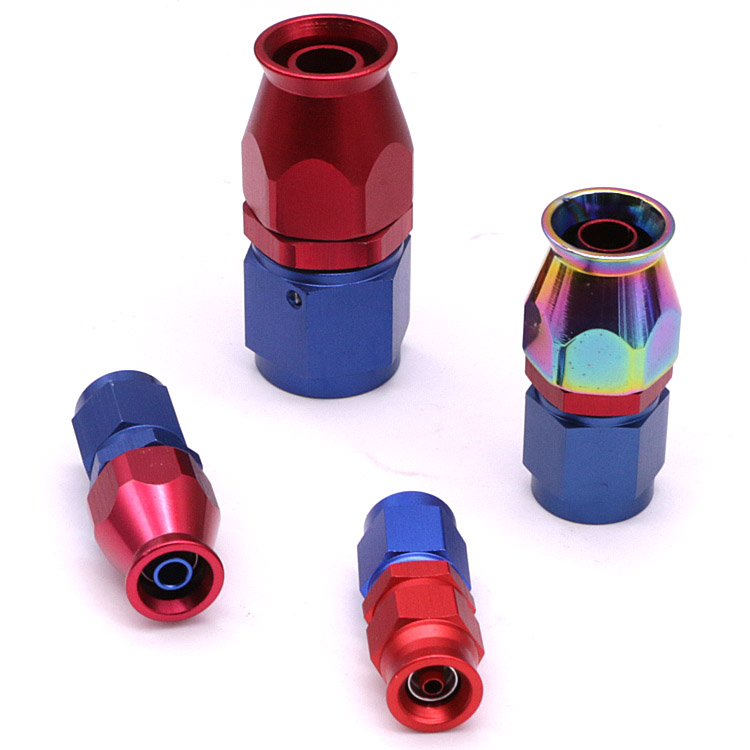
AN8 Straight PTFE Hose End Fitting
icon icon icon icon icon 2022-09-22

AN8 Straight PTFE Hose End Fitting for PTFE Fuel Line Fitting Adapter Black Blue Red

Upload 2D/3D drawings

Upload Your Files or Contact inquiry@vimetal.com.cn to Get Instant Quote (Please attach 2D CAD drawings and 3D CAD models in any format including STEP, IGES, DWG, PDF, STL, ZIP, etc.).

Upload files ( Max file size: 20MB )
+86 15099911516
loading