16 years one-stop China custom CNC machining parts factory

Hey there I’m VMT Sam!
With 25 years of CNC machining experience we are committed to helping clients overcome 10000 complex part-processing challenges all to contribute to a better life through intelligent manufacturing. Contact us now
 715 |
Published by VMT at Sep 14 2026 | Reading Time:About 4 minutes
715 |
Published by VMT at Sep 14 2026 | Reading Time:About 4 minutes


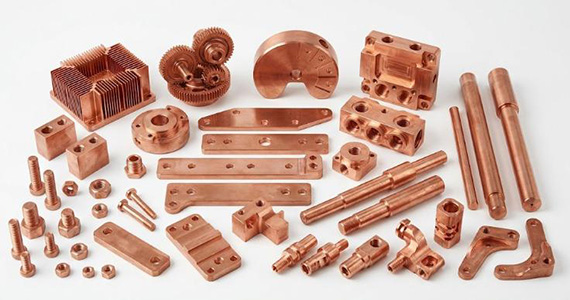
Excluding rare heavy metals such as tungsten, gold, and platinum, red copper (pure copper) stands out as the densest common metal used in CNC machining. With a density of 8.96 g/cm³ (0.323 lb/in³), red copper is denser than aluminum, carbon steel, stainless steel, brass, bronze, and nickel alloys.
While you may know red copper for its exceptional electrical/thermal conductivity and corrosion resistance, its density plays an equally critical role in performance. For example, its high density provides a large thermal capacity, offering an excellent thermal buffer for transient heat spikes in electronics. In horology and precision instruments, this density is harnessed for dynamic balancing and counterweights. Moreover, material density is indispensable when calculating blank weights for accurate CNC machining quotes, evaluating structural gravity loads, or designing load-bearing wall thickness.
Keep reading to discover how red copper density affects your engineering decisions, cost control, and design trade-offs. At the end, we share a case study detailing how our CNC machining factory used density to provide DFM feedback for a client's copper heat exchanger housing, and ultimately delivering heat exchanger housing with ±0.01 mm precision and a Ra 0.04 μm surface finish.
As a heavy metal with a density approximately 1.14 times that of carbon steel and 3.3 times that of aluminum, red copper (pure copper) is an ideal choice for applications requiring rigidity, weight stability, or a premium tactile feel. However, when weight reduction is a key design consideration, particularly for aerospace or portable device components, comparing its density against other metals can guide critical engineering trade-offs. Use the quick-reference table below to compare pure red copper against other engineering metals in both metric and imperial units.
| Metal | Density (g/cm³) | Density (lb/in³) | Quick Engineering Comparison |
| Red Copper ( C11000/ C10200) | 8.96 | 0.323 | Baseline |
| Magnesium Alloys | 1.74 | 0.063 | ~80% lighter than Red Copper |
| Aluminum | 2.70 | 0.098 | ~70% lighter than Red Copper |
| Titanium | 4.51 | 0.163 | ~50% lighter than Red Copper |
| Zinc Alloys | 7.14 | 0.258 | ~20% lighter than Red Copper |
| Tool Steel | 7.70 – 8.00 | 0.278 – 0.289 | ~12% lighter than Red Copper |
| Stainless Steel | 7.75 – 8.05 | 0.280 – 0.291 | ~11% lighter than Red Copper |
| Carbon Steel | 7.85 | 0.284 | ~12% lighter than Red Copper |
| Invar Alloy (Invar 36) | 8.05 | 0.291 | ~10% lighter (36% Ni-Fe low thermal expansion alloy) |
| Brass | 8.40 – 8.70 | 0.303 – 0.314 | Slightly lighter than Red Copper |
| Bronze | 8.70 – 8.90 | 0.314 – 0.321 | Nearly equal to Red Copper |
| Nickel Superalloys (Inconel 625/718) | 8.19 – 8.44 | 0.296 – 0.305 | ~6%-9% lighter than Red Copper (High-temp resistant) |
| Pure Nickel | 8.90 | 0.322 | Nearly equal to Red Copper |
| Tungsten | 19.25 | 0.695 | ~2.15× heavier than Red Copper |
| Gold | 19.32 | 0.698 | ~2.15× heavier than Red Copper |
| Platinum | 21.45 | 0.775 | ~2.39× heavier than Red Copper |
What are the Factors Influencing Red Copper Density?
While pure red copper (pure copper) has a standard benchmark density of 8.96 g/cm³ (0.323 lb/in³), real-world manufacturing conditions and material quality can cause subtle variations.
1.Material Purity and Supplier Quality Control
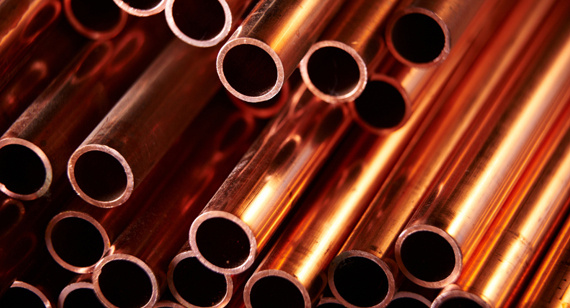
While standard red copper grades like C11000 (ETP) and C10200 (OFHC) share the same benchmark density of 8.96 g/cm³, raw material quality can vary between mill batches. Substandard copper bars containing high impurity levels or unverified recycled stock often fall short of this standard, leading to unexpected weight discrepancies and compromised thermal conductivity. To prevent material risks, always require a Mill Test Report (MTR/CoA) from your machining vendor to guarantee genuine, certified C11000 or C10200 stock.
2.Wrought vs. Cast Stock
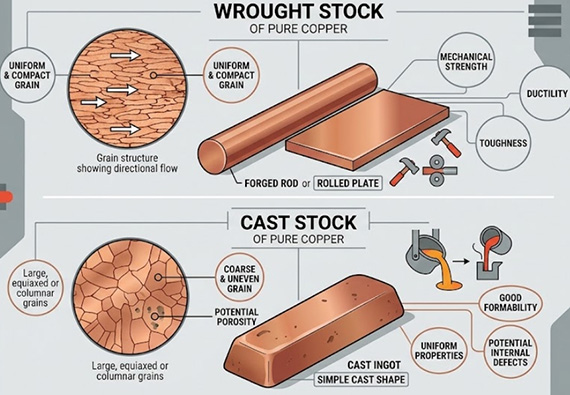
The internal structure of raw copper stock directly impacts its density. Wrought copper—which is hot-rolled, extruded, or forged into bars, removes internal voids to achieve full theoretical density (8.96 g/cm³). In contrast, as-cast copper components or foundry castings often suffer from micro-porosity and microscopic gas pockets during solidification, dropping the effective density down to 8.80–8.90 g/cm³.
3. Cold Working and Thermal Annealing
Plastic deformation from processes such as cold rolling, wire drawing, or heavy bending introduces dislocation densities and micro-strains into the crystal lattice. This internal strain causes a slight volume expansion, temporarily reducing the material's density by up to 0.1% to 0.3%. Thermal annealing (heat treatment) relieves these internal stresses, allowing the crystal structure to recrystallize and restore its nominal density.
4.Thermal Expansion at High Temperatures
Material density dynamically changes with temperature due to thermal expansion (ρ = m/V). As red copper is heated, its mass remains constant while its volume expands, causing density to drop. While red copper holds a steady density of 8.96 g/cm³ at room temperature (20°C / 68°F), elevated operating temperatures, such as 500°C in high-heat electronics or heat exchangers, reduce its functional density to approximately 8.72 g/cm³.
Red copper is priced directly by weight in the manufacturing industry. Machine shop engineers use material density to accurately calculate the weight of the raw stock (CNC blank), helping you evaluate the raw material cost portion of your custom CNC machining quote.
To estimate the raw material required for a custom copper component, engineers calculate the total volume of the initial raw block rather than just the finished 3D CAD model, factoring in necessary machining allowances. Therefore, the raw material portion of the actual quote will naturally be higher than the weight of your finished part alone.
If it's necessary to estimate the material requirement yourself, you can calculate a projection based on the maximum length, width, and height of your part design using the following formulas:
Metric Formula:
Imperial Formula:
Budget Control Tip: Fluctuating Copper Quote Validity
While density helps engineers provide an accurate upfront quote, volatile global commodity markets can quickly impact your actual purchase cost. Global copper market prices experienced a dramatic surge, rising roughly 15% to 25% within the first half of 2026 alone.
We recently worked with a client who approved a high-volume copper component quotation but delayed official purchase order issuing and payment for several months. During that waiting period, raw copper material costs skyrocketed across the market. Because machine shops purchase fresh raw stock only after order confirmation, the original quote could no longer cover the raw material expenses, requiring an updated price adjustment.
Tips: When planning a production run for red copper parts, lock in your quotation and issue payment promptly. Delaying your order by months exposes your project to market price spikes and unexpected budget increases.
Beyond simple material weight calculations, the high density of red copper (8.96 g/cm³) plays an important role in physical performance, mechanical stability, and structural design. Here is how you can leverage its mass per unit volume across critical applications:
1. Thermal Management and Heat Sinks: High Volumetric Heat Capacity
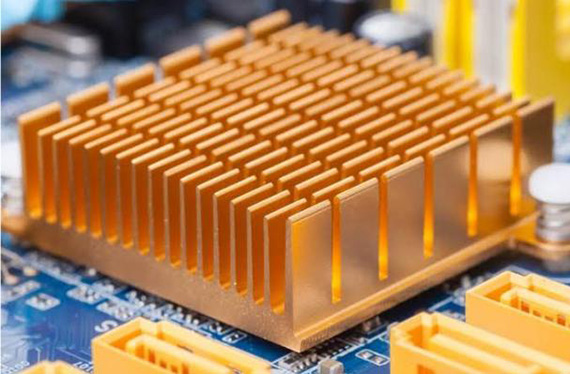
In high-power microelectronics like CPU/GPU cooling modules, transient heat spikes require rapid thermal absorption before dissipation occurs. Because heat capacity depends on mass (C = m · c), red copper's high density allows it to hold 3.3 times more mass per unit volume than aluminum. As a result, a compact copper cold plate acts as a superior "thermal buffer," absorbing high thermal loads instantly without expanding the component's physical footprint.
2. Precision Counterweights and Dynamic Balancing
In horology, aerospace gyroscopes, and high-precision instruments, components often require high mass concentrated in extremely tight spatial envelopes. Red copper offers an optimal combination of high density and good CNC machinability. You can utilize copper blocks and rings for static and dynamic counterweights, achieving exact mass balance without occupying excessive internal enclosure volume.
3. Structural Load and Mechanical Support Considerations
Because red copper is significantly heavy, you should account for gravity loads in both electrical and cooling assemblies to prevent structural deformation:
Electrical Engineering (Busbars and Transformer Windings): Large-scale red copper busbars used in power distribution cabinets carry substantial self-weight. Calculating the copper's mass via its density is essential for designing robust insulating supports, preventing long-term sagging or mechanical distortion under electromagnetic forces.
Electronics and Electronics Packaging: Heavy copper heat sinks mounted directly onto printed circuit boards (PCBs) can warp or stress the solder joints. Density analysis allows you to calculate the total downward force and design stiffeners or backplates to protect the circuit board.
Formulas to calculate both static gravity load and dynamic shock load using the material's density (8.96 g/cm3):
Static Downward Force (F_static):
Dynamic Transport Shock Load (F_dynamic):
During shipping or vibration tests, components often experience acceleration spikes (20G to 50G).
4. HVAC and Heat Exchanger Shells (DFM and Load Calculations)
In industrial chillers and condensers, dense copper tube bundles add massive dead load to the outer housing. Engineers must compute both the dry mass (Volume* 8.96 g/cm3) and the wet operating mass (copper + fluid media) to dictate shell wall thickness and structural reinforcement.
A common design mistake is underestimating the combined effect of high dead load and thermal expansion. If the outer housing wall is too thin, the downward gravitational sag of heavy copper tubes will stress the tube-sheet welds during thermal cycling, leading to potential leaks. To avoid over-thickening the entire shell and inflating costs, you may incorporate intermediate support baffles and localized reinforcement ribs to safely distribute the weight.
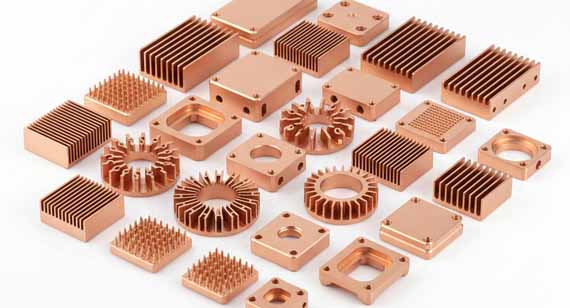
How we used density to provide DFM feedback for a client's copper heat exchanger housing, and delivered heat exchanger housings with ±0.01 mm precision and a Ra 0.04 μm surface finish.
A client brought us an initial CAD design for a heavy-duty red copper heat exchanger housing. The assembly was designed to enclose dense inner tube bundles under demanding thermal loads, requiring strict dimensional control and structural reliability. Knowing that red copper’s high density (8.96 g/cm³) creates substantial static weight once assembled, our engineering team performed a DFM (Design for Manufacturability) analysis prior to machining.
Using copper's nominal density, we calculated both the dry weight of the tube bundle assembly and its wet operating load. The analysis showed that the client's original housing wall thickness was too thin to resist gravitational sag and dynamic transport shock loads (calculated up to 30G). Left uncorrected, this downward load would place excessive stress on the tube-sheet solder joints, risking leaks during thermal cycling.
To fix this without unnecessarily driving up raw material costs, we provided targeted DFM feedback. Instead of increasing the overall shell wall thickness—which would significantly add to material weight and cost—we recommended adding localized stiffening ribs and strategic mounting features to distribute the load. We also specified certified, stress-relieved C11000 copper billets backed by Mill Test Reports (MTR) to ensure material stability during cutting.
Once the revised design was approved, we machined the housings on 5-axis CNC centers. To achieve the precision, our CNC team focused on three specific machining controls:
We used high-rake, polished carbide end mills with optimized chip breakers, keeping radial engagement light (10–15% stepover) to prevent the soft copper from galling, dragging, or building up on the cutting edge.
Because copper conducts heat rapidly, localized thermal expansion can cause dimensional drift during heavy cutting. We used high-pressure, flood-cooled emulsion directed at the tool tip to stabilize part temperature throughout the roughing and semi-finishing passes.
For the final finishing passes, we implemented high-spindle-speed, light-depth-of-cut passes (less than 0.05 mm) using PCD (Polycrystalline Diamond) tooling to eliminate vibration marks, holding ±0.01 mm tolerances while polishing the sealing surfaces down to Ra 0.04 μm, meeting all structural and sealing requirements.
Understanding the density of red copper (8.96 g/cm³ / 0.323 lb/in³) goes far beyond basic material identification, it is a critical tool for engineering optimization and cost management. From serving as a high-capacity thermal buffer in electronics to providing dynamic balance in precision mechanisms, red copper’s high mass per unit volume dictates key structural and thermal decisions. For your teams, accounting for density early in the DFM phase ensures accurate raw material budgeting, prevents costly structural failures like PCB warpage, and avoids order delays in volatile commodity markets. Looking for DFM optimization, precise raw material cost projections, or tight-tolerance machining down to ±0.01 mm? We are ready to support your next project, and upload your files today to receive an instant, professional CNC machining solution and quotation. [2D Drawings (PDF files), 3D Drawings (IGS/STP/STEP files)].
Send your 2D drawings, 3D CAD models, copper grade, critical tolerances, thermal requirements, surface-finish requirements, prototype quantity and production quantity. VMT will review manufacturability, material selection, machining strategy, inspection and quotation requirements.
All information and uploaded files are secure and confidential.
1 Tell us what you need
2 Get solution & quote
3 Approve production
Email: inquiry@vimetal.com.cn
1. Is C11000 or C10200 better for precision CNC copper machining?
Both C11000 (Electrolytic Tough Pitch) and C10200 (Oxygen-Free) share the same nominal density of 8.96 g/cm³ and high conductivity. However, C10200 OFHC copper is superior for ultra-high vacuum applications, high-temperature hydrogen brazing, and critical micro-machining due to its absence of oxygen-induced embrittlement. For general thermal components and electrical busbars, C11000 ETP copper is the most cost-effective choice.
2. Why is red copper more difficult to CNC machine than brass or aluminum?
Despite being softer than steel, red copper is notoriously ductile and sticky during machining. Its high density and thermal conductivity rapidly draw heat into the material, causing thermal expansion during cutting. Furthermore, copper tends to form long, gummy chips that can lead to built-up edge (BUE) on tools. Achieving tight tolerances (such as ±0.01 mm) requires sharp carbide or PCD diamond tools, high-pressure coolant, and strict chip load management.
3. Can red copper parts be electroplated or surface-treated without changing their dimensions?
Yes. Common surface treatments for CNC machined red copper include electroless nickel plating, silver plating, passivating, and clear anti-oxidation coating. Plating thickness typically ranges from 2 to 10 microns, protecting the dense copper surface against oxidation, tarnish, and galvanic corrosion without altering the tight tolerances of critical sealing surfaces.
4. How does copper material density affect 5-axis CNC machining setup and clamping?
Because red copper is extremely dense and heavy, unconsumed raw blocks exert high gravitational forces during multi-axis rotation. At the same time, soft pure copper is vulnerable to clamping deformation under excessive vise pressure. Machining high-density copper parts on 5-axis CNC centers requires specialized soft jaws, custom vacuum fixtures, or low-clamping-force workholding to prevent part distortion while holding rigid cut stability.
5. What tolerance can a professional machine shop hold on high-density red copper parts?
With proper thermal compensation and multi-pass precision finishing, a specialized CNC machine shop can achieve tolerances as tight as ±0.01 mm (±0.0004 in) on critical dimensions and a surface finish down to Ra 0.04 μm on precision sealing faces and heat exchanger housings.
6. What raw material certifications should I request when sourcing red copper CNC parts?
To ensure you receive high-purity copper meeting the 8.96 g/cm³ density and electrical conductivity standards, always request a Mill Test Report (MTR) or Certificate of Analysis (CoA) with your order. These documents verify the chemical composition, tensile strength, and material origin of the raw C11000/C10200 copper stock.
The technical information and manufacturing advice shared on the VMT website are for general guidance only. While we strive for accuracy, VMT does not guarantee that the processes, tolerances, or material properties mentioned are applicable to every specific project. Any reliance you place on such information is strictly at your own risk. It is the buyer's responsibility to provide definitive engineering specifications for any production orders. Final specifications and service terms shall be subject to the formal contract or quotation confirmed by both parties.


 +86 15099911516




 Read more