16 years one-stop China custom CNC machining parts factory

Hey there I’m VMT Sam!
With 25 years of CNC machining experience we are committed to helping clients overcome 10000 complex part-processing challenges all to contribute to a better life through intelligent manufacturing. Contact us now
 1090 |
Published by VMT at Jul 31 2026 | Reading Time:About 12 minutes
1090 |
Published by VMT at Jul 31 2026 | Reading Time:About 12 minutes


Imagine developing a cutting-edge product only to discover that its assembly process is fraught with inefficiencies, leading to increased production costs, extended timelines, and potential quality issues. This scenario is a common nightmare for manufacturers striving to bring innovative products to market swiftly and cost-effectively. The frustration of dealing with complex assembly processes can stifle innovation, delay product launches, and erode profit margins. However, there is a strategic solution that can transform this daunting challenge into a streamlined, cost-effective process: Design for Assembly (DFA).
By implementing assembly design principles, you can optimize the product designs to simplify assembly, reduce costs, and enhance overall product quality. This comprehensive guide explains DFA — the design for assembly rules behind it, and how thoughtful design can revolutionize the manufacturing process and drive success in today's competitive market.
Definition and Importance
DFA stands for Design for Assembly. Assembly design refers to the strategic planning and structuring of how individual parts and components are organized and integrated to form a complete product. It encompasses the arrangement, orientation, and connection methods of parts, ensuring that the final assembly is efficient, reliable, and cost-effective. As a critical aspect of product development, Design for Assembly (DFA) directly influences the ease of manufacturing, the quality of the final product, and overall production costs.
DFA vs DFM
DFM and DFA address different stages: DFM (Design for Manufacturing) targets dfm principles and the optimization of material selection and manufacturing process choice, while DFA focuses on making assembly faster, simpler, and more cost-effective.
DFA vs DFMA
DFMA, or Design for Manufacturing and Assembly, is the umbrella framework that combines DFM and DFA — applying dfa product construction and process planning together as a single, unified approach to product construction.
DFD (Design for Disassembly) targets easy, efficient disassembly for service, repair, and recycling. The core contrast: enabling easy disassembly often requires more parts and more detailed design work, while DFA works in the opposite direction — fewer assembly parts and simpler product construction dfa.
Advantages of Assembly Design in Efficient Manufacturing
Effective assembly design is integral to the manufacturing process, as it directly impacts production efficiency, cost, and product quality. By focusing on thoughtful assembly design, manufacturers can streamline their production lines, reduce waste, and improve the reliability of their products. Additionally, well-designed assemblies facilitate faster time-to-market, allowing companies to respond swiftly to market demands and competitive pressures.
Manual Assembly
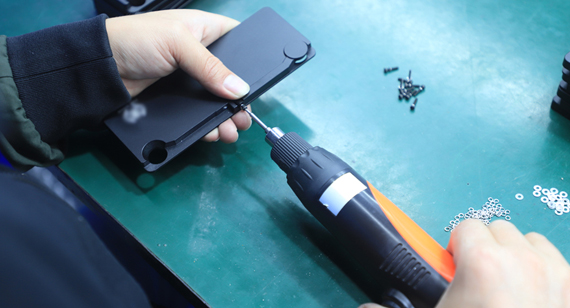
In the earliest days of industrial manufacturing, manual assembly was the obvious starting point. This method requires no automated machinery and suits small-batch production, custom products, or complex assemblies that demand high precision and high operator flexibility.
Early efforts to make manual assembly more efficient — and to save assembly time and cost — used basic measures such as reducing the number of parts to be joined and adding self-aligning features to components. However, because manual assembly is heavily dependent on human labor, ongoing labor costs rise quickly, especially in large-scale production runs. Without machine precision, defect rates tend to climb, and manual throughput is generally slower than automation — a constraint that weighs against time-to-market for your products.
Automated Assembly
As industrial manufacturing developed, automated assembly emerged, using robotics and machinery to perform the assembly process automatically. It fits large-batch production, repetitive work, and assemblies that demand high precision and consistency. The growth of automated assembly also placed new demands on design for automation — top-down assembly sequences, modular sub-assemblies, standardized parts for easy replacement, captive fasteners, and poka-yoke error-proofing.
Automated assembly offers clear advantages over manual methods in large-scale, high-throughput runs, but it has its own limits. Up-front costs are higher than for manual lines. Tasks are usually fixed, so any change in product or assembly logic calls for reprogramming or retooling — with none of the on-the-fly adaptability of a human operator. The equipment also needs regular maintenance, and that maintenance cost is part of your total manufacturing cost.
Balancing Manual and Automated Assembly
In many production environments, a hybrid approach that combines manual and automated assembly delivers the best of both methods. Using automation for repetitive, high-volume tasks while keeping complex or custom elements on manual lines allows this combined approach to optimize efficiency, lower cost, and retain operational flexibility for you.
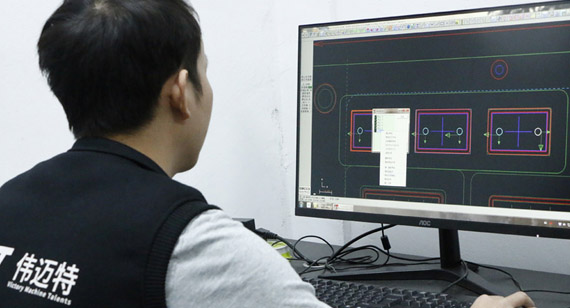
DFA (Design for Assembly) is the engineering mindset that puts ease of assembly at the center of product design. Design for Assembly software is the tool that helps you apply that mindset, simulating and validating assembly sequences, tolerance stacks, and part interactions before any metal is cut. By integrating assembly design principles and applying design for assembly software early in the product development cycle, you can raise the manufacturing efficiency and overall product performance of your project.
Helps Reduce Production Time
One of the main advantages of using DFA (Design for Assembly) and design for assembly software tools is shorter production time. By designing products with fewer parts and simpler assembly processes, you can significantly shorten the time required to assemble each unit. This reduction is achieved by minimizing the number of steps in the assembly process, eliminating unnecessary operations, and simplifying the handling and alignment of components. For your custom products that need to be assembled, faster production cycles and the ability to meet high demand more efficiently translate directly into project value.
Moreover, streamlined assembly processes lead to fewer bottlenecks and delays, helping you accelerate time-to-market. In automotive, drone, electronics, or consumer goods manufacturing — any industry where speed-to-production matters — the ability to produce and assemble parts quickly can give you a competitive advantage.
Helps Reduce Production Costs
DFA principles and design for assembly software use drive down production costs. By minimizing the number of parts, reducing labor requirements, and decreasing material usage, you lower overall project cost. Fewer parts mean lower material costs, reduced inventory requirements, and less complexity in the supply chain. Additionally, simplified assembly processes reduce the need for specialized tools and fixtures, further cutting down production expenses.
For CNC machining parts manufacturing, DFA translates to more efficient machining processes with lower material waste and faster cycle times, leading to cost savings and improved profitability.
Helps Reduce Material Usage and Waste
DFA principles and assembly guidance emphasize the efficient use of materials, which is particularly important in today's environmentally conscious manufacturing landscape. By designing products with fewer parts and optimizing their geometries, you significantly reduce material waste during both machining and assembly. This reduction not only lowers material costs but also contributes to sustainability goals by minimizing environmental impact.
In CNC machining, precise design and efficient toolpath planning enabled by Design for Assembly principles ensure that materials are used optimally, reducing scrap and rework — translating into both cost savings for your product and a real environmental contribution.
Helps Improve Product Reliability
Reliability is a key factor in product performance and customer satisfaction. DFA enhances product reliability by simplifying assembly processes, ensuring that components fit together correctly, and minimizing the potential for assembly errors. Fewer parts and simpler connections reduce the likelihood of mechanical failures and improve overall product integrity.
A reliable assembly process means components are consistently manufactured to precise specifications, enhancing their performance and longevity, and reducing long-term maintenance needs.
Helps Establish Automated Assembly
DFA is essential for establishing automated assembly processes, which are crucial for high-volume production and consistency in product quality. By designing products with design for automation in mind, you can develop assembly processes that are easily automated, reducing the reliance on manual labor and increasing production efficiency.
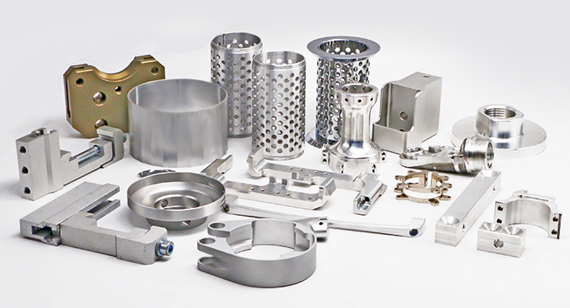
Assembly Design Principles, integral to dfa design for assembly, focus on simplifying product structures, minimizing part counts, and optimizing assembly processes. These principles enhance efficiency, reduce costs, and improve product reliability, making them essential for effective CNC machining parts for assembly and overall manufacturing excellence.
Understanding the critical role of assembly guidelines in DFA is just the beginning. To fully leverage these principles, it is essential to explore their foundational concepts, practical design for assembly examples, and the tangible benefits they bring to the manufacturing process. Let's walk through the core aspects of design for assembly and manufacturing, examining how each principle contributes to a more efficient, cost-effective, and high-quality assembly process.
1.Minimize the Number of Parts
One of the foundational principles of DFA is to minimize the total number of parts in a product. Each additional part introduces complexity, increases the likelihood of assembly errors, and adds to the overall production cost. By consolidating functions into single components or using multifunctional parts, manufacturers can streamline the assembly process, reduce material usage, and lower production costs.
Example. A common case is the plastic pill box or file-box lid. Instead of using separate metal pins or hinges to join the lid to the body, both pieces are molded as a single part with a living hinge. That removes the metal hardware, cuts assembly steps, and leaves no loose parts to lose.
Strategies for Minimizing Part Count
Benefits of Reducing Part Count
2.Optimize Assembly Operations and Processes
Optimizing assembly operations and processes involves designing products in a way that streamlines the assembly sequence, minimizes movement and handling, and reduces the need for specialized tools or fixtures. Efficient assembly operations enhance productivity, reduce labor costs, and improve overall manufacturing efficiency.
Example. Around the perimeter of an electronic device's enclosure, design for assembly examples calls for stepped guide ramps and elastic snap-fit features built into each half. The two halves can then be closed with a single vertical motion — no clamps, no screws — and the assembly sequence becomes self-aligning by construction.
Strategies for Optimizing Assembly Operations
Benefits of Optimizing Assembly Operations
3.Design for Modularity
Design for modularity involves creating products with interchangeable modules or components that can be easily assembled, disassembled, and reconfigured. Modular designs enhance flexibility, allowing for easier customization, upgrades, and maintenance.
Example. An industrial sensor stack built as three swappable modules — sealed sensing head, signal-conditioning PCB, and power-conditioning block, each CNC-machined to the same mounting pattern — lets you replace or upgrade one module without disturbing the others, and it doubles as a natural fit for dfa product construction rules.
Strategies for Designing Modular Products
Benefits of Modularity
4.Built-in Fasteners
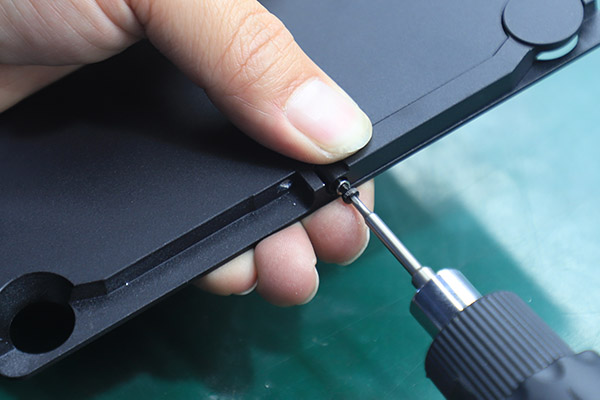
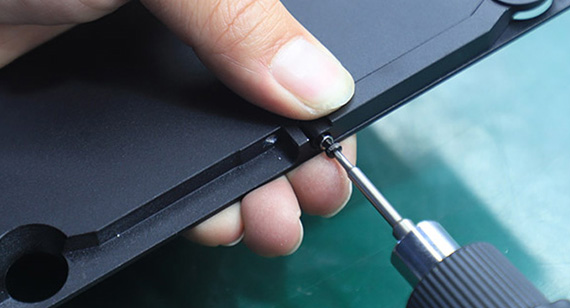
Built-in fasteners are integral design features that eliminate the need for separate fastening components, such as screws or bolts. By incorporating fasteners directly into the product design, manufacturers can simplify the assembly process, reduce part count, and enhance product aesthetics.
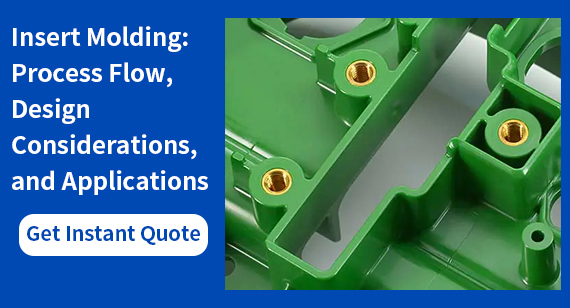
Example. A plastic enclosure with molded-in brass inserts turns the fastening points into the part itself, eliminating loose screws from the kit and reducing final product construction dfa to a single tool operation.
Strategies for Incorporating Built-in Fasteners
Benefits of Built-in Fasteners
5.Create Symmetrical Designs
Symmetrical designs are inherently easier to assemble because they reduce the complexity of part orientation and alignment. Symmetry ensures that components can be assembled in multiple orientations without the need for precise alignment, simplifying the assembly process and reducing the potential for errors.
Example. A symmetrical circular flange with bolt-hole patterns mirrored around the centerline can be mated to its counterpart in any rotational orientation — no clocking, no fixture — which removes one of the most frequent sources of small-part assembly error in dfa design for assembly lines.
Strategies for Creating Symmetrical Designs
Benefits of Symmetrical Designs
6.Use Error-Proofing (Poka-Yoke)
Error-proofing, also known as Poka-Yoke, involves designing products and assembly processes in a way that prevents errors and ensures correct assembly. By incorporating error-proofing techniques, manufacturers can enhance the reliability and quality of their products, reducing the need for rework and minimizing defects.
Example. Asymmetric keyways on a connector housing physically prevent the plug from entering in any orientation other than the correct one. The wrong pinout becomes impossible to assemble by accident — good assembly guidance with no extra operator training required.
Strategies for Error-Proofing
Benefits of Error-Proofing
7.Use Available Standardized Components
Utilizing standardized components, also known as Commercial Off-The-Shelf (COTS) parts, simplifies the assembly process and reduces costs. Standardized components are widely available, interchangeable, and often manufactured to high-quality standards, making them ideal for use in assembly design.
Example. Specifying a standard M3 cap screw and a standard M3 hex nut — both off-the-shelf from any local supplier — keeps the bill of materials in stock hardware, simplifies sourcing, and lets the assembler use any standard hex driver during line build.
Strategies for Using Standardized Components
Benefits of Using Standardized Components
8.Use Reasonable Tolerances
Reasonable tolerances ensure that parts fit together correctly without requiring excessively tight or loose specifications. By designing parts with appropriate tolerances, manufacturers can enhance the ease of assembly, reduce manufacturing costs, and improve product reliability.
Example. On a plastic mating part, ±0.1 mm on a locating boss is wide enough to clear normal fixture and machine variance while still letting the snap-fit engage reliably. Tighter than that drives up machining cost without adding real reliability for the mating interface.
Strategies for Setting Reasonable Tolerances
Benefits of Reasonable Tolerances
9.Other Considerations
Assembly Process Considerations
Beyond the core principles of DFA, it is essential to consider the overall assembly process to ensure that product designs align with manufacturing capabilities and production goals. This includes evaluating the workflow, identifying potential bottlenecks, and ensuring that assembly operations are optimized for efficiency and quality.
Ergonomics and Worker Safety
Designing assemblies with worker ergonomics and safety in mind can enhance productivity and reduce the risk of workplace injuries. Ergonomic designs that minimize the need for awkward movements or excessive force can improve worker comfort and efficiency, leading to a more productive and safer assembly environment.
Environmental Impact
Considering the environmental impact of assembly design is increasingly important in today's sustainable manufacturing landscape. Designing assemblies that minimize material waste, reduce energy consumption, and facilitate recycling and disposal can contribute to more environmentally responsible manufacturing practices.
Designing with Commercial Off-The-Shelf (COTS) parts is a strategic approach that leverages readily available, standardized components in the assembly design process. This method offers numerous advantages, including cost savings, reduced development time, and improved reliability. By incorporating COTS parts into product designs, manufacturers can enhance the efficiency of their assembly processes, streamline production, and focus on adding value through customization and innovation.
Benefits of Using COTS Parts
Strategies for Integrating COTS Parts
Considerations and Challenges
While designing with COTS parts offers numerous benefits, it also presents certain challenges that manufacturers must navigate to maximize the advantages:
Best Practices for Using COTS Parts
Conclusion
Designing with COTS parts is a powerful strategy that enhances the cost-effectiveness, efficiency, and reliability of assembly processes. By leveraging standardized components, manufacturers can streamline their production, reduce costs, and focus on innovation and customization. However, it is essential to carefully manage the integration of COTS parts, addressing challenges such as customization limitations and supply chain dependencies to fully realize the benefits of this approach. These principles also serve as practical dfma examples when paired with custom parts.
Using the same tools across multiple assemblies is a strategic approach that enhances efficiency, reduces costs, and simplifies the manufacturing process. This principle, a key component of dfa design for assembly, focuses on standardizing tooling and equipment to be compatible with a variety of assemblies. By using the same tools across different product lines and assembly processes, you can lift the efficiency of your product assembly and production.
Benefits of Using the Same Tools Across Assemblies
Strategies for Standardizing Tools
Implementation Steps
Challenges and Solutions
Conclusion
Using the same tools across assemblies is a fundamental principle of DFA that offers significant advantages in terms of cost savings, efficiency, and quality. By standardizing tooling and equipment, manufacturers can streamline their production processes, reduce inventory complexities, and enhance overall operational flexibility. While challenges such as initial investment and compatibility need to be addressed, the long-term benefits of standardized tooling make it a worthwhile strategy for manufacturers aiming to optimize their assembly processes.
Design for Assembly (DFA) is a methodology that focuses on designing products to simplify their assembly, reduce costs, and enhance quality. Implementing effective DFA strategies requires a deep understanding of both design principles and assembly processes. Here are six actionable tips that can make a significant difference in applying DFA principles, particularly in the context of CNC machining parts assembly and custom CNC machining services. These tips will help you optimize your designs, streamline your assembly processes, and achieve greater efficiency and cost-effectiveness.
1. Nature of the Product
Understanding the nature of the product is crucial for effective DFA. This involves a comprehensive analysis of the product's functionality, intended use, and operational environment. By deeply understanding these aspects, designers can make informed decisions about the assembly process and identify opportunities for simplification and optimization.
Strategies for Understanding Product Nature
Benefits of Understanding Product Nature
2. Anticipate Problems During Assembly or Repair
Proactively identifying and addressing potential problems in the assembly or repair process is a key aspect of DFA. Anticipating issues before they arise allows manufacturers to design solutions that prevent assembly errors, simplify maintenance, and enhance overall product reliability.
Strategies for Anticipating Problems
Benefits of Anticipating Problems
3. Build Prototypes to Test Assembly Operations and Processes
Building prototypes is an essential step in the DFA process, allowing manufacturers to test and validate assembly operations and processes before full-scale production. Prototyping provides valuable insights into the practicality of assembly designs and identifies areas for improvement.
Strategies for Effective Prototyping
Benefits of Building Prototypes
4. Use Off-the-Shelf Components (COTS Parts) in Your Design
Incorporating Commercial Off-The-Shelf (COTS) parts into product designs is a highly effective DFA strategy. These dfma examples are readily available, standardized components that can be integrated into various assemblies, reducing the need for custom parts and simplifying the assembly process.
Strategies for Using COTS Parts
Benefits of Using COTS Parts
5. Tolerances Should Be Realistic or Reasonable
Setting realistic and reasonable tolerances is crucial for effective DFA. Tolerances define the allowable variations in part dimensions, ensuring that components fit together correctly without requiring excessively tight specifications that can increase production costs and complicate assembly.
Strategies for Setting Realistic Tolerances
Benefits of Realistic Tolerances
6. Avoid Using Small or Large Components
Using components that are too small or too large can complicate the assembly process, increase the risk of errors, and impact the overall quality and reliability of the product. Avoiding overly small or large components is a key DFA strategy that enhances the efficiency and simplicity of the assembly process.
Strategies for Avoiding Small or Large Components
Benefits of Avoiding Small or Large Components
Injection molding is a widely used manufacturing process that involves injecting molten material into a mold to form complex shapes and intricate details. In the context of assembly design, injection molding plays a crucial role in producing precise and durable components that are integral to various assemblies, including those in the energy industry. Effective assembly design for injection molding involves optimizing the design of molded parts to simplify the assembly process, reduce costs, and enhance product quality. This section explores the key aspects of injection molding assembly design, including mechanical fastening and snap-fit techniques, and how they contribute to efficient and reliable assemblies.
Mechanical Fastening
Overview of Mechanical Fastening in Injection Molding
Mechanical fastening involves the use of screws, bolts, rivets, and other hardware to secure components together. In injection molding assembly design, mechanical fasteners are often used to join molded parts, ensuring a strong and reliable connection. This method is widely used due to its versatility, ease of use, and ability to provide secure connections without the need for adhesives or other joining techniques.
Strategies for Effective Mechanical Fastening
Benefits of Mechanical Fastening
Applications in the Energy Industry
In the energy industry, mechanical fastening is commonly used to assemble components such as enclosures, housings, and structural elements. For example, in wind turbine assemblies, mechanical fasteners secure various parts of the turbine, ensuring that they remain firmly in place during operation and withstand the forces exerted by wind and mechanical stresses.
Snap-Fit
Overview of Snap-Fit Connections
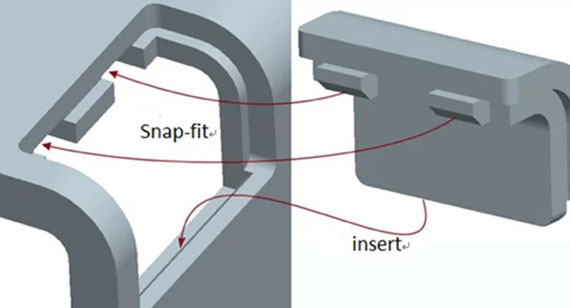
Snap-fit connections are a popular assembly design technique that allows parts to be joined together without the need for additional fasteners or adhesives. This method relies on the use of flexible features in molded parts that can be easily snapped into place, creating a secure and reliable connection. Snap-fit connections are particularly advantageous in injection molding due to their simplicity, cost-effectiveness, and ease of assembly.
Strategies for Effective Snap-Fit Design
Benefits of Snap-Fit Connections
Applications in the Energy Industry
Snap-fit connections are widely used in the energy industry for assembling components such as enclosures, panels, and housings. For instance, in solar panel assemblies, snap-fit connections secure the panel frames together, ensuring that they remain firmly in place while maintaining an attractive and streamlined appearance.
Conclusion
Effective assembly design for injection molding involves leveraging techniques such as mechanical fastening and snap-fit connections to create efficient, cost-effective, and reliable assemblies. By integrating these methods into the design process, manufacturers can simplify assembly operations, reduce costs, and enhance product quality. In the energy industry, where precision and reliability are paramount, optimized injection molding assembly design ensures that components are securely assembled, durable, and capable of withstanding demanding operational conditions. Embracing these assembly design principles not only improves manufacturing efficiency but also contributes to the overall success and sustainability of energy projects.
3D printing, also known as additive manufacturing, has revolutionized the prototyping and manufacturing landscape by enabling the rapid creation of complex and customized components. In the context of assembly design, 3D printing offers unique advantages, allowing manufacturers to design parts that are optimized for assembly, reduce material waste, and enhance overall production efficiency. However, designing for assembly in 3D printing requires adherence to specific principles to fully leverage the benefits of this technology. This section explores the key considerations and DFA tips that must be followed when designing parts for 3D-printed assemblies, ensuring that the components are both functional and easy to assemble.
3D Printing Makes Prototyping Easier and More Efficient
3D printing significantly enhances the rapid prototyping process, allowing manufacturers to create detailed and functional prototypes quickly and cost-effectively. This efficiency is particularly beneficial in the energy industry, where the development of complex assemblies requires extensive testing and iteration. By utilizing 3D printing, designers can produce prototypes that accurately represent the final product, enabling thorough evaluation and refinement before moving to full-scale production.
Advantages of 3D Printing in Assembly Design
Key DFA Tips for Designing Parts for 3D Printing Assemblies
1. Create the Components that Make Up Your Assembly
When designing assemblies for 3D printing, it is crucial to break down the product into its individual components. Each component should be designed to perform a specific function within the assembly, ensuring that they can be easily printed, handled, and integrated. This modular approach facilitates easier assembly and allows for more straightforward testing and iteration of each part.
2. When Designing in 3D CAD, Separate the Components
Using 3D CAD software, designers should ensure that each component is modeled as a separate entity. This separation allows for easier manipulation and assembly of parts, reducing the complexity of the design and enhancing the overall efficiency of the printing process. Additionally, separating components ensures that each part can be printed with the optimal orientation and supports, minimizing material usage and printing time.
3. Use Soluble Support Materials to Create 3D Printed Objects
In 3D printing, support materials are often required to stabilize overhangs and complex geometries during the printing process. Using soluble support materials, which can be easily dissolved after printing, simplifies the removal of supports and reduces the time and effort required for post-processing. This approach enhances the overall efficiency of the assembly process by ensuring that parts are clean and ready for immediate assembly.
4. Print Parts that Cannot Be Taken Apart to Reduce Friction
Designing parts that are printed as single, cohesive units can significantly reduce friction and the need for additional assembly steps. By eliminating the need to take apart and reassemble parts, manufacturers can streamline the assembly process, reduce the potential for assembly errors, and enhance the overall quality and durability of the product. This approach also minimizes the number of moving parts, contributing to more reliable and efficient assemblies.
5. Break Down the Assembly into Individual Parts that Can Be Printed Separately
While printing parts as single units can be beneficial, breaking down the assembly into individual, manageable parts can also enhance the overall efficiency and flexibility of the manufacturing process. By designing components that can be easily printed separately, manufacturers can optimize the printing process for each part, ensuring that each component meets the required specifications and performance standards. This modular approach also facilitates easier maintenance and replacement of individual parts, enhancing the overall longevity and reliability of the assembly.
Benefits of 3D Printing in Assembly Design
Applications in the Energy Industry
In the energy industry, 3D printing is used to create prototypes and final components for various applications, including wind turbines, solar panels, and energy storage systems. The ability to produce customized and complex parts through 3D printing enhances the efficiency and performance of energy systems, supporting the development of more sustainable and reliable energy solutions.
Conclusion
Designing for assembly in 3D printing involves strategic planning and adherence to specific DFA principles that optimize the efficiency and effectiveness of the manufacturing process. By creating and separating components, using soluble support materials, and designing parts for seamless integration, manufacturers can enhance the overall quality and reliability of their assemblies. In the energy industry, where precision and reliability are paramount, effective assembly design for 3D printing ensures that components are produced and assembled efficiently, supporting the development of advanced and sustainable energy systems. Embracing these DFA tips allows manufacturers to fully leverage the benefits of 3D printing, driving innovation and excellence in the rapidly evolving energy sector.
Embarking on the journey of Design for Assembly (DFA) can significantly transform your manufacturing processes, leading to enhanced efficiency, reduced costs, and improved product quality. At VMT, we specialize in providing comprehensive CNC machining services that incorporate DFA principles to optimize your assembly designs and processes. Whether you are a small-scale manufacturer or a large-scale production facility, our expertise in custom CNC machining, CNC prototype machining, and CNC machining services can help you achieve your assembly and manufacturing goals.
Why Choose VMT for DFA
Expertise in CNC Machining Parts Assembly
VMT boasts extensive experience in CNC machining parts assembly, understanding the intricate balance between design, manufacturing, and assembly. Our team of skilled engineers and machinists work closely with clients to integrate DFA principles into every stage of the product development cycle, ensuring that your designs are optimized for ease of assembly and cost-effectiveness.
Custom CNC Machining Solutions
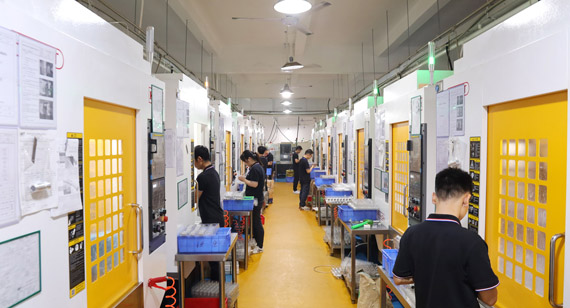
Every product is unique, and so are its assembly requirements. VMT offers custom CNC machining solutions tailored to your specific needs, ensuring that each component is designed for optimal assembly and performance. Our state-of-the-art CNC machining factory is equipped with advanced machinery and technology, enabling us to produce high-precision parts that meet the stringent demands of the energy industry and beyond.
CNC Prototype Machining
Prototyping is a critical step in the DFA process, allowing for the testing and validation of assembly designs before moving to full-scale production. VMT's CNC prototype machining services provide rapid and accurate prototypes, enabling you to evaluate and refine your designs quickly and efficiently. Our prototypes serve as a reliable foundation for identifying and addressing potential assembly issues, ensuring that your final product is both efficient and reliable.
Comprehensive CNC Machining Services
VMT offers a full spectrum of CNC machining services, from initial design consultation to final production and assembly support. Our comprehensive approach ensures that DFA principles are integrated seamlessly into your manufacturing process, enhancing overall efficiency and product quality. Whether you need assistance with design optimization, part production, or assembly process planning, VMT is your trusted partner in achieving manufacturing excellence.
How VMT Implements DFA Principles
Design Consultation and Optimization
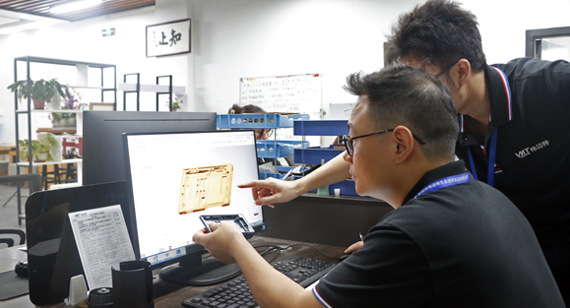
Our design experts collaborate with you to understand your product's assembly requirements and identify opportunities for simplification and optimization. Through detailed analysis and CAD modeling, we help refine your designs to reduce part counts, simplify assembly steps, and enhance overall product reliability.
Advanced CNC Machining Capabilities
VMT's CNC machining factory is equipped with the latest CNC machines and technology, enabling us to produce high-precision parts with tight tolerances. Our advanced machining capabilities ensure that each component is manufactured to exact specifications, facilitating seamless assembly and enhancing product quality.
Prototyping and Testing
Our CNC prototype machining services provide you with accurate and functional prototypes that mirror your final product. These prototypes allow for thorough testing and evaluation of assembly processes, enabling you to identify and resolve any issues before proceeding to mass production.
Assembly Support and Integration
VMT offers assembly support services, assisting you in integrating CNC machining parts into your final assemblies. Our expertise in assembly design ensures that your products are assembled efficiently and reliably, meeting the high standards required in the energy industry.
Benefits of Partnering with VMT for DFA
A commercial drone OEM came to VMT with a quadcopter frame assembly that took 38 minutes per unit, used 22 distinct parts, and required 14 different fasteners. Vibration-related field returns were running at 6%.
Our engineering team analyzed the assembly stack-up, mapped load paths under in-flight vibration, and ran tolerance stack calculations on the arm-to-hub joints. Three root causes for the assembly friction emerged: over-constrained mating surfaces, redundant fastener count, and a cable-routing bracket that had been retrofitted onto the original frame.
Applying DFA principles, we consolidated the four arm-to-hub brackets into two mirror-image CNC-machined 7075-T6 hubs that also serve as cable guides. We replaced the 14 fasteners with 6 standard M2.5 cap screws plus two integrated snap-fit clips. The cable-routing bracket was rebuilt as a co-molded living hinge that ships pre-attached to the hub. Functional integration in the hubs removed a separate vibration-damping pad — the geometry itself now absorbs the damping.
We CNC machined the hubs on our 5-axis machines, ran 10 prototype assembly trials to lock the design, and produced a pilot run of 1,000 units in 18 working days.
The customer accepted the full pilot run. Assembly time dropped from 38 to 14 minutes per unit. Part count dropped from 22 to 9. Field returns fell from 6% to under 1%. The customer placed a follow-on order based on the DFA redesign.
Design for Assembly (DFA) is a transformative methodology that drives efficiency, cost-effectiveness, and quality in the manufacturing process. By implementing the principles and strategies outlined in this comprehensive guide, manufacturers can optimize their product designs to simplify assembly, reduce part counts, minimize material usage, and enhance overall product reliability. Whether through minimizing the number of parts, optimizing assembly operations, designing for modularity, or leveraging standardized components and error-proofing techniques, DFA provides a strategic framework for improving assembly processes and achieving manufacturing excellence.
At VMT, we are committed to helping manufacturers implement DFA principles through our comprehensive CNC machining services, custom machining solutions, and advanced prototyping capabilities. By partnering with VMT, you gain access to a team of experts dedicated to optimizing your assembly designs and processes, ensuring that your products are manufactured to the highest standards of efficiency, reliability, and quality.
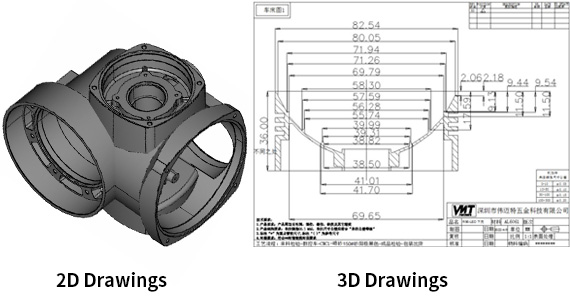
Send your assembly drawings, 3D models, BOM, tolerance requirements, materials, production quantity, and current assembly challenges. VMT will review part count, interfaces, fastening, tolerances, machining feasibility, and assembly risks before providing a practical solution and quotation.
All information and uploaded files are secure and confidential.
1 Tell us what you need
2 Get solution & quote
3 Approve production
Email: inquiry@vimetal.com.cn
Q: What are the principles of DfMA?
DfMA stands for Design for Manufacturing and Assembly, encompassing principles that simplify product designs to enhance both manufacturing and assembly processes. Key principles include minimizing part counts, standardizing components, simplifying assembly operations, designing for modularity, and incorporating error-proofing techniques to ensure ease of assembly and cost-effectiveness.
Q: What are the rules of DFMA?
The rules of DFMA (Design for Manufacturing and Assembly) include:
Q: What is the DFMA process?
The DFMA process involves the following steps:
Q: What are the design requirements for assembly lines?
Design requirements for assembly lines include:
Q: What are the main considerations for assembly design?
Main considerations for assembly design include:
Q: What is the DFM methodology?
The DFM (Design for Manufacturing) methodology involves designing products with the manufacturing process in mind, aiming to simplify production, reduce costs, and enhance manufacturability. Key aspects of DFM include:
The technical information and manufacturing advice shared on the VMT website are for general guidance only. While we strive for accuracy, VMT does not guarantee that the processes, tolerances, or material properties mentioned are applicable to every specific project. Any reliance you place on such information is strictly at your own risk. It is the buyer's responsibility to provide definitive engineering specifications for any production orders. Final specifications and service terms shall be subject to the formal contract or quotation confirmed by both parties.


 +86 15099911516




 Read more