16 years one-stop China custom CNC machining parts factory

Hey there I’m VMT Sam!
With 25 years of CNC machining experience we are committed to helping clients overcome 10000 complex part-processing challenges all to contribute to a better life through intelligent manufacturing. Contact us now
 434 |
Published by VMT at Dec 29 2025 | Reading Time:About 3 minutes
434 |
Published by VMT at Dec 29 2025 | Reading Time:About 3 minutes


Last month, when VMT CNC Machining Factory hosted a group of clients from the United States, the conversation became more lively than the product samples on the table. While looking at the parts and discussing technical details with our engineers and founder, one client suddenly asked how to start a CNC machining factory in China.That is how this article came to be. We have heard this question many times, and some other clients who visited us before also shared the same interest. So, If you are thinking about starting a CNC machining factory in China, you will probably have similar questions: What licenses are required? How strict are environmental rules? How do you handle power supply, customs, and hiring workers? These questions are not small. They are the real challenges every foreign investor must deal with when planning to manufacture in China. In this article, you will learn about these issues in a simple and practical way. From required permits and policies, the risks involved and how to avoid them, to popular regions for foreign investment, below you will find everything you need to know.
As China’s manufacturing industry keeps upgrading and global supply chains continue to shift, more foreign companies are looking at China for their CNC machining operations. If you work in precision metal parts, mechanical components, or mold making, you will find that China offers advantages that are hard to match anywhere else.
The first advantage is the supply chain. China has one of the most complete and efficient industrial supply chains in the world. Whether you need raw materials like aluminum, copper, or stainless steel, or services like heat treatment, surface finishing, or mold support, you can often get everything done very quickly. This means faster lead times, more stable production, and lower operating cost and lead the CNC machining businesses to stronger competitiveness and better profitability.
Another key advantage is China’s mature workforce. Skilled CNC operators and five-axis programmers are easy to find thanks to the large vocational education system.The result is that companies can build capable teams without long delays or high training cost.
China also actively encourages foreign investment in advanced manufacturing. With the removal of most foreign investment restrictions, foreign-owned companies now enjoy nearly the same conditions as domestic firms. Some high-tech industrial parks even provide extra policy support.
Because of these advantages, China has become one of the best locations in the world for foreign companies to build CNC machining factories.
Starting a CNC machining factory in China is achievable and highly profitable, but only if you build the right strategy from the start. Successful foreign-owned CNC factories in China usually focus on a few key foundations:
China remains one of the most advantageous locations in the world for CNC manufacturing. With the right structure, compliance roadmap, and operational planning, foreign investors can scale quickly and run a long-term, stable CNC machining business.
When setting up a CNC machining factory in China, foreign investors technically have four legal structures to choose from: a Joint Venture (JV), a Foreign-Invested Partnership (FIPE), a Representative Office (RO), and a Wholly Foreign-Owned Enterprise (WFOE).
However, only one of these works for real CNC manufacturing, that is , the WFOE.
It cannot manufacture, issue invoices, or generate revenue, so it is completely unsuitable for any CNC factory.
It requires a Chinese partner and forces you to share control, technology, and profits, which is why most foreign CNC manufacturers avoid it.
Because general partners face unlimited liability and the structure is rarely used for manufacturing, it’s not a practical option for a CNC factory.
A WFOE is the only structure that gives foreign investors 100% ownership, full operational and financial control, legal rights to manufacture and hire, import/export capability, and strong protection for technical IP.
Because CNC machining involves sensitive designs, advanced processes, and strict quality control, full control is essential. This is why a WFOE is the only structure that truly fits a CNC manufacturing business. Let’s drive in how to build a WFOE in China.
Step 1: Define Your Business Scope
In China, a company's business scope must be clearly stated on its business license, which determines what your company can and cannot do.
Common scope descriptions for CNC machining factories include: Machining of mechanical parts; CNC machining; Metal product manufacturing; Mold manufacturing; Precision machining, ect.
The clearer the business scope, the easier it will be to obtain the necessary production licenses later.
Step 2: Prepare the Required Documentation
Foreign investors must provide:
These documents must be notarized and legalized so they can be used in China.
Step 3: Secure a Factory Address
To register a manufacturing WFOE, you need a real physical factory location, typically located in an industrial zone. Authorities may perform site inspections. Office-only addresses are not acceptable for CNC manufacturing.
Step 4: Apply for the Business License (AMR)
You must submit an application to the State Administration for Market Regulation (AMR). Upon approval, you will receive: a business license; company seal; legal representative's seal; and financial seal. These seals are legally valid in China and are required for almost all contracts and transactions.
Step 5: Open Bank Accounts
You will need: a basic RMB account and a foreign investment account (for attracting foreign investment). These accounts can meet your operating capital needs and legally transfer profits when necessary.
Step 6: Register with Tax and Customs Authorities
When you start a CNC machining plant, you often need to buy advanced devices for your factory (such as DMG MORI, Mazak, Haas, or FANUC). And later, your factory also produce parts that may be sold domestically or exported overseas. For all these, tax and customs registration is a required step.
You must complete:
In some industrial zones such as Shanghai Free Trade Zone, Qianhai Shenzhen-Hong Kong Cooperation Zone, Suzhou Industrial Park, local governments can provide simplified customs procedures or preferential policies for foreign manufacturers.
Unlike trading companies, a CNC machining plant requires several industry-specific approvals, especially related to environmental protection and safety.
Environmental Approval & Pollutant Discharge Permit
CNC machining naturally generates cutting fluid, waste oil, metal chips, and noise. Because of this, China enforces strict environmental compliance for all machining factories. In most cases, you will need to complete the following:
Depending on the size of your factory and the amount of equipment you install, you may need to submit:a full EIA report,an EIA form, or an online EIA filing.Factories with larger floor space or heavier machining capacity are usually required to provide a full report.
Before you can officially operate, you must install environmental facilities such as: metal chip collection systems, cutting fluid storage and recovery systems, waste oil collection and disposal systems, and noise reduction measures.
Once these systems are installed, the local environmental bureau will conduct on-site inspections to verify compliance.
If your production generates wastewater, exhaust, or other regulated pollutants, you must apply for a pollutant discharge permit. Even if your plant claims “zero discharge,” you still need to complete official filing and acceptance procedures.
Environmental compliance is one of the most common bottlenecks foreign investors face, so planning for this early will save you time and avoid approval delays.
Before starting operations, your CNC factory must pass:
While China offers many industrial zones, Shanghai and Shenzhen are among the most popular destinations for foreign-owned CNC machining factories.
Shanghai: Advanced Manufacturing and Strong Industrial Planning

Shanghai is one of China’s strongest hubs for high-tech and precision manufacturing. It’s an ideal location for CNC machining factories serving industries such as semiconductors, EV components, robotics, medical equipment, and aerospace. The city’s advanced supply chain and strict quality ecosystem allow machining companies to grow while maintaining extremely high process reliability.
Shanghai applies tighter rules on technology import and process security. If your machining operations rely on high-end software, advanced materials, or technologies on export-control lists, you may need additional approvals before installation or production can begin.
Shanghai’s key industrial zones, such as Pudong (Zhangjiang), Lingang Free Trade Zone, and the Jiading manufacturing base. They offer targeted incentives and support for precision manufacturers. For up-to-date policy guidance or general business questions, you can contact the Shanghai government hotline at +86- 21 -12345.
Shenzhen: Fast Approval and High-Tech Ecosystem

Shenzhen’s manufacturing base is unmatched when it comes to speed, innovation, and access to cutting-edge technology. This makes it an excellent location for CNC machining factories that serve industries such as electronics, robotics, drones, communication devices, and consumer tech, where rapid iteration and short lead times are critical.
The city is also known for its strict environmental enforcement, strong intellectual property protection system, and fully digitalized government services, which can significantly simplify compliance and daily operations. In addition, Shenzhen offers the “High-Tech Enterprise” certification program, which can provide meaningful tax benefits to companies that meet R&D and technology criteria.
For policy guidance, compliance questions, or general business assistance, foreign investors can contact the Shenzhen government hotline at +86-755-12345.
CNC machining is a highly competitive field in China actually, and your real opportunity may lie in high-precision, high-value sectors where quality matters more than cost. Clients in industries such as EV, aerospace, medical devices, industrial automation, and robotics care deeply about tight tolerances, reliable supply, consistent quality, and fully documented processes. These customers are also willing to pay premium pricing for suppliers who can meet their requirements.
Because of this, building a solid quality management system is essential.
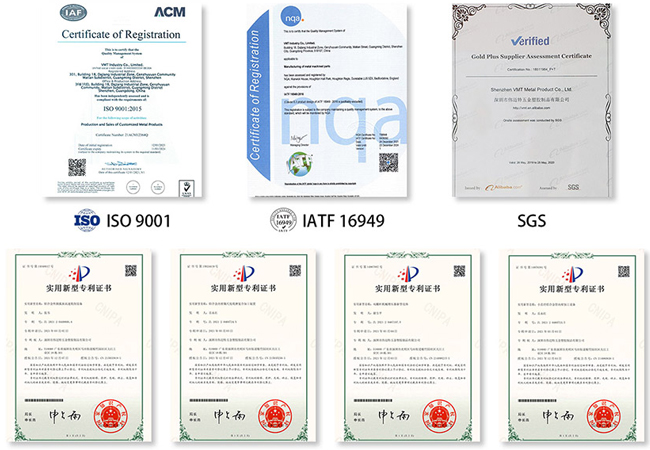
Most international customers expect machining suppliers to hold recognized certifications. Common ones include ISO 9001 for general quality management, ISO 14001 for environmental management, AS9100 for aerospace, ISO 13485 for medical devices, and IATF 16949 for the automotive industry. These certifications take time and investment, but they greatly improve trust and can be the deciding factor when competing for global projects.
How well you run your plant is what decides whether the business thrives. Foreign-owned CNC machining factories in China must focus on several operational areas to stay competitive.
Many manufacturers find suppliers through online platforms, industrial clusters, or local trade fairs. When you build stable long-term relationships, you gain faster lead times, more flexible production, and a more predictable cost structure.
Modern CNC machining factories benefit greatly from digital tools. MES systems, ERP software, automated scheduling, and production dashboards help factories improve throughput and reduce human error. With better data and more efficient workflows, factories can implement lean manufacturing practices and consistently improve quality and profitability.
A CNC machining factory is ultimately built on people. Hiring carefully and investing in ongoing training is one of the most critical operational steps when building a CNC machining factory in China.
China has its deep talent pool of CNC operators, CAM programmers, and machining technicians, supported by a nationwide vocational school system. You can recruit machinists or other talents through several practical channels, including major job platforms such as “Zhaopin.com” and “Boss Zhipin”, partnerships with vocational and technical colleges, or even local WeChat job mini-programs such as “SZbendibao.com” and other city-based hiring apps.
Even though China is one of the best locations in the world for CNC machining, foreign investors must understand several real risks in China manufacturing compliance. Knowing these early can save you time, money, and operational headaches.
The most common risk is environmental compliance for a CNC machining factory. CNC machining generates cutting fluid, oil mist, metal chips, and wastewater. This means you must complete environmental filing and install waste treatment systems before operation. If environmental permits are handled too late or do not meet local emission standards, authorities can stop renovations or delay production. For general requirements and updates, the Ministry of Ecology and Environment (mee.gov.cn) publishes official guidance.
Another frequent risk is electricity capacity for CNC workshops. CNC machines require stable three-phase power and sometimes very high load. Older industrial parks or small workshops may not have enough transformer capacity. Many foreign investors secure a site and install machines only to discover they must wait weeks or months for a power upgrade. Always confirm power availability in advance when planning a CNC machining factory in China.
Workplace safety is also a key part of manufacturing safety compliance in China. You must implement operator training, safe chemical storage, fire protection systems, and routine equipment inspections. Non-compliance can lead to fines or temporary shutdowns. Local safety bureaus enforce rules based on national work safety standards and publish clear operational requirements.
Foreign investment oversight is another factor. If you process parts related to aerospace, high precision, or dual-use technologies, additional review may apply. Investors should check the Foreign Investment Negative List on the NDRC website (ndrc.gov.cn) to confirm whether extra approvals are required.
Finally, intellectual property protection in China remains a concern in CNC machining. Your CAD models, CAM programs, and process parameters are extremely valuable technical assets. Although China’s IP enforcement has improved significantly, you should still protect your data using access controls, encrypted storage, version control, and employee NDAs. These internal controls reduce the risk far more than relying on external legal enforcement alone.
Building a CNC machining factory in China is not easy, but it can be extremely rewarding. China’s supply chain, talent pool, and policies create a manufacturing environment that is hard to beat. Success, however, requires more than choosing a good location, you must handle legal structure, compliance, and operations properly from the start.With the right strategy and execution, a CNC machining factory in China can become a powerful engine for global growth, delivering consistent quality, high productivity, and strong profitability for years to come.
Can foreigners open factories in China?
Yes. Foreigners can legally open factories in China through structures such as Wholly Foreign-Owned Enterprises (WFOE), joint ventures, or partnerships. With proper licensing, registered capital, an approved business scope, and environmental approvals, investors can operate manufacturing facilities and export globally. From a business perspective, China offers strong supply chains, skilled labor, and mature logistics — key advantages for CNC machining and mass production.
Which country is best suited for CNC machining?
China remains one of the most competitive and capable countries for CNC machining thanks to advanced equipment, experienced technicians, fast lead times, and cost-effective production. However, the “best” country depends on your priorities:
Customers looking for balanced quality, price, and speed often choose China as their primary CNC manufacturing base.
How much does it cost to start a business in China?
Startup costs vary widely by city, industry, and factory size. Typical expenses include company registration, legal fees, facility rental, machines, utilities, staff hiring, and compliance approvals. For a small CNC shop, initial investment may start around $50,000–$200,000, while larger factories can require much more. Careful planning, phased investment, and choosing the right industrial zone help control risk and cost.
Which country has the lowest production costs?
China, Vietnam, India, and parts of Southeast Asia generally offer the lowest manufacturing costs. China leads due to its supply chain depth, tooling capabilities, and automation. Although labor in some regions may be cheaper, China’s efficiency and industrial ecosystem often make overall production costs lower — especially for CNC machining, casting, and assembly projects.
Can US citizens start businesses in China?
Yes. US citizens can legally establish businesses in China under the same foreign-investment frameworks as other nationalities. The key is selecting the right structure (often WFOE), following regulatory processes, and working with reliable local advisors. With proper approvals, US investors can own and operate manufacturing companies, hire staff, and sell worldwide.
Is it cheaper to open a CNC machining factory in China or in the United States?
In most cases, it is cheaper to open and operate a CNC machining factory in China. Equipment costs, labor, tooling, and supply-chain support are generally more affordable and easier to scale. However, the US offers benefits such as proximity to customers, stronger IP protections, and fewer language barriers. Many companies choose a hybrid model: produce in China and keep engineering or prototyping closer to home.
Is it difficult to start a business in China?
It is manageable but process-driven. Company registration, tax setup, banking, environmental approvals, and licensing require careful documentation and compliance. Working with professional local agencies and advisors reduces risk and speeds approval. Once established, China offers a stable environment for scaling CNC machining and manufacturing operations.


 +86 15099911516




 Read more