16 years one-stop China custom CNC machining parts factory

Hey there I’m VMT Sam!
With 25 years of CNC machining experience we are committed to helping clients overcome 10000 complex part-processing challenges all to contribute to a better life through intelligent manufacturing. Contact us now
 0 |
Published by VMT at Oct 12 2026 | Reading Time:About 4 minutes
0 |
Published by VMT at Oct 12 2026 | Reading Time:About 4 minutes


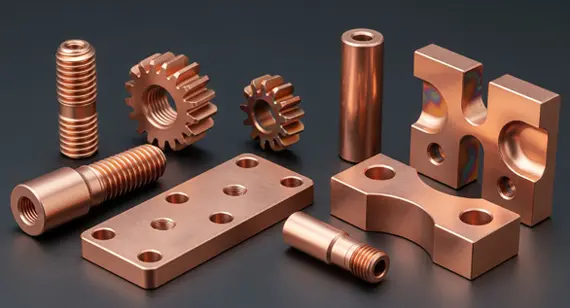
For free-cutting brass C36000, many industrial hardware components can be manufactured quickly and cost-effectively using CNC machining, yet it is unsuitable for applications requiring high electrical conductivity, such as various connectors. Pure copper (C11000/C10200) is indeed the most conductive metal, but because it is too soft, it is difficult to machine into dimensionally stable parts with complex structures. This is where free-machining tellurium copper C14500 serves as a practical CNC machining material option.
Now, Let's explore the key properties of tellurium copper C14500, its advantages over pure copper and free-cutting C36000 brass, practical design and cost saving tips of C14500 uses, and its ideal applications, helping you determine whether C14500 is the right fit for your CNC machined parts project.
At the end of this article, we will also share a case study: When a client inquired whether pure copper C11000 was suitable for their project, we recommended switching to tellurium copper C14500. By CNC machining current connectors for new energy vehicle charging equipment using C14500, we achieved a tight tolerance of ±0.01 mm and a 99.8% yield rate, and this switch is estimated to shorten the single-part machining cycle by 65% and reduce overall production costs by 32%.
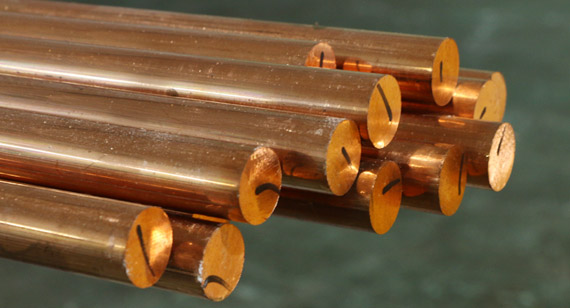
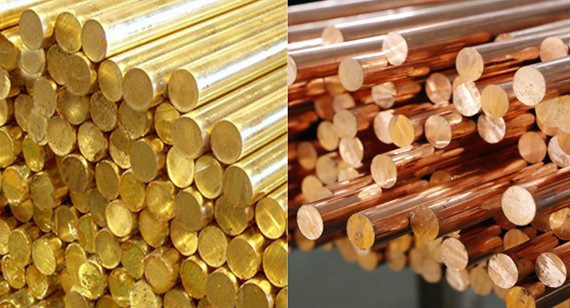
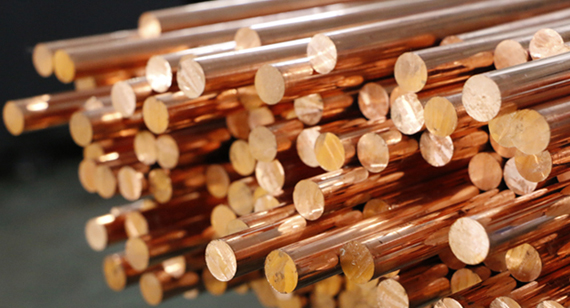
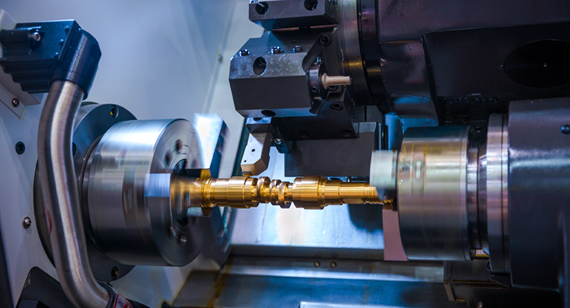
From the appearance of C14500, you can see it almost the same as pure copper.
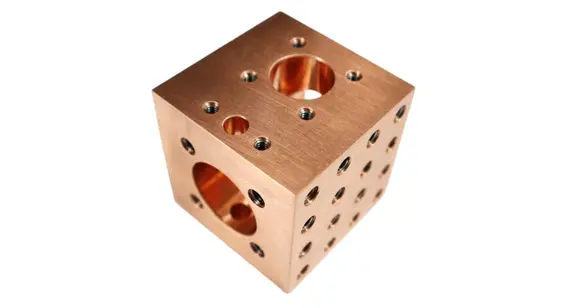
This is because it has 99.5% to 99.9% Copper (Cu), 0.4% to 0.7% Tellurium (Te), and a minor addition of Phosphorus (0.004% to 0.012%) for deoxidation, almost closely to the composition of pure copper. While its composition remains remarkably close to pure copper, the inclusion of tellurium creates fine, dispersed intermetallic particles throughout the copper matrix. These particles act as built-in chip breakers during cutting without compromising the base metal's core electrical and thermal performance.
Here, let's see the key physical and mechanical properties of tellurium copper C14500:
Key Physical and Mechanical Properties of Tellurium Copper C14500
| Property | Metric Units | Imperial Units | Notes |
| Machinability Rating | 85%–90% | 85%-90% | Free-cutting (vs. Pure Copper at 20%, Brass C36000 at 100%) |
| Electrical Conductivity | 90%-94% IACS | 90%-94% IACS | 52.2-54.5 MS/m (Retains ~90%+ of pure copper’s conductivity) |
| Thermal Conductivity | 355 W/m·K | 205 Btu/ft²/(hr·°F/ft) | High performance for heat dissipation |
| Density | 8.94 g/cm³ | 0.323 lb/in³ | Similar to pure copper |
| Melting Point | 1,051°C-1,080°C | 1,924°F-1,976°F | High thermal stability |
| Tensile Strength | 260-400 MPa | 38-58 ksi | Varies depending on temper (e.g., H02 Half-Hard) |
| Yield Strength | 200-350 MPa | 29-51 ksi | Provides good dimensional stability |
| Hardness | 50-65 HRB | 50-65 HRB | Rockwell B scale |
The defining advantage of C14500 is its exceptional machinability (85%–90%). Unlike pure copper, which forms long, ductile, continuous ribbon chips that tangle around tools, C14500 breaks chips into small, brittle fragments. This avoids tool clogging, reduces cutting forces, and allows high-speed CNC machining with excellent surface finish and tight dimensional control.
In terms of weldability and joining, C14500 responds well to gas-shielded arc welding (GMAW/GTAW), butt welding, brazing, and soldering. However, due to its tellurium content and high thermal conductivity, it is not recommended for spot welding, seam welding, or shielded metal arc welding (SMAW/stick welding).
Example:
Consider this scenario: CNC machining a High-Power Plasma Cutting Nozzle.
These nozzles feature internal stepped cooling channels, deep micro-bores, and fine M4/M6 internal threads.
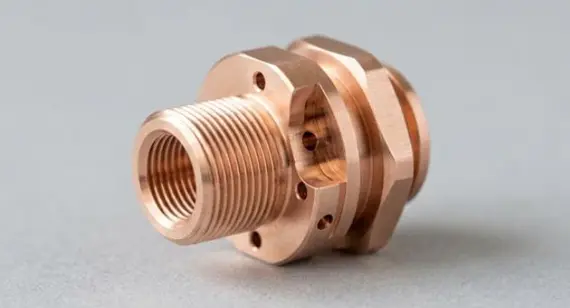
When machining pure copper, its high ductility creates long, continuous ribbon chips that wrap around high-speed boring tools. This results in frequent drill bit breakage, internal thread galling, and surface roughness worse than Ra 3.2 µm. Scrap rates often exceed 15%–20%.
Avantages:
Swapping to Tellurium Copper C14500 addresses these processing issues:
Example:
Free-cutting brass C36000 is widely used for fast, low-cost machining. However, it falls short when electrical load enters the uses.
Take an EV High-Voltage Power Terminal as the example. Brass C36000 machines easily, but its low electrical conductivity (26% IACS) creates significant electrical resistance. Under high-current loads, a brass terminal can experience excessive heat generation, leading to temperature rises, creating serious safety risks for the charging assembly.
Avantages:
C14500 offers a balanced option for high-power applications requiring both conductivity and machinability:
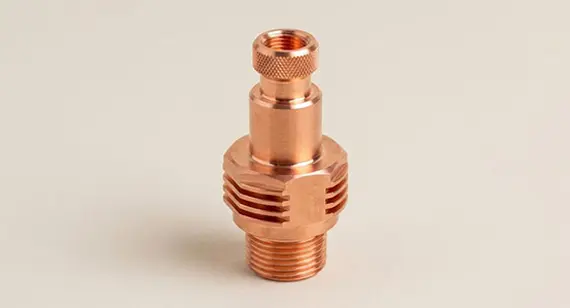
Thanks to its unique balance of free-machining efficiency, high conductivity, and dimensional stability, tellurium copper C14500 is the ideal material choice for precision CNC machined parts across several demanding uses:
Thanks to its exceptional electrical conductivity and superior machinability, C14500 tellurium copper is an ideal material for charging pins, plasma nozzles, and high-frequency connectors. However, to maintain performance while avoiding machining errors and keeping costs under control, you may want to consider the following recommendations during design and material selection:
1. Avoid Ultra-Thin Walls (Recommended Wall Thickness > 0.8 mm)
Although C14500 is harder than pure copper, copper alloys generally have a lower modulus of elasticity, around 115 GPa, which is roughly 60 percent that of steel, resulting in limited overall rigidity. When machining thin sleeves or housings under 0.5 mm, elastic deformation easily occurs under clamping or cutting forces, leading to out-of-spec dimensions or poor roundness after unclamping.
Therefore, keeping the wall thickness above 0.8 mm is recommended when designing C14500 components. For project strictly demands a thinner wall, a professional machine shop can still handle it. They typically use split soft jaws or light finish passes to control deformation, though these extra steps will naturally increase machine time and quoted costs.
2. Limit Deep Micro-Holes to Reduce Manufacturing Costs
During deep-hole drilling, C14500 can work-harden under tool pressure. Designing internal micro-bores with length-to-diameter ratios exceeding 5 (L/D > 5) increases the risk of tap breakage during internal threading. As a result, machine shops often raise their production quotes to offset yield risks.
To keep manufacturing costs down, you can add relief chamfers at hole entrances in your 3D models to simplify thread execution, or simply keep internal micro-hole depths moderate (L/D <= 5).
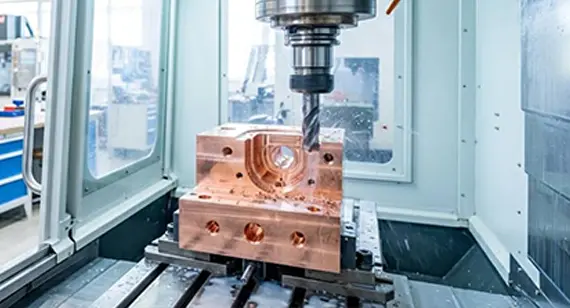
3. Evaluate Whether C14500 Is Truly Necessary
Raw C14500 carries a price premium over standard brass and basic pure copper, even though its CNC machining cost remains far more economical than pure copper.
However, for a part serves purely as a mechanical fastener, spacer, or low-voltage contact where conductivity demands are low (less than 30 percent IACS is acceptable), specifying C36000 brass will lower overall material and processing costs.
Additionally, for simple shapes like flat busbars without tight tolerance requirements, choosing stamped pure copper parts is a much more cost-effective option.
4. Vet Supplier Capabilities Carefully
Post-processing offers a great example of supplier expertise: C14500 plates exceptionally well with silver, gold, or nickel, but components must undergo thorough ultrasonic degreasing and cleaning after machining to prevent tellurium residue and cutting fluid from clogging blind holes.
When auditing potential suppliers, It is recommended to verify whether they understand these specific material nuances and possess the appropriate equipment in-house.
Optimizing EV Charging Connectors with C14500 to Achieve a 65% Speed Increase and 32% Cost Reduction
A client in the new energy vehicle industry recently contacted us to inquire whether pure copper C11000 was suitable for CNC machining high-current connectors used in their EV charging equipment.
The part design required tight mechanical tolerances alongside high electrical conductivity. While C11000 offers excellent conductivity, pure copper is relatively soft and lacks sufficient rigidity. We advised the client that using pure copper would likely result in severe tool chatter, long gummy ribbon chips wrapping around the spindle, frequent micro-drill breakage in deep holes, and heavy edge burrs requiring labor-intensive secondary deburring, making it difficult to achieve a tight tolerance of ±0.01 mm and an Ra 0.8 surface finish.
After evaluating the part geometry and working conditions, our engineering team recommended C14500 tellurium copper alloy. Although its composition only slightly modifies pure copper by adding a small amount of tellurium, C14500 retains over 90 percent IACS electrical conductivity while introducing tellurium particles as internal chip breakers. This drastically improves machinability, turning it into a free-machining copper alloy. Recognizing that tellurium copper was indeed more suitable, the client adopted our recommendation. During subsequent machining, our CNC operators were able to set the spindle speed to 3,500 RPM and optimize feed rates to take full advantage of the material's free-cutting properties, without needing expensive carbide tooling or running slow, overly cautious passes as required for pure copper.
During production, cutting chips broke cleanly into small, brittle fragments that flushed out easily with standard coolant, preventing deep-hole clogging and surface scratching. This smooth chip removal minimized tool deflection, allowing us to achieve an Ra 0.8 surface finish straight off the machine without manual deburring and consistently hold a tight tolerance of ±0.01 mm across volume production.
Ultimately, this batch achieved a 99.8 percent yield rate. Compared to machining pure copper, the single-part machining cycle was estimated to be shortened by approximately 65 percent, and total production costs were reduced by 32 percent.
As a material that cannot be replaced by pure copper or free-cutting brass, tellurium copper is widely favored in CNC machining for its high conductivity, excellent thermal dissipation, precise tolerance retention on complex micro-features, as well as superior cost efficiency and machining speed in volume production. This guide covers the core properties, CNC machining characteristics, and key performance trade-offs of tellurium copper C14500 compared to pure copper and C36000 brass. It also provides actionable design rules for wall thickness and hole depth ratios, clear material selection criteria for different electrical demands, and relevant advice on supplier auditing. Applying these practical engineering insights helps you avoid costly machining pitfalls and achieve significant cost savings on high-conductivity components.
Looking for design optimization, cost reduction, or precision manufacturing solutions for conductive, high-temperature, and heat-dissipation parts, such as EV charging terminals, plasma nozzles, or high-frequency connectors? Contact our engineering team for technical project evaluations or custom C14500 precision CNC machining to optimize your manufacturing process. [2D Drawings (PDF files), 3D Drawings (IGS/STP/STEP files)].
Is C14500 compliant with environmental standards like RoHS and REACH?
Yes. Unlike leaded free-cutting brass (such as C36000, which relies on lead), C14500 uses tellurium for machinability and fully complies with global RoHS and REACH environmental regulations.
Can C14500 be recycled during production?
Yes. Machining chips and scrap from C14500 can be collected, segregated, and recycled similarly to pure copper, helping offset raw material purchasing costs.This also indirectly reduces the cost of raw materials for your product.
How does C14500 compare to sulfur copper C14700?
Both are free-machining copper alloys with similar machinability (around 85%), but C14500 offers better thermal stability and cleaner performance during secondary joining processes like brazing than C14700.
How can we prevent threads from galling or stripping on C14500 parts?
Because C14500 is softer than steel, fine internal threads can strip if over-torqued. Specify standard thread pitch over extra-fine pitch where possible, or use thread-locking inserts for components that require frequent assembly and disassembly.
Can C14500 parts be directly electroplated without pre-treatment?
No. Although C14500 takes silver, gold, and nickel plating exceptionally well, parts must undergo automated ultrasonic degreasing to remove tellurium micro-particles and cutting oils from blind holes, ensuring strong plating adhesion and high electrical conductivity.
How does the manufacturing lead time for C14500 machined parts compare to pure copper?
Because C14500 allows for higher CNC cutting speeds, faster chip removal, and minimal secondary deburring, its machining turnaround is significantly shorter than that of pure copper C11000. For custom high-volume production, lead times can often be reduced by 35% to 65%, making it ideal for quick-turn prototype and rapid production runs.
The technical information and manufacturing advice shared on the VMT website are for general guidance only. While we strive for accuracy, VMT does not guarantee that the processes, tolerances, or material properties mentioned are applicable to every specific project. Any reliance you place on such information is strictly at your own risk. It is the buyer's responsibility to provide definitive engineering specifications for any production orders. Final specifications and service terms shall be subject to the formal contract or quotation confirmed by both parties.


 +86 15099911516




 Read more