16 years one-stop China custom CNC machining parts factory

Hey there I’m VMT Sam!
With 25 years of CNC machining experience we are committed to helping clients overcome 10000 complex part-processing challenges all to contribute to a better life through intelligent manufacturing. Contact us now
 184 |
Published by VMT at Feb 27 2026 | Reading Time:About 2 minutes
184 |
Published by VMT at Feb 27 2026 | Reading Time:About 2 minutes


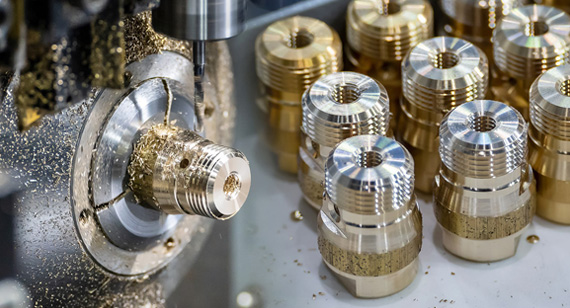
Machinability of a material influences whether the material being machined into the parts is easy or not. For example, the free cutting brass (UNS C36000) has excellent machinability, with a machinability rating of 100%; that is, the machinability rating of all other copper-based alloys, and even steel, is based on this standard. Thus, this 100% machinability rating UNS C36000 brass is quite excellent for high-speed CNC machining and automatic lathes due to its low cutting resistance; This results in very short and brittle chips, making it easy to manufacture various parts. But for some easy to be confused concepts like machinability vs. formability vs. workability, how is machinability measured, factors influencing machinability, and common metals' machinability rating, these questions are what this article shares about.
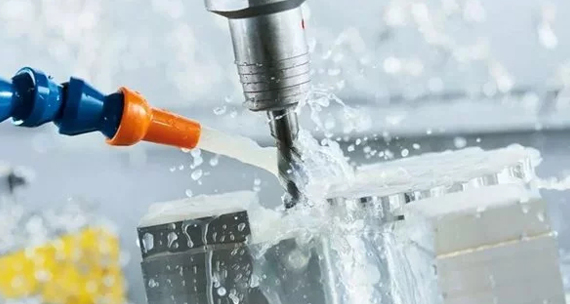
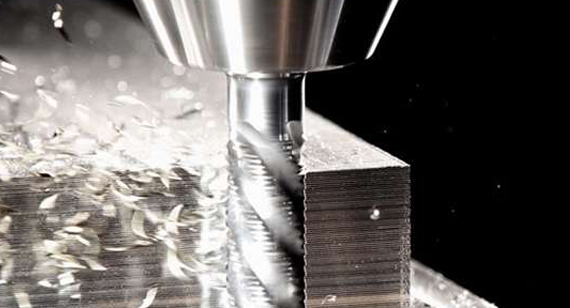
Machinability refers to the ease with which a material can be cut, or finished using subtractive manufacturing processes such as milling, turning, or drilling. For modern industry, this machinability is frequently used in evaluating the material easy to cut, drill,mill or not in CNC machining (A whole piece of material is cut or drilled into the needed shape, and this process controlled by computer programs).
A material with "good" machinability requires minimal power to cut, creates little wear on the cutting tools, and results in a high-quality surface finish. Conversely, materials with "poor" machinability often require slower speeds, specialized tooling, and more frequent maintenance, all of which drive up the cost per part.
How is Machinability Measured?
American Iron and Steel Institute define AISI B1112 steel as a baseline (especially for various types of steel, and high-temperature alloys), which is assigned a machinability rating of 100%. This is one of the standards; and if using AISI B1112 steel as a baseline to evaluate the other industrial standard— the free-cutting brass. It must change from “Free-cutting Brass = 100% “ to “Free-cutting Brass = 300% (Base: AISI B1112 = 100%) “ ; other materials will also change if the evaluating standard changes. For most engineering situations, we recognize “Base: Free-cutting Brass = 100% “ to evaluate whether the material is easy to machine or not.
The following table provides some typical metal materials machinability rating, and this comparison is based on free-cutting brass (C36000) as the 100% benchmark:
Table 1: Typical Metal Materials Machinability Rating
| Materia |
Machinability Rating (Approx.) |
Notes |
| Free-cutting Brass (C36000) |
100% | The benchmark. |
| Aluminum 2011-T3 |
100% + | Very easy to machine. |
| Aluminum 6061-T6 |
80% - 90% | Excellent general-purpose alloy; use polished carbide tools to prevent material sticking (BUE). |
| Aluminum 7075-T6 |
70% - 80% | Harder than 6061; produces better surface finishes but causes slightly more tool wear. |
| Carbon Steel 12L14 |
70% - 80% | Good-cutting steel (leaded); produces short chips similar to brass. |
| Carbon Steel 1117 |
55% - 65% | Resulfurized steel; offers a good balance of strength and machinability. |
| Carbon Steel 1018 |
45% - 55% | Low carbon; moderate machinability. |
| Stainless Steel 303 |
40% - 50% | Sulfur additions make it easier to cut than 304. |
| Stainless Steel 304 |
25% - 35% | Tough and "gummy"; work-hardens if the tool dwells; requires constant, heavy chip load. |
| Stainless Steel 316 |
20% - 25% | Higher Molybdenum content makes it more abrasive and harder to machine than 304. |
| Gray Iron (Class 40) |
35% - 50% | Usually machined dry. |
| D2 / A2 Tool Steel |
15% - 25% | High Chrome/Carbon content; very abrasive in its annealed state, extremely difficult after heat treat. |
| Ti-6Al-4V (Grade 5) |
10% - 18% | Poor thermal conductivity; heat stays at the tool-chip interface. Requires high-pressure coolant. |
| Inconel 718 |
5% - 10% | Nickel-based; maintains strength at high heat; requires ceramic or specialized carbide. |
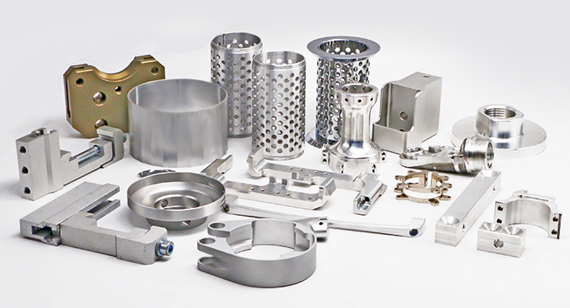
While the inherent properties of a material dictate its "theoretical" machinability, the actual results on the shop floor are determined by how the material interacts with the entire machining system.
Inherent Material Properties (The Core Factor)
The chemical and physical makeup of the metal is the primary driver of machinability. Hardness is the most direct factor; harder materials increase the force required to remove a chip, leading to faster tool wear. Chemical Composition also plays a massive role—for example, adding Sulfur or Lead creates "free-machining" grades that act as internal lubricants. Furthermore, Thermal Conductivity determines how heat is managed; materials like Titanium, which are poor conductors, trap heat at the tool tip, causing the cutting edge to soften and fail prematurely.
Machining Process Parameters
Even a highly machinable material can perform poorly if the process is incorrect. The Cutting Speed (SFM) and Feed Rate must be perfectly synchronized. If the speed is too high, friction-induced heat destroys the tool; if the feed is too low, certain materials (like Stainless Steel) will "work-harden," creating a surface that is harder than the tool itself. The strategy of Coolant Application is also vital for flushing away chips to prevent "re-cutting," which ruins surface finish.
Tooling and Material Interaction
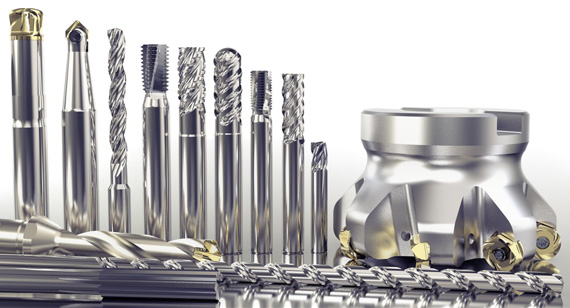
The tool's material and shape are what unlock a material's machinability. Using the wrong Tool Geometry (such as an incorrect rake angle) can make a simple Aluminum job very hard. Modern Tool Coatings like TiAlN or Diamond-like Carbon (DLC) act as a barrier, allowing tools to survive the abrasive nature of low-machinability alloys.
Machine Rigidity and Condition
The final factor is the environment in which the cut happens. Machine Rigidity is essential for high-precision work; if the CNC machine lacks mass or stability, the resulting vibration (chatter) will artificially lower the material's machinability by causing edge chipping on the tool. The Spindle Power and torque capabilities of the machine define whether a tough material can be cut at its optimal theoretical parameters or if the process must be slowed down due to equipment limitations.
Machinability is about removing material (chips); Formability is about shaping thin sheets without them tearing; While workability is about the flow of bulk metal under high pressure without internal failure. Below table shows differences of machinability vs. formability vs. workability:
Table 2: Machinability vs. Formability vs. Workability
| Concept |
Process Type |
Primary Action |
Success Metric |
Common Industrial Scene |
| Machinability |
Subtractive | Cutting/Removing chips | Long tool life, smooth finish | CNC Machining |
| Formability |
Deformative | Stretching/Bending (Sheets) | No cracking or thinning | Sheet Metal Fabrication |
| Workability |
Deformative | Forging/Extrusion (Bulk) | No internal or surface fractures | Cold Forming, Hot Forging, Casting |
This guide has explored how machinability is measured—contrasting the AISI B1112 steel standard with the C36000 brass benchmark; and also lists examples of how various metals rank on C36000 brass benchmark. While inherent properties like hardness and thermal conductivity are the core factors, achieving success in the actual machining performance requires a holistic approach that considers tooling, process parameters, and machine stability. By understanding these variables, you can better optimize your designs for both performance and cost-effectiveness.

A client recently approached VMT to manufacture a high-precision sensor housing, initially specifying SS 304 (Stainless Steel) due to its inherent corrosion resistance. However, the component's complex design—featuring deep internal threads and intricate cooling fins—proved difficult to reconcile with the material’s low 30%–40% machinability rating.
Our engineering team conducted a detailed Machinability vs. Application analysis to determine if a more efficient material could meet the project's functional requirements. We identified that the sensor's operating environment was only mildly corrosive, meaning the protection of SS 304 was not strictly necessary. VMT proposed transitioning the material to Aluminum 6061-T6 finished with a Clear Anodized Coating. This shift allowed us to leverage Aluminum’s superior 85%–90% machinability rating, ensuring that the complex geometries could be cut at optimal speeds without the risk of tool breakage or surface degradation.
By switching to Aluminum 6061, we reduced the cycle time by 43%—from 45 minutes down to just 22 minutes per part—and extended the life of the threading taps by over 120%. These operational efficiencies, combined with a near-zero scrap rate, allowed the client to achieve a 31% total cost saving.
What makes a material "machinable"?
A combination of low hardness, moderate ductility, and low thermal conductivity usually makes a material easier to machine. Materials that produce small, brittle chips are ideal for automated CNC processes.
Why is stainless steel harder to machine than aluminum?
Stainless steel has high toughness and a tendency to "work-harden." This means as you cut it, the material actually becomes harder and more abrasive, which can destroy standard cutting tools quickly.
How can I improve the machinability of my project?
Start by choosing "free-machining" grades where possible (like 12L14 steel). Additionally, optimizing your part design to avoid deep holes or thin walls can significantly reduce machining difficulty.
Why is Titanium's machinability rating so low?
Titanium has low thermal conductivity (heat doesn't dissipate) and high chemical reactivity at high temperatures, which causes it to "weld" itself to cutting tools.
Can I improve a material's machinability after I buy it?
Yes. Heat treatments like Annealing can soften a material to make it easier to cut, while stress-relieving can prevent the part from warping during the machining process.
Why do some steels have "L" or "S" in their name for machining?
These letters often indicate additives like Lead (L) or Sulfur (S). These elements don't change the strength much but make the chips break easily, vastly improving machinability.


 +86 15099911516




 Read more