16 years one-stop China custom CNC machining parts factory

Hey there I’m VMT Sam!
With 25 years of CNC machining experience we are committed to helping clients overcome 10000 complex part-processing challenges all to contribute to a better life through intelligent manufacturing. Contact us now
 537 |
Published by VMT at Feb 26 2026 | Reading Time:About 2 minutes
537 |
Published by VMT at Feb 26 2026 | Reading Time:About 2 minutes


From kitchenware(like SS304 containers or SS401 knives), to automotive components(like SS304 exhaust piping or SS401 gears), stainless steel 401 and 304 are two popular materials among many industries; But if you look at their physical appearance, you can hardly tell these two stainless steels. Stainless steel 401 and 304 belong to entirely different families—martensitic and austenitic—and chemical composition are also different ; these lead to vast differences in magnetism, hardness, heat resistance, cost ,etc. This article will give you a comprehensive understanding of what the 401 and 304 stainless steels are and their key differences in properties, environmental performance, and cost efficiency.
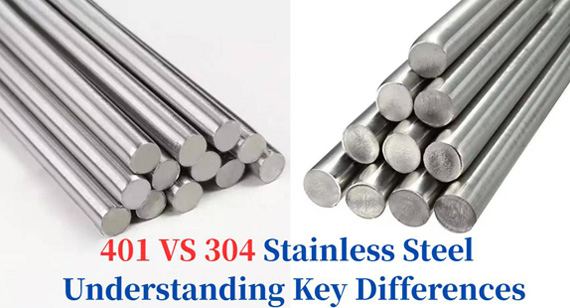
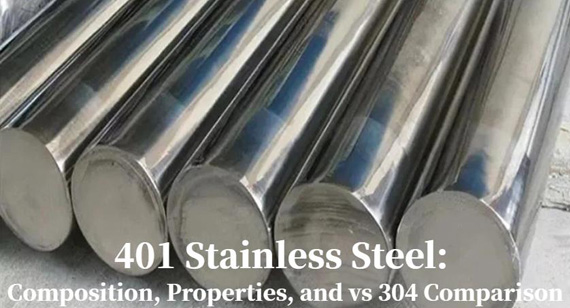
Stainless steel 401 is martensitic stainless steel with chemical composition primarily includes iron and chromium (typically 11.5% to 13.5%), with very little nickel(0.5% – 1.5%). The martensitic structure allows SS401 to be hardened through heat treatment. This SS401 is favored for applications requiring good strength, moderate corrosion resistance, and excellent wear resistance, such as professional cutlery, surgical tools, and rigids gears or fasteners.
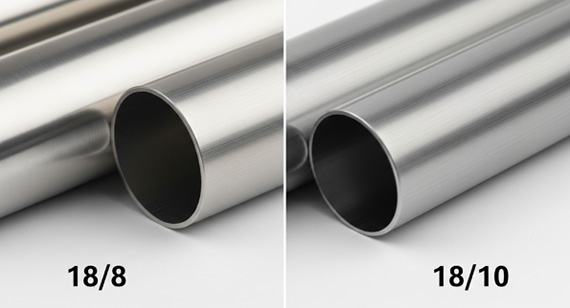
Stainless steel 304 is the most widely used austenitic stainless steel globally(generally accounts for half of the uses of stainless steel). Its composition is defined by high levels of Chromium (18%) and Nickel (8%), often referred to as "18/8" stainless steel. Unlike 401, its crystalline structure remains stable(Nickel contents promote SS304 austenitic structure more stable) across a wide temperature range. It is non-magnetic, highly ductile, and offers better corrosion resistance. From kitchen sinks and food processing equipment to mild-chemical containers and architectural mirror-like trim, food grade SS304 is a good material for durability and hygiene(easy to clean).
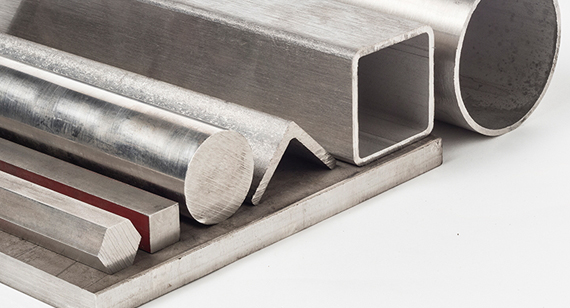
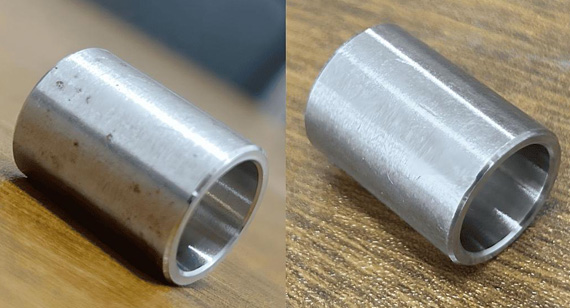
SS304 offers better corrosion resistance than SS401. This is primarily due to the high Nickel and Chromium content in SS304, which forms a more robust passive oxide layer to prevent SS304 corrosion. SS401 is suitable for a relatively mild environments for it may struggle in high-moisture or saline conditions and being rust-like.
However, for both grades, passivation is a highly recommended surface treatment. This surface treatment involves submerging the steel in a nitric or citric acid bath to remove free iron from the surface, enhancing the thickness and uniformity of the protective chromium oxide layer, thereby boosting stainless steel lifespan.
Stainless steel 401 is inherently magnetic because it possesses a body-centered tetragonal (BCT) crystal structure(the martensitic). This makes it ideal for magnetic knife strips in kitchens or industrial automation where electromagnets are used to pick up magnetic SS401 parts. Additionally, 401 is used in the base of cookware to ensure compatibility with induction cooktops because of its magnetism.
Stainless steel 304 is non-magnetic in its annealed state(the FCC structure). However, it may exhibit a weak, unstable magnetic pull after extensive cold working (like deep drawing or bending) due to the transformation of the SS304 internal structure changes(small part of FCC may become BCT).
SS401 can be hardened through heat treatment of quenching and tempering. This transforms its structure into hard Martensite(Through the process of austenitizing and quenching, the initial ferrite-plus-carbide mixture is transformed into a fully martensitic structure). And then SS401 reaches a much higher hardness(~50 HRC after heat-treated) than SS304(~25-40 HRC which is only through cold worked).
SS304 cannot be hardened by heat treatment. Because of the high nickel content stabilizing the Austenitic structure, it does not transform into martensite when heated. It can only be hardened through strain hardening by cold working.
SS401 is superior to SS304 in terms of wear and abrasion resistance. Because 401 can be heat-treated to a high degree of hardness, it resists scratching and surface deformation much better than the "gummy" 304(an elongation at break of over 40%). This makes 401 the preferred choice for scrapers, industrial blades, and mechanical parts subject to friction.
When it comes to the budget, SS401 is more economical than SS304. The primary driver of cost in the two stainless steel is Nickel. SS304 contains approximately 8% nickel, a volatile and expensive commodity. SS401 contains negligible nickel, relying mostly on Chromium and Iron, making it a more cost-effective solution if you don’t consider factors like food grade or corrosion resistance.
While both can handle heat, SS304 is the more stable performer in changed thermal environments due to its stable structure. SS304 can operate continuously at 870°C (1600°F) and intermittently up to 925°C (1700°F). This makes 304 the standard for high-end cookware and exhaust system components. SS401 maintains structural integrity up to 650°C (continuous) and 750°C (intermittent). Beyond these points, it may lose its tempered hardness.
SS304 excels in cryogenic applications thanks to its Face-Centered Cubic (FCC) crystal structure, which remains stable and tough even at absolute zero (-273°C). This makes it perfect for liquid nitrogen storage.
In contrast, SS401 is not suitable for low temperatures. It undergoes a Ductile-to-Brittle Transition (DBT). At temperatures as low as -40°C(already a dangerous temperature), the microstructure of 401 becomes immobile and brittle; if subjected to an external force, the material is likely to shatter like glass rather than bend.
From the perspective of food-grade standards and cleanability, SS304 is much better than SS401. This is primarily because SS304 offers much higher corrosion resistance and a greater tolerance for the chemical cleaning agents used in some food facilities. Furthermore, as a stable austenitic stainless steel, SS304 features a higher surface smoothness with lower porosity, which makes it far easier to clean. These make SS304 quite suitable for applications involving food storage, containers, or processing equipment.
For SS401, it is generally not considered a food-grade material for contact or storage; rather, due to the high wear resistance, strength, and hardness it gains through heat treatment, its use in the kitchen is largely used to cutting tools and professional cutlery.
Machinability measures the relative ease with which stainless steel can be cut using various tools; a higher rating indicates a material that is easier to machine. Both grades of SS401 vs SS304 exhibit their optimal machining performance when in the annealed state. The machinability rating of 401 stainless steel is approximately 45%–55% of free-machining B1112 carbon steel, whereas SS304 stands at roughly 45%.
While these figures appear similar, SS401 is actually easier to machine than SS304. This is because 401 is not that prone to work-hardening the surface compared to 304 when machining the stainless steel(improper machining causing much stress on the steel surface may lead to surface hardening and then makes the machining being hard to continue). Another reason is that in the annealed state, SS401 has better mechanical processing characteristics because the martensitic structure is "softened" during the annealing process—typically resulting in a hardness below 200 HB. Compared to the "gummy" or "sticky" nature of SS304, this material provides much cleaner cuts.
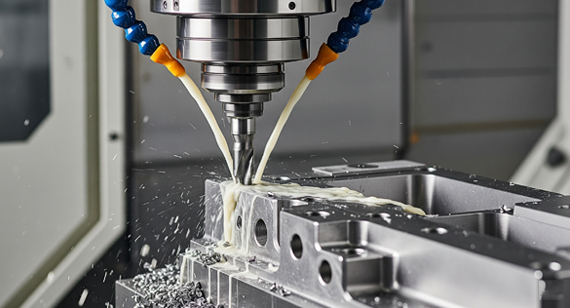
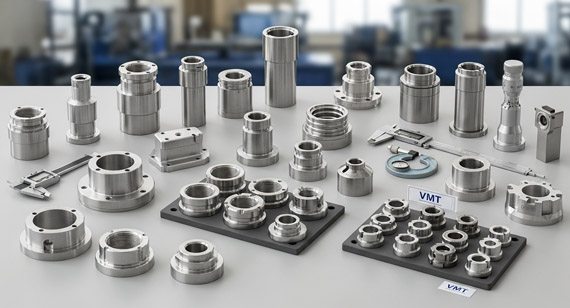
CNC machining is the process of cutting, drilling, or grinding stainless steel into precise parts, where tool paths are controlled via computer programming. This is the most prevalent machining process for manufacturing precision components in modern industry. When CNC machining SS304, this presents challenges; although it is physically softer, its work-hardening speed is rapid, often requiring more intensive processing and careful tool management. In contrast, SS401 is actually easier to process than 304 in its annealed state. To ensure optimal results of both SS401 vs SS304, the following measures should be considered:
Table 1: CNC Machining Measures of SS304 vs SS401
| Machining Parameters |
SS304 (Austenitic) |
SS401 (Martensitic) |
| Tool Rake Angle |
Large positive rake (to reduce extrusion) | Neutral or positive rake angle |
| Feed Rate |
Must be steady and relatively high | More flexible and adaptable |
| Cutting Speed |
Low (to prevent overheating) | Medium to high (in annealed state) |
| Chip Formation |
Long, tough, and prone to tangling | Short, brittle, and easy to clear |
| Primary Risks |
Instant surface hardening, tool burning | Distortion after heat treatment, brittle fracture |
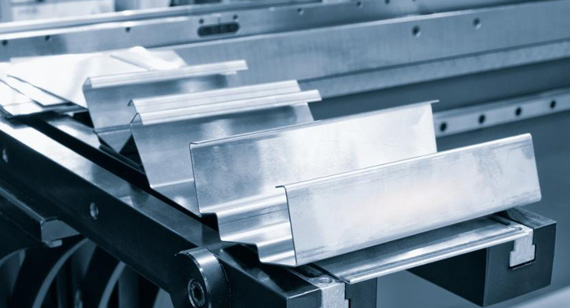
SS304 has much better formability than SS401. It features excellent ductility and a high elongation rate (often exceeding 40%). This allows it to be drawn into complex shapes like sinks or deep bowls without cracking. SS401 is stronger than SS304, making it difficult to perform deep-drawing or complex bending operations.
SS304 has excellent weldability. It can be joined using MIG or TIG welding without preheating, resulting in strong, reliable joints. SS401 is difficult to weld. As a martensitic steel, the area around the weld is prone to cracking. Successful welding of 401 stainless steel requires preheating the metal to 200–300°C and performing post-weld annealing to relieve internal stresses.
SS401 Applications:
Stainless steel 401 is harder, stronger and also has better wear-resistance, it is more likely to be made into products such as:
SS304 Applications:
Stainless steel 304 is easy to clean and called food grade, and has better corrosion resistance and excellent formality, it is more likely to be made into products such as:
In summary, stainless steel 304 is the versatile stainless steel known for its food grades, and excellent formability. On the other hand, stainless steel 401 is a better choice for its high hardness, wear-resistance, and cost-effectiveness. Choosing between stainless steel 401 vs 304 ultimately depends on your environment, budget, and whether you prioritize their unique properties or performance.

A leading medical device manufacturer approached VMT CNC Machining Factory to produce high-precision surgical handle components featuring intricate internal threading and deep-hole drilling. Initially, the client’s design specified SS304 due to its famous of versatile uses. However, the project immediately encountered hurdles: the "sticky" nature of the SS304 caused rapid work-hardening during the CNC drilling process, leading to a 15% scrap rate and frequent tool breakages. The difficulty in managing long, stringy chips also resulted in surface scratches that failed to meet the required aesthetic and functional tolerances.
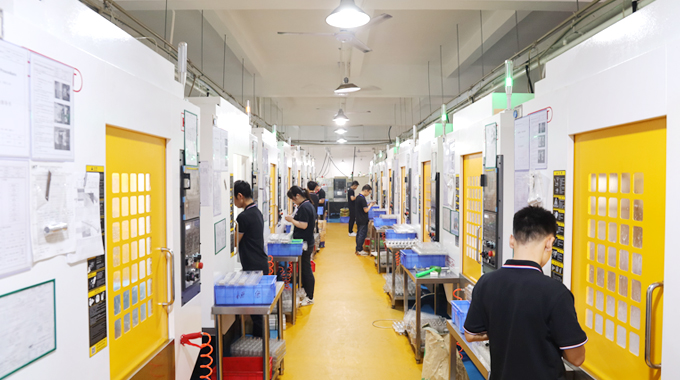
To resolve these issues, our engineering team conducted a comparative analysis and recommended pivoting to annealed SS401 for the machining phase. We demonstrated that the martensitic structure of SS401 would provide cleaner chip breaking and lower cutting resistance compared to the austenitic SS304. We optimized the CNC parameters by implementing a neutral rake angle and increasing the cutting speed by 25%. To compensate for the lower native corrosion resistance of SS401 compared to 304, we also integrated a high-standard automated passivation process post-machining, ensuring the components met all medical-grade durability requirements.
The transition to SS401 delivered immediate, data-backed success. VMT achieved a 35% reduction in total cycle time per part and extended tool life by 220%. The surface finish quality saw an improvement, moving from a rough Ra 1.6 to a precision-polished Ra 0.4, effectively reducing the scrap rate. Ultimately, these optimizations allowed the client to reduce their total production cost by 18% while maintaining the high performance required for surgical environments.
Is 401 stainless steel rust-proof?
It is rust-resistant, but not rust-proof. It performs well in dry, indoor environments but may corrode if exposed to salt water or harsh chemicals.
Why does a magnet stick to my 401 stainless steel but not my 304?
This is due to their crystal structures. 401 has a Martensitic (magnetic) structure, while 304 has an Austenitic (non-magnetic) structure.
Can I use 401 stainless steel for outdoor furniture?
It is not recommended. It is not a good choice for outdoor use because it cannot withstand rain and humidity without rusting.
Which is better for a kitchen knife?
401 is better for the blade because it can be hardened to hold a sharp edge. 304 is too soft to be used as a cutting edge but is great for the handle or the sink.
Is 304 stainless steel worth the extra cost?
Yes, if your application involves moisture, food contact, or requires the metal to be bent into complex shapes.
Can 304 stainless steel become magnetic?
Yes, slightly. If 304 is heavily cold-worked (like being pressed into a sink shape), it can develop a weak magnetic pull. But this not affect uses of 304 stainless steel as long as it is not used for high-end electronics.


 +86 15099911516




 Read more