16 years one-stop China custom CNC machining parts factory

Hey there I’m VMT Sam!
With 25 years of CNC machining experience we are committed to helping clients overcome 10000 complex part-processing challenges all to contribute to a better life through intelligent manufacturing. Contact us now
 375 |
Published by VMT at Dec 20 2025 | Reading Time:About 2 minutes
375 |
Published by VMT at Dec 20 2025 | Reading Time:About 2 minutes


Of various stainless steels being used among architectural decoration, home appliances and even marine engineering in modern fabrication thanks to series grades of stainless steels. They obviously contain several elements in different percentages, different properties of corrosion resistance or others, prices and applications vary from one to another.
Both the SS 430 and SS 316 are austenitic stainless steels that are the worth noting materials, being applied in rapid prototyping processes such as sheet metal fabrication and CNC machining. While you must understand their properties and applications before your decision choosing from the 304 vs 316 stainless steel specifically to a project. To help you decide on the right grade, this article highlights the key differences of properties, prices and applications,etc. of the SS 430 and SS 316. You can find out a full comparison of the stainless 340 vs 316 in our rundown below.
Stainless steel 430 is famous for its corrosion resistance (under tempered conditions), easy to shape, and economical cost. It is a ferritic stainless steel grade(unlike austenitic stainless steel, it is magnetic) with 16–18% chromium, almost zero of nickel content( that’s why cost-effectively), and other elements such as carbon, manganese, and silicon.
SS430 is valued across many industries for its balance of performance, affordability, and magnetic behavior. The grade is used in sheet metal fabrication, stamping, and general-purpose manufacturing where high corrosion resistance is not the primary requirement. Although it has limitations in chloride-rich or acidic environments and its weldability is inferior to austenitic stainless steels, SS430 remains one of the most economical choices for large-volume production and consumer applications. Many people prefer the SS430's heat resistance, cost and good looking surface evident in its use in making automotive trim, kitchen appliances, exhaust components, and other decorative or architectural components.
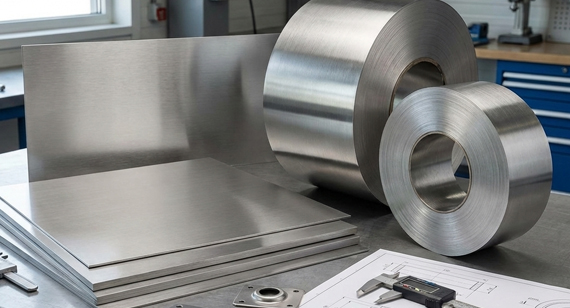
Stainless steel 316 is renowned for its excellent corrosion resistance, superior durability, and versatility in harsh environments. It is an austenitic stainless steel grade (unlike ferritic stainless steel, it is non-magnetic) with 16–18% chromium, 10–14% nickel, 2–3% molybdenum, and other elements such as carbon, manganese, and silicon. The addition of molybdenum greatly enhances its resistance to chloride-induced corrosion.
SS316 is highly valued across many industries for its corrosion resistance, and aesthetic appeal. The grade is widely used in chemical processing equipment, medical instruments, and marine components where long-term corrosion resistance is critical. Although it is more expensive than ferritic stainless steels like SS430, SS316’s durability, heat resistance, and hygienic surface finish make it a top choice for high-end applications such as marine hardware, food processing equipment, surgical instruments, and architectural elements exposed to harsh or salty environments.
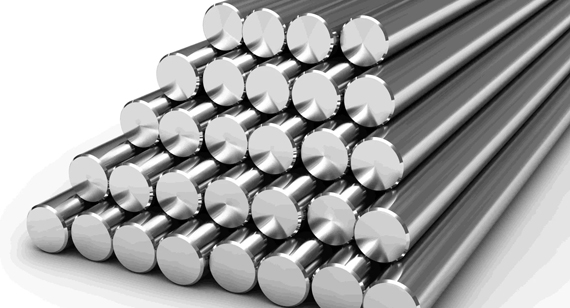
To choose the right stainless steel grade from the AISI 316 Stainless Steel(UNS S31600 ) and UNS AISI 430 Stainless Steel(S43000), there is a necessity to understand the differences of properties, cost, and applications between 430 and 316 stainless steel. Below are eight main differences to keep in mind when choosing the right grade for your project.
The major difference of chemical composition in the stainless 430 vs 316 comparison is the elements content of nickel and molybdenum. Below are the typical compositions of the two stainless steel grades.
From the chemical composition, SS316 contains higher nickel and molybdenum , while SS430 has almost zero nickel and no molybdenum. The differences are responsible for the distinct properties and applications of the two grades.
SS 316 has much better corrosion resistance than SS 430. 430 stainless steel performs corrosion resistance under tempered conditions such as dry, indoor, low-humidity environments. However, the inclusion of 10–14% nickel and 2–3% molybdenum in SS316 helps make the grade resistant to chlorides and salt spray, which SS430 cannot withstand.
Consequently, SS 420 is more suitable for making products used in indoors or moderate environments while SS316 is specifically suitable for making products used in seawater environments.
SS430 is magnetic owing to its ferritic structure (its crystal structure is body-centered cubic, producing ferromagnetic properties), while SS316 is non-magnetic for it is an austenitic stainless steel (its crystal structure is face-centered cubic, which does not produce magnetism). Thus, If your application requires magnetic attachment, such as refrigerator door panels, magnetic tool boards, etc., the 430 would be more suitable.
About mechanical properties of 430 vs 316 stainless steel, there is a need to watch out tensile strength, yield strength, compression strength, and shear modulus of the two grades. Below are the stainless 430 vs 316 comparisons based on each property.
Tensile Strength
Tensile strength is the maximum stress when the material just breaks or fractures. For a thickness of 8 mm stainless steel plate, If its SS 430 stainless steel, the tensile strength will be 450–550 MPa; if its SS 316 stainless steel, tensile strength is 530–680 MPa.
For stainless steel bars with 160 mm thickness, tensile strength of SS 430 is 470–520 MPa while SS 316 is 500–700 MPa.
Yield Strength
Yield strength is the maximum stress after the material just being of permanent deformation. SS430 has a yield strength ranging from 210 to 275 MPa, while SS316 reaches approximately 290 MPa. This means that SS316 is better suited for components that can withstand higher loads.
Hardness
Hardness reflects the material’s resistance to deformation, wear, scratches or dents. SS430 has a hardness of 70–80 Rockwell B while SS316 has a hardness of approximately 79 Rockwell B. Although the difference is slight, 316 stainless steel would be better suited for projects requiring higher wear resistance or friction performance.
Modulus of Elasticity
Modulus of elasticity shows how a material responds to deformation under load. SS430 has a modulus of elasticity of approximately 200 GPa while SS316has a modulus of elasticity of 193–200 GPa. This means that SS430 is a little more rigid and has better dimensional stability than SS316 in structural components.
Welding performance of stainless steel is affected by the amount of carbon in the grade for higher carbon reduction weldability. SS430 has 0.12% carbon while SS316 is usually lower than 0.08% carbon. So, SS316 has a better welding performance than SS430.
For SS430, welding may result in grain coarsening, requiring preheating and post-weld treatment. For SS316, it is more suitable for deep drawing and complex processing.
SS 430 has a lower coefficient of thermal expansion and is less to be deformed when temperature changes while the SS 316 shows better stability at high temperatures and possesses higher oxidation resistance. Under extreme conditions, SS 316 demonstrates superior long-term heat resistance than SS430.
Price is one of the biggest factors affecting the difference between the SS430 and SS 316. SS 430 is cheaper (because it does not contain nickel and molybdenum) while SS 316 is more expensive (due to high nickel and molybdenum content). So, SS 430 is the more cost-effective choice If your project only asks for general corrosion resistance.
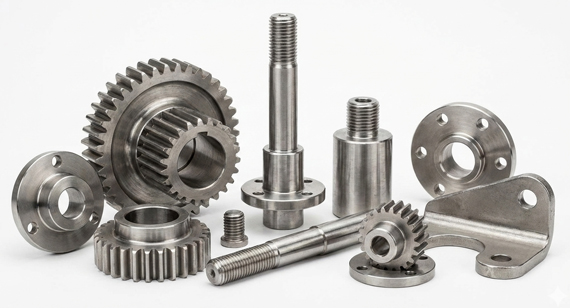
SS430 can be used to make products requiring high hardness and wear resistance but with less exposure to corrosive substances, such as appliance enclosures (microwave oven, refrigerator back panel) , decorative metal sheets, automotive interior components, kitchen equipment enclosures, etc.
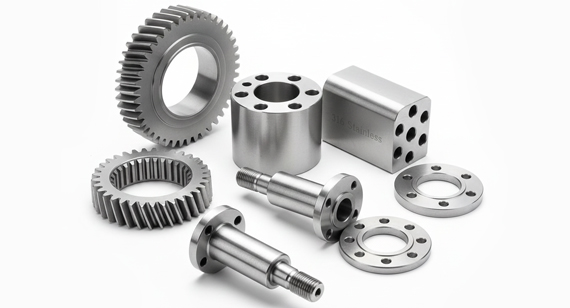
SS316 can be used to make products that will exposure to environments with high salt content or harsh chemicals, such as marine equipment, ship parts, chemical pipelines, storage tanks, medical devices, food processing equipment, and equipment around swimming pools, etc.
You might be wondering which grade of SS430 and SS316 is better for your project after you’ve explored their properties and applications. It’s like all the material selection issues, there’s no single criterion. However, to help you quickly determine the right one, you can answer some questions below.
What environment will your products be exposed to?
For indoor, dry, and low-humidity environments, 430 stainless steel is perfectly suitable. However, for chlorine-containing environments (disinfectants, swimming pools, salt spray), marine environments, and acidic or alkaline environments, you may choose 316 stainless steel.
What is the temperature your products will be exposed to?
Higher temperatures increase the likelihood of corrosion or changes in material properties. For medium-to-high temperature applications (roughly up to 800–870°C), such as kitchen equipment or exhaust systems, both SS430 and SS316 can be used. However, in environments involving thermal cycling, hot-and-humid marine conditions, or high-temperature exposure in the presence of chlorides, SS316 is significantly more stable and reliable.
What is your budget?
If the need for the above properties does not matter, SS430 is a cost-effective option, as it is generally about 50–65% cheaper than SS316.
Choosing between SS430 and SS316 for your project can still be challenging. Therefore, it is important to evaluate their key properties, advantages, and typical applications to ensure the material matches your operating environment, performance requirements, and budget constraints.
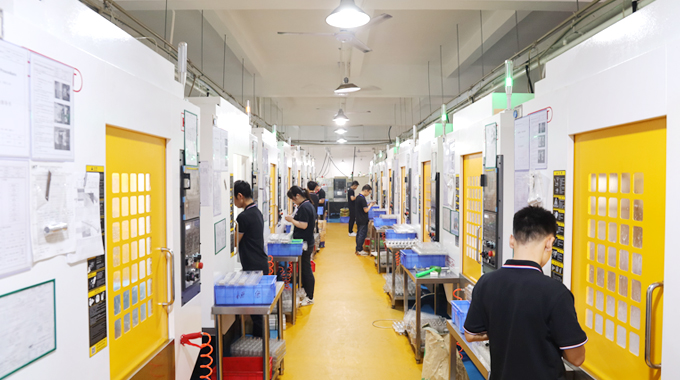
If you’re ready to get pricing for metal parts of SS430, SS316 stainless steel or other materials, we can help. VMT CNC Machining Factory offers a full range of manufacturing capabilities, including high-precision CNC milling and turning, surface finishing,ect. Whether you need prototypes or full-scale production, our engineering team is ready to support your project from start to finish. Visit our website to learn more or submit a free, no-obligation quote request today.

What are the disadvantages of 430 stainless steel?
SS430 has lower corrosion resistance, poorer weldability, and lower toughness compared to austenitic grades like 316. It is not suitable for chloride, acidic, or outdoor marine environments.
How long will 430 stainless steel last?
In dry, indoor, low-humidity environments, SS430 can last many years or even decades. In humid or chloride-rich conditions, its lifespan drops significantly due to faster corrosion.
Is 430 stainless better than 316?
Not in corrosion resistance or durability. 316 is better for marine, chemical, or high-humidity environments. However, 430 can be better when cost is critical and corrosion demands are low.
Is 430 grade stainless steel good?
Yes—for the right environment. SS430 is good for appliances, indoor decorative parts, and general sheet metal fabrication where cost matters and corrosion exposure is mild.
Do magnets stick to 430 stainless steel?
Yes. 430 is magnetic because it’s a ferritic stainless steel with a BCC crystal structure.
Is 430 stainless steel food safe?
Yes. 430 stainless steel is generally considered food-safe and is widely used in kitchen appliances, utensils, food-contact surfaces, and commercial equipment.


 +86 15099911516




 Read more