16 years one-stop China custom CNC machining parts factory

Hey there I’m VMT Sam!
With 25 years of CNC machining experience we are committed to helping clients overcome 10000 complex part-processing challenges all to contribute to a better life through intelligent manufacturing. Contact us now
 652 |
Published by VMT at Dec 19 2025 | Reading Time:About 2 minutes
652 |
Published by VMT at Dec 19 2025 | Reading Time:About 2 minutes


Among the many stainless steel grades available to you, 420HC stainless steel (a high-carbon variant of 420 stainless steel) is a highly adaptable grade that stands out in comparison to others. Its wide range of properties make it popular, and you will find it incorporated into industrial knives, mold components, and precision mechanical parts, because of its fantastic strength, resistance to wear resistance and corrosion, and strong response to heat treatment. You can find out more about it in our rundown below.
Meet 420HC stainless steel, a high-carbon martensitic steel(high carbon variant of 420 stainless steel) that delivers an excellent mix of hardness, wear resistance, and corrosion performance. With about 0.4–0.45% carbon (giving you strong hardness and strength) and roughly 12.5–13.5% chromium (for corrosion protection), it’s a material that’s tough yet cost-effective. You’ll also find small amounts of manganese and silicon, which helps enhance strength and deoxidation, while phosphorus and sulfur are kept minimally seen as impurities.
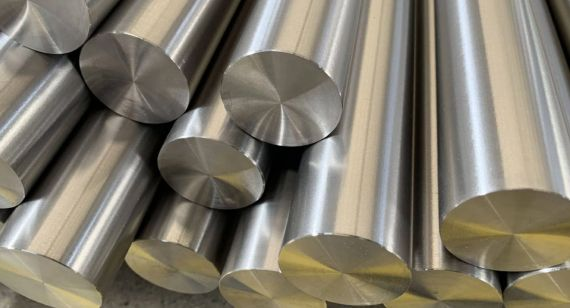
Thanks to higher C content of 420HC than 410 / 420 / 420J2, it holds higher achievable hardness and improved wear resistance. It can be strengthened through hardening. While its corrosion resistance is moderate—higher than 410 and 420J2 but lower than higher-grade alloys such as 440C—it offers a well-balanced combination of hardness, wear resistance, and corrosion performance suitable for knives, tooling, and general-purpose industrial applications. Comparison of 420HC to other martensitic stainless steel is outlined in Table 1 below:
Table 1: 420HC Stainless Steel Compared to Other Martensitic Stainless Steel
| Property / Steel Type | 420HC | 410 | 420 | 420J2 |
| Carbon Content | 0.40–0.50% | 0.08–0.15% | 0.15–0.35% | 0.15–0.36% |
| Hardness (HRC) | 52–56 | 38–45 | 50–53 | 50–53 |
| Steel Category | Martensitic SS | Martensitic SS | Martensitic SS | Martensitic SS |
| Wear Resistance / Edge Retention | High | Moderate | Good | Good |
| Dimensional Stability | Stable after quenching; martensitic structure | Stable after quenching; martensitic structure | Stable after quenching; martensitic structure | Stable after quenching; martensitic structure |
| Corrosion Resistance | Moderate to high | Moderate to low | Moderate | Moderate to low |
Table 1 is based on azom, ulbrich,sciencedirect.
The chemical composition of 420HC stainless steel is:
The physical and mechanical properties of annealed 420HC stainless steel are outlined in Table 2 below:
Table 2: Physical and Mechanical Properties of Annealed 420HC Stainless Steel
| Property | Typical Value |
| Density | 7.75–7.80 g/cm³ |
| Elastic Modulus | 200 GPa |
| Electrical Resistivity | 0.73 μΩ·m |
| Tensile Strength (UTS) | 700–1000 MPa |
| Yield Strength (Annealed, 0.2% offset) | 450–800 MPa |
| Yield Strength (Hardened + 350°F, 2% offset) | 950–1200 MPa |
| Elongation (% in 50 mm) | 8–12% |
| Hardness (HRC, Annealed) | 20–25 HRC |
| Hardness (HRC, Quenched & Tempered) | 56–59 HRC |
Physical of 420HC Stainless Steel Table Credit: ulbrich
The properties listed of 420HC stainless steel may vary slightly owing to the heat treatment applied. Annealed 420HC is easy to machine and exhibits good ductility, but ductility decreases as hardness increases. Quenched and tempered material achieves maximum hardness, and Brinell hardness values generally correlate with HRC measurements. These values represent standard behavior for 420HC stainless steel and provide a reliable reference for industrial applications.
The thermal properties of 420 stainless steel are listed in Table 3 below:
Table 3: Thermal Properties of 420HC Stainless Steel
| Property | Value | Unit |
| Melting Point / Range | ~ 1495 °C (≈ 2723 °F) | °C (°F) |
| Thermal Conductivity @ 100 °C | 24.9 W/m·K (14.4 BTU/hr·ft·°F) | W/m·K (BTU/hr·ft·°F) |
| Thermal Conductivity @ 500 °C | 28.7 W/m·K (≈ 16.6 BTU/hr·ft·°F) | W/m·K (BTU/hr·ft·°F) |
| Specific Heat (0–100 °C) | 0.46 kJ/kg·K (≈ 460 J/kg·K) | kJ/kg·K (J/kg·K) |
| Mean Coefficient of Thermal Expansion (0–100 °C) | 10.2 µm/m·K | µm/m·K |
| Mean Coefficient of Thermal Expansion (0–649 °C) | 12.1 µm/m·K | µm/m·K |
Thermal Properties of 420 Stainless Steel Table Credit: azom
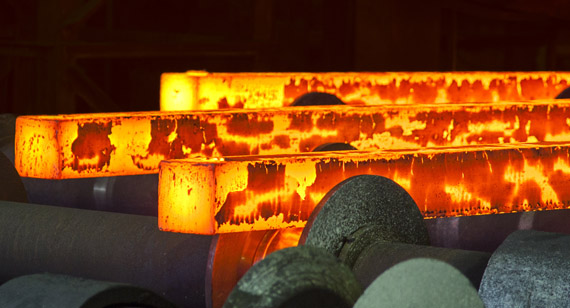
After carefully observing the heat treatment process? Its optimal hardness relies heavily on a proper heat-treating process. For 420 HC steel, you can make this happen through Preheating, austenitizing, quenching, quenching, tempering. It starts with preheating the steel to 760–800°C (helps reduce thermal shock and minimizes the risk of distortion or cracking). And then you can bring up to its austenitizing temperature of 1030–1070°C. (higher temperatures tend to push hardness upward while at the expense of toughness). Once fully heated, the steel is quenched in oil or air, allowing it to transform into a hard martensitic structure that generally reaches about 56–58 HRC.
After quenching, 420HC is tempered to fine-tune its balance between hardness and toughness. Lower tempering temperatures around 150–200°C help maintain peak hardness, while higher settings near 200–300°C promote improved toughness for demanding mechanical applications. Proper tempering improves wear resistance, enhances edge retention, and produces a more uniform surface hardness.
Machinability of 420HC is easier to cut than austenitic grades like 304 or 316, but tougher than lower-carbon martensitic grades such as 420J2 and 410. Compared with these steels, 420HC is more prone to work hardening, generates more heat during cutting, and causes faster tool wear if machining parameters are not properly controlled.
CNC machining is the common method for shaping 420HC. By using programmed tool movements to remove material from bar, plate, or hardened stock, shops can achieve the tight tolerances needed for blades, wear-resistant components, and precision mechanical parts.
For best results when machining 420HC stainless steel, use carbide or coated carbide tooling (TiAlN, TiCN, AlTiN) with geometries optimized for high-hardness steels, and pair them with rigid toolholders to minimize chatter and edge chipping. Medium to low cutting speeds are generally the most effective; running too fast will accelerate tool wear and encourage work hardening, while slightly higher feed rates help maintain a stable cutting zone. Strong, consistent coolant flow is essential, and high-pressure coolant is especially useful for pulling heat away from the cut, reducing work hardening, and improving chip evacuation to prevent heat buildup or surface glazing.
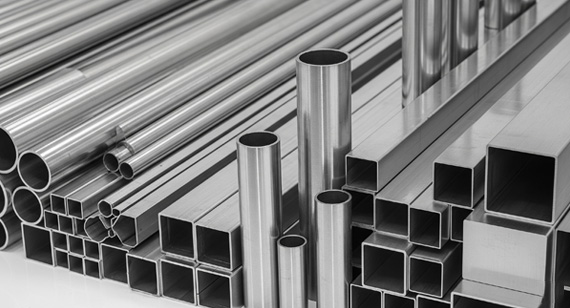
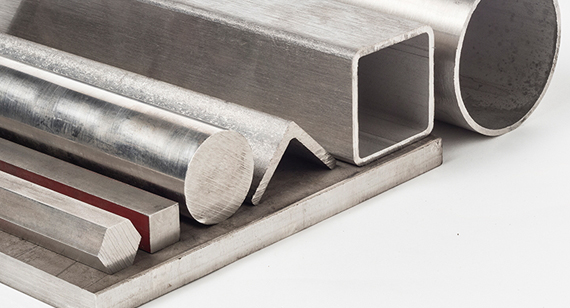
You’ll find 420 HC Stainless Steel available in a wide range of forms that work best for different applications. These include:
The 420HC round bar is widely used for machined components, knife blanks, wear parts, shafts, and tooling elements. It is available in diameters ranging from small precision rods to large industrial bars.
These are flat, thin pieces of metal (typically 0.5–3 mm) that are superb for purposes that are commonly used for stamped parts, blades, housings, surgical supplies, and corrosion-resistant components.
Plates offer a thicker, more rigid form of 420HC—ideal for heavy-duty components, molds, dies, and structural parts requiring high hardness after heat treatment. Thicknesses may extend up to 150–200 mm.
Cold-drawn 420HC offers improved dimensional accuracy, straightness, and surface finish. This is especially useful for precision shafts, pins, and CNC-machined small components. Cold drawing also increases the steel’s strength prior to heat treatment.
Annealed 420HC is supplied in its softest, most machinable condition. Parts are typically rough-machined in the annealed state, then hardened to final properties later.
Pre-hardened 420HC is delivered at an intermediate hardness (usually 48–52 HRC) to reduce or eliminate final heat treatment. This is ideal for high-torque components, knife blanks, and small wear-resistant parts where dimensional stability is critical.
Suppliers commonly offer 420HC in custom-cut bars, water-jet or laser-cut plates, precision-ground sheets, and near-net-shape blanks. These reduce material waste and machining time while allowing customers to start closer to final geometry.
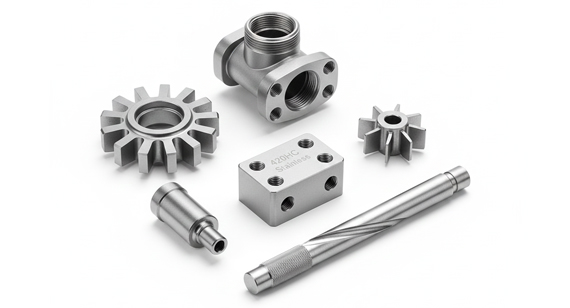
You’ll find 420HC stainless steel in applications that demand high hardness, strong wear resistance, and reliable edge retention. Typical uses include:
420HC stainless steel has high carbon and can be hardened. It is very hard and wear-resistant. This makes it ideal for making knife blades, utility knives, folding knives, precision blades, and general tool edges. Its hardness keeps edges sharp for a long time, and its corrosion resistance extends tool life.
420HC works well for mold inserts, jigs, fixtures, and measuring tools. It stays stable after heat treatment. This helps molds and tools keep precise dimensions, even after long use.
420HC is good for shafts, bushings, sliding parts, bearings, guides, and other parts that face friction. Its hardness and wear resistance make parts last longer and stay reliable.
In machines, pumps, and equipment, 420HC is used for parts that need strength, hardness, and moderate corrosion resistance. It keeps equipment running smoothly under load.
420HC can be used in car systems, like gears, bearings, and other structural parts. It is hard and wear-resistant, which helps parts last under stress. Its corrosion resistance is enough for automotive environments.
Here are some of the top reasons why you may look to 420HC stainless steel for your manufacturing needs:
Despite its strengths, 420HC does come with several limitations that you may keep in mind:
If you’re ready to get pricing for metal parts of 420HC stainless steel or other materials, we can help. VMT CNC Machining Factory offers a full range of manufacturing capabilities, including high-precision CNC milling and turning, surface finishing,ect. Whether you need prototypes or full-scale production, our engineering team is ready to support your project from start to finish. Visit our website to learn more or submit a free, no-obligation quote request today.

Is 420HC stainless steel suitable for cutting tools?
Yes. Its high carbon content and strong heat-treat response make it well-suited for knives, blades, and wear-resistant cutting applications.
How hard can 420HC stainless steel get?
When properly quenched and tempered, 420HC can reach 56–59 HRC, depending on the heat-treating cycle.
What is the difference between 420HC and 440C / 420J2 stainless steel?
420HC offers higher hardness and wear resistance than 420J2 and 410 due to its higher carbon content. 440C, however, provides even higher hardness and significantly better corrosion resistance, but at a higher cost.
How good is the corrosion resistance of 420HC?
Its corrosion resistance is moderate—adequate for general industrial use—but not suitable for highly corrosive or marine environments. Materials like 304 stainless steel, 316 stainless steel, or 440C stainless steel perform better in those conditions.
Is 420HC difficult to machine?
It machines easier than 304/316 but harder than 420J2 or 410, mainly due to its higher carbon content and tendency to be work-hardened.
What Is the Difference Between 420HC Stainless Steel and 2Cr13 Stainless Steel?
2Cr13 (similar to AISI 420) has lower carbon content, so its maximum hardness and wear resistance are lower.420HC contains more carbon and therefore achieves higher hardness (up to 59 HRC) and better edge retention after heat treatment.
What Is the Difference Between 420HC Stainless Steel and 416 Stainless Steel?
416 stainless steel is a free-machining martensitic steel containing added sulfur, making it much easier to machine. 420HC, by comparison, provides higher hardness and wear resistance, but lower machinability and slightly lower corrosion resistance.


 +86 15099911516




 Read more