16 years one-stop China custom CNC machining parts factory

Hey there I’m VMT Sam!
With 25 years of CNC machining experience we are committed to helping clients overcome 10000 complex part-processing challenges all to contribute to a better life through intelligent manufacturing. Contact us now
 433 |
Published by VMT at Sep 11 2026 | Reading Time:About 6 minutes
433 |
Published by VMT at Sep 11 2026 | Reading Time:About 6 minutes


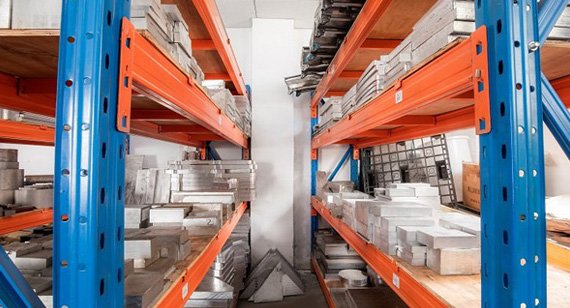
Forged steel available on the market offers a wide variety of exceptional properties, such as high strength, toughness, wear resistance, corrosion resistance, and free-machining capabilities. Utilizing CNC machining, a subtractive manufacturing process that removes material to "sculpt" the desired shape, preserves the inherent material characteristics required for your steel parts. Furthermore, as computer technology continues to advance, this code-driven manufacturing process delivers distinct advantages in high precision and dimensional stability. Overall, when your project demands the durability, strength, or corrosion resistance of steel combined with the structural integrity, dimensional stability, cost-effectiveness, flexibility, and efficiency of CNC machining, this comprehensive guide is essential reading.
Read on to explore CNC steel types and grades, process selection and characteristics, comparisons with other steel manufacturing methods, as well as advantages, technical challenges, cost considerations, design recommendations, and real-world applications to help bring your steel machining project to life efficiently, economically, and with uncompromised quality. At the end of this article, we will also share a case study on how our factory helped a client successfully execute the complex machining of a 4140 alloy steel transmission shaft, balancing extreme wear resistance with high torsional strength while maintaining a total radial runout of less than 0.01 mm post-heat treatment.
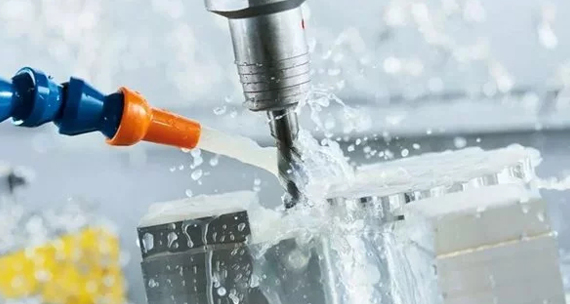
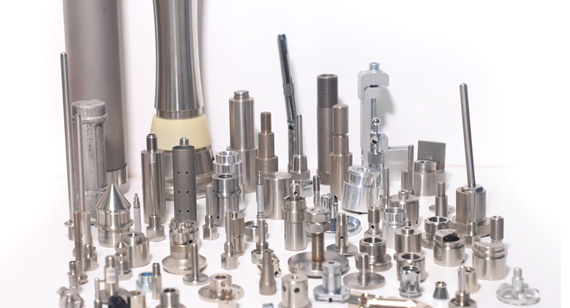
CNC steel machining refers to the process of manufacturing steel parts with high precision and efficiency using Computer Numerical Control (CNC) machine tools. Through pre-programmed software and code, CNC machines control complex machinery, such as lathes, milling machines, routers, and grinders, to cut and shape steel raw material into the desired geometry. Steel machining is controlled by computer-generated code and precision toolpaths, which brings distinct benefits:
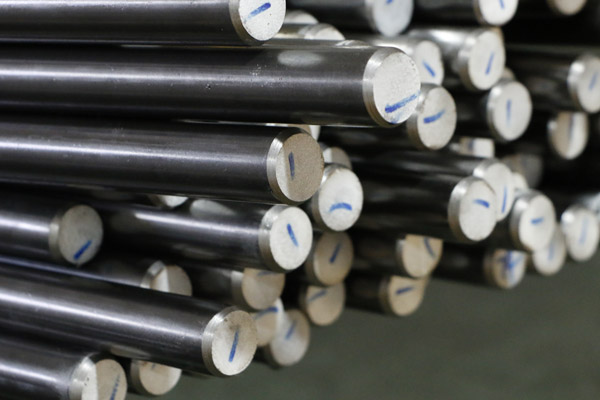
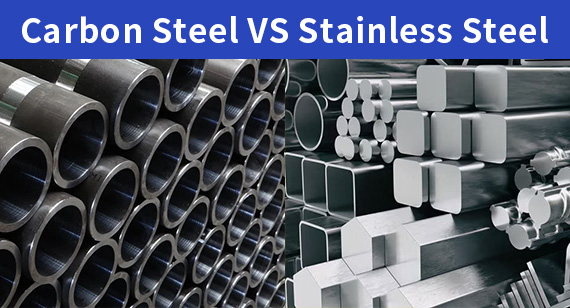
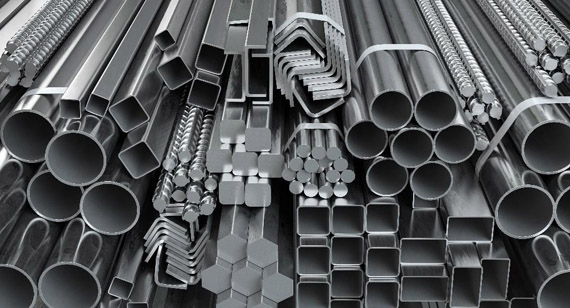
There are primarily four types of cnc steel for you to choose from, and each has it’s specific properties and is used in different applications. Choosing the right cnc steel is crucial for achieving desired performance.
Carbon Steel
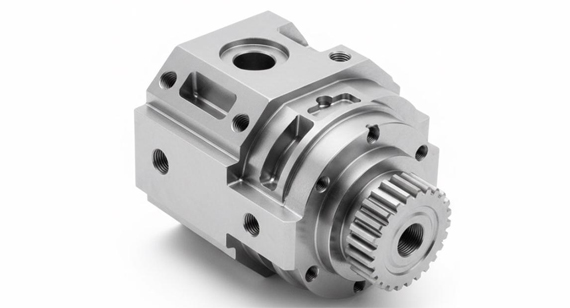
The properties of carbon steel, such as hardness, strength, and machinability, are primarily determined by its carbon content (<0.25%, 0.3–0.6%, 0.6–1.2%). As you move from low carbon to medium and high carbon steel, hardness and strength progressively increase, though the material becomes more brittle.
Additionally, free-machining steel can be viewed as a specialized grade of carbon steel (carbon structural steel). It offers the best machinability among all steel types, enabling the shortest cycle times and highly favorable processing costs for producing CNC steel parts.
Below is a comparison table showcasing various carbon steel categories and typical grades:
| Carbon Steel | Typical Grades | Tensile Strength (MPa) (Rigidity) | Yield Strength (MPa) (Tougness) | Hardness Range (Unhardened vs. Quenched) | Ductility (Elongation) | Weldability | Machinability Rating | CNC Machining Applications |
| Low Carbon Steel | Q235 / 20# (AISI 1020) | ~370–500 | ~235–245 | ~130–160 HB | Excellent (>=25%) | Excellent (No preheating required) | 50% – 70% | Common. Widely used for CNC structural parts, welded bases, fixtures, and general components with modest surface finish requirements. |
| Medium Carbon Steel | 45# / AISI 1045 | ~570–690 | ~330–490 | ~170–230 HB (Quenchable to 50+ HRC) | Moderate (~15–20%) | Fair (Prone to cracking, requires preheating) | 60% – 75% | Very common. Drive shafts, gears, crankshafts, and various high-strength mechanical components. |
| High Carbon Steel | T8 / AISI 1095 | ~600–1000+ | ~400–700 | ~200–250 HB (Reaches 60+ HRC after quenching) | Poor (~5–12%) | Very Poor (Extremely prone to thermal cracking) | 35% – 50% | Less common. Used primarily for light finish machining on blank stock for high-hardness dies, leaf springs, and cutting tools. |
| Free-Machining Steel | Y15 / AISI 1215 | ~400–550 | ~250–350 | ~140–180 HB | Lower (Ductility restricted due to S/P content) | Poor (Sulfur and phosphorus easily cause hot cracking) | 100% – 140% | Very common. High-volume automated lathe parts: bolts, nuts, pins, and instrument fittings. |
Stainless Steel
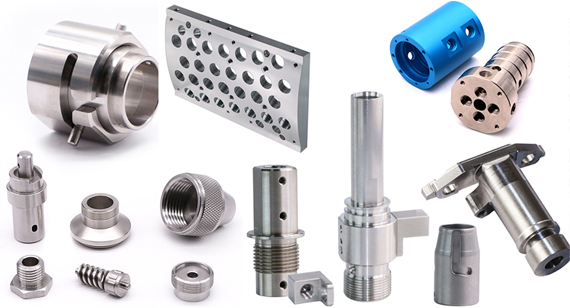
Stainless steel contains at least 10.5% chromium, delivering superior corrosion resistance across all steel categories alongside solid mechanical strength. Its machinability rating typically ranges from 35% to 60%.
Alloy Steel
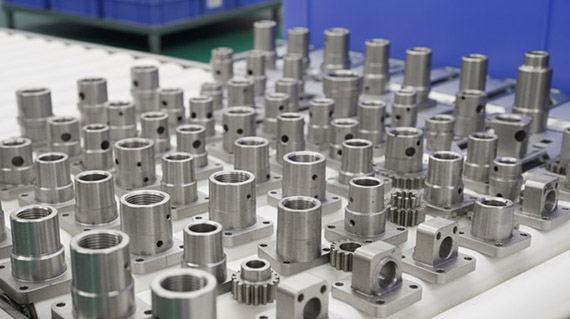
Alloy steels incorporate additional elements such as chromium, nickel, and molybdenum to enhance various mechanical properties. The machinability rating generally ranges between 50% and 75%.
Tool Steel
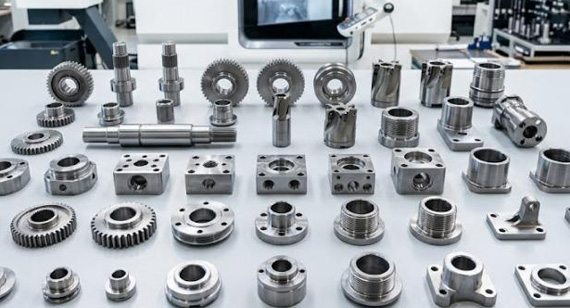
Tool steels are specifically engineered for manufacturing cutting tools, dies, and molds, featuring extreme hardness and wear resistance. In terms of wear resistance, tool steel performs exceptionally well compared to other steel categories; however, due to its high strength and hardness, machinability is relatively low (25% to 55%), leading to higher CNC machining costs.
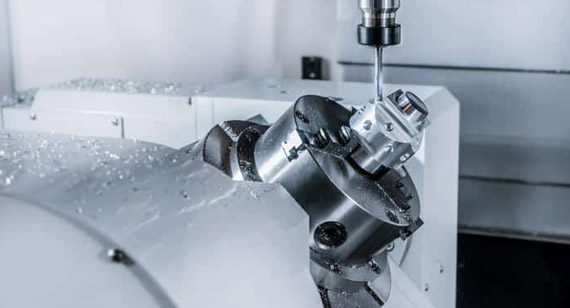
CNC steel machining encompasses a variety of processes, each serving a specific purpose in shaping and finishing steel components. Understanding these operations helps you select the most suitable manufacturing method for your project.
| Machining Process | Core Principle | Advantages |
| CNC Turning | The steel workpiece rotates at high speeds while the cutting tool moves linearly to remove material (performed on CNC lathes). | • High machining precision and superior surface finish. • Ideal for symmetrical steel cylindrical and rotational parts. • Suitable for high-volume automated turning of carbon/alloy steels. |
| CNC Milling | The steel workpiece remains stationary while multi-flute carbide cutters rotate at high speeds and move along multiple axes to cut material. | • Easily handles complex steel part geometries. • Excellent material versatility (stainless steel, alloy steel, etc.). • Accommodates both single-piece steel prototypes and high-volume production. |
| CNC Drilling | CNC controls precise positioning as a rotating drill bit efficiently cuts away steel to create circular holes. | • Fast drilling speeds and high steel processing efficiency. • High repeatability in hole position and diameter. • Ideal for large-scale, standardized hole making in steel plates and components. |
| CNC Tapping | Uses specialized taps with precise CNC feed and speed control to cut internal threads inside pre-drilled steel holes. | • Delivers precise and uniform internal steel threads. • Increases automation efficiency for steel threading operations. • Precise speed control reduces tap breakage risk in high-hardness steels. |
| Grinding | High-speed rotating grinding wheels perform micro-abrasion on heat-treated, hardened steel surfaces. | • Extremely high dimensional and geometric tolerances (micron-level). • Significantly improves surface roughness. • Effortlessly finishes high-hardness tool steels and quenched steels. |
| Electrical Discharge Machining (EDM) | Non-contact process where the tool electrode and steel workpiece are submerged in a dielectric fluid, removing material via high-temperature spark erosion. | • Zero mechanical cutting force; thin-walled steel parts will not deform. • Effortlessly processes high-hardness tool steels and intricate narrow slots. • Exceptionally high precision capable of forming micro mold features. |
Overall, it’s recommend to choose the right machining process with these needs to gain the cost-effective, effeciency, and quality benefits:
1.CNC Turning:
2.CNC Milling:
3.CNC Drilling:
4.CNC Tapping:
5.Grinding:
6.Electrical Discharge Machining (EDM):
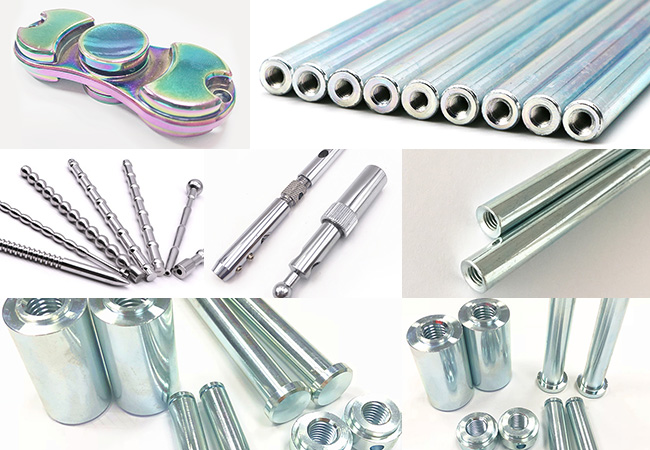
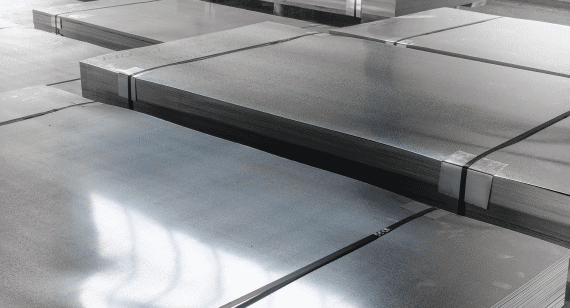
Surface finishing on machined steel plays a crucial role beyond optics. Because raw steel is susceptible to oxidation, corrosion, and friction wear, choosing the right secondary treatment is critical to extending component lifespan.
| Surface Finish Process | Key Characteristics | Engineering Benefits | Typical Steel Applications |
| As-Machined | Retains visible tool marks, Ra 1.6–3.2 μm | Most economical option; requires protective anti-rust oil to prevent flash rusting. | Internal structural parts, weldments, structural prototypes. |
| Bead Blasting | Uniform matte texture; eliminates surface tool mark blemishes. | Enhances aesthetic appearance, relieves surface stress, and improves adhesion for subsequent coatings. | Non-reflective components, pre-treatment surface prep before painting or plating. |
| Black Oxide / Passivation | Chemical conversion coating; introduces zero dimensional change. | Improves basic corrosion resistance and galling prevention; stainless steel passivation removes surface free iron. | Precision gears, mold and die components, stainless steel medical/food-grade parts. |
| Anodizing | Forms a protective oxide layer (primarily for aluminum; steel typically uses black oxide or plating instead). | Significantly enhances wear and corrosion resistance for aluminum; steel requires plating or black oxide for similar performance. | Aluminum fixture assemblies (plating or black oxide recommended if steel corrosion resistance is required). |
| Electroless Nickel Plating | Uniform auto-catalytic deposition of a protective metal layer. | Delivers superior wear and corrosion resistance; uniform coating thickness does not affect micron-level tolerances. | Valve spools, oil and gas components, precision bearings, electronic hardware. |
| Powder Coating | Electrostatic dry powder coating cured at high temperatures. | Creates a tough, scratch-resistant coating with strong corrosion protection suited for harsh outdoor environments. | Steel enclosures, automotive chassis brackets, industrial machinery frames. |
| Carburizing / Surface Hardening | Increases surface carbon content and hardness of the steel part. | Forms a high-hardness wear-resistant outer shell (58–62 HRC) while maintaining a ductile, shock-absorbing core. | 20Cr / 8620 transmission gears, camshafts, drive locating pins. |
Selecting Based on Performance and Functional Requirements
If the component operates in a high-friction or heavy-load environment, prioritize Carburizing or Black Oxide to enhance surface hardness and wear resistance. If the part contacts corrosive media or is designed for the medical/food processing industries, choose Stainless Steel Passivation or Electroless Nickel Plating. For applications requiring scratch resistance and long-term outdoor weatherability, Powder Coating is the optimal choice.
Selecting Based on Aesthetics and Tolerance Budgets
If the project budget is limited and the part is intended for internal structural assemblies, choosing an As-Machined finish offers the highest cost-effectiveness. If you need to eliminate tool marks and achieve a uniform matte texture, adding Bead Blasting is recommended. For precision shafts and mold cavities that require a mirror-like surface finish or reduced friction coefficients, select Polishing. Note: Plating and powder coating add micro-scale layer thickness, so machining allowances must be factored in advance for tight, micron-level mating tolerances.
CNC steel machining is vital across numerous industries, providing the precision and efficiency required for the production of critical components.
CNC steel machining offers numerous benefits but also presents certain challenges that must be managed effectively.
Advantages of CNC Steel Machining
Precision and Accuracy
Wide Range of Applications
Increased Productivity
Superior Surface Finish
Reduced Material Waste
Customization and Flexibility
Strength and Durability
Cost-Effectiveness in Volume Production
Challenges of CNC Steel Machining
Material Hardness
Complexity of Programming
Equipment Costs
Skilled Labor Force
Thermal Deformation
Surface Treatment Challenges
Steel and aluminum are often cnc machined to various parts. When choosing between steel and aluminum for CNC machining, you should balance material performance against total production cost. Aluminum offers exceptional machinability and a high strength-to-weight ratio, allowing for rapid cutting speeds and significantly lower machining times. Conversely, steel provides superior yield strength, extreme hardness, and fatigue resistance, but its higher cutting resistance accelerates tool wear and extends cycle times, making steel parts inherently more costly to machine despite lower raw material prices.
| Comparison Feature | CNC Steel Machining | CNC Aluminum Machining |
| Material Characteristics | High strength, extreme hardness, excellent wear and fatigue resistance. High thermal mass. | Lightweight, excellent strength-to-weight ratio, high thermal and electrical conductivity. |
| Common Grades | AISI 1045, 4140, 4340, D2, 304 / 316 Stainless | Aluminum 6061-T6, 7075-T6, 2024, 5052 |
| Machinability Index | Low to Moderate (25%–65%; up to 100%+ for free-machining grades like 1215) | Excellent (350%–500%+) |
| Cutting Speed | Conservative (50–150 m/min) to prevent tool thermal degradation | Ultra-High Speed (800–3000+ m/min) |
| Tool Wear and Life | High tool wear; requires rigid carbide, CBN, or coated (AlTiN) inserts | Minimal tool wear; tools last significantly longer |
| Coolant Requirements | Essential (High-Pressure Coolant recommended to manage heat and chips) | Standard flood coolant or Minimum Quantity Lubrication (MQL) |
| Raw Material Cost | Low to Moderate (Generally lower cost per kilogram) | Moderate to High (Higher cost per kilogram than standard steel) |
| Machining Cycle Time | Longer cycle times due to lower feed rates and axial depth of cut | Very fast cycle times; rapid material removal rates (MRR) |
| Overall Production Cost | Higher machining cost per part (driven by cycle time and tool consumption) | Lower machining cost per part (driven by high-speed processing efficiency) |
| Typical Applications | Heavy-duty shafts, gears, molds/dies, structural fasteners, high-stress automotive/industrial parts | Aerospace structural frames, drone parts, electronic heatsinks, lightweight enclosures |
Steel CNC machining costs are primarily driven by cycle time, tool wear, and heat treatment steps. Here is how to keep costs low:
Optimizing your design for CNC steel machining reduces tool breakage, improves surface quality, and cuts production costs:
Selecting a reliable CNC machining supplier is critical to the success of your project. When evaluating potential CNC steel machining partners, consider the following key factors:
Experience and Expertise
Quality Assurance
Capacity and Capabilities
Lead Time and Flexibility
Cost-Effectiveness
Technology and Innovation
Customer Service and Support
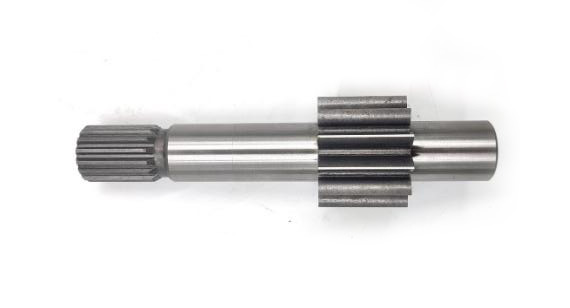
The highly challenging machining of a 4140 alloy drive shaft, achieving a runout value of less than 0.01 mm after heat treatment.
Challenge
A European automotive client required a custom transmission shaft manufactured from 4140 alloy steel for a high-performance gearbox application. The component demanded superior fatigue resistance, excellent toughness, and high torsional strength under extreme mechanical loads. Because the shaft operates in a tight-tolerance drive assembly, the primary technical hurdle was maintaining strict dimensional stability after processing—the total radial runout (concentricity) across all bearing journals had to stay strictly under 0.01 mm (0.0004") to prevent vibration and premature gear wear.
Analysis and Solution
Hardening 4140 steel to the required 42–45 HRC via quench-and-temper (QandT) heat treatment inherently introduces severe internal thermal stresses. Without precise process control, this heat treatment stage frequently causes localized distortion and micro-warping that easily exceeds the tight concentricity limit. Machining heavy steel also introduces significant residual mechanical stresses, making it nearly impossible to hold micro-inch tolerances if the sequence is not carefully engineered from rough stock to final finishing.
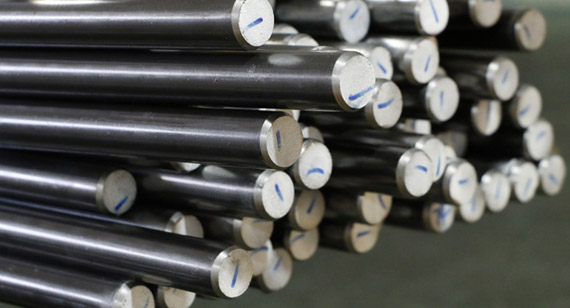
To overcome these thermal deformation risks, our team engineered a strict 5-stage controlled workflow. We began with normalized 4140 bar stock, performing aggressive rough CNC turning while leaving a 0.50 mm (0.020") grinding allowance on critical journals. Before hardening, the parts underwent vacuum stress-relief annealing to relax internal grains. After oil quenching and tempering to 42–45 HRC, we transferred the hardened shafts to a precision CNC cylindrical grinder equipped with CBN wheels and in-process laser gauging to finish the journals in micro-steps.
Final Quality Inspection and Results
The finished shafts underwent 100% Quality Assurance using a 3D Coordinate Measuring Machine (CMM) and an optical laser runout tester. Our multi-stage engineering approach successfully locked the final radial runout within 0.01 mm specification. Additionally, the process delivered a mirror-like journal surface finish of Ra 0.2 μm and achieved a 100% defect-free rate across the entire 500-piece production run.
CNC steel machining remains a cornerstone of modern manufacturing, providing uncompromised strength, micro-inch precision, and outstanding versatility. By selecting the right steel grade (from carbon and alloy steels to heat-treated tool steels and stainless grades) and optimizing your design for manufacturing, you can significantly reduce cycle times while achieving tight tolerances and superior surface finishes. Partnering with an experienced CNC machining supplier ensures your complex steel components are manufactured efficiently, cost-effectively, and to the highest quality standards.
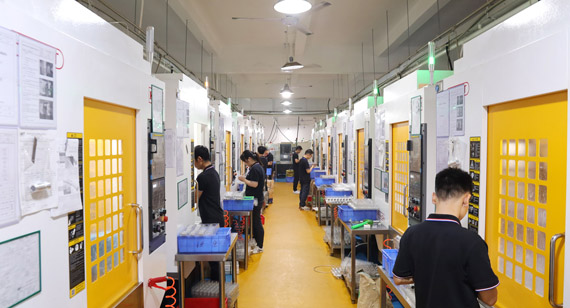
As an ISO 9001-certified custom manufacturing supplier, VMT specializes in high-precision CNC steel machining services for global clients across automotive, aerospace, medical, and industrial automation industries. Equipped with advanced multi-axis CNC mills, lathes, and precision cylindrical grinders, our engineering team handles everything from single-piece rapid prototypes to complex, high-volume production runs.
Our Steel Machining Capabilities Include:
Why Partner with VMT?
For more information or to request a quote, please contact our team. We are dedicated to providing exceptional service and solutions for your CNC steel machining projects.
Send your 2D drawings, 3D CAD models, steel grade, heat-treatment requirements, critical tolerances, surface-finish requirements, prototype quantity and production quantity. VMT will review manufacturability, machining strategy, finishing, inspection and quotation requirements.
All information and uploaded files are secure and confidential.
1 Tell us what you need
2 Get solution & quote
3 Approve production
Email: inquiry@vimetal.com.cn
What is the most common steel used in CNC machining?
The most commonly machined steel grades are AISI 1045 (Medium Carbon Steel) for general structural components, 4140 Alloy Steel for high-strength gears and shafts, and 304/316 Stainless Steels for corrosion-resistant assemblies.
Which steel grade is the easiest to CNC machine?
1215 and 12L14 Free-Machining Steels are the easiest to machine. Added sulfur and lead content act as internal chip-breakers and lubricants, yielding a 100% to 140% machinability rating and superior surface finish.
Why is heat treatment performed during CNC steel machining?
Steel heat treatment (such as annealing, quenching, tempering, and carburizing) alters the metal's grain structure to achieve desired mechanical properties—such as relieving stress before finish cutting, or increasing surface hardness (HRC) to resist wear.
How do you prevent steel parts from rusting after CNC machining?
Immediately after cutting and washing, raw steel parts must be treated with anti-rust oil, black oxide coating, zinc/nickel plating, or powder coating to prevent exposure to environmental oxygen and moisture.
What advantages does CNC steel machining offer over traditional casting or forging?
What is the difference between steel and iron, and is cast iron suitable for CNC machining?
The technical information and manufacturing advice shared on the VMT website are for general guidance only. While we strive for accuracy, VMT does not guarantee that the processes, tolerances, or material properties mentioned are applicable to every specific project. Any reliance you place on such information is strictly at your own risk. It is the buyer's responsibility to provide definitive engineering specifications for any production orders. Final specifications and service terms shall be subject to the formal contract or quotation confirmed by both parties.


 +86 15099911516




 Read more