16 years one-stop China custom CNC machining parts factory

Hey there I’m VMT Sam!
With 25 years of CNC machining experience we are committed to helping clients overcome 10000 complex part-processing challenges all to contribute to a better life through intelligent manufacturing. Contact us now
 2018 |
Published by VMT at Apr 21 2026 | Reading Time:About 3 minutes
2018 |
Published by VMT at Apr 21 2026 | Reading Time:About 3 minutes


Proper steel alloy can decide your budget, performance of the CNC-machined parts like strength, weight, or corrosion resistance. 4140 alloy steel is one of the most versatile structural steel with excellent performance that you may now seek. High strength by heat treatment, good toughness and wear-resistance, good corrosion resistance if coated or painted for mild environment; These advantages of material 4140 alloy steel are what you could prefer to apply to your——
If these needs are right hit on your project, then you could be interested in what this blog will share with you: key properties and uses, composition and machinability, good for CNC or not, good for welding or not, etc.
To wrap things up, we’ll also showcase a case study on how we leverage our CNC expertise to navigate the complexities of 4140 steel, ensuring tight tolerances and superior finishes while avoiding the costly pitfalls of material instability.
4140 alloy steel machining is quite popular, especially for CNC machining into many precision parts for high strength, fatigue-resistant, wear-resistant, and mild corrosion-resistant parts. It has key characteristics including:
Compared to plain carbon steels, 4140 offers superior hardenability; its hardness can be boosted several times over the annealed state via oil or water quenching. You might specify this grade specifically for components where high wear resistance is a priority.
By quenching and tempering, the material retains immense strength while recovering the toughness needed to survive impact loads. This balance allows you to produce 4140 steel gears that are as resilient as they are strong.
The inherent properties of 4140 alloy steel ensure that parts won’t succumb to brittle fracture under heavy pressure. Consequently, when you opt for 4140, it provides a reliable safeguard for the machine's overall structural integrity.
It is built to endure cyclic mechanical stress over the long haul. You can expect a dependable fatigue life from 4140 machined parts, such as drive shafts, even under demanding conditions.
Regarding weldability, machinability, and costs (both material and processing), you can view 4140 as a well-rounded, moderate performer across the board.
Alloy steel 4140 is weldable but welding it can be challenging.
The key is: If the weld zone cools rapidly after being heated, brittle martensite (welding joints become brittle) can quickly form, causing a potential crack.
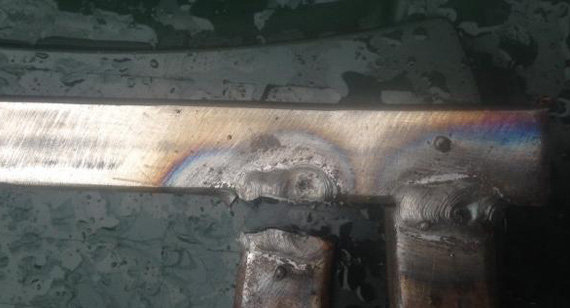
As a result, if you operate the welding process inappropriately when joining two 4140 steel components, the final assembly may lack structural integrity and be prone to failure.
To avoid this potential failure, just follow the below stages:
| Stage |
Actions |
Purpose |
| 1. Preheating |
Uniformly heat the parts or the weld zone to 200°C - 350°C. | Slow down the cooling rate to prevent the formation of brittle martensite. |
| 2. Welding |
Use low-hydrogen electrodes (such as E7018 or E8018-B2) or suitable GMAW/GTAW filler wires. | Minimize the risk of hydrogen-induced cracking and ensure weld metal strength. |
| 3.Interpass Temp Control |
During multi-pass welding, consistently maintain a temperature no lower than the initial preheat level. | Ensure the microstructural stability of the heat-affected zone (HAZ). |
| 4.Post-Weld Heat Treatment (PWHT) |
Immediately perform stress-relief annealing (approx. 600°C-650°C) or controlled slow cooling after welding. | Relieve internal stresses and restore the signature toughness of 4140 alloy steel. |
Steel alloy 4140 has approximately 0.8% - 1.1% Chromium (Cr) and 0.15% - 0.25% Molybdenum (Mo), which belongs to alloy steel—these elements give it better corrosion resistance than standard carbon steels (basically iron and carbon, easy to rust). But alloy 4140 also lacks the spontaneous passive protective layer found in stainless steel (which requires over 10.5% Chromium).
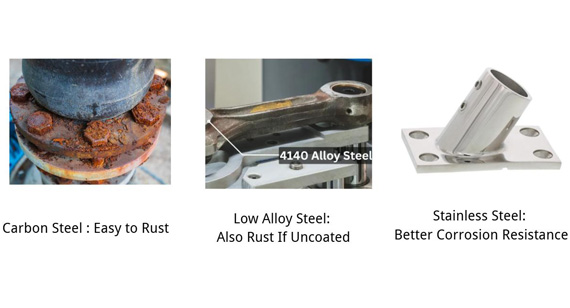
So, the corrosion resistance of 4140 alloy is better than carbon steel but not good as stainless steel (Read carbon steel vs stainless steel for more if interested).
Then, how would you do to protect the 4140 alloy steel machined parts? Particularly if they are exposed to an outdoor or humid environment—if you can’t change into more rust-proof stainless steel.
Simply ask your partner factory to put an appropriate coating or plating on the surface!
If the parts are used in a dry, indoor setting, applying a thin layer of anti-rust oil after machining is often sufficient. As long as the oil film remains intact, 4140 parts can remain free of structural corrosion for decades.
Black Oxide or Bright Nickel Plating: Best for indoor precision parts where dimensional precision is priority (adding only a few microns of thickness).
Phosphating: Ideal as a base layer before painting, or for sliding components before coating oil.
Hard Chrome Plating: Used for heavy-duty shafts where you need extreme wear resistance combined with rust prevention.
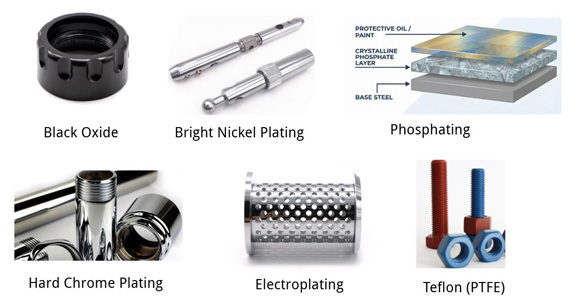
It is better off with electroplating. This can effectively prevent steel base exposure to the air—visual texture can be achieved as well by it.
So, if you want your steel components for industrial equipment —— showing a high-end finish with an excellent rust barrier——electroplating is the good choice.
In such demanding conditions, 4140 may no longer be the right choice for you—— unless it is paired with high-performance coatings, such as Teflon (PTFE) or heavy-duty industrial paints.
In these cases, it is highly recommended that you evaluate whether a switch to a more corrosion-resistant stainless steel is necessary.
4140 alloy steel exhibits excellent machinability in its annealed state. Its machinability rating is approximately 65% of the B1112 standard steel.
Utilizing advanced CNC equipment and carbide tooling enables high-speed cutting (reducing costs since machining is billed by the minute) and achieves a high surface finish (eliminating extra fine-grinding steps and expenses).
More specific configurations include:
At VMT CNC machining factory, these conditions are met—not only can the annealed 4140 be processed effectively, but pre-hardened (HRC 28-32) 4140 can also be machined efficiently—saving production costs while achieving a smooth surface finish.
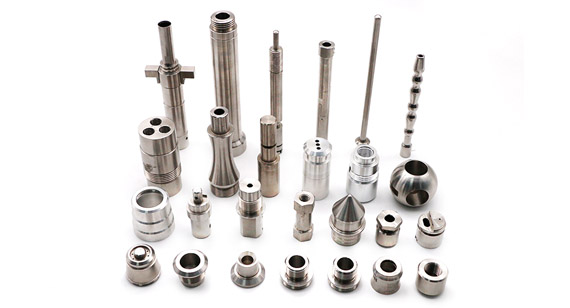
CNC Automotive Engine and Transmission Components
Core automotive components require high fatigue strength—4140 alloy steel consistently meets it.
The performance of 4140 alloy steel in terms of strength, fatigue resistance, and wear resistance makes it an outstanding choice for motorcycle components.
For drone applications, 4140 alloy steel machined parts are primarily utilized for load-bearing joints—— these parts need to withstand pressure, such as:
General Hardware
Typical examples include high-strength bolts (Grade 10.9 or 12.9), couplings, hydraulic cylinder pistons, and heavy-duty rollers.
Tools and Molds
Common applications include mold bases, collets, high-strength wrench heads, heavy-duty sockets, and injection mold sliders.
4140 alloy steel raw material is more expensive than plain carbon steel but more affordable than stainless steel. This is because 4140 contains small amounts of chromium and molybdenum, whereas plain carbon steel lacks significant alloying elements, and stainless steel contains at least 10.5% chromium along with other expensive alloys.
The CNC machining cost of 4140 alloy steel is moderate (yet highly economical if your parts require high strength, fatigue resistance, and guaranteed stability). Due to its good machinability, high-speed cutting is achievable as long as the correct carbide tools with CVD or PVD coatings are selected.
Additionally, it can easily be machined to an excellent surface finish (low Ra values). This typically eliminates the need for extra polishing or grinding processes, saving your part production costs.
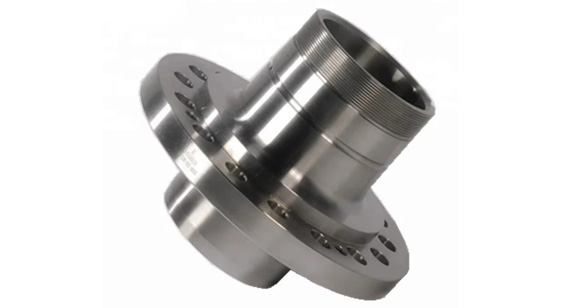
Maintenance costs for 4140 alloy steel parts are moderate; its corrosion resistance is superior to plain carbon steel but inferior to stainless steel (again, due to the chromium and molybdenum content). However, if you provide 4140 alloy steel parts with proper protection, such as coatings or electroplating, they can last for decades in dry indoor environments without rusting, which keeps maintenance costs very low.
Besides common equivalent materials from different regions that can be used as direct replacements, an enhanced performance alternative is also recommended:
4140 Alloy Steel Alternatives
| Category |
Grade |
Standard |
Tip |
| Equivalent |
SCM440 | JIS (Japan) | This is the most common equivalent in Asian supply chains. |
| Equivalent |
42CrMo4 | EN/DIN (Europe) | This is the most prevalent grade in European precision machining, offering full performance compatibility. |
| Equivalent |
EN19 | BS (UK) | Frequently used in industrial standards across Commonwealth countries. |
| Equivalent |
42CrMo4 | UNI (Italy) | Commonly used in Italian automotive and hydraulic components. |
| Equivalent |
Grade 4140 | AS 1444 (Australia) | Directly adopts the American AISI nomenclature with fully aligned performance specifications. |
| Equivalent |
38KhM (38ХМ) | GOST (Russia) | Close performance. 38KhM is the molybdenum-bearing version that closer matches 4140. |
| Equivalent |
42CrMo | GB/T 3077 (China) | Chinese equivalent. The composition (0.4%C, 1%Cr, 0.2%Mo) almost completely overlaps with 4140. |
| Equivalent |
42CD4 | NF (France) | While largely replaced by EN standards, it remains very common in older drawings from France and North Africa. |
| Enhanced Version |
SNCM439 | AISI / JIS | An upgraded version that adds Nickel (Ni) to the 4140 base. It excels in through-hardenability for large-section parts and offers superior low-temperature toughness. |
Chemical Composition of 4140 Alloy Steel
| Element | Symbol |
Weight % |
| Carbon |
C | 0.38% – 0.43% |
| Chromium |
Cr | 0.80% – 1.10% |
| Manganese |
Mn | 0.75% – 1.00% |
| Molybdenum |
Mo | 0.15% – 0.25% |
| Silicon |
Si | 0.15% – 0.35% |
| Phosphorus |
P | ≤ 0.035% |
| Sulfur |
S | ≤ 0.040% |
| Iron |
Fe | Balance |
Physical Properties of 4140 Alloy Steel
| Property |
Metric |
Imperial |
| Density |
7.85 g/cm³ | 0.284 lb/in³ |
| Melting Point |
~1425 °C | ~2600 °F |
| Thermal Conductivity |
42.7 W/m·K | 24.7 BTU/ft·hr·°F |
| Coefficient of Thermal Expansion |
12.2 µm/m·°C | 6.7 µin/in·°F |
| Specific Heat |
473 J/kg·°C | 0.113 BTU/lb·°F |
| Elastic Modulus |
190-210 GPa | 27,500-30,500 ksi |
| Electrical Resistivity |
220 nΩ·m | 1.32 µΩ·in |
| Poisson's Ratio |
0.27–0.30 | 0.27–0.30 |
Mechanical Properties of 4140: Annealed vs. Hardened
| Property |
Annealed |
Quenched & Tempered |
| Tensile Strength, Ultimate |
655 MPa (95,000 psi) | 850 – 1100 MPa (123,000 - 160,000 psi) |
| Yield Strength |
415 MPa (60,200 psi) | 650 – 950 MPa (94,300 - 138,000 psi) |
| Hardness (Brinell) |
197 HB | 280 – 320 HB |
| Hardness (Rockwell C) |
13 HRC (approx) | 28 – 34 HRC |
| Elongation at Break (in 50mm) |
25.7% | 12% – 18% |
| Reduction of Area |
56.9% | 45% – 55% |
| Modulus of Elasticity |
210 GPa (30,458 ksi) | 210 GPa (30,458 ksi) |
| Charpy Impact (V-Notch) |
35 - 45 J | 40 - 60 J |
With its superior balance of strength, toughness, and wear resistance, 4140 alloy steel is an excellent choice for automotive components and heavy machinery parts. While it requires specialized handling for welding and corrosion resistance, its relatively high machinability and excellent response to heat treatment make it a cost-effective option for CNC precision machining. If you are looking for a material that can withstand extreme torque while maintaining tight tolerances—and it fits your budget and environmental requirements—4140 deserves a top spot on your design list.
Optimization of 4140 Steel Drive Shafts for Heavy Equipment
As a CNC machining factory with years of industry experience, VMT successfully resolved a high scrap rate issue for a heavy equipment manufacturer involving 4140 steel parts, ultimately achieving significant cost savings for the client.
The client required a batch of 4140 steel pump drive shafts for hydraulic systems. The specifications demanded a hardness of HRC 32-35 and a run-out tolerance at the journal within 0.01mm. Initially, the client faced severe challenges with another supplier: the parts deformed during the "machining followed by heat treatment" process, compromising precision and resulting in a scrap rate as high as 30%.
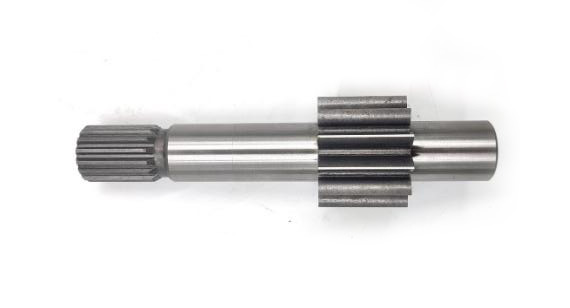
VMT’s technical team re-engineered the traditional workflow. We opted to use pre-hardened 4140 bar stock for full CNC machining. To address the challenges of high hardness and rapid tool wear associated with pre-hardened steel, we utilized custom PVD-coated carbide tools and optimized High-Speed Machining (HSM) parameters. By implementing staged roughing to release internal stresses combined with high-precision grinding processes, we achieved the required design hardness and precision without the need for secondary heat treatment.
Through "hard turning" and internal stress control techniques, we not only maintained tolerances strictly within the 0.01mm range but also shortened the overall production cycle by 25% and achieved 100% part consistency.
What Are 4140 Alloy Steel Magnetic Properties?
4140 alloy steel has a high iron content and is a ferromagnetic material, therefore it possesses strong magnetism. For automotive sensors or magnetic clamping requirements, 4140 alloy steel is suitable. However, if the application involves equipment or precision instruments that cannot tolerate interference, you'd better not use 4140 CNC machined parts.
Does 4140 Alloy Steel Rust?
In dry indoor environments—especially with surface protection like coatings or electroplating—it will not rust easily and can last for decades. However, in constantly humid or marine environments, it is highly susceptible to corrosion even with surface protection.
Is 4140 Alloy Steel Weldable?
It is weldable, but it is considered difficult. To prevent cracking, precise procedures must be followed, such as preheating, using low-hydrogen electrodes, and performing post-weld heat treatment.
How Is AISI 4140 Alloy Steel Made?
Typically, a mixture of recycled steel scrap and iron ore is charged into a furnace to produce molten iron. The molten metal then undergoes secondary refining to remove impurities, and alloying elements are added in specific proportions. Finally, vacuum degassing is performed to ensure material purity. The refined liquid steel is cast into semi-finished forms like ingots, which can be further hot-rolled into plates and bars, or further transformed to supply condition.
What Are Common Forms of Steel Alloy 4140?
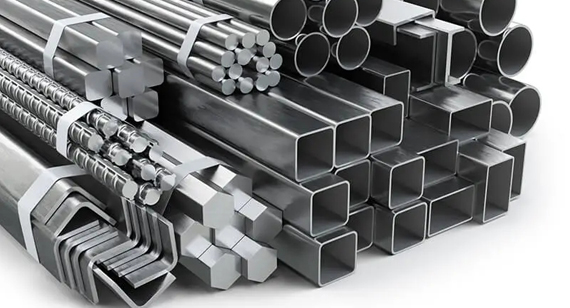
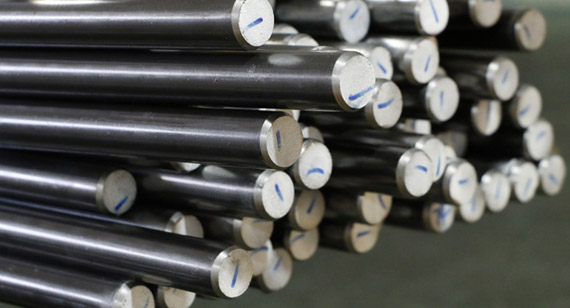
Round Bar, Plate & Sheet, Flat & Rectangle Bar, Hollow Bar/Tubing, Annealed 4140 Steel, Pre-Hardened 4140 Steel, Hot Rolled 4140 Steel; These are usually what you can gain from market supply.
4130 vs. 4140 Alloy Steel: Which Should You Choose?
4130 steel performs slightly better than 4140 steel in terms of weldability and ductility. 4140 alloy steel performs better in strength after heat treatment. Generally speaking, if you require structural components and welded parts, you can consider 4130 steel. If you require mechanical operations and heavy loads, you can consider 4140 steel.


 +86 15099911516




 Read more