16 years one-stop China custom CNC machining parts factory

Hey there I’m VMT Sam!
With 25 years of CNC machining experience we are committed to helping clients overcome 10000 complex part-processing challenges all to contribute to a better life through intelligent manufacturing. Contact us now
 392 |
Published by VMT at Feb 04 2026 | Reading Time:About 3 minutes
392 |
Published by VMT at Feb 04 2026 | Reading Time:About 3 minutes


Known for its signature "hard case and tough core," 8620 alloy steel inherently possesses exceptional toughness, impact resistance, and structural strength. Due to its low carbon content (approximately 0.20%), 8620 steel exhibits relatively low hardness in its raw, untreated state. However, once subjected to the heat treatment of carburizing (Case Hardening), it develops a high-hardness, wear-resistant carbide surface layer. This process compensates for its initial softness, providing good resistance to wear and galling, making it an ideal candidate for high-stress components like gears, cams, and pins.
This article explores AISI 8620 steel—a low-carbon alloy steel favored for CNC machined parts due to its excellent balance of machinability, weldability, and impact resistance. Read on to learn AISI 8620 alloy steel more.
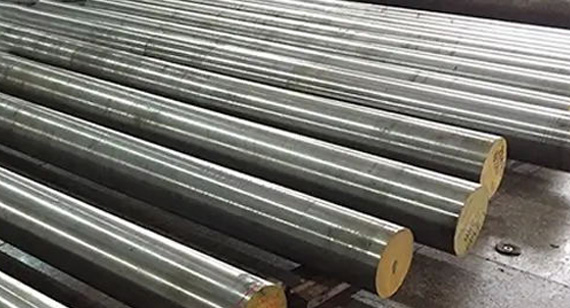
AISI 8620 alloy steel is a low-carbon alloy steel containing Nickel, Chromium, and Molybdenum (Ni-Cr-Mo). This specific blend of alloys makes it one of the most versatile carburizing steels in the industry. The primary advantage of this material is its exceptional carburizing response. In its raw state, the low carbon content ensures that the steel remains incredibly ductile and easy to form. After heat treatment, it achieves a "dual-nature" structure: a high-hardness surface that resists abrasion and a resilient interior that absorbs sudden shocks without fracturing. This makes it the premier choice for 8620 alloy steel machined parts such as high-performance gears and crankshafts, automotive piston pins and differential components, heavy-duty bushings and wear-resistant sleeves.
What are 8620 Alloy Steel Limitations?
While 8620 offers superior machinability and weldability compared to higher-carbon alloys, it does come with certain trade-offs. The inclusion of premium alloying elements—Nickel, Chromium, and Molybdenum—means that 8620 steel is generally more expensive than plain carbon steels (like 1018 or 1045).
Furthermore, although it contains Chromium, the concentration is relatively low (0.40%–0.60%). This is insufficient to form the protective "passive film" found in stainless steels (which typically require over 10.5% Chromium). Consequently, 8620 exhibits average corrosion resistance and is prone to rusting if left unprotected. To ensure longevity, 8620 parts usually require surface protection such as oiling, electroplating, or industrial coatings.
Below table shows detailed chemical composition of material 8620 alloy steel:
Table 1: 8620 Alloy Steel Chemical Composition
| Element |
Content (%) |
| Iron (Fe) |
96.845 - 98.02% |
| Carbon (C) |
0.18 - 0.23% |
| Manganese (Mn) |
0.70 - 0.90% |
| Nickel (Ni) |
0.40 - 0.70% |
| Chromium (Cr) |
0.40 - 0.60% |
| Molybdenum (Mo) |
0.15 - 0.25% |
| Silicon (Si) |
0.15 - 0.35% |
| Sulfur (S) |
≤ 0.040% |
| Phosphorus (P) |
≤ 0.035% |
8620 alloy steel properties are essential for precision engineering; Below table showcases a comprehensive specification of 8620 alloy steel physical, mechanical properties and well as its referenced data when fabricating:
Table 2: 8620 Alloy Steel Properties
| Category |
Property |
Typical Value (Metric) |
Typical Value (Imperial) |
| Physical |
Density | 7.85 g/cm³ | 0.284 lb/in³ |
| Melting Point | 1425 - 1460°C | 2600 - 2660°F | |
| Specific Heat Capacity | 466 J/kg·°C | 0.111 BTU/lb·°F | |
| Thermal Conductivity | 46.6 W/m·K | 323 BTU·in/hr·ft²·°F | |
| Coeff. of Thermal Expansion (CTE) | 12.2 µm/m·°C (0-100°C) | 6.8 µin/in·°F (32-212°F) | |
| Mechanical |
Tensile Strength, Ultimate | 530 - 800 MPa | 77 - 116 ksi |
| Tensile Strength, Yield | 380 - 650 MPa | 55 - 94 ksi | |
| Modulus of Elasticity (Young's) | 190 - 210 GPa | 27.5 - 30.5 Msi | |
| Poisson's Ratio | 0.27 - 0.30 | 0.27 - 0.30 | |
| Elongation at Break (in 50mm) | 15% - 25% | 15% - 25% | |
| Reduction of Area | 40% - 55% | 40% - 55% | |
| Impact Strength (Charpy V-Notch) | 60 - 90 J | 44 - 66 ft-lb | |
| Hardness (Rockwell C) | Annealed: 15-25 HRC | Carburized: 58-63 HRC | |
| Machinability Rating | 65-66% | (Relative to AISI 1212) | |
| Fabrication |
Forging Temperature | 1100 - 1230°C | 2012 - 2246°F |
| Normalizing Temperature | 900 - 925°C | 1652 - 1697°F | |
| Annealing Temperature | 820 - 850°C | 1508 - 1562°F | |
| Carburizing Temperature | 900 - 950°C | 1652 - 1742°F | |
| Quenching Medium | Oil or Polymer | Oil or Polymer | |
| Weldability | Excellent | (Low carbon minimizes cracking) |
Physical Properties of 8620 Alloy Steel
8620 is a typical medium-density low-alloy steel with a density of approximately 7.85 g/cm³. It possesses good thermal conductivity (around 46.6 W/m-K), which facilitates a more uniform temperature distribution during the heat treatment quenching process. Its coefficient of linear expansion is similar to that of most carbon steels, ensuring dimensional compatibility within complex mechanical assemblies.
Mechanical Properties of 8620 Alloy Steel
8620 is renowned for its exceptional balance of "hard case and tough core." In an annealed state, it exhibits moderate strength and good ductility. Following a carburizing process, the surface hardness can reach HRC 58-63, providing excellent wear resistance. Simultaneously, the core maintains high impact toughness, allowing it to withstand vibrations and alternating loads without brittle fracture. This makes its fatigue strength and impact resistance better to that of ordinary high-carbon steels.
Fabrication and Machining of 8620 Alloy Steel
In terms of welding, 8620 offers outstanding performance due to its relatively low carbon content. It typically requires only simple preheating to prevent cracking, which is a rare advantage among alloy steels. Regarding machining, its machinability rating in the annealed state is approximately 65-66%, making it easy to machine. For heat treatment processes, it is highly responsive to carburizing and demonstrates good dimensional stability during quenching. By precisely controlling forging, normalizing, and oil-quenching temperatures, parts with consistent performance can be manufactured, making it a good option for large-scale industrial manufacturing.
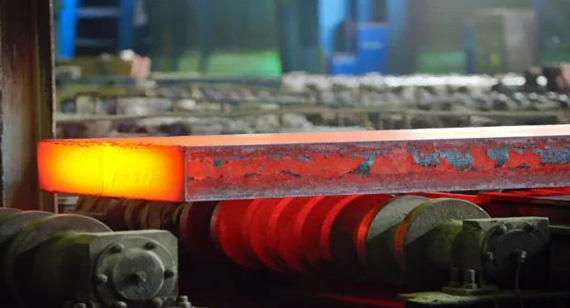
Heat treatment process of 8620 alloy steel include:
This treatment grants the part high fatigue strength and a surface hardness of HRC 60+, allowing it to resist weariness when using 8620 alloy steel products. But what you will consider is that heat treatment can cause minor dimensional "growth" or distortion due to phase changes. Usually suggesting you manage this by leaving precise grinding allowances and utilizing hard-milling or grinding post-treatment to ensure tight accuracy.
When checking the 8620 alloy steel price, you will notice it is higher than standard carbon steels like 1045 or 1018. This is primarily due to the costly alloying elements: Nickel (Ni), Chromium (Cr), and Molybdenum (Mo). Nickel is an expensive commodity that provides the critical low-temperature toughness 8620 is known for.
Furthermore, the production of material 8620 alloy steel requires sophisticated refining processes, such as electric furnace melting and vacuum degassing. This ensures the uniform distribution of alloys, which is necessary for consistent case-depth during carburizing. While the initial material cost is higher, the extended part life and reduced failure rates offer much better long-term value.
As the representative of “surface hardness but tough core” alloy steel 8620 and the representative of "through-hardening" 4140 alloy steel that provides high strength throughout the entire cross-section, what’s their detailed differences? And how to choose between them? Below table showcases the differences between 8620 vs. 4140 alloy steel:
Table 3: Comparison of 8620 vs. 4140 Alloy Steel
| Property |
8620 Alloy Steel |
4140 Alloy Steel |
Key Difference |
| Carbon Content |
0.18 - 0.23% (Low Carbon) | 0.38 - 0.43% (Medium Carbon) | 4140 has higher carbon for higher strength potential. |
| Hardening Method |
Case Hardening (Carburizing) | Through Hardening (Quench & Temper) | 8620 hardens the "skin"; 4140 hardens the "entire body." |
| Tensile Strength |
530 - 800 MPa (77 - 116 ksi) | 850 - 1100 MPa (123 - 160 ksi) | 4140 can withstand much higher pulling forces. |
| Yield Strength |
380 - 650 MPa (55 - 94 ksi) | 650 - 950 MPa (94 - 138 ksi) | 4140 is more resistant to permanent bending. |
| Surface Hardness |
HRC 58 - 63 | HRC 50 - 55 | 8620 offers superior wear and abrasion resistance. |
| Core Toughness |
Superior(60-95J; 44-70 ft-lb ) | Moderate to High(35-55 J; 26- 40 ft-lb) | 8620 is less likely to shatter under sudden impact. |
| Weldability |
Excellent | Poor (Requires Pre/Post-Heat) | 8620 is much easier to weld without cracking. |
| Machinability |
Good (~66% rating) | Fair (~57% rating) | 8620 is faster to machine, saving tool life. |
| Primary Usage |
Gears, Pins, Camshafts | Axles, Bolts, Crankshafts | 8620 for Wear + Impact; 4140 for Torque + Load. |
Select 8620 Alloy Steel Rather Than 4140 Alloy Steel When:
4140 Alloy Steel is the Ideal 8620 Alloy Steel Alternative When:
AISI 8620 is a low-carbon alloy steel containing nickel, chromium, and molybdenum, recognized for its excellent carburizing response. After heat treatment, the material develops a high-hardness, wear-resistant surface while retaining a strong, ductile core. This "hard-case, tough-core" mechanical profile makes it essential for industrial components subjected to high impact loads and cyclic stress.
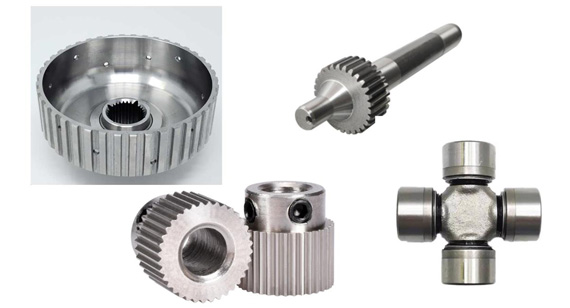
Automotive & Drivetrain Systems
In drivetrain engineering, 8620 AISI alloy steel is a standard material for balancing surface performance with fatigue strength. Common applications include:
Energy & Oil Drilling Equipment
Under demanding field conditions, 8620 is used for critical load-bearing parts:
Heavy Machinery & Construction Engineering
Construction machinery joints are frequently exposed to abrasive environments. The application of material 8620 alloy steel effectively extends their service life:
Aerospace & Defense Industry
In auxiliary systems where reliability is a primary requirement, alloy steel 8620 provides stable physical performance:
Industrial Automation & Robotics
For heavy-duty applications of robotics, 8620 alloy steel is widely utilized for precision transmission:
General Engineering
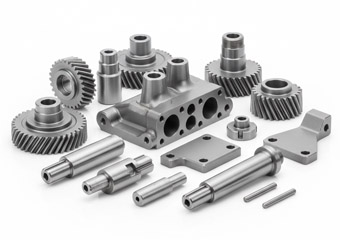
In general manufacturing, this alloy balances machinability with finished durability:
This alloy steel is recognized globally under various standards and equivalent grades:
Table 4: Equivalents of 8620 Alloy Steel
| Region |
Equivalent Grade Name |
| USA (SAE/AISI/AMS) |
8620, G86200, AMS 6274, AMS 6276, AMS 6277 |
| Germany (DIN/W.Nr.) |
1.6523, 21NiCrMo2, 20NiCrMo2-2 |
| European Union (EN) |
1.6523, 20NiCrMo2-2 |
| Japan (JIS) |
SNCM220, SNCM21, SNCM21H |
| China (GB/T) |
20CrNiMo, 20CrNiMoA |
| United Kingdom (BS) |
805M20, 805H20, EN362 |
| France (AFNOR) |
20NCD2, 22NCD2 |
| Italy (UNI) |
20NiCrMo2 |
| Russia (GOST) |
20KhGNM (20ХГНМ) |
| Sweden (SS) |
2506 |
| International (ISO) |
20NiCrMo2 (ISO 683/11) |
| Spain (UNE) |
20NiCrMo2 |
| Region |
Equivalent Grade Name |
| USA (SAE/AISI/AMS) |
8620, G86200, AMS 6274, AMS 6276, AMS 6277 |
| Germany (DIN/W.Nr.) |
1.6523, 21NiCrMo2, 20NiCrMo2-2 |
| European Union (EN) |
1.6523, 20NiCrMo2-2 |
| Japan (JIS) |
SNCM220, SNCM21, SNCM21H |
This guide has explored the chemical composition, mechanical properties, and specialized heat treatment of 8620 alloy steel. By understanding its advantage "hard case, tough core" nature and comparing it with 4140 steel, it is clear why 8620 remains a good choice for high-impact, high-wear applications. Whether you need durable industrial components or precision automotive parts, 8620 alloy steel can be a suitable material for your designing or manufacturing need.

Project Background & Challenges
In a recent high-volume automotive transmission pin project, the VMT team tackled the challenges of processing AISI 8620 alloy steel. The components required a stringent combination of a HRC 60-62 surface hardness, a precise effective case depth of 0.8mm, and a diameter tolerance strictly maintained at ±0.01mm. Given that 8620 steel is susceptible to thermal distortion and volumetric fluctuations during heat treatment, achieving micron-level dimensional precision while ensuring high hardness became the core technical objective of this project.
Customized Engineering Solutions of CNC Machining Factory
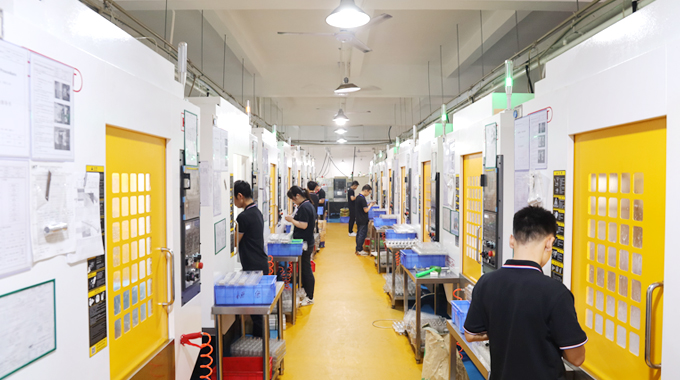
To overcome the challenge of heat-treatment deformation, VMT engineering team moved beyond conventional machining in favor of a data-driven predictive compensation strategy. By conducting a 50-piece pilot run, we accurately analyzed the material's shrinkage data during quenching. Based on these insights, we implemented a precise 0.025mm reverse compensation factor during the initial CNC turning phase. Furthermore, we synchronized our machining paths with an advanced Low-Pressure Vacuum Carburizing (LPC) process and utilized high-rigidity CBN (Cubic Boron Nitride) tooling for hard finishing, ensuring the components "shrank" perfectly into the target tolerance range after treatment.
Project Results
The dimensional inspection pass rate increased significantly, driving the defect rate below 0.5%. Ultimately, we consistently delivered high-quality transmission pins meeting the HRC 60-62 hardness requirement. By eliminating several post-processing grinding steps and optimizing production cycles, we successfully shortened the overall lead time by 15%.
Can 8620 steel be hardened without carburizing?
No. Due to its low carbon content (approx. 0.20%), 8620 cannot achieve high hardness through standard quenching alone. It must undergo carburizing to add carbon to the surface first.
What is the weldability of 8620 alloy steel?
It is relatively good. The low carbon content significantly reduces the risk of weld cracking, meaning it usually doesn't require the complex pre-heating or post-heating often needed for high-carbon alloys.
What is the typical core hardness of 8620 after quenching?
While the surface reaches HRC 60, the core typically remains between HRC 25-40. This ensures the part remains ductile and won't shatter easily when subjected to heavy impacts.
Why do 8620 CNC machined parts change size after heat treatment?
This is a natural result of the steel's structure transforming from austenite to martensite, which causes a slight volumetric expansion. At VMT, we compensate for this by leaving a specific grinding allowance.
What is the difference between 8620 and 8620H?
The primary difference between 8620 and 8620H lies in the guaranteed hardenability: while standard 8620 is produced primarily based on chemical composition, 8620H (where "H" stands for Hardenability) is manufactured to meet specific hardenability band limits. This ensures that 8620H provides a more predictable and uniform response during heat treatment, making it the superior choice for high-precision, high-volume applications—such as gears and transmission pins—where minimizing dimensional distortion is critical.
Is 8620 alloy steel magnetic?
Yes, AISI 8620 alloy steel is strongly magnetic. This alloy steel composed of over 96% iron, and it is a ferromagnetic material in all common states, including annealed, cold-worked, or case-hardened conditions. This makes it suitable for mechanical components that require magnetic response, such as electromagnetic assemblies or magnetic chain links. Also, it allows for the use of magnetic work-holding during the machining process.


 +86 15099911516




 Read more