16 years one-stop China custom CNC machining parts factory

Hey there I’m VMT Sam!
With 25 years of CNC machining experience we are committed to helping clients overcome 10000 complex part-processing challenges all to contribute to a better life through intelligent manufacturing. Contact us now
 665 |
Published by VMT at Feb 03 2026 | Reading Time:About 2 minutes
665 |
Published by VMT at Feb 03 2026 | Reading Time:About 2 minutes


As the name suggests, 1045 carbon steel is a specific grade of carbon steel. With a carbon content of approximately 0.45%, 1045 carbon steel is classified as a medium-carbon steel. AISI 1045 steel achieves the perfect balance between strength, affordability, and machinability, thus standing out as one of the most versatile medium-carbon steels used across various industries—from automotive components to heavy-duty machinery. Understanding 1045 steel material properties, uses, composition, pros, and cons is worthwhile for your designing and manufacturing reference. Read on to find more about the material 1045 steel.
AISI 1045 steel is a medium-carbon steel is well-known for its balanced characteristics of strength, ductility, and wear resistance. With a carbon content of approximately 0.45%, this grade offers an increase in strength and hardness over low-carbon steels like 1018 steel, while remaining one of the affordable options in the carbon steel family. The specific carbon level determines the mechanical performance of the alloy, providing enough carbon to respond well to heat treatment (such as induction or flame hardening) without becoming overly brittle. It also maintains good weldability and excellent machinability(about 70%), making it a good choice for high-precision CNC machining where both performance and budget are acceptable.
But like most carbon steels, 1045 is prone to rust if exposed to moisture, so surface protections such as black oxide, chrome plating, or zinc plating are commonly applied to ensure longevity. The specific carbon level determines the mechanical performance of the alloy, providing enough carbon to respond well to heat treatment (such as induction or flame hardening) without becoming overly brittle. This allows the material to achieve a hard, durable surface while maintaining a tough and impact-resistant core for demanding applications.
1045 Steel Equivalents
Depending on your countries or regions, 1045 steel can be referred to other equivalent names, including :
Table 1: 1045 Steel Equivalents in Different Regions
| Region |
Standard |
Equivalent |
| International |
ISO 683-1 | C45 |
| European Union |
EN 10083-2 | C45E (1.1191),C45 (1.0503) |
| United States |
ASTM / AISI / SAE | 1045 |
| China |
GB/T 699 | 45# or 45 |
| Japan |
JIS G4051 | S45C |
| United Kingdom |
BS 970 | EN8 / 080M46 |
| Germany |
DIN 17200 | Ck45 / Cm45 |
| France |
AFNOR NF | XC45 / XC48 |
| Italy |
UNI 7846 | C45 |
| Russia / CIS |
GOST 1050 | 45 |
| Sweden |
SS | 1650 |
| Spain |
UNE | F.114 |
| Australia |
AS/NZS 1442 | 1045 |
1045 carbon steel primarily consists of 98.5% iron and carbon, with small amounts of manganese for increased hardenability. 98.5% iron contributes to its magnetism, together with its microstructure function in its magnetism; 0.43% – 0.50% carbon contributes to its heat treatment to improve strength or toughness. Below table showcases 1045 steel’s chemical composition:
Table 2: 1045 Steel Chemical Composition
| Element |
Content (%) |
| Carbon (C) |
0.43% – 0.50% |
| Manganese (Mn) |
0.60% – 0.90% |
| Phosphorus (P) |
≤ 0.040% |
| Sulfur (S) |
≤ 0.050% |
| Iron (Fe) |
Remainder (~98.5%) |
Microstructure and Magnetic Properties
As a medium-carbon steel, the microstructure of 1045 steel at room temperature primarily consists of ferrite and pearlite. Both of these phases are ferromagnetic; consequently, 1045 steel exhibits strong magnetic properties, allowing it to be firmly attracted by magnets or easily magnetized for specific industrial applications like the armature or pressure plate of an electromagnetic clutch.
Crystal Structure and Heat Treatment
1045 steel features a body-centered cubic (BCC) crystal structure. In its normalized or hot-rolled state, the balanced ratio of pearlite and ferrite provides the material’s inherent strength and toughness. During heat treatment, this structure allows for the formation of martensite, and this heat treatment enhances surface hardness and wear resistance.
Below table shows physical, mechanical, thermal properties of 1045 steel for your reference:
Table 3: Physical, Mechanical, and Thermal Properties of 1045 Steel
| Category |
Property |
Value (Metric) |
Value (Imperial) |
| Physical |
Density | 7.87 g/cm³ | 0.284 lb/in³ |
| Melting Point | 1495 - 1520 °C | 2723 - 2768 °F | |
| Modulus of Elasticity | 200 - 205 GPa | 29,000 - 29,700 ksi | |
| Poisson's Ratio | 0.29 | 0.29 | |
| Shear Modulus | 80 GPa | 11,600 ksi | |
| Mechanical |
Yield Strength | 310 - 505 MPa | 45,000 - 73,200 psi |
| Tensile Strength | 570 - 700 MPa | 82,700 - 101,500 psi | |
| Hardness (Brinell) | 160 - 220 HB | 160 - 220 HB | |
| Hardness (Rockwell C) | 54 - 60 HRC | 54 - 60 HRC | |
| Elongation at Break | 12% - 16% | 12% - 16% | |
| Reduction of Area | 35% - 40% | 35% - 40% | |
| Machinability Rating | 70% | (Relative to AISI 1212) | |
| Thermal |
Thermal Conductivity | 49.8 W/m·K | 345 BTU·in/hr·ft²·°F |
| Coeff. of Thermal Expansion | 11.2 µm/m·°C | 6.22 µin/in·°F | |
| Specific Heat Capacity | 486 J/kg·K | 0.116 BTU/lb·°F | |
| Critical Temp (Ac1) | 724 °C | 1335 °F | |
| Electrical |
Electrical Resistivity | 1.62 x 10⁻⁷ Ω·m | 1.62 x 10⁻⁷ Ω·m |
The mechanical properties mentioned above primarily apply to hot rolled (HR) or normalized conditions. When supplied in a cold drawn (CD) state, the material exhibits a significant increase in yield strength due to work hardening, though this comes at the expense of reduced elongation (ductility).
Furthermore, 1045 steel possesses relatively low hardenability. In industrial practice, induction hardening or flame hardening is typically employed to strengthen only the surface layer (achieving high wear resistance), while the core remains unhardened to maintain critical toughness and impact resistance.
Regarding its thermal properties, the thermal conductivity of 1045 steel is moderately high compared to other alloy steels. This allows for rapid heat dissipation during high-speed machining, which helps protect cutting tools from premature thermal wear. Additionally, its melting point serves as a fundamental reference value for optimizing welding parameters and casting processes to ensure structural integrity.
Advantages of 1045 Steel
You can consider 1045 carbon steel material as your manufacturing or parts’ designing option for the reasons that:
Disadvantages of 1045 Steel
If you are going to apply the material 1045 carbon to your project, you may watch out for some of its limitations that:
Thanks to its good balance of strength and toughness, good machinability, affordable price and versatile supply, 1045 steel applications span across multiple industries including:
Mechanical and General Engineering
This is thanks to 1045 steel’s good strength and toughness, it is used for parts bearing medium loads.
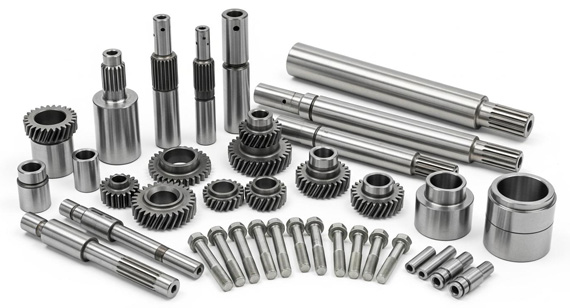
Utilizes its fatigue strength and heat treatment response.
Agriculture and Heavy Equipment
Often surface-hardened for harsh environments.
Construction and Infrastructure
Used for high-stress connections.
Tooling and Mold Making
Valued for its machinability and stability.
AISI 1045 steel is the versatile material of the medium-carbon steel family. Its combination of affordability, excellent machinability, and decent mechanical properties makes it a staple in modern manufacturing. By understanding its limits and strengths, you can optimize both the cost and performance of your products.

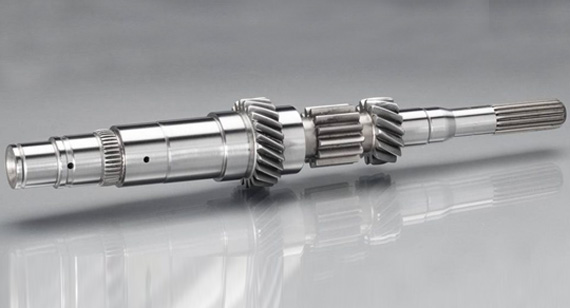
At VMT, we recently handled a high-precision project involving custom transmission shafts made from 1045 carbon steel for an industrial robotics client.
The Challenge
The client required a very tight tolerance (±0.01mm) on a 500mm shaft, coupled with a specific surface finish to ensure smooth bearing fit. 1045 can sometimes vibrate during long-axis turning, affecting the finish.
Our Solution
VMT’s engineering team implemented a multi-faceted approach specifically engineered for mid-carbon steel stability:
Vibration Dampening & Support:
We deployed customized steady rests and hydraulic follower rests to provide continuous support along the 500mm span. This rigid setup neutralized radial vibrations at the point of contact, ensuring the tool remained stable throughout the long pass.
Optimized Tooling Geometry:
We selected high-performance PVD-coated carbide inserts with a specialized chip-breaker geometry designed for 1045 steel. These inserts reduced cutting resistance and heat buildup, preventing the formation of built-up edges (BUE) that often ruin surface finishes.
Result
Finally we achieved a surface roughness of Ra 0.8, exceeding the client's expectations. In addition, through optimized tool life and reduced cycle times, we successfully reduced total processing costs by 15% and delivered a 99.8% pass rate on dimensional inspections, ensuring the shafts were ready for immediate assembly.
How Is 1045 Carbon Steel Made?
It is produced via the Basic Oxygen Furnace (BOF) or Electric Arc Furnace (EAF) method. The process involves melting iron ore or scrap, adjusting the carbon and manganese levels, casting into ingots or billets, and finally hot-rolling or forging into bars and plates.
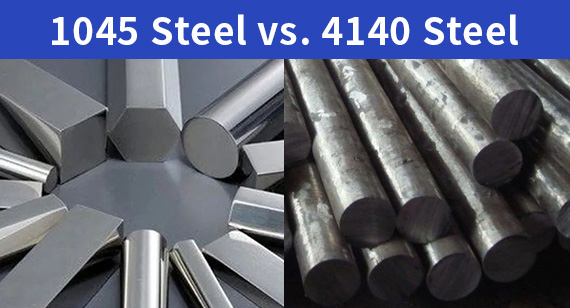
1045 Steel vs. 4140: Which Should You Choose?
Choose 1045 steel if you need a cost-effective solution for parts with moderate strength requirements or where surface hardening is sufficient. Choose 4140 if your part requires higher fatigue strength, through-hardening, or will operate in high-stress environments.
What Is the Difference Between 1045 Carbon Steel and A514 Steel?
1045 is a medium-carbon machinery steel designed for strength and heat treatment. A514 is a high-strength, quenched and tempered alloy structural steel primarily used for structural applications like bridges and cranes where high yield strength (690 MPa) is required without further machining.
What Is 1045 Steel’s Metal Type?
1045 is a wrought carbon steel metal type. It has much lower carbon than cast iron (which usually has >2% C), allowing it to be forged, rolled, and machined with much higher ductility and impact resistance.
What Are the Common Forms of 1045 Steel for Sale?
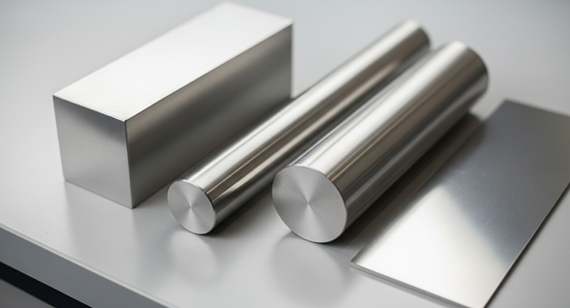
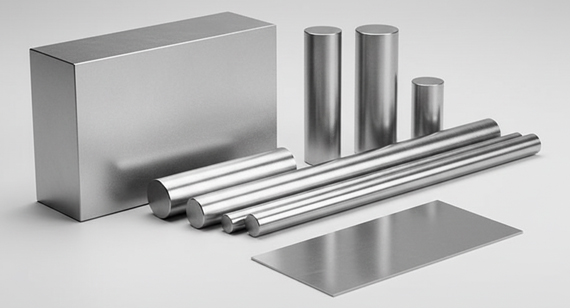
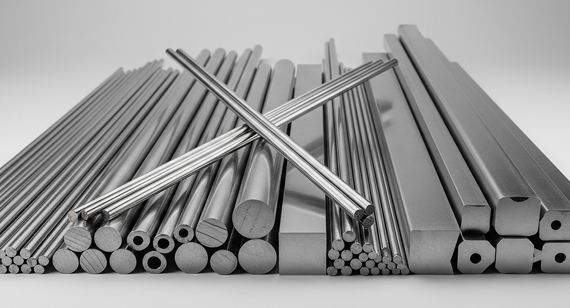
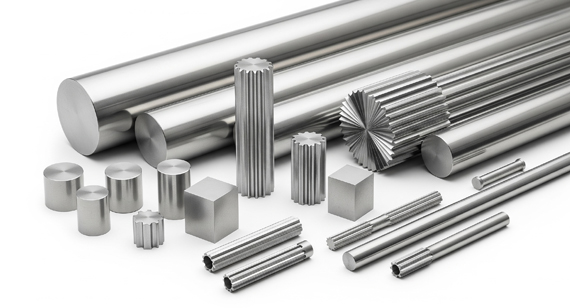
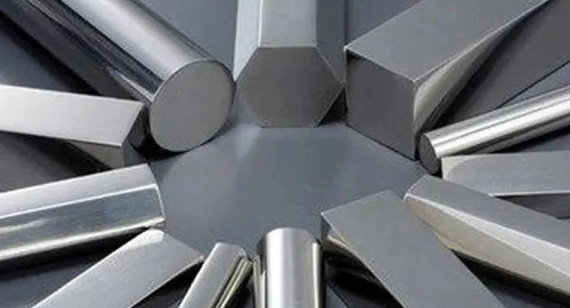
It is most commonly available as 1045 steel bar (round, square), 1045 steel plate, and hollow tubes. It can be purchased in hot-rolled, cold-drawn, or normalized conditions.
Can 1045 steel reach high hardness?
Yes. While the base 1045 steel hardness is around 160-220 HB, surface hardening (induction or flame) can increase the surface hardness to HRC 50-55, providing excellent wear resistance.


 +86 15099911516




 Read more