16 years one-stop China custom CNC machining parts factory

Hey there I’m VMT Sam!
With 25 years of CNC machining experience we are committed to helping clients overcome 10000 complex part-processing challenges all to contribute to a better life through intelligent manufacturing. Contact us now
 514 |
Published by VMT at Jan 19 2026 | Reading Time:About 3 minutes
514 |
Published by VMT at Jan 19 2026 | Reading Time:About 3 minutes


6061 aluminum alloy (Al-Mg-Si) is currently the most widely used and versatile heat-treatable aluminum alloy for everyday parts such as tube systems, bike parts, electronic housings, small brackets. It achieves a good balance between strength, corrosion resistance, weldability, good formality, and machinability, while also being lightweight and durable. From construction and transportation to aerospace and consumer uses, 6061 aluminum alloy plays a vital role in modern manufacturing.
However, when evaluating 6061 aluminum alloys as an engineering material, simply knowing its general properties is not enough. What are its annealed and heat-treated states? Is 6061 more suitable for your part application compared to 6063 and 7075? What are its chemical composition and the roles of its alloying elements? Why is the T6 state the most commonly used, and what are the physical and mechanical properties of 6061-T6? Read on and you will find the answers to these questions.
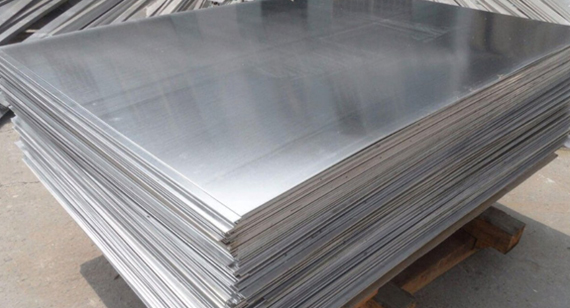
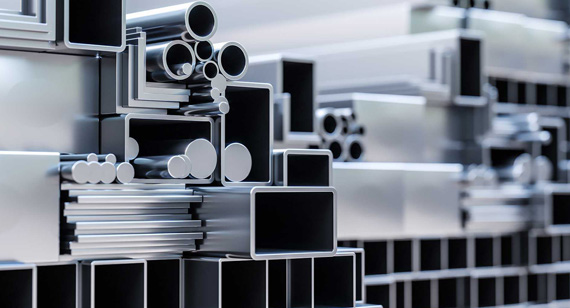
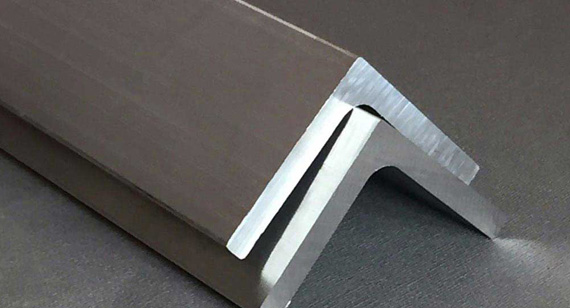
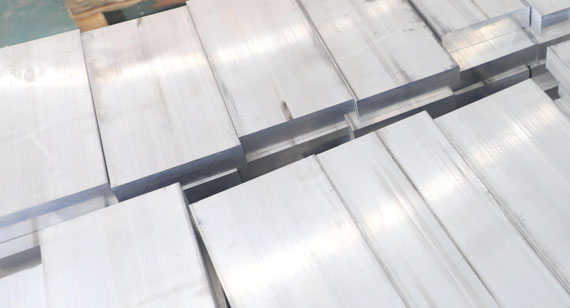
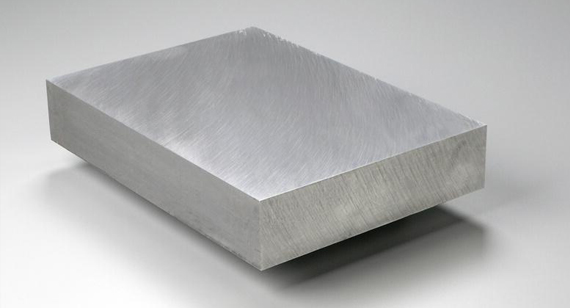
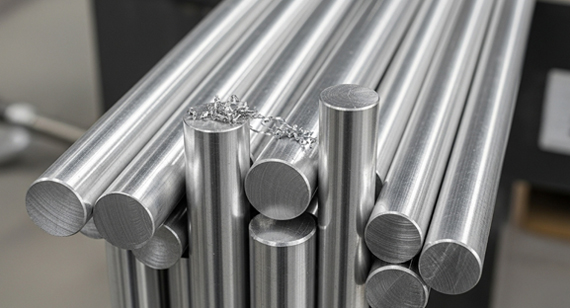
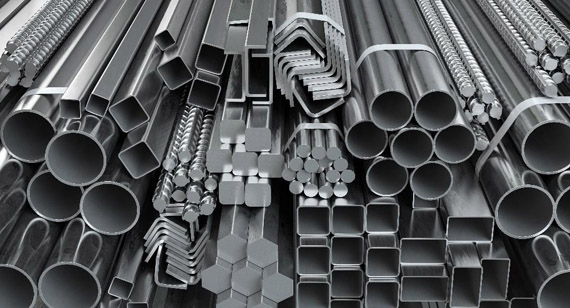
You may have heard another name for 6061 aluminum, that is, the “structural aluminum alloy.” Containing aluminum, magnesium, and silicon as its main alloying elements, with additions of copper and chromium, aluminum 6061 naturally has excellent mechanical strength and good toughness. Extrusions like angle profiles, square tubes, round tubes; Bars of round bars, square bars; Sheets or plates are 6061 aluminum’s common forms.
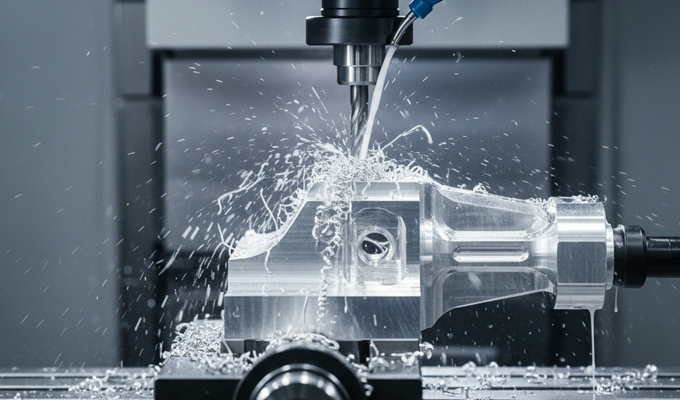
Compared to other aluminum alloys, the main characteristic of 6061 is its versatility. It can achieve relatively high strength through heat treatment (such as the T6 condition) (higher than 6063 and 5052, although not as strong as 7075), while retaining excellent corrosion resistance and weldability (which 7075 lacks). This makes it a common material in structural and welding applications. Good electrical conductivity and machinability also makes it a choice for electrical fittings and connectors while good corrosion resistance yet good cold workability of 6061-O (annealing) or T4 temper make it suitable to cold bend, rolling, drawing, extrusion, upsetting, forging, stamping, spinning.
As 6xxx series aluminum alloy, 6061 is mainly composed of elements of Aluminum, Magnesium, Copper, and others. For weight percentage and roles of each element, you can find them in below table 1:
Table 1: 6061 Aluminum Chemical Composition (%)
| Element | Symbol | Content (%) | Primary Rols |
| Aluminum | Al | 95.85 - 98.56 | Base Metal: Provides lightweight properties, excellent thermal/electrical conductivity, and basic corrosion resistance. |
| Magnesium | Mg | 0.80 - 1.20 | Principal Strengthener: Increases hardness and tensile strength; combines with Silicon to form the hardening phase Mg₂Si. |
| Silicon | Si | 0.40 - 0.80 | Precipitation Hardening: Works with Magnesium to enable heat-treatment capabilities (e.g., T6 temper) and improves fluidity during casting. |
| Copper | Cu | 0.15 - 0.40 | Strength & Machinability: Enhances response to artificial aging for higher strength and improves the "crispness" of the metal during CNC machining. |
| Chromium | Cr | 0.04 - 0.35 | Grain Control & Corrosion: Prevents grain growth during heat treatment and significantly improves resistance to stress-corrosion cracking (SCC). |
| Iron | Fe | 0.00 - 0.70 | Casting Aid: Reduces die-sticking in casting processes. Excessive amounts can decrease ductility and toughness. |
| Manganese | Mn | 0.00 - 0.15 | Microstructure Refiner: Increases recrystallization temperature and prevents grain coarsening during hot working. |
| Zinc | Zn | 0.00 - 0.25 | Minor Strengthening: Slightly boosts strength without compromising the alloy's general corrosion resistance. |
| Titanium | Ti | 0.00 - 0.15 | Grain Refiner: Acts as a nucleating agent to refine the grain structure in welds and castings to prevent cracking. |
| Others | - | ≤ 0.15 (Total) | Impurity Control: Limits individual impurities (max 0.05% each) to ensure consistent mechanical and chemical properties. |
The core effect of 6061 aluminum lies in the combination of Magnesium and Silicon to form Magnesium Silicide (Mg₂Si). When the alloy is heat-treated (Solutionized and then Aged), these microscopic Mg₂Si particles precipitate throughout the aluminum matrix, creating barriers that prevent the metal from deforming easily, which results in the high-strength T6 condition.
6061 aluminum alloys exhibit different properties like strength, ductility in its annealed and other heat-treated states. Thus, the processing and uses of 6061 aluminum should be chosen based on the conditions that best suit the engineering requirements. The following explains the O(annealed) and T4, T6, T651, T6511 tempers of 6061 aluminum alloy:
1.6061-O (Annealed)
This is the softest state, with the lowest strength (yield strength of only about 55 MPa), but the best ductility. It is typically used for parts requiring extreme bending or deep drawing, with subsequent heat treatment after forming.
2.6061-T4 (Solution heat treatment + natural aging)
After solution heat treatment, it is naturally cooled at room temperature. It has medium strength and good formability and is often used for automotive sheet metal parts requiring subsequent forming. Solution heat treatment involves heating the material to a high temperature and then rapidly quenching it in water, allowing alloying elements such as zinc and magnesium to be evenly distributed in the material, laying the foundation for subsequent strengthening.
3.6061-T6 (Solution heat treatment + artificial aging)
This is the most commonly used standard state. It undergoes solution heat treatment and artificial aging in a furnace (approximately 177°C). Heating the 6061 aluminum alloy at a specific time and temperature achieves the highest strength (however, internal stress exists, and cracking should be observed during processing). It is the standard choice for most structural components such as bicycle frames, and aerospace parts. This is mainly due to the formation of Mg₂Si (magnesium silicide) from the alloying elements Mg and Si in 6061. Through heat treatment, these tiny magnesium silicide particles precipitate in the aluminum matrix, hindering dislocation movement, thus transforming the aluminum from a softer state to the industrially strong T6 state.
4.6061-T651 / T6511 (Solution heat treatment + stress relief "51" + artificial aging)
To address processing deformation problems, the material undergoes 1.5% - 3% mechanical stretching after quenching to eliminate internal stress, although this sacrifices some strength (strength is slightly lower than 6061-T6). T651 (typically plate material) is a preferred choice for precision machining of 6061 aluminum alloy(but not tough as T6), as the stress relief process prevents warping during machining. T6511 (typically extruded material) is similar to T651, but allows for minor straightening.
The "T6" suffix indicates that the alloy has been Solution Heat Treated and then Artificially Aged to reach its peak mechanical strength, and 6061-T6 is the most common used for it structural uses, where mechanical and physical properties is valuable for parts design.
Mechanical Properties of 6061-T6 Aluminum
Mechanical properties reflect how a material behaves under stress. 6061-T6 is a medium-to-high strength alloy with excellent toughness and fatigue resistance while maintaining excellent machinability and welding reliability. The table below shows the specific mechanical properties of 6061-T6 aluminum alloy:
Table 2: Mechanical Properties of 6061-T6 Aluminum
| Property |
Metric |
Imperial |
Notes |
| Yield Strength |
276 MPa | 40,000 psi | Typical at 0.2% offset |
| Ultimate Tensile Strength |
310 MPa | 45,000 psi | Maximum stress before failure |
| Shear Strength |
207 MPa | 30,000 psi | Resistance to shearing forces |
| Fatigue Strength |
96.5 MPa | 14,000 psi | Based on 5x10⁸ cycles |
| Modulus of Elasticity |
68.9 GPa | 10,000 ksi | Young's Modulus |
| Shear Modulus |
26.0 GPa | 3,770 ksi | Resistance to shear deformation |
| Hardness (Brinell) |
95 HB | - | 500kg load, 10mm ball |
| Hardness (Vickers) |
107 HV | - | Estimated from Brinell |
| Elongation at Break |
12% - 17% | - | Depends on thickness/gauge |
| Poisson's Ratio |
0.33 | 0.33 | Ratio of transverse to axial strain |
Physical Properties of 6061-T6
Physical properties are inherent natural attributes of a material. 6061-T6 is a highly stable, lightweight metal with low density (approximately one-third of steel) and good thermal and electrical conductivity. The table below shows specific physical properties of 6061-T6 aluminum alloy:
Table 3: Physical Properties of 6061-T6 Aluminum
| Property |
Metric |
Imperial |
Notes |
| Density |
2.70 g/cm³ | 0.0975 lb/in³ | Roughly 1/3 the density of steel |
| Melting Point |
582 – 652 °C | 1,080 – 1,205 °F | Range between solidus and liquidus |
| Thermal Conductivity |
167 W/m·K | 1,160 BTU·in/h·ft²·°F | At 25°C (77°F) |
| Specific Heat Capacity |
896 J/kg·K | 0.214 BTU/lb·°F | At 20°C (68°F) |
| Coeff. of Thermal Expansion |
23.6 µm/m·K | 13.1 µin/in·°F | Range from 20 to 100°C |
| Electrical Resistivity |
3.99 μΩ·cm | - | Measure of resistance to current |
| Electrical Conductivity |
40% IACS | 40% IACS | International Annealed Copper Std |
| Magnetic Permeability |
1.0 | 1.0 | Non-magnetic |
Main Advantages of 6061 Aluminum
The following advantages make 6061 aluminum alloy a popular choice among many metalworkers and manufacturers.
Disadvantages of 6061 Aluminum
There are also some limitations of 6061 aluminum:
6061 Aluminum achieves a good balance between strength, corrosion resistance, weldability, good formality and machinability, while also being lightweight and durable, and it’s widely used in applications such as:
1. Marine Engineering
For example, ship components, sailboat masts, dock facilities, hull superstructures, deck fittings, engine mounts, and propeller components; 6061 aluminum is suitable for these saltwater corrosion-resistant applications.
2. Consumer or Sporting Uses
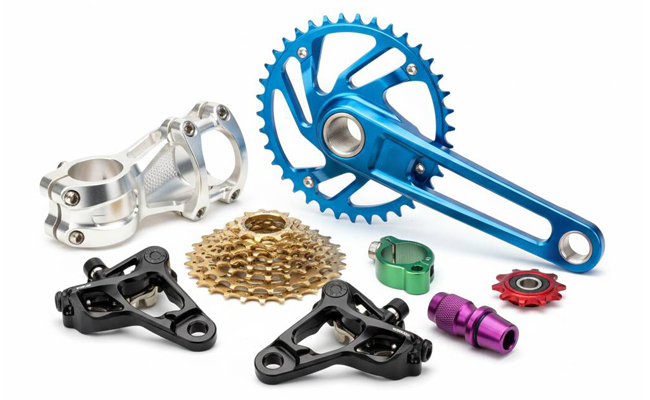
For example, high-end bicycle frames, fishing reels, camera lenses; the medium-to-high strength, good machinability, and corrosion resistance of 6061 aluminum meet the requirements of most consumer and sporting applications.
3. Construction
For example, building facade supports, scaffolding, stairs, and handrails; this is also due to the medium-to-high strength, good machinability, and formability of 6061 aluminum.
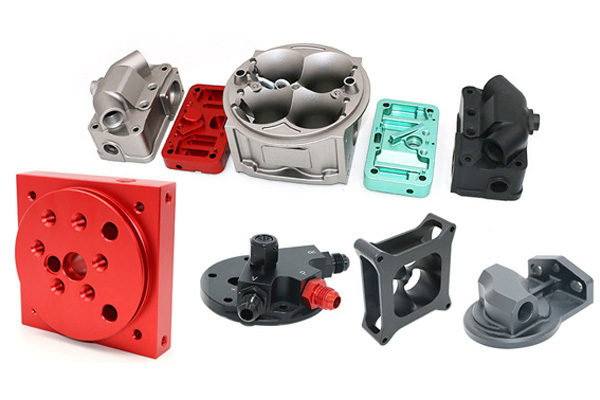
6061 aluminum is used to manufacture air brake system parts, valve components, wheels, and gearbox housings.
5. Piping Systems
High-pressure gas or fluid transmission pipelines and fittings. Railway Applications: Car bodies and interior structural components of subway and light rail vehicles.
6. Aerospace
Some secondary load-bearing structural components such as control systems or seats; higher-strength 7075 or 7050 aluminum alloys are more suitable for primary load-bearing structures.
7. Piping Systems
High-pressure gas or fluid transmission pipelines and fittings; pipelines are more suitable for annealed 6061 aluminum alloy with good cold working characteristics, and fittings can use common 6061-T6;
8. Others
In addition, 6061 is also used in extruded and die-cast applications.
If your application prioritizes structural integrity and requires a certain level of strength, then the stronger 6061 aluminum alloy is recommended for your project. If your application prioritizes ductility, surface quality, and aesthetics, especially for architectural decorative applications, then the 6063 aluminum alloy is recommended. Although it has lower strength, it offers excellent extrusion performance and a perfect surface finish, making it the preferred choice for door and window profiles. The table below shows the main differences between 6061 and 6063 aluminum alloys:
Table 4: 6061 vs 6063 Performance Comparison (T6 Temper)
| Property |
6061-T6 |
6063-T6 |
| Ultimate Tensile Strength |
310 MPa (45 ksi) | 186-214 MPa (27-31 ksi) |
| Yield Strength |
276 MPa (40 ksi) | 145-172 MPa (21-25 ksi) |
| Extrudability |
Moderate | Excellent |
| Surface Finish |
Good | Excellent (Smooth) |
| Anodizing Quality |
Good | Superior (Highly Uniform) |
| Corrosion Resistance |
Excellent | Outstanding |
| Machinability |
Good | Fair (Gummy/Sticky) |
| Primary Alloy Focus |
Strength & Toughness | Formability & Finish |
| Relative Cost |
Higher | Lower |
If your project involves joining parts via TIG or MIG welding, 6061 is the only viable option. 7075 is generally considered non-weldable by conventional methods.When you need the strength of steel but the weight of aluminum. 7075 is the preferred standard for aerospace and high-performance racing.The table below shows the main differences between 6061 and 7075 aluminum alloys:
Table 5: 6061 vs 7075 Performance Comparison (T6 Temper)
| Property |
6061-T6 |
7075-T6 |
| Ultimate Tensile Strength |
310 MPa (45 ksi) | 572 MPa (83 ksi) |
| Yield Strength |
276 MPa (40 ksi) | 503 MPa (73 ksi) |
| Weldability |
Excellent (MIG/TIG) | Poor (Prone to cracking) |
| Corrosion Resistance |
High | Moderate (Prone to pitting) |
| Machinability |
Good | Excellent |
| Fatigue Strength |
96 MPa | 159 MPa |
|
Weight (Density) |
2.70 g/cm³ | 2.81 g/cm³ |
| Relative Cost |
Lower | Higher |
For most engineering projects, 6061 aluminum is always the safest and most economical choice; although it doesn't offer the best strength or surface quality, it simultaneously meets the requirements for high strength, weldability, corrosion resistance, and ease of processing.

A leading American drone system manufacturer find VMT CNC Machining Factory to custom-produce a batch of 6061-T6 aluminum alloy drone casings.
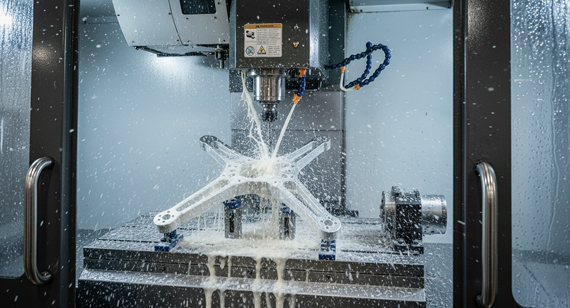
The client required the thinnest sections of the casing to be only 0.8mm thick. Due to internal stresses in 6061-T6 during machining, springback deformation was a significant risk, making it difficult to achieve the required ±0.05mm tolerance for the ultra-thin walls. Furthermore, the client required high-strength hard anodizing for scratch resistance, but this process typically alters part dimensions (increasing thickness by 25-50μm), potentially preventing the precise threaded holes from being assembled correctly.
VMT, through precise process control, implemented the following engineering optimization measures:
1.An additional stress-relieving process at 180°C for 4 hours was added before finish machining, increasing the release rate of internal stress by 85%, effectively solving the thin-wall deformation problem.
2.The diameter of the threaded holes was pre-enlarged by 0.03mm based on the drawing specifications. After anodizing, the coating thickness precisely filled this gap, achieving "zero interference" during assembly.
Ultimately, thanks to VMT's optimized machining process, the processing cycle for each part was reduced by 20%, while maintaining the required part quality and appearance. This resulted in significant cost savings for the client during large-scale mass production.
What is the durability of 6061 compared to 6063 and 7075?
Compared to 6063, 6061 is harder and has better impact resistance, but its corrosion resistance is slightly inferior to 6063.
For 6061 vs. 7075, although 7075 has higher tensile strength, in outdoor environments, the environmental durability of 6061 (oxidation resistance and stress corrosion cracking resistance) is far superior to 7075. 7075 is prone to exfoliation corrosion without proper surface protection.
What are the price factors for 6061 aluminum?
The price of 6061 is usually lower than 7075 or 2024. Price influencing factors include:
What are common forms of 6061 aluminum?
Why do most aluminum alloy bicycles use 6061 instead of the stronger 7075?
6061 aluminum alloy’s strength is good for most of bicycle parts, and cost is much cheaper.
What are common international equivalents of 6061?
What is 6061 aluminum good for?
It is suitable for almost all structural applications that do not require extreme heat resistance (such as inside engines) or extreme strength (such as landing gear). It is an ideal material for automated equipment, robot chassis, molds, fixtures, and custom machined parts.


 +86 15099911516




 Read more