16 years one-stop China custom CNC machining parts factory

Hey there I’m VMT Sam!
With 25 years of CNC machining experience we are committed to helping clients overcome 10000 complex part-processing challenges all to contribute to a better life through intelligent manufacturing. Contact us now
 351 |
Published by VMT at Jan 18 2026 | Reading Time:About 2 minutes
351 |
Published by VMT at Jan 18 2026 | Reading Time:About 2 minutes


You may have heard of 7075 aluminum, the ultra-high-strength material also developed for the aerospace industry. Its strength and fatigue resistance are considered among the highest in the entire aluminum series. So, why do manufacturers and engineers sometimes prefer another aerospace-grade alloy—7050 aluminum?
7050 aluminum is specifically engineered for large-cross-section, high-stress structural components, making it an indispensable material for modern commercial and military aircraft. When dealing with thick sections (typically 3 to 6 inches), 7050 aluminum solves the critical issue of declining core strength and reduced corrosion resistance—a common pitfall for alloys like 7075.
In this article, we will take a deep dive into the unique charm of the 7050 aluminum alloy (Al-Zn-Mg-Cu series). We will provide a multi-dimensional decoding of its chemical composition, key properties, performance comparisons with other common alloys, and market price factors to help you fully understand 7050 aluminum alloy.
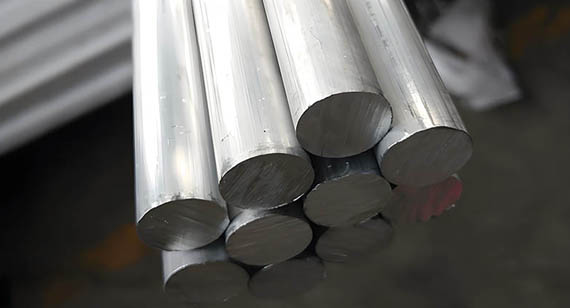
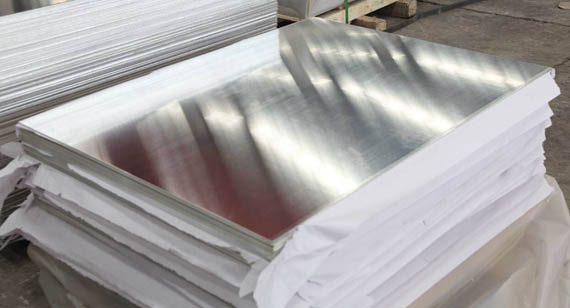
As a quintessential representative of the Al-Zn-Mg-Cu series super-hard aluminum, 7050 aluminum alloy is renowned for its ultra-high mechanical strength, superior strength-to-weight ratio, and excellent fatigue resistance. You can find this alloy in the market in the forms such as sheets, plates, round bars, tubes, and precision forgings. And these forms can be utilized in the manufacturing of critical load-bearing structures for aerospace (such as wing spars and fuselage stringers), high-end mountaineering equipment, and high-end bicycle components.
As a typical heat-treatable strengthening alloy, its properties like dimensional stability and strength can be enhanced or balanced through heat treatment processes such as T6 (peak strength) or T7 (optimized stress corrosion resistance; 7050-T7451 is processed by T7). Also, it possesses a certain degree of cold-working capability in an annealed state. In terms of machining, 7050 offers outstanding machinability with smooth chip evacuation and a high surface finish. However, as a wrought aluminum alloy, it is not suitable for casting. Its weldability is also poor, as it is highly prone to thermal cracking during fusion welding.
As Al-Zn-Mg-Cu series aluminum alloy, 7075 is mainly composed of elements of Aluminum, Zinc, Copper, Magnesium, Zirconium, as well as impurities of Iron and Silicon. For weight percentage and roles of each element, you can find them in below table 1:
Table 1: 7050 Aluminum Chemical Composition (%)
| Element |
Weight Percentage (wt.%) |
Roles |
| Aluminum (Al) |
87.3 – 90.3 (Balance) | Base element |
| Zinc (Zn) |
5.7 – 6.7 | The primary strengthener |
| Copper (Cu) |
2.0 – 2.6 | Enhances thermal stability and mechanical strength |
| Magnesium (Mg) |
1.9 – 2.6 | Works with Zn to form precipitated strengthening phase MgZn₂and gains surperior stength |
| Zirconium (Zr) |
0.08 – 0.15 | Can control grain structure and reduce quench sensitivity |
| Iron/Silicon (Fe/Si) |
Max 0.15 / 0.12 | Low impurities |
First, you need to learn about several concepts of solution heat treatment (heating and quenching), artificial aging, stress relief (designated as "51"), and artificial overaging (designated as "T74").
1.Solution Heat Treatment (Always the First Step)
7050 aluminum is heated to a high temperature and then rapidly quenched in water, allowing alloying elements like zinc and magnesium to distribute uniformly throughout the material, which lays the foundation for subsequent strengthening.
2.Artificial Aging
Subsequently heat 7050 aluminum to its maximum strength at a specific temperature.
T6 is Solution Heat Treatment + Artificial Aging, which can gain peek strength. But it is not used for 7050 aluminum applications because of large stress in the T6. It’s very easy to crack if you use 7075-T6 to make parts, and it is also easy to crack in a humid environment.
3.Stress Relieving (Marked as "51")
7050 aluminum undergone stretching (1.5% to 3%) to eliminate internal residual stresses, preventing warping if need machining or cutting 7050 aluminum.
T651 is Solution Heat Treatment + Stress Relieving (51) + Artificial Aging, which is just T6 go through a more “51” step to reduce stress but maintain high strength. Theoretically, you can use 7050-T651 but not recommended as there are alternative alloys 7075-T651 at a cheaper price.
4.Artificial Over-Aging (Marked as T74)
This is similar to Artificial Aging but heating the alloy for a longer time. Best strength can’t achieve but defects of SCC (Stress Corrosion Cracking) resistance and exfoliation corrosion resistance can be perfectly balanced with still good strength.
Now you must have understood that 7050-T7451 is the most advanced version when heat treats aluminum 7050. Solution Heat Treatment +“51” Stress Relieving + “T74” Artificial Over-Aging contributes to the industry-standard default supply status—7050-T7451, with distortion controllable, high strength, and excellent corrosion resistance and resistant to crack.
Mechanical properties reflect how a material behaves under stress. 7050-T7451 exhibits excellent yield strength and fatigue strength, making the material resistant to fracture and capable of bearing heavy loads; its performance is also good in other mechanical characteristics.
Physical properties are the inherent natural attributes of the material. 7050-T7451 has a low density, making it lightweight, and possesses good thermal conductivity. Electrical conductivity is often used to test the quality of heat treatment; the conductivity of the T74 state is usually higher than that of T6. Although the electrical conductivity of 7050-T7451 is not a primary engineering consideration, measuring conductivity can quickly confirm whether the 7050 materials has truly undergone "over-aging" treatment. Machinability of aluminum 7050-T7451 is rated at ~70%, which is excellent for a high-strength alloy.
For the physical and mechanical properties of 7050-T7451, you may refer to the two tables below:
Table 2: Mechanical Properties of 7050-T7451
| Mechanical Property |
Imperial Unit |
Metric Unit |
| Ultimate Tensile Strength |
76,000 psi | 524 MPa |
| Yield Strength |
68,000 psi | 469 MPa |
| Elongation |
11% | 11% |
| Modulus of Elasticity |
10.2 x 10³ psi | 71 GPa |
| Shear Strength |
44,000 psi | 303 MPa |
| Fatigue Strength |
35,000 psi | 240 MPa |
Table 3: Physical Properties of 7050-T7451
| Physical Property |
Unit |
| Brinell Hardness |
140 HB |
| Rockwell B |
84 HRB |
| Density |
2.83 g/cm³ |
| Electrical Conductivity |
38-42% IACS |
| Thermal Conductivity |
154 W/m·K |
| Machinability |
~70% |
Below table shows the key differences of 7050 vs 7075 vs 6061 under their most common tempers which is 7050-T7451 vs 7075-T6 vs 6061-T6:
Table 4: Key Differences of 7050 vs 7075 vs 6061 Under Their Most Common Tempers
| Feature |
7050-T7451 |
7075-T6 |
6061-T6 |
| Primary Advantage |
Thick Section Strength | Max Strength (Thin) | Versatility / Low Cost |
| Corrosion Resistance (SCC) |
Excellent | Fair / Poor | Excellent |
| Weldability |
Not Recommended | Not Recommended | Excellent |
| Machinability |
Good (with Carbide) | Good | Excellent |
| Typical Use Case |
Aircraft Bulkheads | Small Aero Parts | General Engineering |
The differences in these alloys mainly depend on their chemical composition and heat treatment processes. But how do you select the proper material?
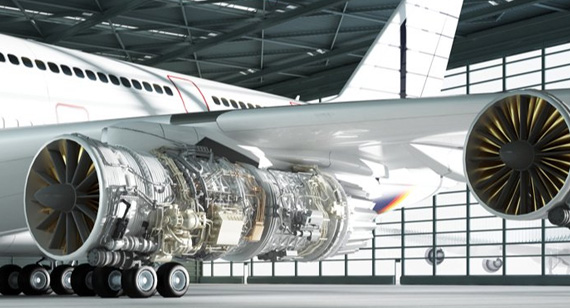
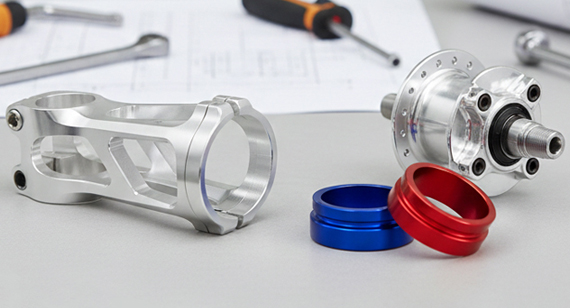
7050 aluminum is very suitable for high stress, thick parts yet crack-resistant, humid environment uses. Here I show a few examples of 7050 aluminum alloy applications:
7050 aluminum is more expensive than the same structural uses alloy like 6061 or 7075; this is because:
After reading this article, you’ve found that 7050’s reliability in high-stress and humid environments; Only high end bicycle parts or other high end equipment needs corrosion-resistance you may choose 7050 for its higher cost; And something more about your material selection: when the thickness exceeds 3 inches, 7050 is the only logical choice for safety and performance of the structural uses.

Client Background:
A high-end mountain bike (MTB) brand based in the USA, specializing in downhill and Enduro racing, was developing a next-generation full-suspension frame for extreme terrain.
1. The Challenges
The client initially used 7075-T6 aluminum for their prototypes but encountered three critical roadblocks during the testing and pre-production phases:
2. VMT Solutions
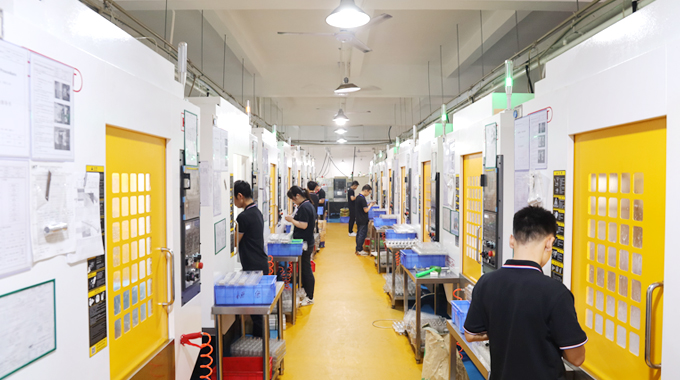
Leveraging deep expertise in aerospace-grade materials and precision engineering, VMT CNC Machining Factory implemented the following technical solution:
3. The Results
Q1: Can 7050 aluminum be welded?
A: It is generally not recommended. Welding usually results in weld cracking, porosity, and a significant drop in strength at the heat-affected zone.
Q2: What makes 7050 better than 7075 for thick plates?
A: It has lower quench sensitivity. While 7075 loses significant strength in the center of a thick block, 7050 maintains uniform properties from surface to core.
Q3: Is 7050 aluminum magnetic?
A: No, 7050 aluminum is a non-magnetic alloy.
Q4: How does the T7451 temper affect machining?
A: The stretching process in T7451 removes residual stresses. This means when you remove a large amount of material via CNC, the part stays flat and doesn't "spring" or warp.
Q5: What is 7050 aluminum equivalent to?
international equivalent of 7050 aluminum mainly include:
Q6:What are the disadvantages of 7075 aluminum?
The main disadvantages of 7075 aluminum are its poor weldability, high cost, and reduced formability.


 +86 15099911516




 Read more