16 years one-stop China custom CNC machining parts factory

Hey there I’m VMT Sam!
With 25 years of CNC machining experience we are committed to helping clients overcome 10000 complex part-processing challenges all to contribute to a better life through intelligent manufacturing. Contact us now
 422 |
Published by VMT at Jan 17 2026 | Reading Time:About 3 minutes
422 |
Published by VMT at Jan 17 2026 | Reading Time:About 3 minutes


High-lead tin bronze, renowned for its application in self-lubricating bearings, is a highly machinable material with excellent wear resistance and good thermal conductivity. Although it generally falls within the medium-strength range, this does not hinder its exceptional performance in harsh, polluted industrial environments. From marine to automotive components, the self-lubricating properties provided by lead make this alloy particularly effective in preventing the interference of dirt and debris on the surface, ensuring reliable operation. Additionally, the tin content determines the hardness and toughness of high-lead tin bronze while heterogeneous of the alloy is also affected by the material's Tin content. Read on for a more detailed and comprehensive understanding of high-lead tin bronze.
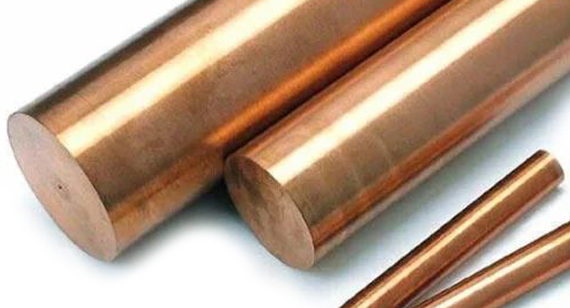
High-lead tin bronze, as the name suggests, is a copper alloy with a high lead content (ranging from 7% to 30%) and a tin content between 5% and 13%. This alloy is known for its excellent self-lubricating properties, machinability (ease of cutting), and good thermal conductivity. Common grades of high-lead tin bronze include C93200, C93400 through C93900, C94100, C94300, and C94500.
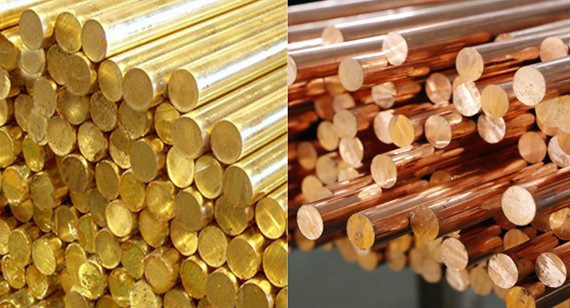
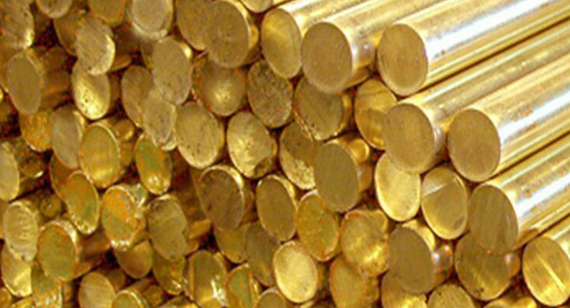
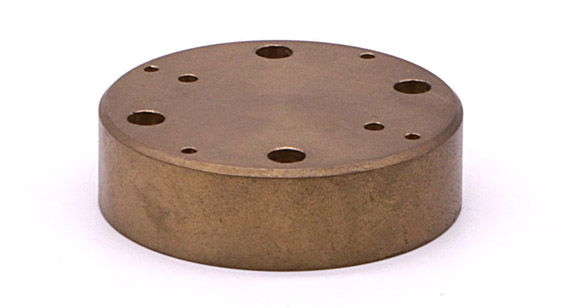
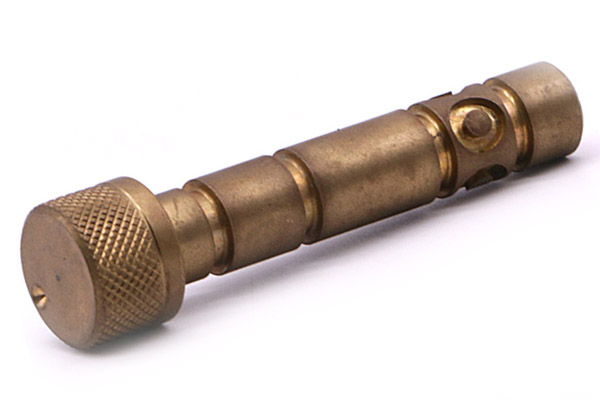
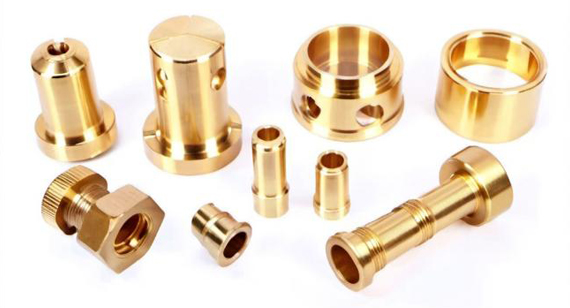
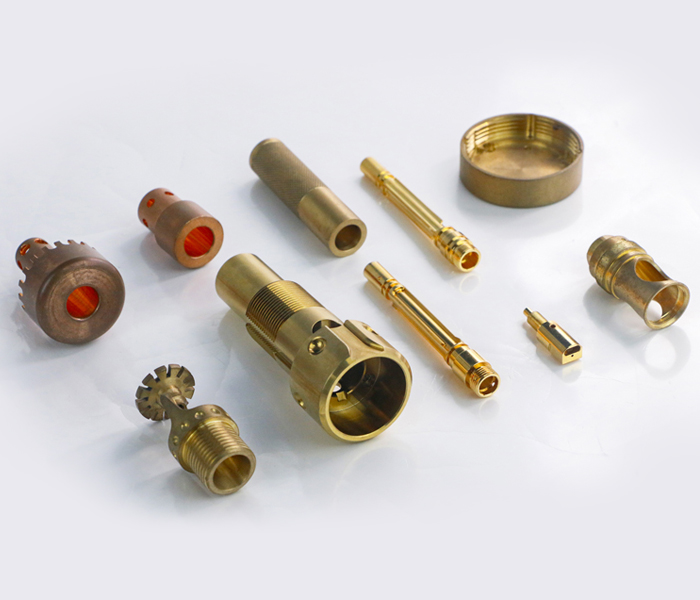
High-lead tin bronze is often available in various forms, such as solid round bars, tubes, hexagonal shapes, flat pieces, and custom castings. These can be used to manufacture components like electrical wire and cable connectors, electrical plug connectors, door handles, screws and nuts, corrosion-resistant bushings, and rolling mill bearings.
However, if the components made from high-lead tin bronze are in contact with water, it is important to consider alternative materials due to the toxicity of lead. Materials like silicon bronze or specific lead-free brass alloys may be more appropriate in such cases.
Why is Lead Tin Bronze a Heterogeneous Alloy?
"Heterogeneous" refers to a material or alloy that contains two or more distinct structures or phases. These different phases usually exhibit varying properties, such as hardness, toughness, and strength.
In lead tin bronze, lead and the copper-tin matrix (primarily composed of copper and tin) are insoluble in the solid state. This means that lead and the copper-tin matrix separate into two distinct "phases" — one being a copper-tin solid solution, and the other being independent of lead particles. Since these are two different substances, they form a heterogeneous structure.
What’s the Heterogeneous Effect on High-Lead Tin Bronze?
The independent lead particles mainly provide self-lubricating properties to high-lead tin bronze, while the tin content affects its hardness and ductility.
High-lead tin bronze typically contains less than 13% tin, which can completely dissolve in copper, forming a single-phase α solid solution structure. As a result, high-lead tin bronze has relatively low hardness and is more ductile. (If the tin content exceeds 13%, the alloy will form the hard and brittle δ phase, making it harder but also more brittle.
However, even if the tin content of high-lead tin bronze is usually below 13%, localized tin concentrations above 13% can still occur due to improper heat treatment, leading to the formation of the brittle δ phase.
How to Properly Anneal High-Lead Tin Bronze?
Proper heat treatment can optimize the performance of high-lead tin bronze, allowing it to achieve both good hardness and toughness. High-temperature (300°C to 500°C) annealing helps ensure a more uniform distribution of tin, preventing the precipitation of the hard and brittle δ phase, and restoring the α solid solution structure, thereby increasing toughness. But you may note that if the alloy is held at temperatures between 300°C and 500°C for too long, it will become brittle.
High-lead tin bronze has properties of self-lubricating, good wear resistance and corrosion resistance, and good heat dissipation, making it particularly popular in applications such as bearings and bushings (due to self-lubricating properties), marine hardware (due to corrosion resistance), and gears, shafts, and other high-wear components. The following are the main properties of high-lead tin bronze:
Excellent Self-Lubricating Property
The lead particles in high lead tin bronze do not dissolve into the copper-tin matrix, which results in the formation of independent lead particles within the alloy (refer to the Heterogeneous Alloy - High-Lead Tin Bronze section). These lead particles have a low friction coefficient and can form a self-lubricating layer on the friction surface, reducing friction and wear, thus improving the self-lubricating properties. Bearings, bushings, and other similar components especially benefit from these self-lubricating characteristics.
Good Machinability
The lead particles in high-lead tin bronze serve as a lubricant during machining, reducing friction. The excellent machinability of high-lead tin bronze allows it to be easily cut into the desired shapes and sizes. For applications of CNC machining (turning, drilling, or milling), high-lead tin bronze can be easily manufactured into high precision parts.
Good Castability
The lead and copper-tin matrix of high-lead tin bronze do not undergo significant chemical reactions during casting. And the addition of lead lowers the melting point, making it easier to cast. Thus, high-lead tin bronze has good flowability and castability. This alloy can be easily cast into complex shapes, making it ideal for manufacturing parts like gears or bearings that require intricate shapes.
Good Corrosion Resistance
The copper-tin matrix and the lead phase in high-lead tin bronze help resist oxidation and corrosion. Good corrosion resistance of high-lead tin bronze makes it remain highly durable in chemical, seawater, or other harsh environments.
Good Wear Resistance
The presence of lead enhances the self-lubricating properties of high-lead tin bronze, which also improves its wear resistance. In high-friction environments like bearings and bushings, the wear rate of high-lead tin bronze is lower compared to other copper-based alloys. In standard wear tests (e.g., ASTM G99), the wear rate of high-lead tin bronze is typically in the range of 0.1-0.2 mm³/N·m.
Good Ductility and Toughness
The elongation of high-lead tin bronze typically ranges from 10-30%. Additionally, high-lead tin bronze generally has a good impact on toughness. At room temperature (~20°C), its IZOD impact toughness (measured in J/cm²) typically falls within the range of 10-25 J/cm², depending on the tin and lead content. It is recommended to keep the tin content (including local content during heat treatment) below 13% for better toughness and ductility, making the alloy suitable for withstanding impact loads.
Moderate to Good Hardness
The hardness of high-lead tin bronze is typically lower than that of other tin-based bronze alloys, generally in the range of 60-120 HB. However, it still demonstrates good strength and durability in applications where extreme hardness is not required. High-lead tin bronze with higher tin content exhibits higher hardness but tends to become more brittle.
High Density
Due to the relatively high density of lead (approximately 11.34 g/cm³), high-lead tin bronze, which contains 7-30% lead, is a relatively dense material. Although the strength of high-lead tin bronze is generally moderate, the addition of lead increases the overall density of the alloy, making it suitable for applications that require higher weight and strength, such as heavy machinery.
Moderate to Good Thermal Conductivity
Although the thermal conductivity of high-lead tin bronze (50-80 W/m·K) is much lower than that of pure copper (approximately 390 W/m·K) or other high-copper-content alloys, it is still sufficient for heat dissipation in many mechanical friction applications. Not only is the copper content lower than others to a reduced thermal conductivity, but also the addition of lead sacrifices some of its thermal conductivity.
Moderate Electrical Conductivity
Due to the copper content, high-lead tin bronze retains moderate electrical conductivity, although it is lower than pure copper. However, electrical conductivity is generally not a key performance factor in the application of high-lead tin bronze. Its engineering value lies more in its mechanical properties and corrosion resistance.
The grades of high-leaded tin bronzes include C93200, C93400 to C93900, C94100, C94300, and C94500. Their common characteristic is the relatively high lead content (usually above 7%), which makes them suitable for applications requiring exceptional self-lubricating properties, embeddability, and wear resistance.
In the copper alloy naming system, UNS (C-series) is the standard numbering system, and the CDA (Copper Development Association) numbers are identical. SAE (Society of Automotive Engineers) and ASTM are also the most used standards in engineering applications. Below is a comparison table of the High-Leaded Tin Bronzes grades:
Table 1: Comparison of High-Leaded Tin Bronzes Grades
| UNS/CDA Number |
SAE Number |
ASTM Standard |
Industry Common Name |
Core Features and Applications |
| C93200 |
SAE 660 | B505 / B584 | 660 Bearing Bronze | The most commonly used bearing alloy. It combines strength, wear resistance, and excellent machinability. |
| C93400 |
- | B505 | High-Leaded Tin Bronze | Commonly used for pressure-bearing components in pumps and valves. |
| C93500 |
SAE 66 | B505 / B584 | Mod. 81-7-7-5 | Suitable for medium load, general lubrication conditions in industrial bushings. |
| C93600 |
- | B505 | Mod. 81-7-12 | Slightly higher lead content, offering better anti-seizing and acid corrosion resistance. |
| C93700 |
SAE 64 | B505 / B584 | 80-10-10 Bronze | Classic heavy-duty bearing material with excellent wear resistance, needs to be used with hardened shafts. |
| C93800 |
SAE 67 | B505 / B584 | 78-7-15 Bronze | High lead content providing excellent lubrication, suitable for low-speed, heavy-load applications (e.g., railway bearings). |
| C93900 |
- | B505 | High-Leaded Bronze | Lead content around 19%, ideal for applications requiring extremely high embeddability. |
| C94100 |
SAE 68 | B505 | High-Leaded Bronze | Lead content ranges from 18.0% to 22.0%, used in highly difficult lubrication industrial parts. |
| C94300 |
SAE 68A | B505 / B584 | Soft Bearing Bronze | Soft bearing bronze (25% lead), suitable for use with un-hardened soft steel shafts. |
| C94500 |
SAE 68B | B505 | Medium-Leaded | Medium lead content, providing a balance between toughness and self-lubricating properties. |
General recommendations for your high-leaded tin bronzes grades selection:
High-leaded tin bronze (HLTB), a copper-based alloy, is widely used in various industries due to its excellent wear resistance, corrosion resistance, and good casting properties. You've already listed some common applications, but here are a few more areas where HLTB is used:
2. Railway Industry
3. Mining Equipment
4. Marine Industry
5. Energy and Heavy Industry
7. Aerospace Industry
High-Lead Tin Bronze, Semi-Red Copper, and Red Copper are often compared because they are all copper-based alloys so they share some common characteristics like good electrical conductivity and corrosion resistance. These alloys are commonly used in mechanical applications, but they each have distinct characteristics that make them suitable for different uses. Below is the comparison table of High-Lead Tin Bronze vs. Semi-Red Copper vs. Red Copper taking their most used grades as examples:
Table 2: Comparison of High-Lead Tin Bronze vs. Semi-Red Copper vs. Red Copper(C83600,C84400,C93200)
| Category |
Red Brass (C83600) |
Semi-Red Brass (C84400) |
High-Leaded Tin Bronze (C93200) |
| Core Composition |
85% Cu, 5% Sn, 5% Pb, 5% Zn | 81% Cu, 3% Sn, 7% Pb, 9% Zn | 81-85% Cu, 6.3-7.5% Sn, 6-8% Pb, 1-4% Zn |
| Wear Resistance |
Moderate (suitable for low-speed, static parts) | Moderate (better for low-pressure, static parts) | Excellent (self-lubricating, great for high-wear, friction parts) |
| Casting & Machining |
Easy to cast, low cost, good flow properties | Easy to cast, cost-effective, good flow properties | Difficult to cast, high cost, higher machining requirements |
| Corrosion Resistance |
Balanced, good in water & chemical environments | Balanced, good in low-pressure applications |
Excellent, especially in seawater & fluid-wear conditions |
| Common Applications |
Water pumps, valves, plumbing fittings, small gears | Low-pressure valves, plumbing, radiator components | Bearings, bushings, machine tool components, heavy machinery wear rings |
| Best For |
Liquid-bearing, pressure parts | Low-pressure, cost-sensitive parts | Friction-heavy, self-lubricating parts |
This article introduces the composition, properties, applications, and grades of high-lead tin bronze. High-lead tin bronze is a copper-based alloy primarily composed of copper, tin, and lead, known for its excellent wear resistance, self-lubricating properties, and corrosion resistance. The lead content provides self-lubrication, making it ideal for high-friction components like bearings and bushings, while the tin enhances its strength and corrosion resistance, particularly in harsh environments such as seawater. The article also discusses the High-Lead Tin Bronze vs. Semi-Red Copper vs. Red Copper taking their most used grades as examples to explore the key characteristics and uses.

A U.S. automotive company required custom bearings for the transmission system, designed using C93200 high-leaded tin bronze due to its excellent corrosion resistance and friction performance. However, the bearing design involved tight tolerances and complex shapes, leading to issues with bearing holes and mating surfaces. The discrepancies resulted in assembly difficulties. The customer sought VMT CNC Machining Factory's expertise to resolve the problem.
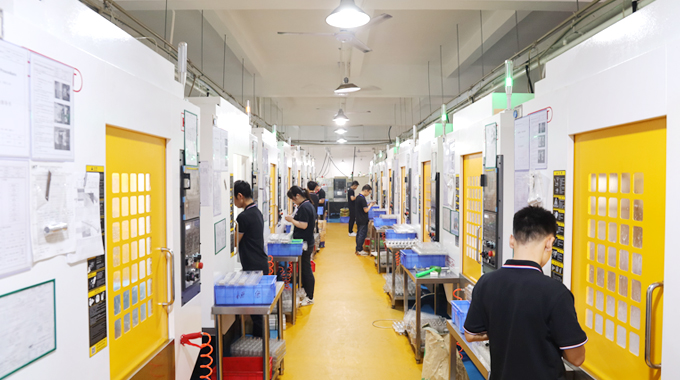
VMT CNC Machining Factory provide specific solutions to the customer's issues:
Thanks to VMT's professional machining solutions, the customer's batch of bearings was successfully produced, with the parts meeting all precision and surface finish specifications. The bearing surfaces were smooth, and the dimensions were accurate, allowing for perfect integration with other components. This satisfied result caused that the customer minimized rework costs caused by dimensional inaccuracies and ensured the reliability of their products.
1. What is leaded tin bronze?
Leaded tin bronze is a copper-based alloy that contains tin and lead, offering excellent wear resistance and self-lubricating properties, making it ideal for bearings and bushings in high-friction environments.
2. What is high tin bronze?
High tin bronze is a copper alloy that contains a higher percentage of tin (typically 10-15%), which improves its strength, corrosion resistance, and wear resistance, especially in harsh environments like seawater.
3. Which alloy has bronze, lead, and tin?
High-lead tin bronze is the alloy that contains copper, lead, and tin, often used for its self-lubricating properties and high wear resistance in industrial applications.
4. Can bronze contain lead?
Yes, bronze can contain lead. Leaded bronze alloys combine copper with other metals like tin and lead, providing enhanced machinability and self-lubricating qualities.
5. Does bronze become fragile over time?
Bronze can become brittle over time if exposed to certain conditions like high temperatures or corrosive environments, but under normal conditions, it remains strong and durable.
6. Is bronze worth more than copper?
Bronze is generally more expensive than copper due to the additional alloying elements like tin, which improve its properties but also increases the cost of production.
7. Is bronze an alloy?
Yes, bronze is an alloy primarily made of copper and tin, although other elements like aluminum or phosphorus can also be added to enhance specific properties.


 +86 15099911516




 Read more