16 years one-stop China custom CNC machining parts factory

Hey there I’m VMT Sam!
With 25 years of CNC machining experience we are committed to helping clients overcome 10000 complex part-processing challenges all to contribute to a better life through intelligent manufacturing. Contact us now
 810 |
Published by VMT at Jan 04 2026 | Reading Time:About 2 minutes
810 |
Published by VMT at Jan 04 2026 | Reading Time:About 2 minutes


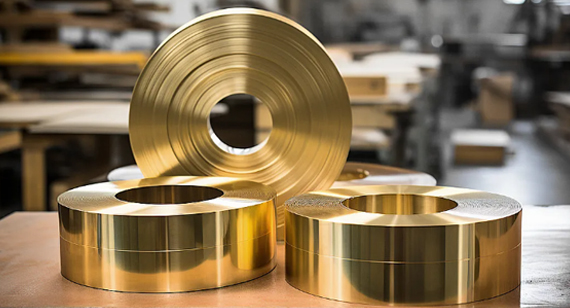
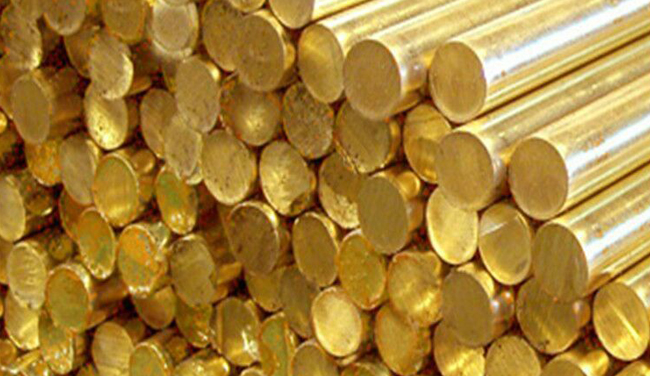
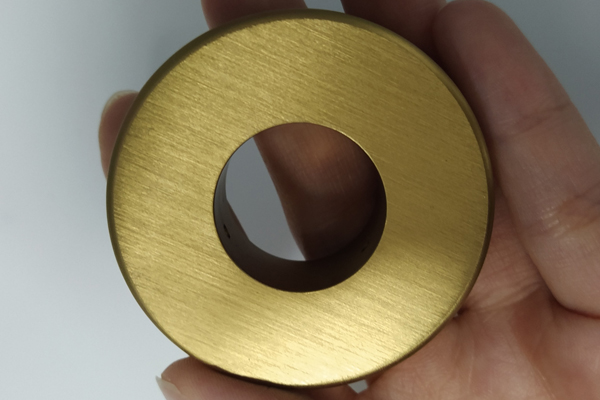
At VMT CNC Machining Factory, we work with a wide range of materials to help customers produce precision parts efficiently and at scale. One of the most frequently requested materials for CNC turning and automatic lathe production is CuZn39Pb3 brass, a free-machining brass known for its excellent machinability and consistent performance. As one of the most widely used brass grades in precision machining, this brass provides manufacturers with a reliable solution for high-volume production of turned components.
In this article, we’ll take a closer look at CuZn39Pb3 brass, including its key properties, equivalent grades, machinability, and common applications—so you can quickly determine whether it’s the right material for your manufacturing needs.
What Is CuZn39Pb3 Brass?
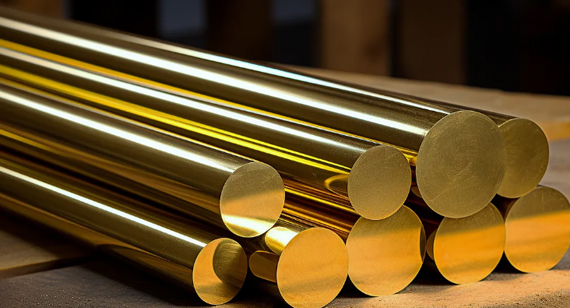
CuZn39Pb3, also known as leaded free-machining brass, is a copper-zinc alloy composed of approximately 58% copper, 39% zinc, and 3% lead. The addition of lead significantly improves its machinability, allowing for smoother cutting during high-precision turning and milling operations. Besides its excellent machinability, CuZn39Pb3 is valued for its balanced strength and good corrosion resistance, making it ideal for producing precision components in industries such as plumbing, automotive, electrical, and general engineering. It is commonly used to manufacture fittings, connectors, valves, and other high-precision turned parts.
While the leaded composition enhances its machinability, it slightly limits the alloy’s corrosion resistance in aggressive environments—for example, prolonged exposure to seawater or acidic cleaning solutions can cause gradual surface tarnishing. Despite this minor limitation, CuZn39Pb3 remains one of the most widely preferred brass alloys for manufacturing projects worldwide. It’s not only for its reliable performance and precision but also for its cost-effectiveness (30–40% cheaper than pure copper)in high-volume production.
What Are the Equivalents of CuZn39Pb3 Brass?
CuZn39Pb3 brass is standardized globally under different naming systems. The alternative designations of CuZn39Pb3 brass include:
Table 1: Equivalents of CuZn39Pb3 Brass in Different Regions
| Standard | Equivalent |
| Europe (EN) | CW614N (Ms58) |
| Germany (DIN) | CuZn39Pb3 |
| USA (ASTM) | C38500 |
| USA (UNS) | C38500 |
| USA (CDA) | 385 |
| Japan (JIS) | C3603 |
| UK (BS) | CZ121 |
| ISO | CuZn39Pb3 |
| China (GB) | HPb59-1 |
| Russia (GOST) | Л63 |
| Australia (AS) | CZ121 / MS58 |
Chemical Composition of CuZn39Pb3 Brass
CuZn39Pb3 brass (CW614N) mainly consists of copper and lead. The presence of lead gives this brass excellent machinability. Other trace elements (Fe, Ni, Al, Sn) are added to modify the properties and machining behavior of CuZn39Pb3 brass.
For example, iron (Fe) increases strength and hardness, nickel (Ni) enhances corrosion resistance, and tin (Sn) refines the grain structure, improving ductility and reducing the risk of cracking during hot working or machining. Typical chemical composition of CuZn39Pb3 brass includes:
Table 2:Chemical Composition of CuZn39Pb3 Brass
| Element | Composition (%) |
| Copper (Cu) | 57–59 |
| Lead (Pb) | 2.5–3.5 |
| Iron (Fe) | ≤ 0.3 |
| Nickel (Ni) | ≤ 0.3 |
| Aluminium (Al) | ≤ 0.05 |
| Tin (Sn) | ≤ 0.3 |
| Others (total) | ≤ 0.20 |
| Zinc (Zn) | Balance |
Table 2 Credit: steelnumber CuZn39Pb3 ( CW614N )
Physical Properties of CuZn39Pb3 Brass
The alloy exhibits good overall physical performance, including moderate thermal and electrical conductivity, reliable stiffness, and stable dimensional behavior, making it suitable for structural components and precision-machined parts. Physical properties of CuZn39Pb3 brass (CW614N) shows in the following:
Table 3: Physical Properties of CuZn39Pb3 Brass
| Property | Value |
| Density (20°C) | 8.46 g/cm³ |
| Melting Temperature | 875–890 °C |
| Thermal Conductivity | 123 W/m·K |
| Specific Heat Capacity | 380 J/kg·K |
| Electrical Conductivity | 14.6 MS/m |
| Electrical Conductivity (%IACS) | 25 %IACS |
| Young’s Modulus (annealed) | 97 GPa |
| Thermal Expansion Coefficient | 21.4 ×10⁻⁶ K⁻¹ |
Mechanical Properties of CuZn39Pb3 Brass
The mechanical properties of CuZn39Pb3 brass (CW614N) vary depending on the strength class and product form. In general, the alloy offers a good balance of strength, hardness, and ductility, with higher temper conditions providing increased tensile strength and hardness at the expense of elongation. Mechanical properties of CuZn39Pb3 brass (CW614N) shows in the following:
Table 3: Mechanical Properties of CuZn39Pb3 Brass
| Condition | Tensile Strength (Rm) | Yield Strength (Rp0.2) | Elongation (%) | Hardness (HB) |
| R360 (Rod) | ≥ 360 | ≥ 320 | 15–20 | 90–125 |
| R430 (Rod) | ≥ 430 | ≥ 220 | 6–10 | 110–160 |
| R500 (Rod) | ≥ 500 | ≥ 350 | 2–8 | — |
The designations R360, R430, and R500 refer to the strength classes of CuZn39Pb3 brass (CW614N) rods, representing the minimum tensile strength in MPa for each condition.
In the case of R500, hardness is not specified in the datasheet because the alloy’s hardness can vary significantly in this high-strength state, and tensile and yield strength are considered more critical design parameters for engineering and machining purposes.
CuZn39Pb3 is considered one of the most machinable copper alloys and is often used as the 100% machinability benchmark. It is often used as a reference standard for evaluating the machinability of other copper alloys.
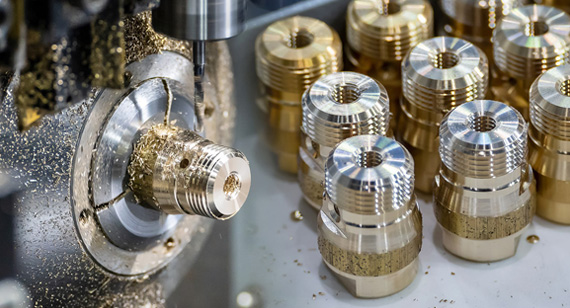
CuZn39Pb3 brass machines exceptionally well due to the presence of lead particles, which act as internal lubricants during cutting. This reduces cutting forces, facilitates chip breakage, and lowers heat generation. The superior machinability of CuZn39Pb3 contributes to higher cutting speeds, longer tool life, improved surface finish, and lower production costs per part. These advantages make it an ideal choice for high-volume CNC turning and automatic lathe production.
If you’re interested in how CuZn39Pb3 brass performs under different machining parameters and gain guidance for optimizing precision turning and CNC operations to achieve better surface finish, lower cutting forces, and higher overall efficiency, you can refer to the study “Experimental Investigation of Machinability Parameters in Turning of CuZn39Pb3 Brass Alloy”.
CuZn39Pb3 brass offers excellent hot formability and moderate cold forming capability. Typically, CuZn39Pb3 is supplied in hot-rolled or annealed conditions to maximize formability, and it is primarily selected for machining rather than extensive cold working.
Its good hot workability is mainly due to the zinc content. It lowers the alloy’s melting point and improves ductility at elevated temperatures, making CuZn39Pb3 brass suitable for processes such as hot extrusion and hot forging. Lead, while beneficial for machinability, slightly reduces cold ductility, limiting its performance in deep cold forming operations.
CuZn39Pb3 Brass: Corrosion Resistance
CuZn39Pb3 brass exhibits good corrosion resistance due to the inherent properties of copper, and its stable microstructure in neutral environments further enhances its resistance. The alloy performs well in fresh water, oils, and fuels, as well as in indoor and general industrial atmospheres.
However, CuZn39Pb3 brass has limitations in more aggressive environments. High zinc content makes it susceptible to dezincification under certain conditions. It may experience stress corrosion cracking when exposed to ammonia, amines, or other corrosive chemicals. Marine and strongly acidic environments are generally not recommended unless protective coatings, such as electroless nickel plating, are applied.
To maximize longevity of CuZn39Pb3 brass,
Compared with zinc plating or simple passivation, nickel plating is a more practical and cost-effective choice for CuZn39Pb3 brass, as it bonds well to copper alloys and delivers more durable protection without significantly increasing processing cost.
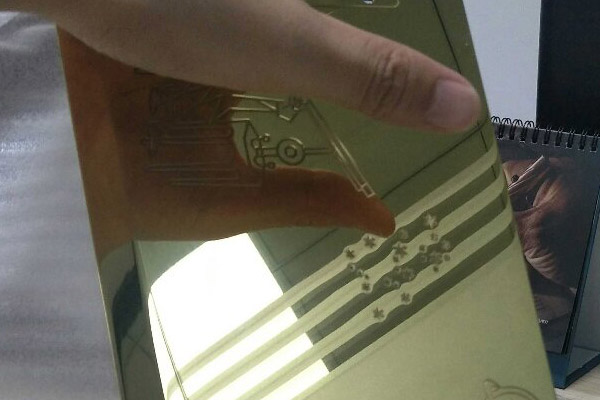
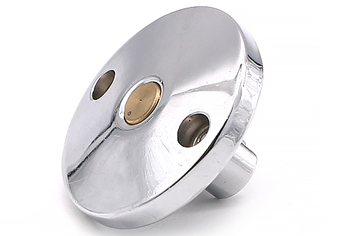
Nickel plating involves applying a thin protective layer of nickel to CuZn39Pb3 brass components. This coating significantly improves corrosion and wear resistance while also providing a bright, decorative surface finish.
It protects the material from chemicals, moisture, and oils, making nickel-plated CuZn39Pb3 well suited for demanding applications such as cable glands, industrial fittings, brackets, connectors, and components used in harsh or humid environments.
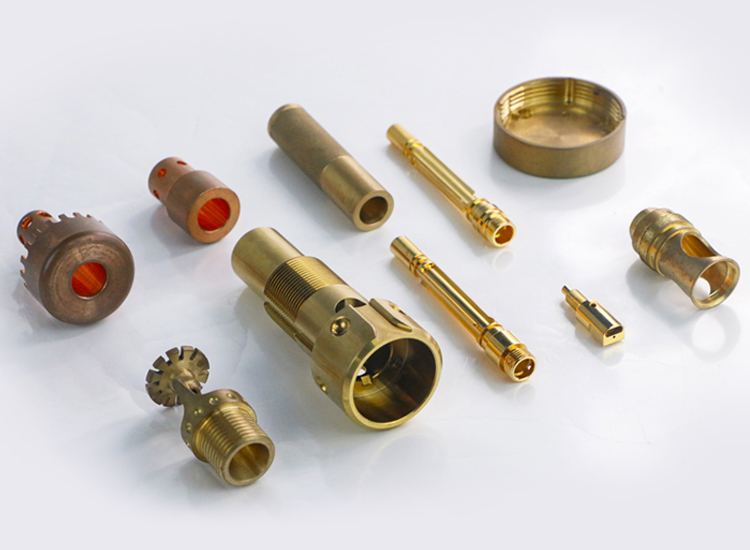
CuZn39Pb3 brass’s good balance of strength, hardness, and ductility, corrosion resistance as well as excellent machinability give it widespread uses including:
1.Plumbing Application
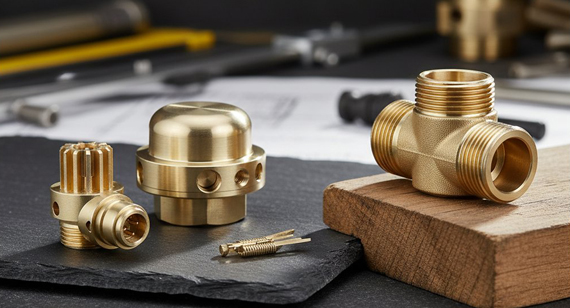
CuZn39Pb3 brass is widely used in plumbing components such as taps, valves, and pipe connectors. Its good corrosion resistance in fresh water, combined with excellent machinability, allows for precise threads, smooth sealing surfaces, and reliable long-term performance in indoor plumbing systems.
2.Automotive Industry
In automotive applications, CuZn39Pb3 is commonly used for gears, connectors, and other precision components. The alloy’s superior machinability enables tight tolerances and high production efficiency, while its strength and wear resistance make it suitable for components exposed to vibration, oils, and moderate heat.
3.Electrical
CuZn39Pb3 brass is well suited for electrical terminals, sockets, and connectors due to its good electrical conductivity and stable mechanical properties. Its machinability allows complex geometries and fine features, and surface treatments such as nickel plating further enhance corrosion resistance and contact reliability.
4.Hardware
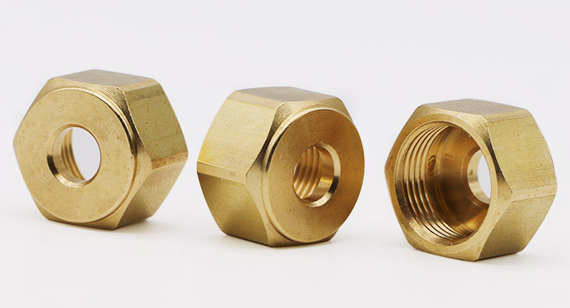
In general hardware applications, including screws, nuts, locks, and window fittings, CuZn39Pb3 offers an excellent balance of strength, durability, and ease of machining. Its ability to produce clean threads and smooth surfaces makes it ideal for mass-produced fastening and architectural hardware components.
5.General Engineering
For general engineering use, CuZn39Pb3 is commonly selected for hydraulic components and CNC-turned parts. Its consistent machining behavior supports high-volume production with good surface finish, making it a cost-effective choice for precision parts used across a wide range of industrial applications.
This article introduced CuZn39Pb3 brass, covering its properties, equivalents, machinability, formability, corrosion resistance, and applications.Thanks to its excellent machinability, stable performance, and cost efficiency, CuZn39Pb3 is one of the best materials for CNC machining and mass production of precision brass parts.

If you are looking for custom CNC-machined brass components, feel free to contact VMT CNC Machining Factory for professional support and a fast quotation. With extensive experience in CNC turning and automatic lathe production, VMT delivers high-precision brass parts with consistent quality, competitive pricing, and reliable lead times. From material selection and process optimization to surface finishing and quality control, our team supports your project at every stage. Contact us for a free quote and custom machining solution today!

1. What is the price of CuZn39Pb3 brass?
The price of CuZn39Pb3 brass strictly depends on London Metal Exchange (LME) copper and zinc prices and is typically 30–40% cheaper than pure copper.
2. Is CuZn39Pb3 suitable for CNC machining?
Yes. It is one of the most machinable brass alloys and ideal for CNC turning and automatic lathes.
3. Is CuZn39Pb3 lead-free?
No. It contains approximately 3% lead to enhance machinability.
4. Can CuZn39Pb3 be nickel plated?
Yes. Nickel plating is commonly applied to improve corrosion resistance and surface appearance.
5. Is CuZn39Pb3 suitable for outdoor use?
It performs well in general outdoor environments but is not recommended for marine or highly acidic conditions.
6. What is the difference between CuZn39Pb3 and CW614N?
There is no practical difference; CW614N is the EN standard designation for CuZn39Pb3.


 +86 15099911516




 Read more