16 years one-stop China custom CNC machining parts factory

Hey there I’m VMT Sam!
With 25 years of CNC machining experience we are committed to helping clients overcome 10000 complex part-processing challenges all to contribute to a better life through intelligent manufacturing. Contact us now
 523 |
Published by VMT at Dec 08 2025 | Reading Time:About 3 minutes
523 |
Published by VMT at Dec 08 2025 | Reading Time:About 3 minutes


When you work with bronze parts—especially casting, forging, or CNC machining—you may struggle with unclear information about the bronze melting temperature. This confusion can lead to production delays, surface defects, or higher costs. You want a simple, accurate explanation that helps you plan better. Understanding the melting point of bronze gives you the clarity you need to choose the right process and avoid costly mistakes.
The melting point of bronze typically ranges from 850°C and 1,050°C (1,562°F–1,922°F), depending on its alloy composition—especially tin, aluminum, or silicon content. Knowing the exact bronze melt point helps you choose proper casting temperature, control molten bronze handling, and avoid defects during fabrication or CNC machining.
Now that you know the basic bronze melting temperature range, you can dive deeper into what affects it and how each bronze type behaves under heat. This helps you choose the right casting temperature, forging temperature, or CNC machining approach for your project.
The melting point of bronze usually falls between 850°C and 1,050°C (1,562°F–1,922°F), depending on how much tin, aluminum, or silicon is in the alloy. You often hear terms like bronze melt point, bronze fusion point, or bronze liquefaction point—all referring to the temperature where bronze becomes fully molten and ready for casting, forging, or high-temperature fabrication.
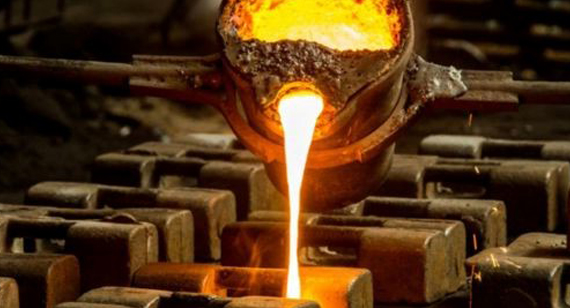
Bronze is not a single metal—it’s an alloy mainly made of copper mixed with other elements such as tin, aluminum, silicon, phosphorus, lead, or manganese. These alloying elements change the bronze melting temperature, strength, corrosion resistance, and how well it performs in casting, forging, and CNC machining. When you choose a bronze grade, you’re choosing a specific composition that directly affects its bronze melt point and overall performance.
Bronze Composition Table
| Bronze Type |
Main Elements |
Typical Copper Content |
Effect on Properties |
| Tin Bronze (Standard Bronze) | Copper + Tin | 80–90% | Balanced strength and heat tolerance |
| Aluminum Bronze |
Copper + Aluminum | 70–90% | Higher strength, corrosion resistance, higher melting point |
| Silicon Bronze |
Copper + Silicon | 94–96% | Excellent weldability and fluidity |
| Phosphor Bronze |
Copper + Tin + Phosphorus | 88–94% | High fatigue resistance and hardness |
| Lead-Tin Bronze |
Copper + Tin + Lead | 75–90% | Good machinability and lubrication |
| Manganese Bronze |
Copper + Zinc + Manganese | 55–65% | Extremely strong, good wear resistance |
| High-Strength Bronze |
Copper + Aluminum + Iron + Nickel | 60–80% | Superior mechanical strength |
| Cast Bronze |
Copper + Tin (varied alloying elements) | 70–90% | Designed for casting, good flow characteristics |
| Forged Bronze |
Copper + Tin or Aluminum (low impurities) | 85–95% | High toughness and durability |
The melting temperature of bronze doesn’t stay the same across all alloys. It shifts based on what elements are added, how the alloy is made, and how heat is applied during casting or fabrication. When you understand these factors, you can control the bronze fusion point more accurately and avoid problems like overheating, poor fluidity, or casting defects.

Alloy Composition
Alloy composition is the biggest factor that changes the bronze melting temperature. When you adjust elements like tin, aluminum, silicon, or phosphorus, the bronze melt point rises or falls. For example, aluminum bronze has a higher thermal threshold, while lead-tin bronze melts at lower temperatures. The alloy mix directly affects casting, forging, and CNC machining behavior.
Tin Content (Alloying Element)
Tin is the primary element that lowers or raises the bronze melting point. Higher tin content generally reduces the bronze liquefaction point, making the alloy easier to melt but slightly less ductile. Lower tin levels increase strength and heat tolerance.
Manufacturing Process
How bronze is produced—cast, forged, or continuously cast—changes its internal structure and therefore its melting temperature behavior. Cast bronze often contains more alloy variations and melts at slightly different ranges compared to forged bronze, which is denser and more stable under heat.
Temperature and Cooling
Heating speed and cooling rate also affect the bronze fusion point during processing. Fast heating can cause uneven melting, while slow cooling can shift the alloy’s microstructure, influencing how it melts the next time. Controlled heating ensures predictable bronze heat tolerance.
Porosity
Porosity—small air pockets inside the metal—lowers heat conductivity and causes inconsistent melting. High-porosity bronze may melt unevenly, affecting casting flow and part accuracy. Dense bronze melts more predictably and handles high temperatures better.
Other Factors
Impurities, oxidation, and exposure to moisture or contaminants all influence the bronze melt point. Minor elements such as zinc, lead, or nickel can shift melting behavior significantly. Even storage conditions can change how bronze reacts to heat.
Different types of bronze melt at different temperatures because each alloy contains unique combinations of copper, tin, aluminum, silicon, phosphorus, lead, or manganese. These variations change the bronze melting temperature, bronze heat tolerance, and overall thermal behavior. When you know the melting range of each bronze category, you can choose the right alloy for casting, forging, or CNC machining without risking defects or overheating.
Table: Melting Point Ranges of Common Bronze Types
| Bronze Type |
Typical Composition | Melting Point Range (°C) |
Melting Point Range (°F) |
Notes |
| Tin Bronze (Standard Bronze) | Cu + 5–12% Sn |
850–1050°C | 1,562–1,877 °F |
|
| High-Tin Bronze |
Cu + 10–20% Sn + <1% P |
900–1,050 °C |
1,652–1,922 °F |
Higher strength and wear resistance; suitable for bearings and gears. |
| Aluminum Bronze |
Cu + 6–12% Al |
1,020–1,080 °C | 1,868–1,976 °F | Higher melting point due to aluminum content |
| Silicon Bronze |
Cu + 2.8–4% Si |
1,020–1,050 °C | 1,868–1,922 °F | Good fluidity; easy to cast and weld |
| Phosphorus Bronze |
Cu + 3.5–10% Sn + 0.01–0.35% P |
890–1,030 °C | 1,634–1,886 °F |
|
| Lead-Tin Bronze (Bearing Bronze) | Cu + 10% Sn + 5–10% Pb |
850–1,000 °C | 1,562–1,832 °F |
|
| Manganese Bronze |
Cu + 35–40% Zn + Mn |
880–1,000 °C | 1,616–1,832 °F |
|
| Nickel Bronze (Nickel Silver) |
Cu + Ni + Zn |
1,020–1,150 °C |
1,868–2,102 °F |
Silver-like appearance; used in decorative parts and musical instruments. |
| Gunmetal (Traditional Bronze) |
Cu + ~10% Sn + ~2% Zn |
900–1,050 °C |
1,652–1,922 °F |
High pressure and corrosion resistance; used for pump bodies and valve housings. |
| High-Strength Bronze |
1,050–1,200°C | 1,922–2,192°F | Alloyed with iron/nickel; strong heat resistance | |
| Cast Bronze |
900–1,150°C | 1,652–2,102°F | Designed for casting; melting depends on alloy mix | |
| Forged Bronze |
950–1,150°C | 1,742–2,102°F | Dense structure improves heat stability |
Summary of Bronze Melting Point Ranges
Here are the key points you should remember when comparing different bronze types and their melting temperatures:
Tip: When planning a project involving molten bronze handling or high-temperature fabrication, always confirm the alloy type—thermal properties change fast with small composition differences.
When you compare bronze to other common metals, you can quickly see where it stands in terms of heat tolerance and processing difficulty. Bronze generally melts at a medium-high temperature, higher than aluminum and zinc but lower than stainless steel, titanium, and tungsten. Understanding these differences helps you choose the right material for casting, forging, CNC machining, or high-temperature applications.
Table: Melting Points of Bronze vs. Other Metals
| Material |
Melting Point (°C) |
Melting Point (°F) |
Notes |
| Bronze (general range) |
850–1050°C | 1,526–2,192°F | Varies by alloy composition |
| Aluminum |
~660°C | ~1,220°F | Low melting point; easy to cast |
| Titanium |
~1,668°C | ~3,034°F | Very high heat tolerance |
| Stainless Steel |
1,400–1,530°C | 2,552–2,786°F | High melting point; excellent heat resistance |
| Copper |
~1,085°C | ~1,985°F | Base element of bronze |
| Iron |
~1,538°C | ~2,800°F | Higher heat resistance than bronze |
| Tin |
~232°C | ~450°F | Very low melting point; lowers bronze fusion point |
| Tungsten |
~3,422°C | ~6,192°F | Highest melting point of all metals |
| Silver |
~962°C | ~1,764°F | Lower melting point but good heat conductivity |
| Zinc |
~419°C | ~786°F | Very low melting point; used for low-temp casting |
Summary of Metal Melting Point Comparison
Here are the key takeaways when comparing bronze with other common metals:
Tip: Always pick a metal that matches the heat exposure of your application—wrong choices lead to warping, cracking, and costly rework.
To find the exact melting point of a bronze alloy, you need more than general reference charts. Every bronze grade has its own bronze melt point because of different alloying elements and manufacturing methods. The most accurate way to confirm the melting temperature of bronze is through controlled laboratory testing and industrial evaluation techniques.
Laboratory Evaluation Techniques
Laboratories use precise scientific tools to measure the bronze fusion point. Differential Scanning Calorimetry (DSC) and thermal analysis systems gradually heat the specimen to record its bronze liquefaction point and thermal threshold. These methods identify exact temperature ranges and help you avoid overheating during casting or forging.
Industrial Testing Techniques
In industrial environments, melting point testing is usually done using furnace trials, temperature probes, thermal cameras, and controlled melting setups. While less precise than lab tests, these methods give reliable real-world results for bronze foundry processes, bronze heat treatment, and molten bronze handling. They help you match heating settings to the alloy used in CNC machining parts or casting projects.
New technology is making bronze melting safer, more accurate, and more energy-efficient. Modern induction furnaces heat bronze faster and more evenly, helping you reach the exact bronze melting temperature without overheating. Advanced sensors, automated temperature controllers, and AI-based monitoring systems reduce human error and stabilize the bronze fusion point during casting. Improved alloy engineering also creates bronze types with better heat tolerance and smoother flow for CNC machining and bronze part manufacturing.
Bronze’s melting point makes it ideal for industries that need materials with strong heat tolerance, excellent wear resistance, and stable performance under friction. Because bronze melts at a medium-high temperature, it handles heat better than aluminum or zinc but processes easier than stainless steel or titanium. This balance makes it suitable for a wide range of demanding parts.
Here are the main industries and why bronze works well in each:
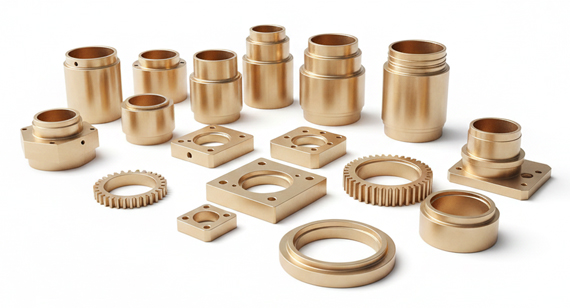
1. Marine Industry
Common Parts: bushings, propellers, valve components, bearings, pump housings
Bronze resists corrosion—even in saltwater—and its bronze heat tolerance prevents deformation in high-friction environments.
2. Electrical and Electronics Industry
Common Parts: connectors, switches, terminals, springs
Bronze conducts electricity well and maintains stability under heat, thanks to its strong bronze thermal threshold.
3. Industrial Machinery
Common Parts: gears, worm wheels, bearings, bushings, guide plates
Bronze’s high wear resistance and steady bronze melting temperature make it perfect for heavy-load, high-friction moving parts.
4. Automotive and Transportation
Common Parts: thrust washers, transmission components, hydraulic parts
Bronze handles heat, pressure, and vibration without deforming, supporting long-term reliability.
5. Aerospace Components
Common Parts: bearings, bushings, valve seats, landing gear components
Bronze alloys offer stable mechanical properties at elevated temperatures and resist surface wear under heavy mechanical loads.
6. Art, Sculpture, and Foundry Work
Common Parts: statues, casting molds, decorative pieces
Bronze’s fluidity when molten allows fine detail capture, and its bronze casting temperature is ideal for both small and large sculptures.
7. Oil, Gas, and Chemical Processing
Common Parts: pump parts, valve seats, seals, bearing components
Bronze resists chemical corrosion and maintains integrity in high-heat, high-pressure environments.
8. Medical and Precision Equipment
Common Parts: guides, surgical tool components, movement parts
Bronze delivers consistent performance, excellent wear resistance, and smooth movement, critical for precise mechanisms.
Client Background and Challenges
A European automation equipment manufacturer approached VMT seeking a reliable supplier to produce a series of precision bronze CNC machined parts used in their heavy-duty motion control assemblies. Bronze was selected due to its exceptional wear resistance and load-bearing properties. However, the customer faced a significant production challenge:
Bronze has a relatively high melting point and low thermal conductivity compared to aluminum, which resulted in excessive heat buildup during machining. This created multiple issues with their previous supplier, including:
Their former vendors could not manage temperature control effectively, leading to rejection rates above 20% and delay in product delivery. The customer required a manufacturer with deep expertise in both bronze material behavior and heat-sensitive machining processes.
Our Solutions and Breakthroughs
VMT’s engineering team conducted a detailed review of the customer’s drawings and identified thermal management as the core issue. We designed a machining strategy specifically addressing bronze’s high melting point and heat-generation characteristics:
1. Temperature-Controlled Toolpath Strategy
We implemented optimized multi-step toolpaths that reduced cutting friction, minimized tool engagement time, and prevented localized overheating.
2. Advanced Cooling and Lubrication Management
A custom coolant delivery system was applied, combining high-pressure mist lubrication with precise nozzle angles to efficiently remove heat and chips from critical zones.
3. Heat-Resistant Tooling Selection
VMT selected specialized carbide tools with high-heat-tolerance coatings, significantly reducing wear and maintaining consistent performance under extended machining cycles.
4. Fixturing and Vibration Control
Thermal-resistant fixturing techniques were used to stabilize the part during machining, ensuring that heat buildup did not distort thin sections or alter dimensional accuracy.
5. In-Process Thermal Monitoring
Our team added real-time inspection checkpoints, measuring temperature influence on key dimensions and adjusting machining parameters dynamically to maintain stable quality.
These breakthroughs resolved the customer’s long-standing heat-related machining issues and enabled stable, repeatable production.
Results and Customer Value
The improved machining strategy delivered measurable benefits for the customer’s bronze components:
This project demonstrated VMT’s ability to handle challenging materials like bronze—especially when the high melting point becomes a critical machining pain point—reinforcing VMT’s position as a trusted CNC machining partner for high-performance industrial components.
Understanding the melting point of bronze is essential for selecting the right alloy for engineering, manufacturing and CNC machining applications. Because bronze alloys vary in composition—typically blending copper with tin, aluminum, silicon, phosphorus or other elements—their melting points can range widely. This temperature range directly influences how the material behaves during casting, forming, heat treatment and high-temperature service.
A higher melting point often translates to better thermal stability, wear resistance and durability, making certain bronze alloys ideal for heavy-duty components such as bearings, bushings, gears, valves and marine hardware. Likewise, alloys with lower melting points are easier to cast into complex shapes, improving manufacturability for applications requiring fine details or tight tolerances.
By understanding the melting characteristics of each bronze type, manufacturers and engineers can make better decisions when choosing the right alloy for specific performance needs. Whether the goal is improved corrosion resistance, higher load capacity, enhanced machinability or long-term stability under heat, selecting bronze with an appropriate melting point ensures both reliability and cost-effective production.

Is bronze difficult to melt?
Bronze is not particularly difficult to melt, but it requires higher temperatures than many common metals. Most bronze alloys melt between 850°C and 1,000°C (1,562°F–1,832°F). Proper equipment—such as a high-temperature furnace or foundry setup—is necessary to melt it safely and uniformly.
Is melting bronze safe?
Melting bronze is safe only when performed with proper precautions. The metal reaches extremely high temperatures, and molten bronze can cause severe burns or fires. Adequate ventilation, heat-resistant gloves, face shields, foundry tongs, fire-safe clothing, and a controlled environment are essential to prevent accidents and exposure to fumes.
Which metal is easiest to melt?
Among common metals, tin and lead are the easiest to melt.
These metals require much lower temperatures than bronze, aluminum, or steel.
Can aluminum bronze be forged?
Yes. Aluminum bronze can be forged, but it requires higher forging temperatures than other copper alloys. Aluminum bronze typically forges well between 850°C and 950°C (1,562°F–1,742°F). It offers excellent strength, wear resistance, and corrosion resistance—making it suitable for heavy-duty forged components like bushings, gears, and marine parts.
Why is borax used when melting brass?
Borax acts as a flux when melting brass. It:
Although bronze melting also benefits from flux, brass often requires it more due to its zinc content, which oxidizes quickly at high temperatures.
How long does it take to melt bronze?
The time required depends on the furnace type, bronze volume, and temperature. Typically, melting a small batch (1–5 kg) in a properly heated furnace takes 20–45 minutes. Larger industrial batches may take 1–2 hours. Molten bronze must also be held briefly at temperature to ensure uniformity before casting.
What color is pure copper?
Pure copper has a reddish-orange metallic color. When freshly polished, it appears bright and reflective. Over time, it can develop brown, black, or green patinas depending on environmental exposure.
Is bronze magnetic?
No. Bronze is not magnetic because it is primarily made of copper and tin, both of which are non-ferromagnetic metals. However, if a bronze alloy contains small amounts of iron or nickel, it may exhibit very weak magnetic responses—but this is uncommon.


 +86 15099911516




 Read more