16 years one-stop China custom CNC machining parts factory

Hey there I’m VMT Sam!
With 25 years of CNC machining experience we are committed to helping clients overcome 10000 complex part-processing challenges all to contribute to a better life through intelligent manufacturing. Contact us now
 713 |
Published by VMT at Aug 31 2026 | Reading Time:About 8 minutes
713 |
Published by VMT at Aug 31 2026 | Reading Time:About 8 minutes


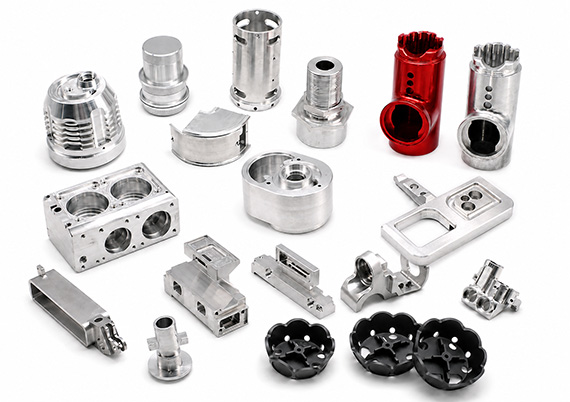
When you request a quote for aluminum CNC machining parts, similar-looking components can receive very different prices. Small quantities, tight tolerances, deep pockets, thin walls, multiple setups, anodizing, and inspection can quickly increase the final cost. Understanding how the price is calculated helps you compare quotations and reduce unnecessary manufacturing expenses.
Aluminum CNC machining parts price is mainly determined by material, programming and setup, machining time, geometry, tolerance, quantity, tooling, surface finishing, inspection, and packaging. Simple turned or milled parts generally cost less, while complex, thin-wall, tight-tolerance, or multi-axis aluminum parts require more manufacturing control and therefore cost more.
This guide explains what affects aluminum CNC machining parts price, how suppliers calculate it, why quotations differ, and how you can reduce the price without compromising the function of your part.
There is no fixed aluminum CNC machining parts price because every custom part has different dimensions, geometry, aluminum grade, tolerance, production quantity, surface finish, and inspection requirements.
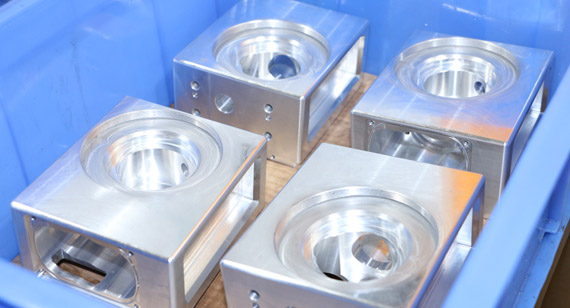
A simple aluminum spacer or bushing produced by CNC turning normally has a lower price than a precision housing with deep cavities, thin walls, multiple threaded holes, tight tolerances, and anodizing.
The final price should therefore be evaluated according to the complete finished part rather than only its weight or the hourly rate of the CNC machine.
| Aluminum CNC Machined Part | Relative Price Level | Main Price Drivers |
|---|---|---|
| Spacer, sleeve or bushing | Low | Simple turning geometry and short cycle time |
| Basic bracket or plate | Low–Medium | Milling, drilling and setup |
| Aluminum housing | Medium | Pockets, holes, threads and multiple machined faces |
| Thin-wall enclosure | Medium–High | Deformation control and fixture requirements |
| Tight-tolerance precision part | Medium–High | Controlled machining and additional inspection |
| Complex 5-axis aluminum part | High | Programming, complex toolpaths and machining time |
| Cosmetic anodized aluminum part | Medium–High | Surface preparation, anodizing and appearance inspection |
Two aluminum CNC parts of approximately the same size can therefore have very different prices.
For example, a simple aluminum plate with standard holes may be machined quickly. A similarly sized enclosure with deep internal cavities, thin walls, ±0.01 mm critical dimensions, multiple threaded holes, bead blasting, and black anodizing requires much more manufacturing time and process control.
A higher machine hourly rate also does not automatically mean a higher finished-part price. If a 5-axis machining strategy reduces several setups and repeated positioning operations, the total aluminum CNC machining parts price may be lower than using a less expensive machine with multiple setups.
Tip: For an accurate aluminum CNC machining parts price, provide your 2D drawing, 3D model, aluminum alloy, quantity, tolerance, surface finish, and inspection requirements.
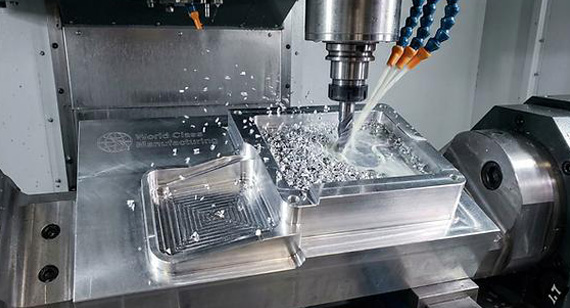
CNC machining is a subtractive manufacturing process in which material is removed from aluminum bar, plate, billet, extrusion, or other stock to produce the required geometry and dimensions.
Computer-controlled cutting tools such as end mills, drills, boring tools, reamers, and taps can produce precise pockets, holes, threads, mating surfaces, profiles, and complex contours.
CNC machining is widely used for custom aluminum parts because it offers good dimensional accuracy, repeatability, flexibility, and surface quality for prototypes and production components.
The machining method also directly affects the final aluminum CNC machining parts price. Material removal, machining time, tooling, workholding, setup quantity, and inspection requirements vary significantly between different part designs.
The cost of CNC machining aluminum parts depends on several manufacturing factors. Understanding these factors makes it easier to evaluate quotations and determine where cost can realistically be reduced.
Complexity of Design
Part complexity directly affects machining time and the number of manufacturing operations required.
Features that can increase aluminum CNC machining parts price include:
A simple part may require only one setup and a few cutting tools, while a complex housing may require several operations, custom fixtures, multiple tool changes, and additional inspection.
More machining complexity generally means longer production time and a higher finished-part price.
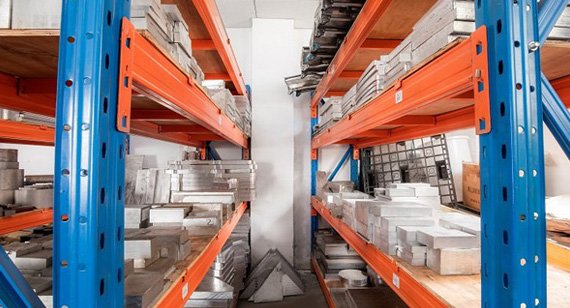
The aluminum grade also influences pricing.
Common CNC machining alloys such as 6061, 6063, 6082, 2024, and 7075 have different raw material costs, mechanical properties, stock availability, and application requirements.
Higher-strength or certified aluminum grades may increase material cost, particularly for large parts or production quantities.
However, raw material is only one component of the complete aluminum CNC machining parts price. For small or highly complex parts, machining time may have a greater influence than the difference in aluminum material price.
Quantity and Batch Size
Order quantity can significantly affect the unit price.
Before production begins, the CNC supplier normally needs to complete activities such as:
These preparation costs must be absorbed whether you order a few parts or hundreds of parts.
For example:
Programming + Setup ÷ 10 parts
Programming + Setup ÷ 500 parts
As quantity increases, fixed preparation costs are distributed across more pieces, which normally reduces the aluminum CNC machining parts price per part.
However, the price does not decrease indefinitely. Once setup cost becomes a relatively small percentage of the total, machining time, material, finishing, tooling life, inspection, and packaging become the main cost drivers.
Machining Time
Machining time is one of the most important factors affecting aluminum CNC machining cost.
Cycle time depends on:
A design that requires two hours of machine time will naturally cost more to manufacture than a design that can be completed in 15 minutes, assuming similar equipment and production conditions.
For this reason, toolpath optimization, fixture optimization, and reducing unnecessary machining operations can have a significant effect on the finished-part price.
Surface Finishing Requirements
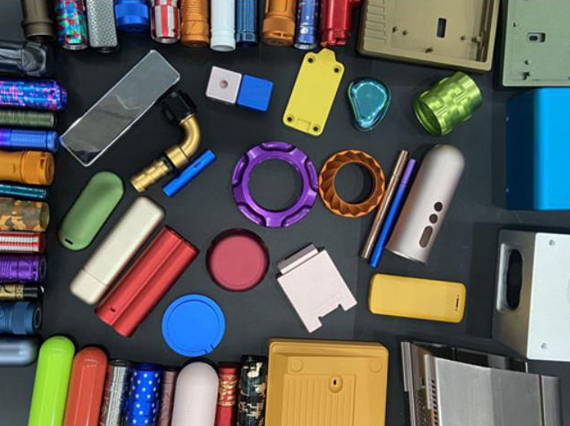
Surface finishing is another important part of aluminum CNC machining pricing.
Common finishing options include:
The finishing price depends on the part size, quantity, surface area, color, masking requirements, cosmetic standards, and dimensional requirements after finishing.
For appearance-critical aluminum parts, finishing can also increase costs associated with surface protection, appearance inspection, color control, rejection risk, and packaging.
Additional Services
Additional services may also affect the total CNC machining price.
These can include:
When comparing quotations from different suppliers, make sure the quotations include the same manufacturing and inspection scope.
Not every factor affects the price equally.
For many aluminum CNC machining projects, machining time, geometry complexity, quantity, setup requirements, and tolerance have a greater impact on the final part price than the raw aluminum itself.
| Price Factor | Typical Impact on Price | Why It Changes the Price |
|---|---|---|
| Machining time | Very High | Longer cycle time directly increases processing cost |
| Part complexity | Very High | More features require more tools, operations and toolpaths |
| Quantity | Very High | Setup and programming costs are divided across the order |
| Number of setups | High | Every setup requires clamping, positioning and verification |
| Tight tolerances | High | Require more controlled machining and inspection |
| Thin walls | High | Need deformation control and optimized workholding |
| Deep pockets | High | Often require long tools and slower cutting |
| Aluminum alloy | Medium–High | Raw material price and stock requirements vary |
| Surface roughness | Medium | May require additional finishing passes |
| Anodizing or finishing | Medium | Adds secondary processing and inspection |
| Cosmetic requirements | Medium–High | Increase handling, protection and rejection risk |
| Packaging | Low–Medium | Appearance-sensitive parts require more protection |
For example, specifying ±0.01 mm on one critical mating diameter may have only a limited effect on the overall price.
Applying ±0.01 mm to almost every dimension on the drawing can substantially increase machining and inspection time without improving the actual function of the product.
Note: When comparing aluminum CNC machining parts prices, compare the complete finished part rather than only the raw material cost or machine hourly rate.
A practical CNC machining quotation normally includes much more than aluminum material and machine time.
A simplified formula is:
Aluminum CNC Machining Parts Price = Material Cost + Programming & Setup + Machining Cost + Tooling & Fixtures + Surface Finishing + Inspection + Packaging
The percentage of each cost component changes according to your project.
Aluminum Material Cost
Material cost should not be calculated only from the final weight of the machined part.
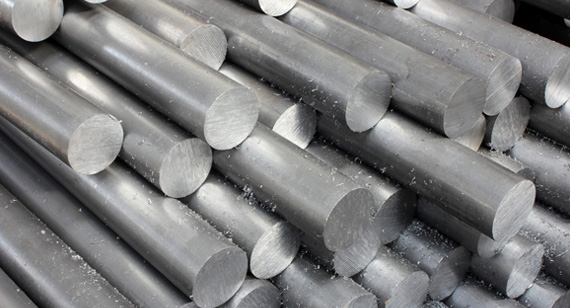
Most CNC aluminum parts are produced from:
The starting material is usually larger than the finished component.
For example, a finished housing weighing 300 g may need to start from a substantially larger aluminum billet. The material removed during rough machining still contributes to the starting material cost.
Material cost is influenced by:
This is why two finished aluminum parts with the same weight can still have different material costs.
Programming and Setup Cost
Before machining starts, engineers may need to complete:
These preparation costs have a particularly strong effect on prototypes and low-volume orders.
A similar amount of programming and setup work may be required for both 5 parts and 500 parts. The cost per piece is therefore much higher when only a few parts are ordered.
CNC Machining Cost
Machining cost is strongly related to actual cycle time.
It depends on:
For many custom aluminum components, machining time is one of the largest portions of the total price.
Tooling and Fixture Cost
Simple aluminum parts can usually be produced with standard tools and conventional workholding.
Complex parts may require:
Fixture engineering may initially add cost, but an optimized fixture can reduce setup time, improve repeatability, reduce deformation, and lower scrap during repeat production.
Surface Finishing Cost
Surface finishing is normally calculated separately from basic machining.
Finishing cost can be affected by:
For cosmetic aluminum parts, finishing price also needs to consider appearance consistency and rejection risk.
Inspection requirements also influence aluminum CNC machining parts price.
Inspection may include:
The tighter the tolerance and the more extensive the reporting requirements, the more inspection time may be required.
Packaging is normally a smaller cost component, but it becomes important for appearance-sensitive aluminum parts.
Anodized, polished, brushed, or bead-blasted parts may require:
Proper packaging helps prevent finished parts from being rejected because of scratches, dents, or transportation damage.
Aluminum alloy selection affects the final price, but it should not be considered separately from the rest of the manufacturing process.
| Aluminum Alloy | Relative Material Cost | Typical Price Effect | Typical CNC Applications |
|---|---|---|---|
| 6061-T6 | Lower | Cost-effective | Housings, brackets, plates, fixtures |
| 6063 | Lower | Cost-effective | Cosmetic housings and structural parts |
| 6082 | Moderate | Moderate | Structural and mechanical components |
| 2024 | Moderate–High | Higher material contribution | High-strength components |
| 7075-T6 | Higher | Higher material contribution | High-strength precision parts |
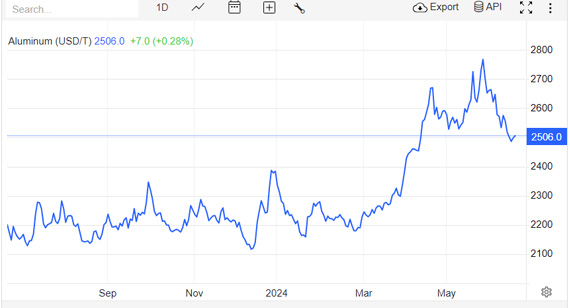
Actual aluminum prices vary with market conditions, stock dimensions, temper, certification, and purchasing volume.
A more expensive alloy does not mean the final part price will increase by the same percentage.
For example, if machining, setup, finishing, and inspection represent most of the total cost, replacing 7075 with 6061 may lower the material cost but only slightly reduce the final part price.
Material selection has a greater impact when:
For small complex precision components, machining time may still be the dominant cost factor.
Tip: Select aluminum according to your actual performance requirements. If 6061 already meets the strength, corrosion, thermal, and assembly requirements, choosing 7075 unnecessarily can increase the price without providing useful value.
Before producing an aluminum CNC machined part, the supplier should evaluate the component structure, tolerance, quantity, finishing requirements, and production volume.
A suitable manufacturing process is critical for both quality and cost.
For prototype and low-volume projects, machining directly from billet, plate, bar, or extrusion is often practical because no production mold is required.
For suitable medium- or high-volume projects, near-net-shape manufacturing can sometimes be combined with CNC machining, such as:
Reducing the amount of material that needs to be removed by CNC machining can lower machining time and material waste when the production quantity justifies the additional tooling investment.
The correct process should therefore be selected according to the overall project cost rather than only one manufacturing operation.
Choosing the Right CNC Machining Manufacturer
Different CNC machining manufacturers have different strengths in:
The most suitable supplier is not simply the smallest or largest factory.
A supplier whose equipment, engineering capability, inspection system, and production model match your project can often provide a more competitive aluminum CNC machining parts price.
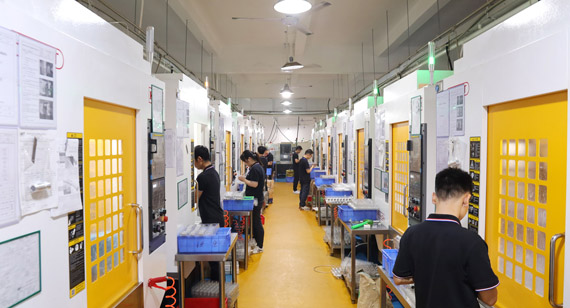
Selecting the Right CNC Machine
Different CNC machines are suitable for different geometries.
Examples include:
The objective is to select a machine and process that can produce the required geometry efficiently and reliably.
Using a more expensive machine is not necessarily wasteful if it reduces setup time, repositioning, cycle time, or quality risk.
CNC turning and CNC milling have different price structures because they are suitable for different types of aluminum parts.
| CNC Process | Typical Aluminum Parts | Price Characteristics |
|---|---|---|
| CNC Turning | Shafts, bushings, sleeves, spacers | Efficient for rotational geometry |
| CNC Milling | Housings, brackets, plates, enclosures | Cost depends on toolpaths, pockets and setups |
| Mill-Turn | Parts combining turned and milled features | Can reduce secondary setups |
| 5-Axis CNC Machining | Complex multi-face parts | Higher machine rate but fewer setups may reduce total price |
CNC turning is normally efficient for round components such as shafts, sleeves, bushings, and spacers.
However, when a turned part also requires cross holes, flats, slots, radial threads, or off-center features, secondary milling may be required.
In these cases, a mill-turn process can sometimes reduce handling and setup costs.
For complex milled parts, 5-axis machining may also provide a lower total production cost.
For example:
3-axis process:
Lower machine rate + multiple setups
5-axis process:
Higher machine rate + fewer setups
If the 5-axis process reduces repeated clamping, repositioning, and inspection, it can sometimes produce a more competitive final part price.
What Usually Increases CNC Milling Aluminum Parts Price?
What Usually Increases CNC Turning Aluminum Parts Price?
Note: The machine with the lowest hourly rate does not always produce the lowest aluminum CNC machining parts price. The more useful comparison is the total cost of one conforming finished part.
Machine hourly rates vary according to:
For buyers, comparing only the machine hourly rate can therefore be misleading.
A more useful comparison is:
Total Finished Aluminum CNC Part Price
including:
In basic terms, the quotation includes material cost, processing cost, and the supplier's operating margin. The detailed processing cost depends on the actual machining route and project requirements.
Order quantity also affects the final price. For a single custom part, setup, programming, and preparation must be absorbed by only one component. For larger quantities, these costs can be distributed across the production batch.
The amount of outsourcing can also influence pricing. If several processes must be subcontracted to different suppliers, additional logistics, handling, coordination, and supplier margins may be added.
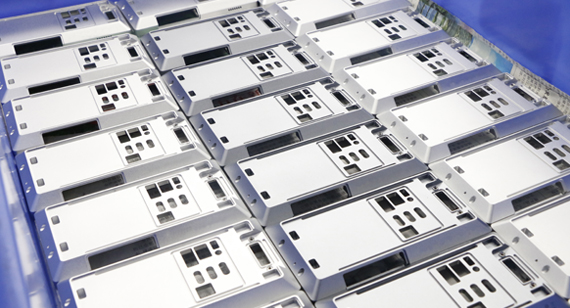
The easiest way to understand aluminum CNC machining parts price is to look at how a typical quotation is structured.
The example below is an illustrative cost structure rather than a fixed quotation.
Example: CNC Machined Aluminum Electronics Housing
| Cost Component | What It Includes | Effect on Price |
|---|---|---|
| Aluminum material | Starting billet or plate | Depends on stock dimensions and material utilization |
| CAM programming | Process planning and toolpaths | Greater effect on low-volume orders |
| Fixture and setup | Workholding, datum and offsets | Distributed across total quantity |
| CNC machining | Milling, drilling, tapping and finishing | Often a major cost component |
| Deburring | Hole, thread and edge finishing | Adds secondary processing |
| Bead blasting | Cosmetic surface preparation | Adds finishing cost |
| Anodizing | Protective and cosmetic finish | Adds processing and inspection |
| Inspection | Dimensional and appearance verification | Depends on quality requirements |
| Packaging | Finished-surface protection | Important for cosmetic parts |
How Quantity Changes the Price Per Part
Suppose the same programming and setup work is required for both 10 parts and 100 parts.
For 10 parts:
For 100 parts:
The setup contribution per part becomes much smaller at 100 pieces.
This is one of the main reasons prototype aluminum CNC machining parts have a higher unit price than repeat or batch production.
Once quantities increase further, machining cycle time, material, surface finishing, inspection, and tooling life become more important than setup allocation.
How Drawing Changes Can Change the Price
Even if the overall dimensions and material remain almost the same, a drawing revision can change the quotation.
Examples include adding:
Each of these changes can increase machining, setup, finishing, or inspection time.
For this reason, aluminum CNC machining parts price should always be based on the current drawing revision.
Why Similar Aluminum Parts Can Have Different Prices
Consider two aluminum parts with almost the same external dimensions.
Part A
Part B
Although the starting material may be similar, Part B normally has a higher price because it requires more machining time, process control, finishing, and inspection.
This is why using only “price per kilogram” is rarely an accurate way to estimate custom aluminum CNC machining parts.
If you want to reduce the cost of CNC machining aluminum parts, optimization should begin with the drawing and manufacturing strategy.
Design Simplification
Simplifying unnecessary design features can reduce machining time and material removal.
This does not mean removing important product functions. It means identifying features that increase machining difficulty without providing functional value.
Material Selection
Choose an aluminum alloy that meets the required strength, corrosion resistance, thermal performance, weight, and finishing requirements.
Using a more expensive alloy than necessary can increase material cost without improving the performance of the final product.
Batch Consolidation
Consolidating confirmed production requirements into a larger batch can reduce the setup and programming cost allocated to each part.
However, this should be balanced against inventory requirements and future design changes.
Optimal Machining Strategies
Work with your CNC supplier to optimize:
A better manufacturing strategy can reduce machining time while maintaining tolerance and quality.
1. Apply Tight Tolerances Only Where Required
Tight tolerances should be assigned according to function.
If only a bearing bore or mating surface requires ±0.01 mm, avoid applying the same tolerance to every dimension.
Unnecessarily tight tolerances can increase:
The correct tolerance is not always the tightest tolerance. It is the tolerance required for assembly and function.
2. Avoid Excessively Deep Pockets
Deep cavities can require:
Reducing unnecessary pocket depth can shorten machining time and reduce tool risk.
3. Increase Internal Corner Radii Where Possible
Small internal radii require small cutting tools.
Larger corner radii allow larger and more rigid end mills, which can remove aluminum more efficiently and improve machining stability.
4. Use Standard Hole and Thread Sizes
Standard drill diameters, taps, and thread specifications reduce the need for special tooling.
For batch production, this can also reduce tool changes and machining cycle time.
5. Reduce Unnecessary Setups
Every setup requires:
Designing a component so more features can be completed in one setup can reduce both price and accumulated positioning error.
6. Select Aluminum According to Function
Use higher-strength alloys such as 7075 when the design requires their properties.
Where 6061 already satisfies the application, specifying 7075 unnecessarily can increase the material contribution to the final price.
7. Define Cosmetic Surfaces Clearly
Not every surface needs the same appearance standard.
Clearly marking visible cosmetic areas allows machining and finishing controls to focus on the surfaces customers actually see.
Hidden internal surfaces can often use standard machining requirements.
8. Consider Standard Aluminum Stock Sizes
Where practical, designing around common aluminum plate, bar, billet, or extrusion sizes can improve material utilization and reduce rough machining.
This becomes more important for larger components.
9. Optimize Quantity After Prototype Validation
Prototype the design first and confirm:
Once the design is stable, larger production quantities can reduce the unit contribution of setup and programming.
10. Request DFM Feedback Before Production
DFM review can identify price-driving features before machining begins.
VMT can review:
Small design changes before production can often reduce aluminum CNC machining parts price more effectively than trying to reduce the supplier's price after the manufacturing process has already been fixed.
Tip: Good DFM cost reduction does not make the part cheaper by reducing quality. It removes manufacturing difficulty that does not contribute to the required function.
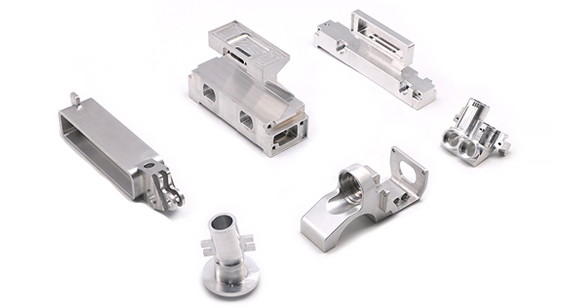
It is common to receive different quotations from CNC machining suppliers for the same aluminum part.
The difference does not necessarily mean one quotation is incorrect. Different suppliers may use different machines, fixtures, machining sequences, tooling, inspection methods, finishing suppliers, and production strategies.
| Reason for Price Difference | How It Affects Price |
|---|---|
| Machine selection | Changes cycle time and setup requirements |
| Toolpath strategy | Changes machining efficiency |
| Fixture design | Affects setup time, stability and scrap |
| Material source | Changes stock and certification cost |
| Tolerance interpretation | Changes machining and inspection requirements |
| Finishing supplier | Changes finishing price, yield and logistics |
| Inspection level | Changes measurement and reporting time |
| Batch planning | Changes setup allocation and production efficiency |
| Outsourced operations | Can add logistics and supplier margins |
| Manufacturing risk | Complex parts may require different scrap allowances |
Before comparing quotations, confirm that each supplier includes the same:
For example, a quotation that excludes anodizing and dimensional inspection should not be compared directly with a quotation that includes both.
Is the Lowest Aluminum CNC Machining Price Always Better?
Not necessarily.
A low quotation may create additional costs if the finished parts have:
For procurement teams, the more useful metric is often the cost per usable finished part, rather than simply the lowest quoted unit price.
To determine the price of your aluminum CNC machining parts, the supplier needs enough information to evaluate the complete manufacturing process.
Requesting Quotes
Provide detailed project information such as:
The more complete the information, the more accurately the CNC manufacturer can calculate your price.
Evaluating Quotes
When comparing quotations, consider more than unit price.
Evaluate:
A quotation that appears slightly higher may provide a lower total production cost if it reduces rework, sorting, assembly problems, and delivery risk.
3D CAD Model
Common formats include:
The 3D model helps engineers evaluate:
2D Engineering Drawing
The 2D drawing should define information that may not be fully represented by the 3D model, including:
For precision CNC machined aluminum parts, the 2D drawing is particularly important for accurate pricing.
Aluminum Alloy
Specify the required aluminum grade, such as:
If the material has not yet been finalized, VMT can review the application and provide material suggestions.
Order Quantity
Provide both the current quantity and expected future production quantity when possible.
For example:
Knowing expected production volume helps determine whether additional fixture or process optimization is worthwhile.
Surface Finish
Specify your finishing requirements, such as:
For anodized aluminum parts, also define color, cosmetic surfaces, masking areas, and any dimensions that remain critical after finishing.
Inspection Requirements
Specify whether your project requires:
Inspection requirements should be included when comparing aluminum CNC machining parts prices between suppliers.
Delivery Requirements
If your project has a fixed deadline, provide the required delivery date during quotation.
Urgent production can affect scheduling, machine capacity, secondary finishing, and logistics.
CNC machining is an efficient and precise method for producing custom aluminum parts, but there is no universal aluminum CNC machining parts price.
The final price depends on the complete manufacturing process, including:
If you want to reduce price, start by identifying unnecessary machining complexity, overly tight tolerances, excessive setups, poor material utilization, or cosmetic requirements that do not contribute to the function of your part.
The most accurate aluminum CNC machining parts price always comes from your actual drawing and production requirements.
Get an Aluminum CNC Machining Parts Price for Your Project
Upload your 2D drawing and 3D CAD model and tell VMT your required aluminum alloy, quantity, tolerances, surface finish, inspection requirements, and delivery target.
VMT can review the machining process, price-driving features, fixture requirements, tolerance control, and potential DFM improvements before quotation.
Send your drawings to request an aluminum CNC machining quote and DFM feedback.
Upload your drawings and project requirements for a manufacturing review and quote.
All information and uploaded files are secure and confidential.
1 Tell us what you need
2 Get solution & quote
3 Approve production
Email: inquiry@vimetal.com.cn
What Is the Typical Turnaround Time for CNC Machining Aluminum Parts?
Turnaround time depends on part complexity, quantity, material availability, machining requirements, surface finishing, inspection, and current production capacity.
Simple prototypes can usually be completed faster than complex parts requiring special fixtures, finishing, or detailed inspection.
Is CNC Machining Suitable for Large-Scale Production of Aluminum Components?
Yes. CNC machining can support prototypes, low-volume production, and batch manufacturing.
For larger quantities, fixtures, machining sequences, tooling, and automation can be optimized to reduce cycle time and improve repeatability.
For very high quantities, processes such as extrusion, forging, stamping, or die casting combined with CNC machining may also be considered.
Can I Provide My Own Aluminum Material for CNC Machining?
Yes, customer-supplied aluminum can often be machined if the alloy, temper, stock dimensions, material quality, and certification meet the manufacturing requirements.
The material should be reviewed before production.
Are There Limitations on the Complexity of Aluminum Parts That Can Be Machined?
Modern CNC turning, 3-axis, 4-axis, 5-axis, and mill-turn equipment can produce complex aluminum parts.
However, tool access, deep cavities, thin walls, small internal radii, tolerance, and workholding can affect manufacturing feasibility and price.
A DFM review can identify these issues before production.
What Surface Finishes Are Available for CNC Machined Aluminum Parts?
Common options include anodizing, hard anodizing, bead blasting, sand blasting, polishing, brushing, powder coating, painting, and laser engraving.
The selected surface finish can affect both appearance and the final aluminum CNC machining parts price.
How Much Does an Aluminum CNC Machined Part Cost?
There is no fixed price for a custom aluminum CNC machined part.
The final price depends on material, raw stock size, geometry, machining time, quantity, tolerance, surface finish, inspection, and packaging.
A simple turned component normally costs less than a complex thin-wall housing or multi-axis precision component.
Why Are Prototype Aluminum CNC Parts More Expensive Per Piece?
Prototype quantities normally have a higher unit price because programming, fixture preparation, setup, and first-piece inspection are divided across only a few parts.
As production quantity increases, these preparation costs can be distributed across more pieces.
Is CNC Turning Cheaper Than CNC Milling for Aluminum Parts?
CNC turning is generally more economical for rotational parts such as shafts, bushings, sleeves, and spacers.
CNC milling is more suitable for housings, brackets, plates, pockets, and multi-face parts.
The most economical process depends on the geometry and number of setups rather than machine hourly rate alone.
Does 7075 Aluminum Cost More to CNC Machine Than 6061?
7075 normally has a higher raw material price than 6061.
However, the final CNC machining price difference also depends on stock size, material utilization, machining time, part complexity, quantity, tolerance, and surface finishing.
For a highly complex part, machining time may have a greater influence on the final price than the difference in raw material cost.
How Does Order Quantity Affect Aluminum CNC Machining Parts Price?
Programming, setup, fixture preparation, and first-piece inspection are fixed preparation costs.
When quantity increases, these costs are distributed across more parts, which usually reduces the unit price.
At larger volumes, material, cycle time, finishing, inspection, and tooling life become the dominant cost factors.
Does Anodizing Increase the Price of CNC Machined Aluminum Parts?
Yes.
Anodizing adds secondary processing, handling, inspection, and sometimes masking requirements.
Strict color, cosmetic appearance, or post-anodizing dimensional requirements can further increase the finishing cost.
Do Tight Tolerances Increase Aluminum CNC Machining Price?
Yes.
Tight tolerances can require slower finishing operations, more stable fixtures, tighter process control, additional measurement, and more inspection.
Applying tight tolerances only to functional features can help control the aluminum CNC machining parts price.
How Can I Get an Accurate Aluminum CNC Machining Parts Quote?
Provide your:
These details allow the CNC manufacturer to evaluate material, setup, machining time, finishing, inspection, and production risks before calculating the final aluminum CNC machining parts price.


 +86 15099911516




 Read more