16 years one-stop China custom CNC machining parts factory

Hey there I’m VMT Sam!
With 25 years of CNC machining experience we are committed to helping clients overcome 10000 complex part-processing challenges all to contribute to a better life through intelligent manufacturing. Contact us now
 205 |
Published by VMT at Mar 21 2026 | Reading Time:About 3 minutes
205 |
Published by VMT at Mar 21 2026 | Reading Time:About 3 minutes


It’s important to balance superior corrosion resistance with tight dimensional tolerances when manufacturing high-quality standards precision parts—such as aerospace components, drone parts, and precision instruments.
Anodizing processes like Type II or Type III often add relatively a little higher thickness, which can compromise assembly precision. They cannot match the performance of Type I Chromic Acid Anodizing, which achieves a high corrosion resistance standard of 336 hours in ASTM B117 salt spray tests (meeting MIL-A-8625 military standards) with a thickness of only 1.2μm - 5μm.
As the "ultra-thin" representative of surface treatments, Type I chromic acid anodizing of aluminium is the high-quality choice for aerospace and precision instruments—— offering excellent corrosion resistance without affecting accuracy, fatigue strength, or the ability to detect hairline cracks. This article provides a deep dive into the engineering value and trade-offs of this process from a factory perspective.
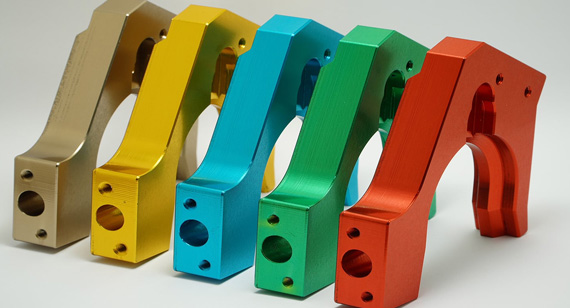
In industry standards like MIL-A-8625, chromic acid anodizing is known as Type I, also referred to as the Bengough-Stuart process. It was the first commercially used anodizing method, producing an oxide film that is exceptionally thin, dense, and ductile.
Table 1: Chromic Acid Anodizing (Type I) Basics
| Feature |
Specifications |
| Standard Specs |
MIL-A-8625 Type I & IB, AMS 2470 |
| Coating Thickness |
0.00005" - 0.0002" (Approx. 1.2μm - 5μm) |
| Primary Materials |
Aluminum Alloys (High-strength 7075, 2024, etc.) |
| Appearance |
Opaque gray to dark gray, non-reflective, relatively soft |
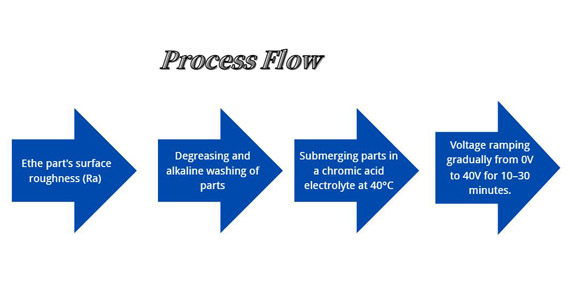
Chromic acid anodizing is more than just "soaking in a chromic acid bath." It is a high-precision process with strict requirements for electrochemical parameters. In our collaborative shop, the following steps are strictly enforced:
1. Pre-treatment: Degreasing and alkaline washing of CNC-machined parts.
(Before Pre-treatment: Because the Type I oxide film is extremely thin, it can barely hide any machining marks. Therefore, during the CNC machining stage, we use high-precision milling to ensure the part's surface roughness (Ra) meets the required standards.)
2. Chromic Acid Bath Immersion: Submerging the parts in a chromic acid electrolyte maintained at approximately 40°C.
3. Voltage Ramping: Gradually increasing the voltage from 0V to 40V. This incremental ramping effectively controls the growth rate of the oxide layer, ensuring film uniformity.
(Voltage ramping is a process that occurs after immersion to allow the initial oxide film to form slowly and evenly. The ramp-up time of 10–30 minutes and voltages of ~40-50V are higher than those for Type II and Type III, making it more energy-intensive and increasing the overall cost.)
4.Cleaning and Sealing: Thoroughly rinsing with deionized water followed by dichromate sealing as required to maximize corrosion resistance.
1. True "Zero" Dimensional Change
For aerospace or precision instrument parts with tolerances of ±0.01mm or tighter, Type II anodizing (1.8–25 μm) can lead to assembly failure. The Type I film (1.2–5 μm) occupies only 1/4 to 1/10 of a ±0.01mm tolerance zone. This is negligible, meaning no dimensional compensation is required during the CNC machining phase.
2. Superior Fatigue Performance
Another major advantage of type i chromic acid anodizing is its minimal impact on the material's fatigue life. Unlike sulfuric acid processes(type ii) that can reduce fatigue strength, the CAA layer is thin, ductile, and creates shallower microscopic pores, resulting in lower tensile stress. This is why it is mandatory for high-stress parts like landing gears and wing structures.
3. "Invisible" Crack Detection
If a part has micro-cracks, the chromic acid seeps in and bleeds out during the process, forming visible brown stains. This makes it a secondary tool for detecting hidden cracks, which is vital for aerospace safety.
As a transparent manufacturer, we advise clients to consider the following trade-offs:
Table 2: Limitations of Chromic Acid Anodize
| Limitations |
Notes |
| Wear Resistance |
Compared to Type III (Hardcoat), the Type I film is softer and not suitable for applications involving frequent friction. |
| Environmental Compliance |
Uses Hexavalent Chromium, which is restricted by RoHS/REACh regulations. For products exported to Europe, we recommend consulting alternative solutions of hexavalent chromium-free alternatives. |
| Aesthetic Limitations |
Although it can be dyed black, the color saturation is lower than Type II. It is typically used for functional protection rather than decorative purposes. |
When surface treating precision parts, the quotation for chromic acid anodizing is typically higher than for Type II and Type III anodizing. For the main reasons:
Estimated Prices for Type I Chromic Acid Anodizing by Major Regions
The estimated price for Type I chromic acid anodizing varies across major regions, driven by industrial scale, environmental regulations, and labor costs. If you require part manufacturing combined with type i chromic acid anodizing, the Pearl River Delta region in China offers the best balance of high quality and cost-effectiveness due to its large-scale, mature supply chain.
Table 2: Estimated Pricing for Type I Chromic Acid Anodizing (Ref: 2016-2017)
| Region |
Price Level |
Est. Min. Lot Charge (Per Batch) |
Est. Unit Price (Med. Volume) |
Notes |
| North America (USA/Canada) |
Highest | $200 - $350 | $1.50-$10.00+ | Strict environmental compliance, high labor costs, NADCAP management fees. |
| Western Europe (Germany/France) |
High | $195 - $325 | $2.20 -$13.00+ | Extremely strict EU REACH regulations, high energy consumption, limited certified shops. |
| China (Pearl/Yangtze River Delta) |
Mid/Low | $70 - $140 | $0.20 - $2.00 | Massive supply chain scale, lower labor costs, centralized processing zones. |
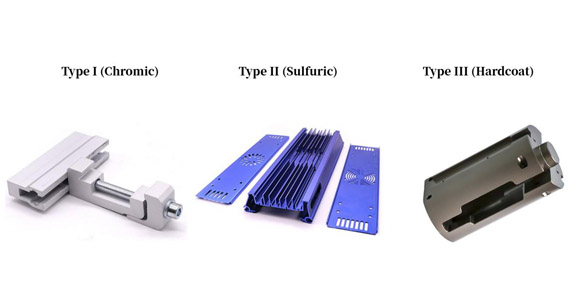
Below is a comparison table of Type I vs. Type II vs. Type III covering thickness, hardness, corrosion resistance, fatigue impact, typical applications, and cost for your reference:
Table 3: Comparison of Type I vs. Type II vs. Type III
| Feature |
Type I (Chromic) |
Type II (Sulfuric) |
Type III (Hardcoat) |
| Thickness |
Thinnest (1.2–5 μm) | Medium (1.8–25 μm) | Thickest (13–114 μm) |
| Hardness |
Softest; thin & ductile | Moderate; good for daily wear | Extremely Hard (C60-70 Rockwell) |
| Corrosion Resistance |
Excellent (Best per unit thickness) | Good (standard protection) | Good (best physical barrier) |
| Fatigue Impact |
Negligible (Best for stress) | Moderate reduction | Significant reduction (up to 50%) |
| Appearance |
Opaque, gray, or iridescent | Clear, satin, or brightly dyed | Dark gray, bronze, or black |
| Application |
Aircraft structures, flight-critical parts, precision bonds. | Consumer goods, electronics, architectural trim. | Pistons, gears, valves, cookware, sliding parts. |
| Cost Comparison |
Highest | Lowest | Higher |
If you are developing a high-stress, high-precision aluminum alloy product, Chromic Acid Anodizing (Type I) is undoubtedly an excellent surface treatment solution for ensuring long-term corrosion resistance and fatigue performance.
At VMT, we provide more than just high-quality CNC machining services; we offer a comprehensive engineering evaluation plan—from material selection and tolerance control to the final surface treatment.
Want to know if your parts are suitable for chromic acid anodizing? Send your drawings now for a free project assessment. Our engineers will provide professional advice within 24 hours.

The Project: A US-based client required a batch of custom 7075-T6 aluminum brackets for a drone project(Here is 7075 t6 aluminum properties). The tolerances were extremely strict, requiring high precision, corrosion resistance, and fatigue strength. The client demanded high-quality surface finishes and placed a high emphasis on quality.
Our Solution:
The Result: Our factory provided the client with a full one-stop service, ranging from prototyping and precision CNC machining to post-processing and surface treatment. The parts passed the assembly test on the first attempt, with dimensions perfectly matching the drawings. They also successfully passed the rigorous 336-hour salt spray simulation. The client was highly satisfied and willing to keep long-term cooperation with VMT.
Q: Is chromic acid anodizing better than sulfuric acid anodizing?
A: It depends entirely on your specific application. If your priority is fatigue resistance and strict dimensional control, chromic acid (Type I) is the superior choice. However, if your project requires high wear resistance or vibrant decorative dyeing, sulfuric acid (Type II or III) is the better option.
Q: Is chromic acid anodize conductive?
A: Technically, it is defined as non-conductive (an insulator). However, because the Type I oxide film is extremely thin, it may occasionally exhibit slight electrical continuity in certain low-voltage applications. Despite this, for standard engineering purposes, it should be treated as non-conductive.
Q: What are the common industry specifications for this process?
A: The most widely recognized standards are MIL-A-8625 Type I (the military specification) and AMS 2470.
Q: Can Type I anodizing be dyed?
A: Yes, it can be dyed black, but the color saturation is never as deep or vibrant as Type II. It typically results in an opaque gray or a muted background tone rather than a jet-black finish.
Q: Besides aluminum, what other materials utilize this surface treatment?
A: While chromic acid anodizing (CAA) is primarily applied to aluminum alloys, Titanium alloys and Magnesium alloys are two other materials that frequently utilize this process. For Titanium aerospace components (such as wing structures and engine blades) and Magnesium precision parts (including electronic housings, drone chassis, and precision mechanical components), chromic acid anodizing significantly enhances corrosion resistance without sacrificing the fatigue life of the part.
Q: What are requirements for it if as paint or organic coating bases?
A: When using chromic acid anodizing (CAA) as a base for paint or organic coatings, the primary goal is to maximize mechanical bonding and chemical compatibility. Because the CAA layer is ultra-thin and porous, the coating must meet the following requirements: high wettability, chemical compatibility, and controlled coating thickness.


 +86 15099911516




 Read more