16 years one-stop China custom CNC machining parts factory

Hey there I’m VMT Sam!
With 25 years of CNC machining experience we are committed to helping clients overcome 10000 complex part-processing challenges all to contribute to a better life through intelligent manufacturing. Contact us now
 226 |
Published by VMT at Mar 20 2026 | Reading Time:About 3 minutes
226 |
Published by VMT at Mar 20 2026 | Reading Time:About 3 minutes


When joining two pieces of metal, choosing the right thermal process is critical for the integrity of the final product, as well as the durability and aesthetics of the joint. While they may look similar to the untrained eye——both processes use a filler metal to join base materials without melting them, brazing vs. soldering involves different temperatures, filler metals, and mechanical properties.
In this guide, we will dive deep into how these processes work, their impact on CNC machined parts, and which one you should choose for your project.
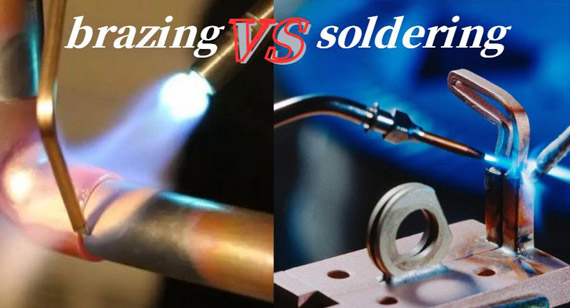
The Process: Apply flux to clean the surface → Position the filler metal → Heat to melt the filler → Cool to solidify the joint.
Both brazing and soldering are "solid-liquid" joining processes. Unlike welding, the base metals (like steel, aluminum, or copper) do not melt. Instead, a filler metal (soldering wire or brazing rod) is melted and drawn into the joint through capillary action.
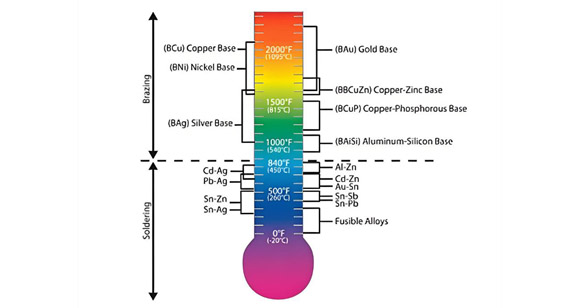
According to the American Welding Society (AWS), the primary distinction of them lies in the melting temperature of the filler metal:
The Role of Flux
Before the joining begins, a chemical agent called Flux must be applied.
What is Flux?
Flux is a specially formulated chemical (available as a paste, liquid, or powder) designed to prepare the metal surface for bonding. Think of it as a "chemical cleaner" that works in real-time as you heat the metal.
How it works:
Removing Oxide Layers: All metals (especially aluminum and copper) naturally form an oxide layer when exposed to air. This layer acts as a barrier that prevents the filler metal from sticking. Flux chemically dissolves these oxides.
Preventing Re-oxidation: As you apply heat, metals oxidize even faster. Flux creates a protective blanket over the joint, sealing out oxygen during the heating process.
Promoting "Wetting": Flux reduces the surface tension of the melted filler metal, allowing it to "wet" the surface and flow smoothly into the weld seam through capillary action.
Brazing vs. soldering strength and temperature are closely related to their practical engineering requirements——Whether the temperature will above the melting point of metal base? Whether the strength good for application needs or not?
Brazing vs. Soldering Temperature
Brazing vs. Soldering Strength
Brazing offers significantly higher strength and durability. Because the filler metal interacts more deeply with the base metal at high temperatures, a well-made brazed joint can be stronger than the base metals themselves.
Soldering is primarily used for electrical conductivity and leak-proofing. It has lower mechanical strength and is not suitable for load-bearing structures.
In the plumbing and HVAC systems industry, the choice between copper brazing vs. soldering depends on the pressure of the system:
As the most common modern mainstream processing technology for manufacturing aluminum parts, stainless steel parts, brass parts, etc., CNC machining may face a dilemma when welding is required: Does brazing versus soldering compromise the original smooth surface and precision of CNC-machined parts?
That is, we say ——
For manufacturers using CNC machining to produce high-precision aluminum, stainless steel, or brass parts, joining these components requires careful consideration.
Does Brazing or Soldering Affect Precision?
Choosing between brazing and soldering is a balance of strength, temperature, and aesthetics. Here is how different industries apply these techniques based on their specific needs:
Brazing: High Strength & Extreme Durability
Characterized by higher temperatures and superior joint integrity, brazing is the go-to for structural and high-pressure environments. While it may leave some oxidation or heat marks, its mechanical performance is unmatched.
Soldering: Precision, Aesthetics & Thermal Safety
Soldering operates at lower temperatures, making it ideal for delicate parts. It provides a clean appearance and excellent conductivity, though its mechanical strength is lower than brazing.
Comparison Summary Table of Brazing vs. Soldering
| Feature |
Soldering |
Brazing |
| Temperature |
Lower (< 450°C) | Higher (> 450°C) |
| Filler Metal |
Tin-lead, Lead-free solder | Silver, Copper-phosphorus, Nickel alloys |
| Joint Strength |
Moderate (Electrical/Sealing) | Very High (Structural) |
| Base Metals |
Copper, Brass, Precious metals | Steel, Stainless, Aluminum, Copper |
| Appearance |
Smooth and clean | May require post-cleaning |
| Cost |
Low | High (due to materials & energy) |
Choosing between brazing vs. soldering comes down to the specific requirements of your application.
Navigating the complexities of metalworking, heat treatment, and joining can be difficult. As a leading one-stop service provider for custom manufacturing, VMT combines advanced CNC machining with expert assembly techniques. At VMT CNC Machining Factory, our one-stop service ensures that your CNC machined parts are designed with the final joining process in mind.
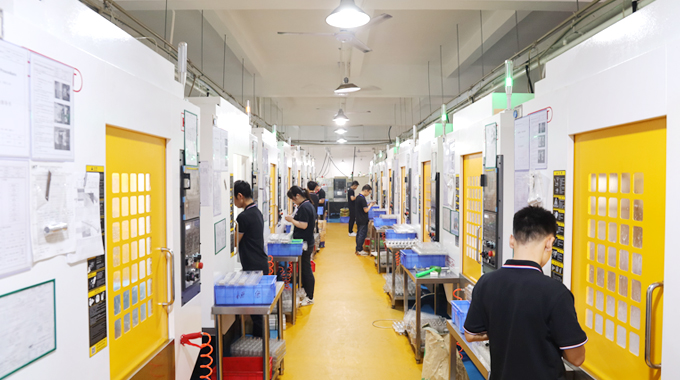
Showcase of Our Successful Project: Precision Aluminum Electronics Housing
VMT’s Integrated Solution:
The Result: The final assembly maintained its 100% dimensional accuracy, provided excellent EMI shielding, and passed all pressure-leak tests.
Ready to start your next project?
[Contact VMT CNC Machining Factory Today] for a professional consultation and a fast quote on your custom CNC machined and joined components. Explore more of our CNC Milling Service and CNC Turning Service.

What is the difference between hard soldering vs. brazing?
Technically, they are the same. "Hard soldering" is an older term often used in jewelry and silverwork to describe brazing with silver-based filler metals.
Why would you braze instead of solder?
You should choose brazing if the joint needs to withstand high stress, high vibration, or high operating temperatures (like in an engine or industrial piping).
Can you braze with just a propane torch?
Only for very small parts or low-melting-point brazing rods. For industrial metalworking, an oxy-acetylene torch or induction heating is usually required to reach the necessary temperatures.
Does brazing require flux?
Yes, in most atmospheric conditions, flux is required to prevent oxidation. However, brazing in a vacuum furnace or a controlled atmosphere can be done without flux.
What are the different types of brazing rods, and how do I choose one?
A brazing rod (or filler metal) is chosen based on the base metals being joined and the required strength.
Brazing vs. welding: Which is better for high-strength applications?
The main difference is that welding melts the base metals to fuse them, while brazing does not.


 +86 15099911516




 Read more