16 years one-stop China custom CNC machining parts factory

Hey there I’m VMT Sam!
With 25 years of CNC machining experience we are committed to helping clients overcome 10000 complex part-processing challenges all to contribute to a better life through intelligent manufacturing. Contact us now
 140 |
Published by VMT at Dec 13 2025 | Reading Time:About 2 minutes
140 |
Published by VMT at Dec 13 2025 | Reading Time:About 2 minutes


Perhaps you are designing a camera lens and need a focus ring that is lightweight, smooth, and has a premium feel. Or maybe your industrial optical lens project requires a focus ring that is wear-resistant and deformation-proof. Or your drone camera lens ring is sensitive to weight while also demanding high machining precision and structural stability. The choice of focus ring material not only directly affects the overall weight but also determines machining performance, surface durability, and service life.
This article will guide you through three commonly used focus ring materials—aluminum, stainless steel, and brass—from the perspectives of pros and cons, machining and surface treatment capabilities, and application scenarios,etc. Hoping you will find which one is most suitable for you after reading, providing some useful references for your optical project.
The focus ring is an external structural component on a camera lens that can be rotated to adjust the focus and sharpness of the image or line of sight within the lens. From camera lenses, industrial optics, drone lenses, microscopes to laser systems, they have very different requirements for the adaptive focus rings, which is why no material fits all scenarios. Therefore, it is not just an external mechanical component, but also an essential functional part of the lens assembly. The material affects:
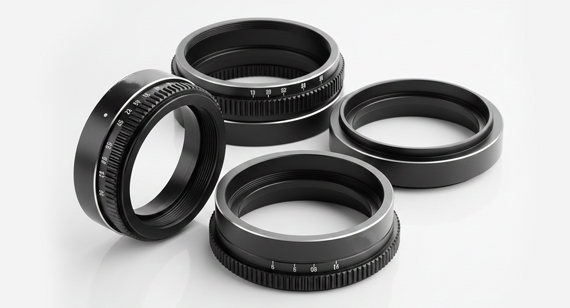
1.Weight
The material directly influences the weight of the camera focus ring, which can affect factors such as portability, gimbal balancing, drone flight time, and overall handling.
2.Durability
The material affects the long-term wear resistance of the focus ring, which can influence how well it withstands frequent rotation, friction, and mechanical stress.
3.Appearance & Tactile Feel
The material shapes the visual quality and hand-feel of the focus ring, which can affect factors such as perceived premium quality, rotational resistance, and overall smoothness.
4.Machining Precision
The material determines how easily the focus ring can be machined, which can affect thin-wall stability, tolerance control, and risks of deformation during CNC manufacturing.
5.Cost
The material affects machining difficulty (such as tool wear, cycle time, and deformation risk) as well as the types of surface-finishing processes it can support, and these combined factors directly drive the total manufacturing cost.
When choosing materials for CNC-machined focus rings, aluminum, stainless steel, and brass are the three most frequently mentioned options. Each material has its unique advantages and limitations, and these characteristics directly affect whether they can meet the engineering requirements of different types of optical systems for focus rings. In the following sections, I will analyze the properties of aluminum, stainless steel, and brass, as well as commonly used material grades, and compare them with common lens categories to help you determine which material is most suitable for your focus ring under different engineering requirements.
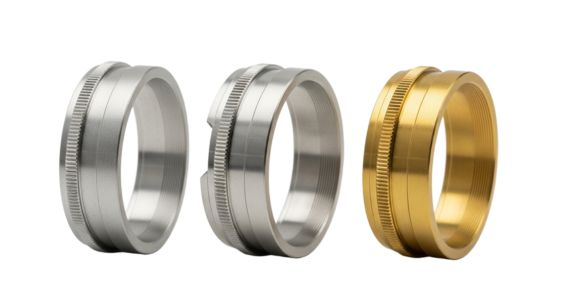
Material Selection of Aluminum
Aluminum is well suited for applications such as lightweight optical systems, and projects with cost requirements. Its best applications include mirrorless and portable camera lenses, drone lenses, and consumer-level lenses. Below, I will list the advantages and disadvantages of aluminum, as well as the differences between commonly used grades(aluminum alloy 6061 / 7075) and how to select the appropriate material.
Table 1: Material Selection of Aluminum For Lens Focusing Ring
| Material |
Advantages |
Disadvantages |
Focusing Ring Is For |
| Aluminum |
Lightest weight among three ones, fast machining, good thermal conductivity, can be anodized | Lower surface hardness, easier to scratch/wear | Lightweight, cost-effective |
| Aluminum alloy 6061 |
Good appearance, lower cost | Less strength | Mirrorless camera lenses, consumer-level lenses |
| Aluminum alloy 7075 |
Higher structural strength, better deformation resistance | Higher cost , harder to machine | High-end durable lens |
Material Selection of Stainless Steel
Stainless steel is well suited for applications that demand maximum strength, durability, and corrosion resistance. Typical applications include professional camera lenses, industrial optics, laser and scientific instruments, and equipment used in outdoor or marine environments. Here lists the advantages and disadvantages of stainless steel, as well as common used grades(stainless steel 303/304 / 316).
Table 2: Material Selection of Stainless Steel For Lens Focusing Ring
| Material |
Advantages |
Disadvantages |
Focusing Ring Is For |
| Stainless Steel |
High strength, excellent wear and corrosion resistance, very stable dimensional accuracy | Heaviest among three ones, difficult to machine, higher cost | Professional camera lenses, industrial optics |
| Stainless Steel 303 |
Good machinability, good strength | Slightly lower corrosion resistance than 304/316 | Precision camera lenses |
| Stainless Steel 304 |
Good corrosion resistance, strength and durability | Higher cost | Outdoor/humid environments, industrial optics |
| Stainless Steel 316 |
Good corrosion resistance, very durable, excellent strength | Heaviest, most difficult to machine, highest cost | High-end lenses, marine/outdoor equipment, scientific instruments |
Brass is ideal for applications requiring a premium tactile feel, high machining precision, and excellent surface finish. Its best applications include vintage-style camera lenses, high-end custom lenses, microscopes and lab-grade focusing assemblies, and decorative optical products. Here lists the advantages and disadvantages of brass, as well as the common used grades brass C3604 and brass H62.
Table 3: Material Selection of Brass For Lens Focusing Ring
| Material |
Advantages |
Disadvantages |
Focusing Ring Is For |
| Brass |
Smooth, premium feel; high machining precision; good surface finish | Oxidizes over time; needs plating; heavier than aluminum; more expensive | Vintage-style camera lenses, high-end custom lenses, microscopes |
| Brass C3604 |
Excellent machinability; moderate plasticity; stable weight | Needs plating for long-term appearance | High-end camera lens focus rings, precision optical assemblies |
| Brass H62 |
Good machinability; high plasticity; consistent appearance | Slightly less tactile damping than C3604 | Camera lens focus rings requiring smooth rotation and premium feel |
When choosing materials for CNC-machined focus rings or other precision optical components, it is important to understand how each metal behaves during machining and finishing. In CNC precision manufacturing, aluminum, stainless steel, and brass are widely used because of their different mechanical properties, surface performance, and cost. Selecting the right material and surface finish improves function and durability, and also gives the product a more refined look.
Material Performance in CNC Machining
1. Aluminum — Fast Machining and Lightweight
Aluminum is popular for precision focus rings because it machines quickly and cleanly. It works well for fine knurling, thin-wall parts, micro threads, and tight tolerances. Its low weight is ideal for optical systems that must stay light. However, its dimensional stability is lower than steel or brass, so it fits best in products where the structural load is moderate.
2. Brass — Excellent Stability and Detail Quality
Brass cuts smoothly and causes very little tool wear. It produces clean details and a high-quality surface finish. It has better rigidity and dimensional stability than aluminum, making it a strong choice for high-precision focus rings, knobs, and premium instrument parts where appearance and accuracy both matter.
3. Stainless Steel — Maximum Strength and Stability
Stainless steel is the most challenging to machine. It requires slower cutting speeds and high-durability tooling. The finished parts offer very low thermal expansion, high structural strength, and outstanding dimensional stability. This makes stainless steel the top choice for professional lens systems, harsh-environment equipment, and products that demand long-term durability.
Surface Finishes and Visual Effects
1. Aluminum Finishes — Versatile Anodizing Options
Aluminum can be anodized to improve corrosion resistance and appearance. Colors like black, silver, red, and custom tones are common. Sandblasting before anodizing creates a smooth matte look. Hard anodizing increases surface hardness and wear resistance, which is ideal for focus rings that are used frequently.
2. Stainless Steel Finishes — Premium Look and Wear Resistance
Stainless steel parts can be brushed, mirror-polished, or coated with PVD in colors such as black, gold, or gunmetal. PVD coatings add scratch resistance and long-term color stability, making them a premium finish for high-end optical components.
3. Brass Finishes — Classic and Refined
Brass can be nickel-plated, chrome-plated, or treated with PVD coatings for different visual styles and better corrosion resistance. It can also be aged with a natural patina to create a vintage look, which is popular for high-end camera lenses and artistic mechanical products.
Different optical systems place very different demands on weight, durability, tactile feel, corrosion resistance, and appearance. Choosing the right material for a focus ring should always start from how and where the product will actually be used.
1. Focus Ring for Portable & Lightweight Devices
When portability matters and every gram counts, aluminum alloy is the ideal choice. It is lightweight, easy to machine, and highly cost-effective, making it perfect for mass production. With anodized finishes, it also delivers reliable corrosion resistance.
Typical uses of this kind of focus rings may be in:
2. Focus Ring for High-End Manual Focus & Premium Optics
When tactile feel and visual quality are key, brass is the preferred material. It provides a smooth, refined turning experience and can be finished to an elegant, premium appearance that enhances the overall aesthetic of the optical device.
Typical uses of this kind of focus rings may be in:
3. Focus Ring for Industrial & High-Durability Applications
When strength, stability, and long-term reliability are critical, stainless steel is the best choice. It delivers exceptional structural integrity and excellent resistance to wear and corrosion, ensuring consistent performance even in demanding environments.
Typical uses of this kind of focus rings may be in:
4. Focus Ring for Outdoor, Humid & Corrosive Environments
In harsh outdoor or high-humidity conditions, corrosion resistance becomes the top priority. Stainless steel and brass both offer strong protection against environmental damage, making them reliable choices for rugged optical systems that must perform in challenging conditions.
Typical uses of this kind of focus rings may be in:
5. Focus Ring for High-Volume Consumer Products
For large-scale production where cost and efficiency matter most, aluminum alloy remains the most practical solution. Its low cost, fast machinability, and consistent quality allow manufacturers to meet performance and economic targets without compromise.
Typical uses of this kind of focus rings may be in:
Choosing the right material for a CNC lens focusing ring requires careful consideration of the application, user requirements, and budget. During machining, thin-wall designs are common and can be prone to deformation or misalignment if not handled properly, which may lead to accuracy issues and affect overall performance.
Within VMT’s mature CNC machining team, our engineers address these challenges by optimizing cutting parameters, applying multi-stage finishing passes, and carefully controlling both cutting heat and workholding. These measures ensure a stable and predictable machining process, resulting in high precision and excellent surface quality. With years of experience in machining complex optical components, VMT is able to develop reliable process solutions tailored to different materials and geometries, consistently delivering stable and repeatable high-quality results to more than 1000 customers worldwide.
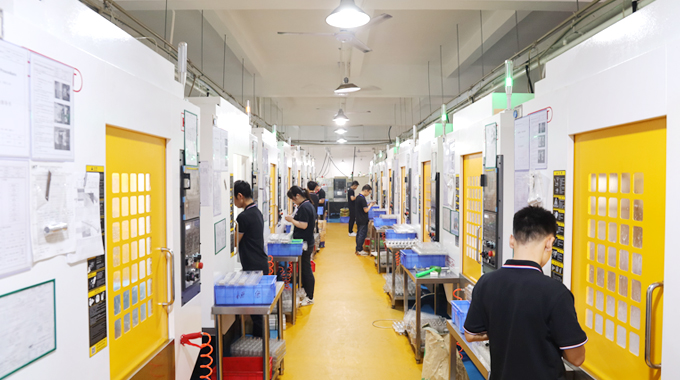
In addition, VMT offers a wide range of surface finishing options—including surface polishing, multi-color anodizing, painting, sandblasting, electroplating, and PVD. We can meet requirements for lightweight design, wear resistance, corrosion protection, and aesthetics. Whether your project prioritizes performance, cost, or appearance, VMT can provide a full end-to-end solution, from material selection to final production, helping your lens focusing ring achieve the highest quality standards.


 +86 15099911516




 Read more