16 years one-stop China custom CNC machining parts factory

Hey there I’m VMT Sam!
With 25 years of CNC machining experience we are committed to helping clients overcome 10000 complex part-processing challenges all to contribute to a better life through intelligent manufacturing. Contact us now
 436 |
Published by VMT at Jul 28 2026 | Reading Time:About 4 minutes
436 |
Published by VMT at Jul 28 2026 | Reading Time:About 4 minutes


With the continuous advancement of medical technology, the design and manufacture of medical devices have become increasingly precise and complex. As a crucial material made for medical device manufacturing, medical grade plastics have earned close attention across the industry for being cost-effective, ductile, hard, biocompatible, chemically resistant, and heat resistant—compatible with many manufacturing methods to be formed into medical components of almost any shape, while staying easy to recycle and simple to sterilize. Whether it is an endoscope, medical device accessories, a knuckle prosthesis or limb components, or even medical grade plastic containers, medical-grade plastic materials are widely used thanks to the qualities above.
This article explores what medical grade plastics are, the reasons for choosing polymers for medical applications, the common types of thermoplastics used in medical grade plastic injection molding, and the advantages of medical-grade plastic in healthcare. Additionally, we will introduce VMT's plastic CNC machining services and address some common questions about medical plastic CNC machined parts.
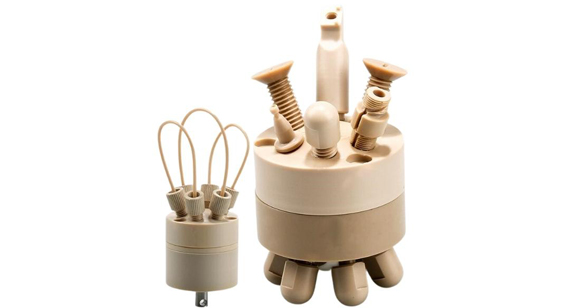
Medical grade plastics are designed and manufactured in strict compliance with industry standards and regulations to ensure their safety and reliability. These plastics typically exhibit excellent chemical stability, biocompatibility, and mechanical properties, meeting the various needs of medical devices in clinical applications. Furthermore, the composition and processing conditions of medical grade plastics are rigorously controlled during manufacturing to ensure they do not pose any harmful effects on the human body.
Even though a medical grade plastic is designed and manufactured to meet the relevant industry rules for biocompatibility, colorants (color additives that must be non-toxic, non-migrating, and compliant with FDA 21 CFR or USP requirements), and medical grade plastic compounds for medical devices (base resins combined with certified additives, fillers, or stabilizers formulated for medical use), there is still no strict rule that every one of them meets USP Class VI. This standard requires a material to show low toxicity through a defined set of biological reactivity tests. Whether a specific medical grade plastic material type meets the U.S. Pharmacopeia standard still needs to be confirmed with a qualified professional before you design it in.
Polymer materials are widely used in the medical field due to their unique advantages.
Medical grade plastic comes in several families. Thermoplastics soften when heated and harden when cooled, which makes them re-meltable and by far the most common choice for medical use. Thermosets cure into a permanent shape and will not soften again with heat. Viscoelastic plastics stretch under load and then recover their original shape and dimensions. The types we focus on below are thermoplastic medical grade plastics.
Commonly used in disposable syringes, infusion sets, and catheters due to its excellent chemical stability and biocompatibility. PE is essentially safe and non-toxic with stable chemistry, and it comes in grades such as high-density polyethylene (HDPE), low-density polyethylene (LDPE), and ultra-high-molecular-weight polyethylene (UHMWPE). Beyond disposables, it also serves orthopedic implants—UHMWPE, for instance, is machined into wear-resistant bearing spacers for artificial hip, knee, and shoulder joints.
Known for its superior heat resistance and chemical resistance, used in high-temperature and corrosion-resistant medical devices like respirator masks and oxygen masks. This medical grade plastic withstands steam autoclaving at 121°C and higher without deforming, and it accepts gamma or electron-beam sterilization without yellowing or embrittling, meeting USP Class VI and ISO 10993. Beyond masks, it is used in lab and diagnostic ware such as centrifuge tubes, pipettes, pipette tips, and Petri dishes, as well as single-use infusion sets, syringes, medical catheters, and blood collection devices. Many medical packages, infusion bottles, and instrument barrier packaging also rely on polypropylene.
Polymethyl Methacrylate (PMMA)
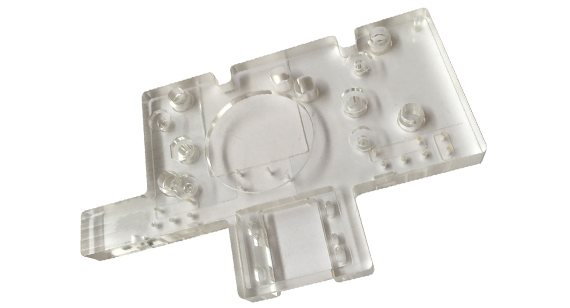
Offers excellent transparency and weather resistance, making it ideal for ophthalmic surgical instruments and dental restorative materials. PMMA, also called acrylic, is arguably the most transparent of the medical plastics. Medical endoscopes can use medical grade acrylic, and dental work—denture bases, temporary teeth, and orthodontic appliances—also uses it, along with lab vessels, containers, infusion components, and device housings. With light transmission above 92%, it suits medical equipment that needs a clear view or optical observation.
Valued for its flexibility and corrosion resistance, commonly used in blood dialysis tubing and transfusion lines. This is a specially compounded, modified polymer that keeps cost low. It is fairly soft and meets the safety thresholds of common biological testing, and its heaviest use is still in single-use infusion tubing and breathing circuits.
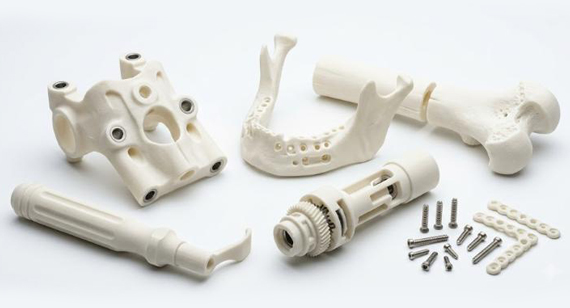
High strength and wear resistance make it suitable for surgical instruments and sutures. That high strength shows in high hardness, strong wear and compression resistance, and it also offers good toughness and flow for precision extrusion, injection molding, or 3D printing into complex medical parts. Common grades include PA12 and PA6. Also called medical-grade nylon, PA2201 is frequently 3D printed into surgical guides and bone models.
Acrylonitrile Butadiene Styrene (ABS)
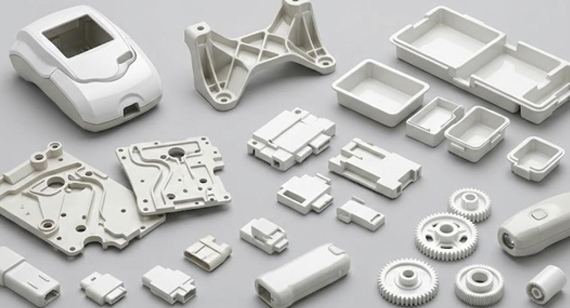
Provides good impact resistance and processability, used in medical devices requiring high strength and toughness. Typical uses include external device housings, diagnostic instrument components, and short-term, non-implant parts, and the material meets ISO 10993 biocompatibility. It should not be used for implants, since residual acrylonitrile monomer can pose a cytotoxicity risk. ABS also cannot take repeated high-temperature, high-pressure steam sterilization, so it usually relies on chemical or gamma sterilization.
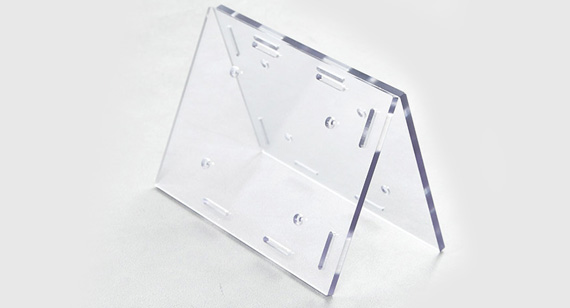
High transparency and heat resistance make it suitable for observation windows and housings of medical equipment. PC also passes the relevant ISO 10993 standards as safe for human contact. Infusion and drug-delivery systems—such as hemodialysis components and infusion pumps—can use it, along with surgical delivery components, in-vitro diagnostic equipment, structural parts, and oxygen masks that call for medical PC.
Compare Different Types of Medical Grade Plastics
Values below are typical figures and vary by grade and supplier; confirm the exact grade before you design it in.
| Plastic | Hardness (typical) | Tensile Strength | Biocompatibility | Implantable? | Light Transmission |
| PE (UHMWPE) | Shore D ~65 | 20–40 MPa | ISO 10993 / USP Class VI | Yes (long-term joint bearings) | Opaque / translucent |
| PP | Rockwell R85–110 | 30–38 MPa | ISO 10993 + USP Class VI | Short-term / limited | Translucent |
| PMMA | Rockwell M90–100 | 50–75 MPa | ISO 10993 | Limited (bone cement, IOLs) | Transparent (>92%) |
| PVC | Shore A 70–90 | 10–25 MPa | ISO 10993 (tested grades) | No (external/surface contact) | Transparent / translucent |
| PA (Nylon) | Rockwell R110–120 | 45–85 MPa | ISO 10993 | Generally no (short-term) | Opaque |
| ABS | Rockwell R100–115 | 40–50 MPa | ISO 10993 | No | Opaque |
| PC | Rockwell M70 / R118 | 60–70 MPa | ISO 10993 | Limited / short-term | Transparent (~88–90%) |
No single process fits every medical part. The table below compares the main routes used to turn medical grade plastics into finished components.
| Process | Best-fit plastics | Main advantages | Main limitations | Typical applications |
| CNC Machining | PEEK, PMMA, PC, UHMWPE, PA | High precision and tight tolerances, no tooling, ideal for prototypes and low volume | More material waste, higher per-part cost at high volume | Surgical guides, implant trials, housings, fixtures |
| Injection Molding | PP, PC, ABS, PE | Very low per-part cost at volume, highly repeatable | High tooling cost, not economical for small runs | Syringes, containers, device housings |
| Extrusion Molding | PVC, PE, PP | Continuous tubing and profiles, low cost | Constant cross-section only | Catheters, infusion and dialysis tubing |
| 3D Printing | PA12, PA2201, PEEK | Complex geometry, no tooling, fast iteration, patient-specific parts | Slower at volume, surface finish, limited certified materials | Surgical guides, bone models, custom devices |
| Blow Molding | PE, PP, PET | Hollow parts at high volume, low cost | Hollow shapes only | Bottles, medical grade plastic containers |
Match the process to your volume, geometry, and tolerance, and talk to us early so we can flag the trade-offs before any method is choosen and get best medical grade plactics solutions.
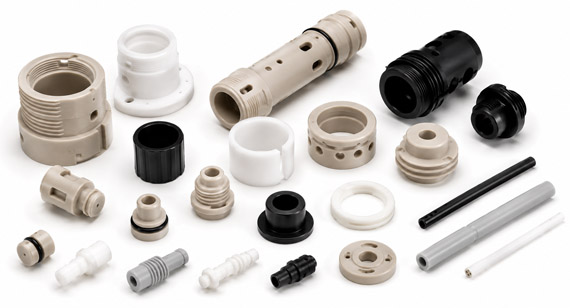
Challenge
A medical device manufacturer came to us after their previous supplier could not hold the optical-window flatness and tight concentricity their endoscope housing demanded—parts kept coming back with light leakage and assembly interference. We reviewed the drawings and found two root causes: the PMMA window was being machined dry, which left micro-crazing on the optical face, and the PC housing was cut in a single aggressive setup that let internal stress relax and pull the bore out of round.
Solution
Our engineering team completely re-engineered the machining strategy for both components. For the PMMA optical window, we shifted to a temperature-controlled flood coolant system combined with ultra-sharp single-point diamond finishing passes. This eliminated micro-crazing and achieved optical clarity (Ra < 0.05 µm) directly off the machine while ensuring perfect planar flatness.
For the PC housing, we decoupled the aggressive single-pass approach into a three-stage sequence: rough machining, thermal stress relief, and precision finish machining. We implemented custom pie-jaw soft fixtures to distribute clamping forces evenly around the thin-walled bore, preventing mechanical distortion. Final finishing was executed in a single chucking setup, successfully holding bore roundness within 0.01mm and eliminating concentricity drift.
Results
First-article parts passed optical and CMM inspection on the first submission, scrap dropped to near zero, and the customer transferred their full endoscope program to our facility.

VMT Plastic CNC Machining Services aim to provide high-quality medical grade plastic CNC machined parts to customers. With advanced CNC machining equipment and a professional technical team, we meet various demands for precision, shape, and size. We also offer customized services tailored to specific client requirements.
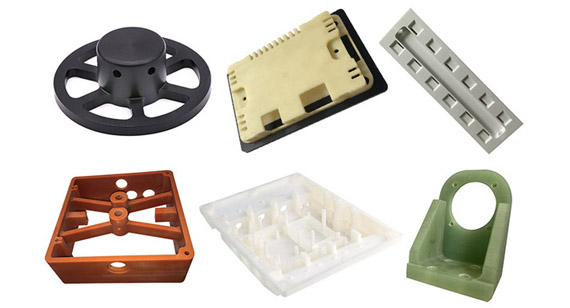
As a critical material in the manufacturing of medical devices, medical grade plastics possess excellent properties and broad application prospects. With the continuous advancement of medical technology and expanding market demands, medical grade plastics will play an increasingly important role in the medical field. As experts in CNC machined parts manufacturing, we will continue to monitor the development of medical grade plastics and provide high-quality, efficient services to our clients.
Send your drawings, medical plastic grade, tolerance requirements, sterilization method, surface requirements, and batch size. VMT will review your project and provide a practical machining solution and quote.
All information and uploaded files are secure and confidential.
1 Tell us what you need
2 Get solution & quote
3 Approve production
Email: inquiry@vimetal.com.cn
Q: What is the difference between medical grade plastics and regular plastics?
Medical grade plastics have stricter and more complex requirements in terms of material properties, biocompatibility, and processing standards compared to regular plastics. They undergo rigorous testing and certification to ensure their safety and reliability.
Q: How to choose the right material for medical injection molding?
Choosing the right material requires considering multiple factors, such as the functional requirements, usage environment, and sterilization methods of the medical device. Cost, processability, and environmental impact are also important. It is advisable to consult with professional technicians or refer to relevant standards and regulations.
Q: How is the machining accuracy of medical plastic CNC machined parts ensured?
Machining accuracy is crucial for ensuring the quality and performance of medical plastic CNC machined parts. We use advanced CNC machining equipment and precision measuring tools to strictly control the machining process. Additionally, a comprehensive quality management system monitors and inspects raw materials, the machining process, and the final products to ensure every part meets client specifications and standards.
Q: How is the sterilization of medical plastic CNC machined parts performed?
After manufacturing, medical plastic CNC machined parts undergo sterilization to ensure sterility during use. Common sterilization methods include autoclaving, ethylene oxide sterilization, and radiation sterilization. The specific method depends on the material, structure, and use of the medical device. Our CNC machining facility is equipped with professional sterilization equipment and can provide sterilization services as required, along with corresponding sterilization certification.
Q: What are the environmentally friendly options for medical plastic CNC machined parts?
With increasing environmental awareness, more healthcare institutions are focusing on the environmental friendliness of medical plastic CNC machined parts. Some available options include biodegradable or recyclable medical grade plastic materials such as Polylactic Acid (PLA) and Polyhydroxyalkanoates (PHA). These materials can be broken down by natural microorganisms or recycled, reducing environmental impact. When selecting medical plastic CNC machined parts, consider using these environmentally friendly materials.
Q: What’s the difference between USP Class VI and ISO 10993 certification?
USP Class VI is a U.S. Pharmacopeia test set that screens a material for biological reactivity—acute systemic toxicity, intracutaneous reactivity, and implantation response—so it acts as a baseline low-toxicity screen. ISO 10993 is a broader, internationally recognized framework that evaluates biocompatibility based on how and how long a device contacts the body (cytotoxicity, sensitization, genotoxicity, and more), so it is generally the stricter, device-specific route.
The technical information and manufacturing advice shared on the VMT website are for general guidance only. While we strive for accuracy, VMT does not guarantee that the processes, tolerances, or material properties mentioned are applicable to every specific project. Any reliance you place on such information is strictly at your own risk. It is the buyer's responsibility to provide definitive engineering specifications for any production orders. Final specifications and service terms shall be subject to the formal contract or quotation confirmed by both parties.


 +86 15099911516




 Read more