16 years one-stop China custom CNC machining parts factory

Hey there I’m VMT Sam!
With 25 years of CNC machining experience we are committed to helping clients overcome 10000 complex part-processing challenges all to contribute to a better life through intelligent manufacturing. Contact us now
 76 |
Published by VMT at Jun 23 2026 | Reading Time:About 3 minutes
76 |
Published by VMT at Jun 23 2026 | Reading Time:About 3 minutes


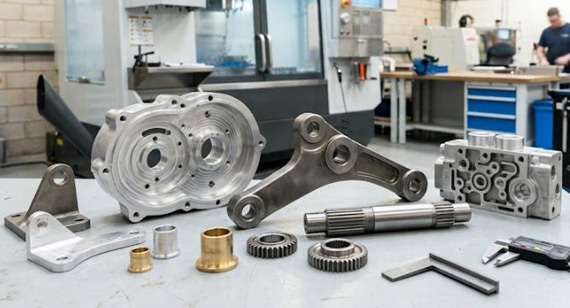
Agricultural equipment operates under harsh outdoor conditions—exposed to sun and rain, mud, water, and dust, with highly intensive seasonal operations and long periods without maintenance. In outdoor and highly intensive seasonal work environments, a component's corrosion resistance, impact resistance, wear resistance, and fatigue life directly determine the equipment's maintenance cycles and service lifespan.
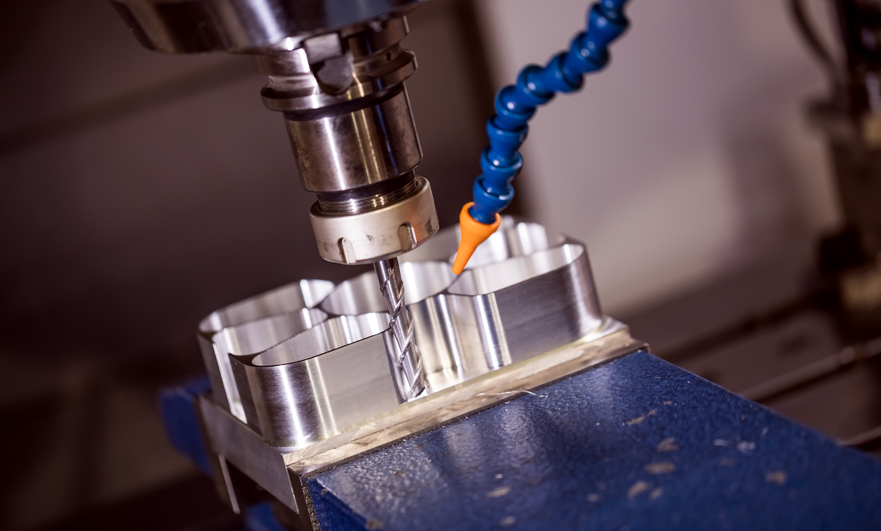
CNC machining can stably process high-strength alloy materials such as 17-4 PH, 7075-T7351, and 4140, and the cutting process introduces no internal defects, preserving the material's original strength. Combined with protective surface treatments, this stands out as a rational combination for manufacturing high-quality agricultural equipment components.
When sourcing custom CNC agricultural equipment parts, it is essential to focus not only on the process and technical details but also on the specifications checklist, supplier capabilities, quality documentation, and comparable quotes. A practical case study is also attached detailing how our factory met accuracy and waterproofing requirements for precision sensor housings requested by an American client.
Agricultural parts face several special conditions: operating environments (outdoor, seasonal high-intensity work); requirements inherent to agricultural equipment (long-life low-maintenance, replaceable parts). Combined, agricultural parts need "high-strength or corrosion-resistant materials + a process that does not weaken the material + a process that can machine these materials."
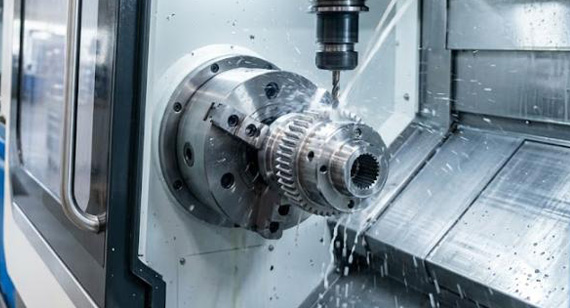
High-Strength Materials Carry Agricultural Loads
Agricultural operations involve vibration, impact, and fatigue loads — the material's inherent strength is the foundation. 17-4 PH, 7075-T7351, 4140 and other high-strength alloys are the material examples.
CNC Machining Does Not Weaken the Material
Castings often have internal porosity, voids, and shrinkage — strength predictability is poor. But CNC cuts from solid billet without introducing internal defects, so the material's original strength or other properties are preserved.
CNC Machining Can Machine High-Strength Materials
17-4 PH, 7075-T7351 and other high-strength alloys are hard and difficult to machine by conventional methods. 5-axis simultaneous CNC machining can stably cut these materials, letting the high-strength performance deliver as designed.
Replaceability and Iterability
Agricultural equipment models have long iteration cycles (5–10 years), but annual production is limited (100–5000 pieces per year). CNC machining needs no die — parts can be redesigned and resupplied on demand.
Long Life and Traceability
CNC machined parts come with process records, inspection data, and material certificates for every piece. This is critical for agricultural equipment's 5–10 year service cycle warranty traceability.
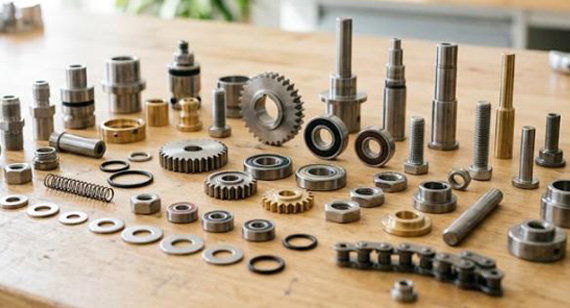
Agricultural equipment parts fall into six functional categories. You can use the table below to judge the features and material recommendations for the part your project requires.
| Category |
Typical Parts |
Feature |
Key Materials |
| Powertrain |
Gearbox housings, drive shafts, shift forks, differential housings | High stiffness, high wear resistance, tight tolerance | 17-4 PH, 7075-T7351, 4140 |
| Hydraulic system |
Hydraulic valve blocks, oil pump housings, cylinder end caps, fittings | High sealing, high pressure, no porosity | 6061-T6, 7075-T7351, 316 |
| Suspension & chassis |
Control arms, steering knuckles, shock mounts, links | High strength, impact resistance, fatigue resistance | 7075-T7351, titanium, 4140 |
| Cutting & harvest |
Cutter mounts, blade guards, threshing drums, cleaning sieves | High wear, impact resistance, easy replace | 17-4 PH, Hardox wear plate |
| Irrigation & spray |
Nozzle bodies, valve bodies, runners, filters | High sealing, corrosion resistance, precision | 316 stainless, PEEK, POM |
| Smart control |
Sensor mounts, GPS positioning seats, autopilot module housings | High precision, lightweight, sealing | 6061-T6, 7075, PA66+GF30 |
Agricultural CNC parts demand tighter specifications than general industrial parts. Before drawing the part, or talking to suppliers, pin down these five core specifications for a more efficient negotiation and precise quotation.
Corrosion Resistance Grade
Write the salt spray hours directly (typically ≥ 500 h for outdoor parts) and the test standard (ASTM B117 or ISO 9227). Avoid vague language like "rust-proof" or "corrosion-resistant" — name the test method and duration. For example, VMT's standard agricultural process: electroless nickel 20 µm + sealing, 500 h salt spray without corrosion.
Impact and Fatigue Load Case
Describe the operating conditions clearly: ground clearance, vibration profile, peak shock load, cycle count. Vague language like "strong" or "durable" gives suppliers no optimization target — leading to over- or under-spec.
Wear Resistance
Specify surface hardness for moving-fit surfaces (gears, bearing seats, valve spools) in HRC, HB, or HV, and the hardening method (through-hardening, induction hardening, carburizing, nitriding). For blades, drums, sieves, name a Hardox grade or 17-4 PH H1025 directly.
Dimensional Tolerance
For critical mating surfaces (bearing bores, seal faces, locating holes), specify the IT grade or absolute values: gearbox hole position ±0.02 mm, hydraulic valve seal face Ra ≤ 1.6 µm, suspension link mounting hole position 0.05 mm. Marking every surface as IT7 wastes your budget; marking only the critical ones drives precision where it matters.
Service Life Target
Write the expected service life explicitly (e.g., 5 years / 8000 hours). This drives material and heat treat selection. Without a written life target, suppliers default to minimum specs — and the risk of field failure within 5 years transfers back to your side.
Quality documents are the most direct evidence of supplier capability. A complete agricultural CNC part quality package should include five document types.
Material Certificate (Mill Cert)
Original mill certificate with chemical composition, mechanical properties, and heat treat condition. On receipt, verify the heat treat condition is explicitly stated (e.g., "H1025 aged" is more specific than "17-4 PH").
First Article Inspection Report (FAIR)
AS9102 or PPAP format, 100% CMM inspection on critical dimensions. Red flag: suppliers who provide sampling-based reports as first article reports.
In-Process Patrol Data.
Sample inspection records at 1 in every 50 pieces (2% sample rate), focused on drift trends in critical dimensions. The CNC system also logs cutting parameters for each part — keep these on file.
Surface Treatment Report
Film thickness measurement (anodize 12–25 µm, electroless nickel 10–25 µm, paint 20–60 µm) and salt spray test report (≥ 500 h, no corrosion).
CMM Report for Critical Dimensions
Full CMM dimensional report for bearing bores, mounting holes, and sealing surfaces — not just "passed inspection" without data.
Choosing a supplier cannot rely on unit price alone. Evaluate across seven dimensions, each tied to specific questions to ask.
1. Equipment Capability
Are 5-axis simultaneous machines (Hermle, DMG MORI, GF, etc.) equipped? Does the max machining envelope cover your parts? Are large gantry mills available for oversized agricultural parts? Ask the supplier for an equipment list with max travel data.
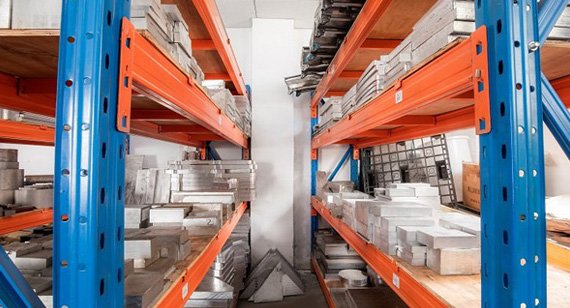
Do they stock 17-4 PH, 7075, 4140, 316, and other mainstream materials? How long is the material lead time? Can material certificates be delivered with the parts? Suppliers with thin material stock add 3–5 weeks of uncontrollable lead time.
3. Process Experience
Have they made agricultural parts? Can they provide a case library of gearboxes, hydraulic valve blocks, suspension parts, etc.? Ask for at least 3 agricultural cases with drawings, finished parts, and inspection reports.
4. Surface Treatment Capability
Do they operate (or partner with) anodize, electroless nickel, painting lines? Is the process chain complete? Outsourced surface treatment adds two uncontrollable nodes (lead time and quality) to the supply chain.
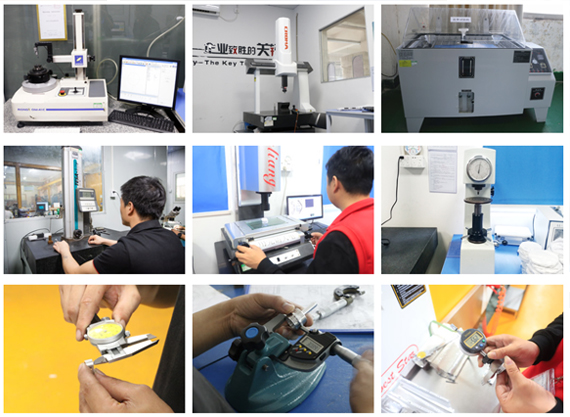
Are CMM, profilometer, roughness tester equipped? Can they provide AS9102 or PPAP format first article reports? Ask to see a sample CMM report and recent calibration certificate.
6. Lead Time and Capacity.
Are 5–10 working days for prototypes and 2–4 weeks for batches achievable? Can monthly capacity cover your order volume? Can capacity be expanded in peak season? Ask for capacity data and the last 6 months of on-time delivery rate.
7. Engineering Support
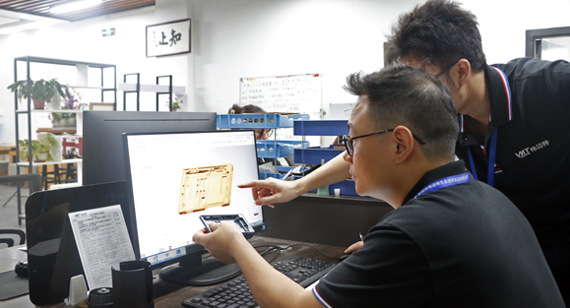
Can they provide material selection advice, DFM review, assembly tolerance analysis? Can they cooperate on material substitution trials? Pure job-shop suppliers and engineering-supported suppliers differ in problem-solving speed by an order of magnitude.
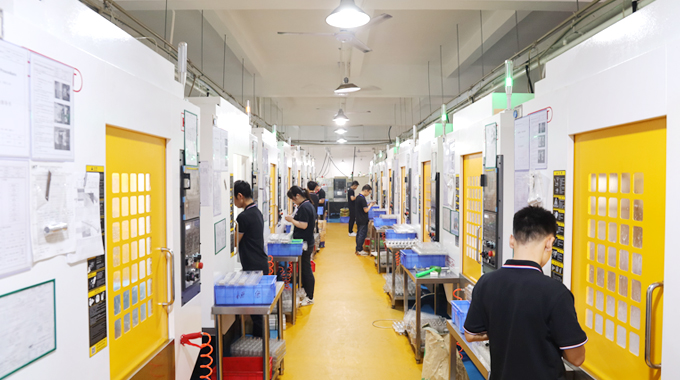
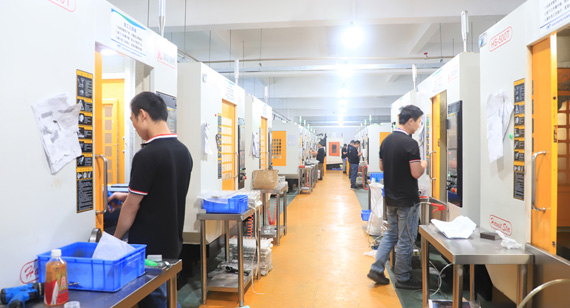
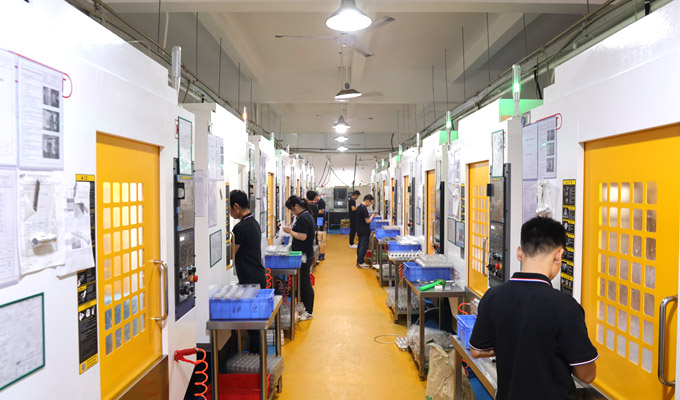
VMT CNC machining factory has complete capability across all seven dimensions — 5-axis CNC, agricultural material stock, in-house anodize and electroless nickel, CMM full inspection, in-house engineering — and serves multiple US, European, and Australian agricultural machinery brands from prototype to production.
Several pitfalls repeat across agricultural parts sourcing. Identifying them early saves significant rework cost.
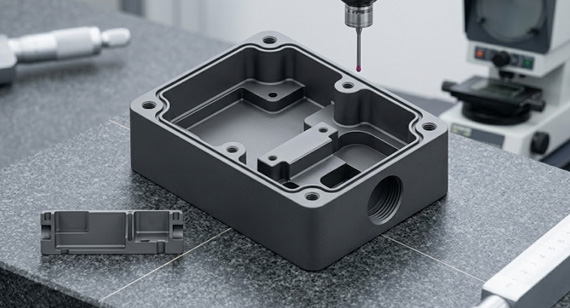
In spring 2026, a US agricultural equipment manufacturer developed a next-generation autopilot control module for its high-horsepower tractors from their previous supplier. Installed on the vehicle roof and hitch areas, the original design utilized a plastic injection-molded housing. However, during field operations, these plastic parts frequently cracked under high-frequency vibrations and rock impacts, causing water ingress. The customer needed an upgrade to a CNC-machined aluminum alloy housing that weighed under 450g, offered high fastening precision, and achieved an IP67 waterproof rating. The lead time for the first batch of 500 pieces was 3 weeks.
Solution
Our engineering team proposed a "lightweight structure optimization + flexible fixturing" approach:
Results
Sourcing quality custom CNC agriculture equipment parts is fundamentally about getting four things right: specifications, supplier capability, quality documents, and RFQ preparation. Clear specs make supplier quotes comparable. Verified capability guarantees quality. Complete documents enable traceability. Thorough RFQ keeps the entire procurement cycle controllable. For CNC machining solution for agricultural equipment parts, VMT offers free material selection advice and process consultation. Welcome to upload the 2D drawing(pdf file), 3D drawing(igs/stp/step file) and the operating conditions (load, environment, temperature, life requirement), and our engineering team will respond with a material selection recommendation, process route, cycle and cost estimate within 24 hours.

1. Why choose CNC machining over casting for agricultural parts?
CNC machining cuts parts directly from solid billets, avoiding the internal voids and porosity common in castings. This preserves the material’s maximum strength and allows for cost-effective design updates without expensive mold fees.
2. What are the most common materials used for these components?
We optimize material selection based on part function:
3. How do you ensure parts survive harsh outdoor environments?
We apply advanced surface treatments, such as 20 µm electroless nickel plating and specialized sealing. This ensures our parts pass a 500-hour salt spray test (ASTM B117 / ISO 9227) without rusting, fully protecting parts against rain, mud, and fertilizers.
4. What quality documentation do you provide?
To guarantee full traceability for your 5–10 year equipment lifecycles, every order includes:
5. Can you help optimize my design to reduce costs?
Yes. Our engineers provide a free DFM (Design for Manufacturing) review. We analyze your 3D models to optimize material usage and isolate tight tolerances (±0.02mm) only to critical mating surfaces, saving you budget on non-critical features.
6. What are your typical production lead times?
We move quickly to meet strict seasonal agricultural deadlines:
The technical information and manufacturing advice shared on the VMT website are for general guidance only. While we strive for accuracy, VMT does not guarantee that the processes, tolerances, or material properties mentioned are applicable to every specific project. Any reliance you place on such information is strictly at your own risk. It is the buyer's responsibility to provide definitive engineering specifications for any production orders. Final specifications and service terms shall be subject to the formal contract or quotation confirmed by both parties.


 +86 15099911516




 Read more