16 years one-stop China custom CNC machining parts factory
Hey there I’m VMT Sam!
With 25 years of CNC machining experience we are committed to helping clients overcome 10000 complex part-processing challenges all to contribute to a better life through intelligent manufacturing. Contact us now
 166 |
Published by VMT at Jun 01 2026 | Reading Time:About 3 minutes
166 |
Published by VMT at Jun 01 2026 | Reading Time:About 3 minutes


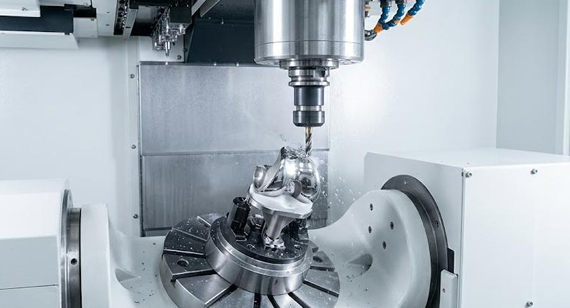
While many non-medical suppliers are capable of machining titanium alloys or PEEK, they often lack an understanding of medical-grade contamination control standards. Improper control of cutting heat or incorrect selection of cutting fluids can easily lead to material degradation or harmful residue contamination, causing the parts to fail biocompatibility testing. Furthermore, blindly pursuing high precision can skyrocket scrap rates and cause costs to spiral out of control; inexperienced suppliers struggle to find the balance between meeting medical tolerances and achieving cost-efficiency in mass production. Therefore, you need a reliable list of CNC medical parts manufacturers.
Looking for a reliable medical machining partner? This data-backed guide ranks China's premier CNC suppliers for medical device components based on a strict evaluation of certifications, precision capabilities, and verified industry experience.
Each manufacturer was evaluated across five weighted criteria:
Quick Table: At-a-Glance Comparison
| Rank | Company | Location | ISO 13485 |
Cleanroom |
Precision |
Best For |
| 1 |
VMT CNC Machining Factory |
Shenzhen |
Yes |
ISO Class 7 |
±0.005mm |
Implants, full medical programs |
| 2 | TOPS Precision |
Shenzhen |
Yes |
— |
±0.005mm |
Mid-volume surgical devices |
| 3 | PARTMFG |
Shenzhen |
Yes |
— |
±0.005mm |
DFM-heavy R&D projects |
| 4 | Tuofa Technology |
Shenzhen |
Yes |
— |
±0.005mm |
Reliable delivery, surgical parts |
| 5 | Dongguan Yuelinsen |
Dongguan |
Yes |
Class 100K |
±0.01mm |
Medical instrument bodies |
| 6 | Zhengna Technology |
Zhejiang |
In progress |
— |
±0.005mm |
Swiss-type micro-components |
| 7 | RapidDirect |
Shenzhen |
Yes |
— |
±0.005mm |
Fast prototyping, digital workflow |
| 8 | WayKen |
Shenzhen |
Yes |
— |
±0.005mm |
Fast-turnaround prototypes |
| 9 | AT Machining |
Shenzhen |
In progress |
— |
±0.01mm |
Non-implant R&D parts |
| 10 | Yijin Hardware |
Shenzhen |
No |
— |
±0.01mm |
High-volume non-implant parts |
Why VMT ranks Top1:
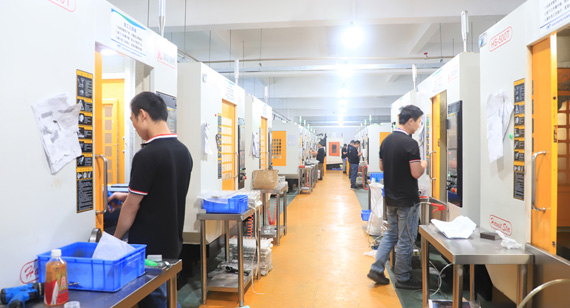
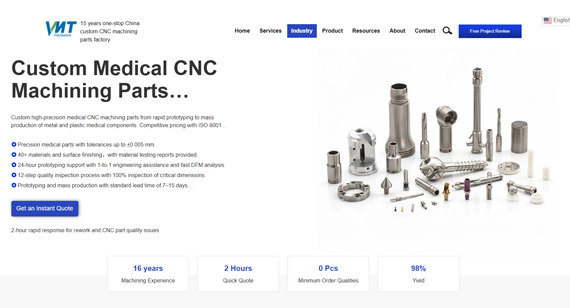
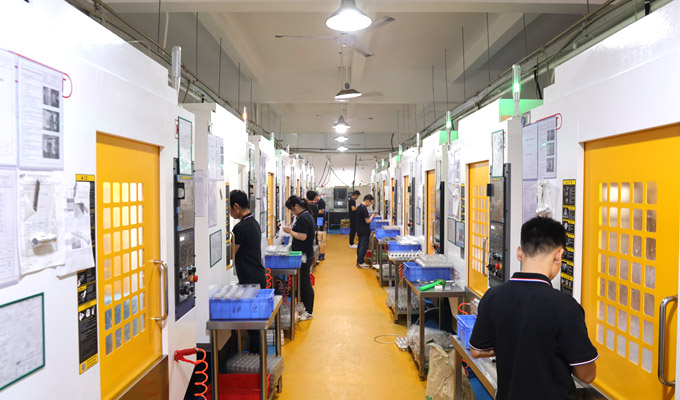
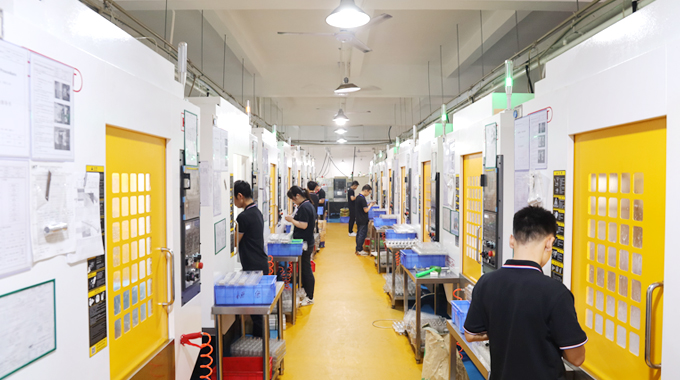
The factory holds ISO 13485:2016 and IATF 16949 dual certifications, applying automotive-grade process control standards to medical parts production. Its in-house ISO Class 7 cleanroom, dedicated titanium machining cell, and full material traceability from mill test report (MTR) to finished part make it the most vertically complete medical CNC supplier on this list.
Core Capabilities:
TOPS Precision has built a strong reputation in high-precision metal and elastomer components across medical, aerospace, and automotive verticals. Their one-stop model — from rapid prototyping through serial production — combined with competitive pricing makes them a frequent choice for mid-volume medical device programs.
Capabilities:
PARTMFG differentiates through strong DFM (Design for Manufacturing) engineering support — their process engineers review your medical part design and surface manufacturability improvements before a single chip is cut. This front-end engineering capability is rare among mid-size Chinese CNC shops and particularly valuable for medical device startups transitioning from R&D to production.
Capabilities:
Tuofa holds a near-perfect supplier rating on major B2B platforms, with a documented 100% on-time delivery rate and sub-one-hour inquiry response time. Their ±0.005 mm tolerance capability and ISO 13485 certification make them a reliable option for medical OEMs who prioritize delivery dependability.
Capabilities:
Yuelinsen operates a dedicated medical division with a 100,000-class cleanroom and focused expertise in medical instrument precision parts. Their commitment to medical as a core vertical — rather than a sideline — shows in their process controls and documentation practices.
Capabilities:
Zhengna Technology brings distinctive Swiss-type machining capability to medical manufacturing. Their fleet of Citizen, Star, and Tsugami Swiss-type lathes excels at high-volume production of small, complex medical components — bone screws, dental abutments, and minimally invasive surgical instrument shafts — with consistent quality across large batches.
Capabilities:
RapidDirect combines a digital manufacturing platform with a vetted supplier network. Their AI-powered instant quoting engine delivers pricing and DFM feedback within minutes — a significant efficiency advantage for medical device R&D teams that need fast design iterations without the back-and-forth of manual RFQ processes.
Capabilities:
WayKen brings over 20 years of CNC machining experience with a solid track record in multi-axis machining and tight-tolerance medical components. Their prototyping speed and engineering review process are well-regarded among medical device startups needing fast development cycle turnaround.
Capabilities:
AT Machining is known for fast prototype turnaround and strong engineering support in 5-axis milling and turning. While their medical certification coverage is narrower than those ranked above, their machining capability and responsiveness make them a practical choice for non-implant medical device components and R&D-phase projects.
Capabilities:
Yijin Hardware brings scale to the table: over 150 CNC machines across a large Shenzhen facility, with more than 25 years of manufacturing history. Their broad material selection and substantial capacity make them a dependable choice for mid-to-high-volume medical device programs that don't require implant-grade certifications.
Capabilities:
1. Start with the certification that matches your device class
2. Match material capability to your part
3. Verify quality infrastructure, not just claims
Request within 24 hours: CMM inspection reports from their last three medical batches, material certificate (MTR) traceability process documentation, and photos of their cleanroom (if applicable). A supplier who can't produce these likely doesn't have the systems in place.
4. Test communication and engineering support
Send a real medical part drawing as a test RFQ. Measure three things: response time, DFM feedback quality, and whether the questions they ask demonstrate medical domain knowledge. The best medical CNC suppliers ask about your sterilization method, biocompatibility requirements, and regulatory submission timeline — not just "what's the tolerance?"
From Europe to China: How a Dental Startup Optimized Unit Economics by 30% Without Compromising MDR Compliance
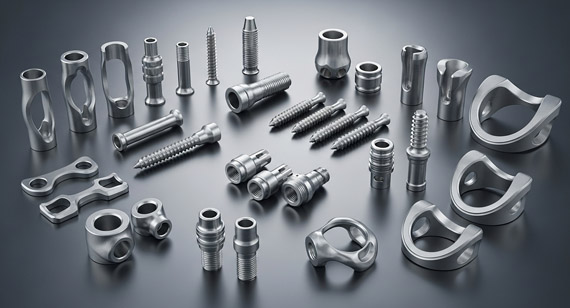
A Berlin-based dental implant startup was sourcing titanium implant bodies and abutments from a Swiss manufacturer at €47.00 per set. This high cost consumed 38% of their unit economics, stalling market launch.The components required ±0.005mm tolerances on critical Morse tapers to ensure a hermetic micro-seal, Ti-6Al-4V ELI material, ASTM A967 passivation, ISO Class 7 cleanroom processing, and 100% traceability for EU MDR submission. The Swiss supplier’s volume pricing scaled poorly, staying at €38.00/set even for large orders.
VMT Solution
The Results
| Metric |
Swiss Supplier |
VMT China |
Improvement |
| Cost per set (500 units) |
€47.00 | €32.90 | -30% |
| Cost per set (5,000 units) |
€38.00 | €25.50 | -33% |
| Prototype Turnaround |
14 days | 8 days | -43% |
| Production Lead Time |
21 days | 14 days | -33% |
| In-House First Pass Yield |
97.9% | 99.6% | +1.7% |
The landscape of medical CNC manufacturing in China has matured significantly over the past decade. Today, top-tier tier suppliers operate at quality levels comparable to Western contract manufacturers, but at a more competitive cost structure.
However, the best supplier for your program is based on the factory whose specific capabilities and production philosophy align with your device class and regulatory pathway. A Swiss-type specialist may be the ideal fit for high-volume bone screws, a digital platform might offer the fastest path for early-stage prototypes, while a supplier with deep DFM expertise can generate the highest long-term cost savings.
Ultimately, the value of this guide lies in the framework it provides. For critical Class II or III medical devices—where quality directly impacts patient safety—the key to success is to look beyond equipment lists. Verify the ISO 13485 certificate numbers, evaluate technical responsiveness through a test RFQ, and select a partner structured for medical compliance from the ground up.

Q1: What certifications should a medical CNC supplier have?
ISO 13485:2016 is the baseline quality management system standard for medical device component manufacturing. For implantable devices, also look for ISO Class 7 or better cleanroom capability. FDA registration and EU MDR compliance documentation support are strong additional signals.
Q2: How much do CNC medical parts from China cost?
Pricing varies by material, complexity, tolerance, and volume. For a 100-unit run, simple 316L surgical instrument parts cost $8–$35/each, while complex titanium implants with ±0.005 mm tolerances range from $40 to $200+/each. Prototypes generally run 3–5x production pricing, and setup fees are typically amortized for orders over 500 units. Note that special requirements—such as ISO 13485 compliance, material traceability, medical passivation, or cleanroom packaging—will usually add a 30% to 50% premium.
Q3: What's the typical lead time for medical CNC parts from China?
Prototypes: 3–10 days. Production orders: 10–25 days. Complex implant-grade parts requiring full documentation packages add 3–5 days for quality paperwork. Express shipping (FedEx/DHL) adds 3–5 days transit time to North America or Europe; sea freight adds 25–35 days but costs roughly 80% less.
Q4: How do I protect my intellectual property when sourcing from Chinese CNC suppliers?
Sign a bilingual (Chinese-English) NDA before sharing any drawings. Use phased project disclosure — share only what's needed for the current stage. Work with ISO 13485-certified suppliers, as their quality management system includes documented customer confidentiality procedures. For highly sensitive projects, split production across multiple suppliers so no single factory sees the complete assembly.
Q5: Can Chinese CNC shops support FDA-regulated medical devices?
Yes. Many Chinese medical CNC suppliers are themselves FDA-registered, and many more supply components to FDA-registered device manufacturers. The key distinction: regulatory responsibility rests with you (the device manufacturer). The supplier's role is to provide material traceability, process validation documentation, and consistent quality — all of which directly support your FDA 510(k) or PMA submission package.
Q6: What is the minimum order quantity (MOQ) for medical CNC parts?
MOQs vary significantly by supplier and part complexity. Most medical-focused CNC shops accept 1–5 pieces for prototyping. Production MOQs typically start at 50–100 pieces. Some suppliers (particularly those with Swiss-type lathes optimized for high-volume) prefer minimum 500–1,000 pieces.


 +86 15099911516




 Read more