16 years one-stop China custom CNC machining parts factory

Hey there I’m VMT Sam!
With 25 years of CNC machining experience we are committed to helping clients overcome 10000 complex part-processing challenges all to contribute to a better life through intelligent manufacturing. Contact us now
 1214 |
Published by VMT at Sep 08 2026 | Reading Time:About 8 minutes
1214 |
Published by VMT at Sep 08 2026 | Reading Time:About 8 minutes


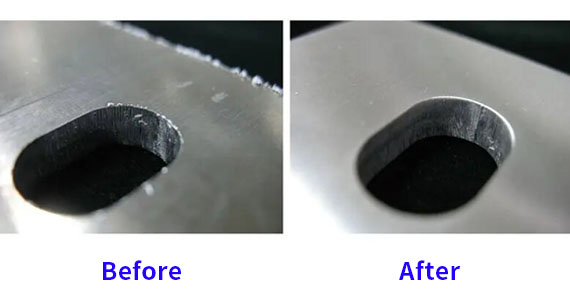
Deburring is a critical post-processing operation in precision CNC machining and metal fabrication that removes sharp edges, raised ridges, and unwanted material (burrs) to ensure functional safety, precise fit, and optimal surface quality. Untreated burrs can lead to part failure under operational stress or require costly rework across applications ranging from aerospace to consumer electronics.
Furthermore, selecting the right deburring method for specific materials directly impacts part accuracy, post-processing costs, and overall lead time. Read this comprehensive guide to explore the different types of burrs, their manufacturing impact, and effective deburring methods to achieve flawless, high-performance components. At the end of this article, we will also share how our custom CNC machining factory helped a client machine and deburr custom robotic adapter flanges and then solved the planar inclination and reducing end-effector errors.
A burr is a small, raised edge or residual material that forms on a metal surface after machining or cutting processes. These imperfections may seem minor to the naked eye but can have significant consequences in industrial applications. Burrs are typically created during operations like drilling, milling, turning, or punching, where intense force or heat distorts the metal’s edge. This results in a jagged, sharp, or unwanted projection on the part’s surface, commonly found on the edges, holes, or corners.
Then, how could you identify the different size or appearance of burrs in CNC machined parts? Here are primarily four types for you to understand:
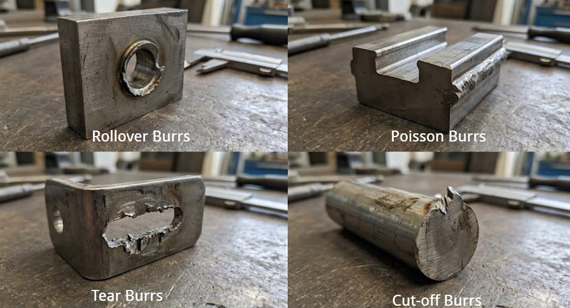
Rollover Burrs
These look like thin, curled metal lips or rolled edges along the exit margin of a cut. They occur when the cutting tool exits the workpiece and pushes the material outward rather than shearing it cleanly, especially in ductile metals like copper or soft aluminum. Because they are relatively thin and flexible, manual scraping or CNC edge-chamfering easily removes them. However, if left unchecked on high-volume runs, manual deburring will quickly inflate overall labor hours.
Poisson Burrs
These appear as raised, bulged ridges along the side edges of a cut. Under heavy cutting pressure, compressive stress causes the metal along the tool’s edge to bulge plastically outward, a phenomenon known as the Poisson effect. Since Poisson burrs are typically shallow and localized on flat edges, automated vibratory tumbling or fast brush deburring handles them efficiently without adding significant cycle time or cost.
Tear Burrs
These burrs look like jagged, irregular, or torn metal flaps hanging off the workpiece. They happen when a cutting tool (often a dull drill bit or end mill) tears the material away from the base instead of shearing it, or during punching and slitting operations. Tear burrs leave rough, deep imperfections. Removing them often requires aggressive mechanical grinding or precision electrochemical deburring (ECD), which significantly increases labor and extends delivery lead time.
Cut-off Burrs
They are presented as a sharp, un-machined projection or "pip" leftover at the point where a completed part is severed from the raw bar stock, common in lathe turning and Swiss machining. Modern CNC lathes can easily remove cut-off burrs on-machine using sub-spindle back-machining. If handled offline via secondary grinding, it adds minimal labor cost per piece.
The deburring step in CNC machining is an essential part of post-processing. Without deburring, CNC machined parts are hardly to achieve precise tolerances or smooth surface finishes. This ultimately negatively impacts precision assembly, aesthetics, sealing performance, operational efficiency post-assembly, safety, and the quality of subsequent surface treatments. The following details the reasons that you should focus on the burr removal:
Increased Risk of Cracking and Stress
Burrs, especially sharp and irregular ones, tend to cause uneven internal stress distribution in CNC machined parts. Over time, particularly under cyclic or dynamic loads, this can lead to micro-cracks and ultimate component failure. Deburring ensures a smooth surface that evenly dissipates stress, significantly extending part service life. Otherwise, burrs cause stress concentrations in localized areas, reducing the fatigue resistance of the component. This is critical in industries such as aerospace, automotive, and medical device manufacturing. And you also surely don't want the fatigue failure caused by stress concentration in a component causing severe consequences.
Poor Fastener Retention and Assembly Issues
Burrs can interfere with threaded holes, mating surfaces, or contact points, leading to poor fastener retention or improper part assembly. In automated assembly lines, burrs can jam or misalign components, causing downtime and increased operational costs. Metal deburring processes ensure that the assembly process runs smoothly and that parts fit and function as intended without manual intervention.
Increased Surface Wear and Lubrication Problems
Burrs increase surface roughness, which not only accelerates wear but also interferes with lubrication. In dynamic parts such as gears or shafts, improper lubrication due to burrs can lead to overheating and premature failure. Smooth, deburred surfaces help ensure that lubricants distribute evenly and perform efficiently, reducing maintenance needs and improving machine performance.
Safety, Aesthetics, and Compliance
Sharp burrs pose safety hazards to operators and end-users, causing potential cuts or injury. Additionally, visible burrs diminish the appearance of a finished product, especially in consumer-facing or decorative parts. For many industries, burr-free surfaces are part of regulatory or ISO-compliant standards. As a result, CNC machining services often integrate deburring as a mandatory finishing step to ensure compliance and customer satisfaction.
Quality and Cost of Subsequent Surface Finishing
The precision of deburring on CNC machined parts directly affects the coating quality of subsequent surface treatments, such as anodizing, electroplating, and powder coating. Incomplete deburring can prevent paint or powder coatings from properly concealing surface imperfections, resulting in bumps, grainy textures, or runs. Alternatively, in anodizing and dyeing processes, stress concentration and microstructural variations caused by burrs can lead to uneven dye absorption compared to flat surfaces, creating color discrepancies or specks. These post-processing steps are vital components of precision CNC machining. Failing to handle them properly leads to costly rework and delayed lead times.
Removing burrs is a critical step in ensuring the quality and functionality of precision components. Depending on the material, part geometry, and production scale, there are multiple deburring methods—each with its advantages and limitations. Whether you're working on a single prototype or full-scale CNC prototype machining, choosing the right deburring method can save time, reduce costs, and improve overall efficiency.
Table of Deburring Methods Comparison
| Deburring Method | Best For | Precision & Tolerance Impact | Process Speed & Volume | Relative Cost |
| Manual | Prototypes, low-volume runs, complex exterior edges | High control; risk of human error | Slow / Low volume | Low initial equipment cost; High labor cost |
| Grinding & Rolling | Large structural parts, flat metal sheets | Moderate; can remove base material | Fast / Medium-to-High volume | Low to Moderate |
| Electrochemical (ECD) | Hardened metals, internal cross-holes, gears | Very High (Micron-level control, no stress) | Fast / Medium-to-High volume | High (Requires custom tooling) |
| Hole Deburring | Drilled/Tapped holes, cross-bores in manifolds | High | Very Fast / Integrated with CNC | Low |
| Brushing | Gentle edge rounding, complex profiles | High; minimal dimensional change | Fast / Automated high-volume | Low to Moderate |
| Mechanical (Tumbling) | Small-to-medium batch parts, mass finishing | Moderate; slight surface radius | Slow cycle; High batch throughput | Low per-part cost |
| CNC On-Machine | Prismatic parts, chamfers, high-precision CNC parts | Very High (Matches CNC machine accuracy) | Real-time / Integrated with cycle time | Low (No secondary setup) |
| Robotic | Complex 3D contours, high-volume automotive/aerospace | High and repeatable | Very Fast / High volume | High upfront investment |
| Thermal (TEM) | Hard-to-reach internal burrs, manifold blocks, castings | High for burr removal; monitor surface oxidation | Ultra-Fast (Milliseconds per cycle) | High initial equipment cost |
| Cryogenic | Engineering plastics (POM, PEEK), soft non-ferrous alloys | Ultra-High (Zero impact on base part dimensions) | Fast / High batch volume | Moderate to High |
Details of Each Deburring Methods
1. Manual Deburring
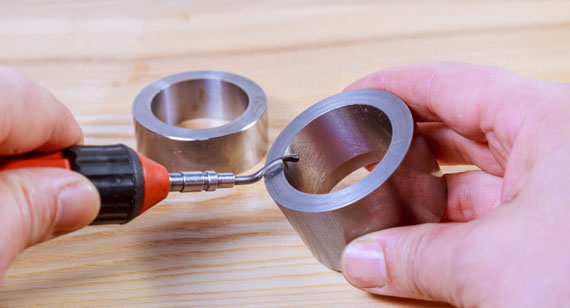
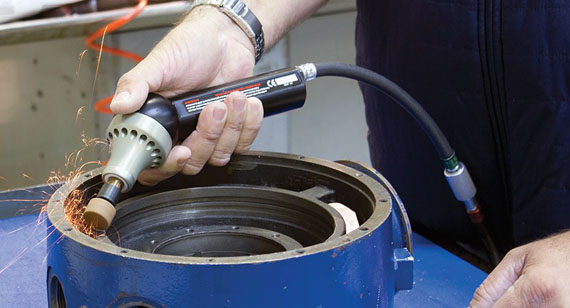
Manual deburring is the simplest and most traditional method. Skilled technicians use handheld tools such as deburring knives, scrapers, or files to remove burrs by hand. This method is ideal for small batches, delicate parts, or components that require precision finishing. It provides flexibility, but it’s labor-intensive and less consistent for high-volume production.
2. Grinding and Rolling
Grinding uses abrasive wheels to smooth out sharp edges, while rolling applies pressure to deform and flatten burrs. These methods are effective for flat surfaces or large structural components and are commonly used in metal deburring workflows. However, they may not reach deep holes or complex internal geometries.
3. Electrochemical Deburring (ECD)
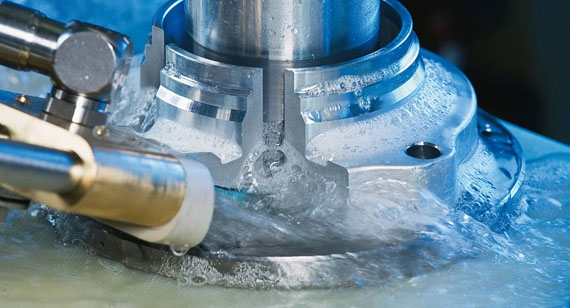
ECD is a high-precision, non-contact method that uses an electrolyte and electrical current to dissolve burrs. It is especially useful for deburring hard-to-reach areas in high-precision parts like gears or fuel injectors. Though it requires specific equipment and expertise, it's ideal for intricate CNC machining services where manual access is limited.
4. Hole Deburring
Specialized tools are designed to remove burrs from the edges of drilled or tapped holes. These tools often work from the inside out, making them effective for through-holes and cross-holes in CNC-machined parts. It's a targeted, efficient approach that minimizes damage to the surrounding material.
5. Brushing
Brushing uses rotating or oscillating brushes made of wire or abrasive filaments to sweep away burrs. It’s suitable for parts with complex geometries or delicate surfaces. Brushing can be integrated into automated production lines for high throughput and consistent results.
6. Mechanical Deburring
Mechanical deburring often refers to vibratory or tumbling methods where parts are placed in a chamber with abrasives. As the chamber vibrates or rotates, burrs are gradually removed. This is excellent for batch machining of small-to-medium-sized parts but may not be suitable for fragile components.
7. CNC Deburring
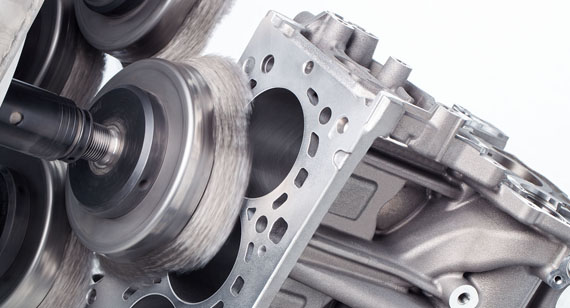
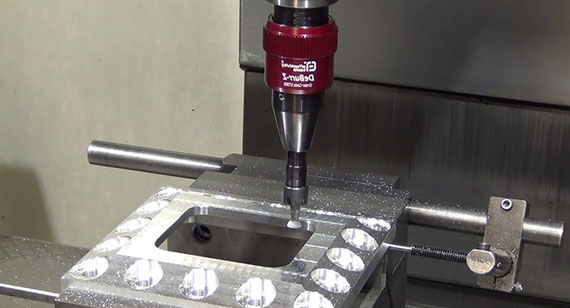
Modern CNC machines can perform integrated deburring operations as part of the toolpath. This ensures consistency and reduces secondary machining. In CNC prototype machining, this method improves efficiency by combining deburring with the machining cycle, especially for parts with consistent geometries.
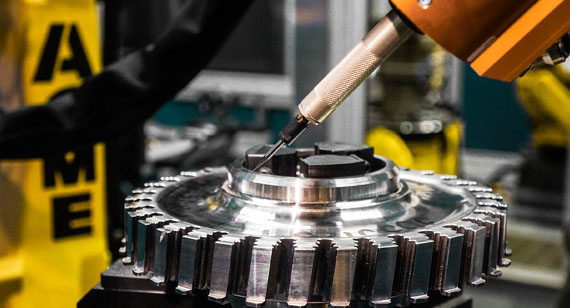
8. Robotic Deburring
Robotic deburring systems use automated arms equipped with various deburring tools. They offer precision, speed, and repeatability, making them ideal for high-volume production. These systems can be programmed for specific geometries, ensuring that every part meets the same standard.
9. Thermal Deburring
Also known as explosive deburring, this technique uses a controlled burst of gas to burn away burrs in hard-to-reach places. It’s highly effective for small, intricate internal burrs, especially in castings or precision-drilled components. However, it’s a specialized process and may not be suitable for all materials.
10. Cryogenic Deburring
Cryogenic deburring utilizes liquid nitrogen to flash-freeze the components at extremely low temperatures, making the delicate burrs brittle. Abrasive media (such as non-abrasive polycarbonate beads) are then blasted at high speeds to safely snap off the brittle burrs without damaging the main body of the part. This non-contact, highly automated method is exceptional for complex geometries, delicate internal features, and materials prone to heat deformation, such as precision engineering plastics (POM, PEEK, Nylon) and soft non-ferrous metals (soft aluminum alloys, zinc castings). It delivers ultra-clean, burr-free parts with high repeatability and zero thermal damage.
Selecting the optimal deburring process requires balancing burr removal efficiency with parent material protection. Because materials vary widely in hardness, ductility, thermal conductivity, and melt thresholds, a one-size-fits-all finishing approach often leads to scraped parts or inflated unit costs. Below, we break down material-specific burr behaviors, how expert CNC machine shops clear them, and actionable DFM design tips to keep your production budget on track.
1. Aluminum Alloys (e.g., 6061-T6, 7075-T6, 5052)
Roughly, you can think aluminum has properties of good ductility, excellent thermal conductivity, low hardness, and low tendency to work-harden. But for common detailed grades, 7075-T6 is harder and more brittle, yielding cleaner edges with minimal burrs. Conversely, 6061-T6 or softer grades (like 5052) may produce slightly larger burrs.
When experienced factory deals with the aluminum burring, they often program light chamfers into the CNC toolpath to break edges directly on the machine to save the extra manual labor; or use vibratory tumbling with soft resin or plastic media plus anti-oxidation additives to clear external burrs without denting or scratching soft surfaces for small parts.
For your aluminum parts' design, you may avoid razor-thin wall intersections (<0.8 mm), because thin features are prone to push outward under tool pressure instead of shearing cleanly, creating heavy rollover burrs, and this cause higher fees for burrs removing.
2. Stainless Steel (e.g., 304, 316L, 17-4 PH)
Many stainless steel grades often have properties of good hardness, strong toughness, poor thermal conductivity, and work-hardening tendencies.
Dull cutting tools or improper feed rates easily cause stainless steel to work-harden at the cut boundary, generating hard, sharp tear burrs and heavy edge ridges, especially in deep tapping, cross-hole drilling, and slot milling. Therefore, experienced factory usually use high-pressure coolant & sharp carbide tools and electrochemical deburring (ecd) / thermal energy method (tem) for stainless steel parts to largely avoid above situations.
For turned parts, you can choose free-machining stainless steel 303 (instead of 304/316) if corrosion requirements permit. 303 stainless steel chips easily and leaves almost zero heavy burrs.
3. Carbon & Alloy Steel (e.g., 1045, 4140, 8620)
These steels have good mechanical strength, moderate-to-high hardness, good thermal conductivity, and medium ductility. Usually, low-carbon steels (like 1018) form gummy, sticky burrs, whereas medium/high-carbon steels (1045, 4140) produce cleaner, more brittle burrs that snap off easily.
The factory often runs carbon steel batches through centrifugal barrel or heavy vibratory tumblers with ceramic media to knock off heavy ridges efficiently. Another important thing that reputable shops will do is thet will integrate automated anti-rust rinsing or light oil dipping right after tumbling to prevent flash rust during overseas shipping.
For the DFM advice, you can ask the factory engineers to use chamfers( 0.5mm 45° )onto 3D CAD models for exterior sharp corners to allow automated CNC edge-breaking, which is more convenient and cost saving.
4. Titanium Alloys (e.g., Grade 5, Grade 2)
Titanium has properties of low thermal conductivity, high strength-to-weight ratio, high elasticity, and high work-hardening rate. Because heat accumulates at the cutting edge rather than dissipating into the chip, titanium tends to form hard, tough, feather burrs during slotting, end milling, and micro-drilling.
For burrs in titanium alloys, the experienced factory often apply sharp, diamond-coated or micro-grain carbide chamfer mills at controlled feeds to remove burrs before the material hardens. They also use AFM (extruding abrasive media through channels) to remove burrs while polishing internal surfaces especially for medical or aerospace titanium parts with internal fluid passages.
What you should know is that the common used titanium grade 2 (commercially pure titanium) is more ductile and forms heavier burrs than Ti-6Al-4V (grade 5), so it's common that you will pay more for dealing with grade 2 burrs than grade 5 burrs. The other noted thing is that you'd better to avoid deep, narrow blind-tapped holes ( > 3 D ) for titanium machined parts, and consider using thread milling or through-hole designs instead , because threading titanium in deep holes generates packed chips and heavy exit burrs.
5. Brass & Copper Alloys (e.g., C36000 Brass, C11000 Pure Copper)
Free-cutting brass has low ductility and high machinability; pure copper is soft, sticky, highly ductile, and thermally conductive. This can lead to, for example, C36000 brass produces tiny, brittle micro-burrs that crumble easily, and C11000 red copper tends to smear and form large, tenacious rollover burrs in fine threads and slitting cuts.
For brass connectors and electronic pins, shops use high-speed magnetic tumblers with ultrafine stainless steel pins to flush burrs out of small threads without altering pitch dimensions. And automated nylon abrasive brushes can be used to clear copper burrs gently without scratching polished sealing surfaces.
Advice for you is that you can specify C36000 Brass whenever possible for turned electrical/mechanical fittings because it is one of the easiest metals to machine burr-free. For brass or copper parts' geometry, you can consider to add an undercut or relief groove at the end of external threads so the threading tool exits into open space, preventing hanging end-burrs.
6. Engineering Plastics (e.g., POM, PEEK, ABS, PTFE)
The engineering plastics often has low melting point, low thermal conductivity, high elasticity, and prone to thermal deformation under friction. High-speed milling or dull tools generate frictional heat, causing plastic to melt and form stringy, feathered burrs that re-weld onto part edges. And glass-filled plastics (e.g., PEEK-GF30) produce shorter, brittle burrs, while unfilled soft plastics (PTFE, PE) create long, fibrous strands.
The experienced factory usually flash-freezes plastic parts with liquid nitrogen below their embrittlement temperature, then blast them with polycarbonate media to snap off brittle burrs while leaving the part body pristine. For low-volume prototypes, skilled technicians use ultra-sharp razor scrapers to cleanly slice off stringy burrs under magnification.
For high-precision plastic micro-components, you can request cryogenic deburring services to guarantee zero thermal distortion and clean edge profiles. But for low-volume parts that are not required strict tolerance, the manual deburring is sufficient and cost-effective.
What Are the Deburring Tools? What Are They Used For?
Deburring tools directly dictates production efficiency, edge consistency, and overall cost. Whether processing low-volume CNC prototype machining orders or high-volume precision CNC machining parts, the deburring services supplier will rely on specific tool categories tailored to material hardness and geometry:
How Does a Deburring Machine Work?
Deburring machines automate edge finishing to deliver consistent quality across precision CNC machining parts. These systems remove burrs using six distinct mechanical and physical principles:
What is the Deburring Process?
In professional machine shops, the deburring process follows five standardized quality-controlled steps:
When designing parts for manufacturing, it’s essential to consider factors that can reduce burr formation and optimize the deburring process. Effective design decisions can prevent unnecessary costs associated with excessive deburring and make the process smoother and more cost-efficient. By minimizing burrs from the beginning, you can reduce the time spent on deburring and lower the overall production costs.
1. Minimize or Prevent Burrs
One of the best ways to manage deburring costs is to focus on preventing burrs from forming in the first place. During the design phase, engineers can employ certain strategies to reduce burr formation, such as selecting appropriate cutting methods, ensuring smooth edges, or optimizing part geometry. For example, sharp internal corners are more likely to produce burrs during cutting operations, so adding radii or chamfers to edges can significantly reduce burr formation.
Additionally, selecting more precise cutting methods, such as laser cutting or water jet cutting, can help minimize the size and complexity of the burrs produced, making them easier to remove. By designing parts with fewer burrs, manufacturers can reduce the need for intensive deburring operations, saving both time and resources.
2. Remove Burrs Only When Necessary
Not all burrs need to be removed. In some cases, small burrs may not affect the functionality of the part, and in such instances, it may be more cost-effective to leave them in place. For example, if the part will undergo additional machining, such as coating or welding, the burrs may be smoothed out in those later stages.
Designers and manufacturers should consider whether deburring is necessary or if the part can still function properly with minimal deburring. By assessing the potential impact of the burrs on the part’s performance, manufacturers can make informed decisions about whether to invest in deburring or leave the burrs as-is.
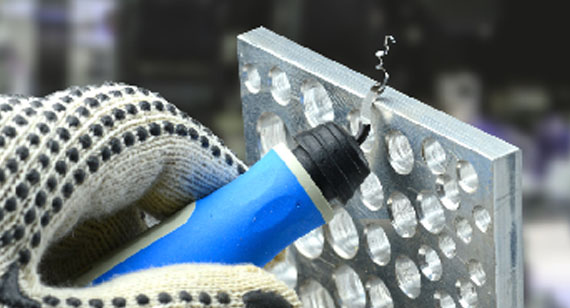
3. Abrasive Brushing is More Economical
Abrasive brushing is a highly efficient and economical method for deburring many metal parts, especially those with light burrs. It involves using abrasive materials, such as wire brushes or nylon brushes with abrasive grains, to remove burrs from the metal surface. This method is particularly effective for parts with intricate geometries or delicate surfaces, where other deburring methods, like grinding, could cause damage.
Abrasive brushing provides a quicker, more cost-effective solution compared to more complex deburring methods, such as electrochemical deburring or robotic deburring. Additionally, this method can be used to simultaneously deburr and finish the part, further reducing production costs and time.
By choosing abrasive brushing, manufacturers can achieve consistent deburring results while avoiding the higher costs associated with other more labor-intensive methods. It's a flexible option that can be used for a wide range of metal parts, making it a valuable tool in any deburring operation.
Precision Deburring & Machining for Custom Robotic Adapter Flanges
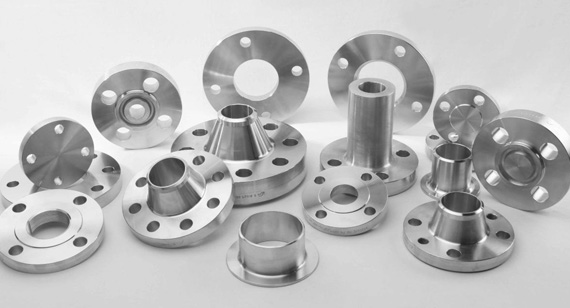
A leading automation system integrator approached our factory with a challenge involving custom 6061 aluminum robotic adapter flanges used in high-precision assembly arms. The components were experiencing end-effector position errors and minor planar inclination during high-speed rotation. Upon technical audit, our engineering team discovered that the issue stemmed from residual micro-burrs along the internal mounting holes and slight thermal distortion caused by unproper manual edge-finishing by their previous supplier.
To resolve the planar inclination and solve end-effector errors, our CNC engineers re-engineered the complete manufacturing and deburring process. First, we optimized the cutting paths during 5-axis CNC precision machining by introducing a custom thread relief groove and automated in-machine chamfering (using 0.15 mm x 45-degree edge breaks). This cut burr formation by over 80% during the primary machining cycle, preventing edge deformation and keeping the flange mounting face completely flat.
For the remaining micro-burrs within the internal cross-hole intersections, we implemented a two-stage automated deburring routine utilizing high-precision abrasive nylon brushes and vibratory tumbling. This uniform, non-contact edge-breaking process cleared all internal burrs without altering the tight geometrical tolerances or scratching the critical sealing face.
The optimized deburring and machining strategy achieved a surface flatness within 0.005 mm and avoided the mounting tilt, resolving the client’s end-effector positioning errors, and the delivering 100% batch consistency across 2,000+ custom flange units.
In precision CNC machining, effectively managing burrs requires a balanced approach combining smart DFM design, precise machining parameters, and the right post-processing techniques. From soft aluminum to work-hardened titanium and delicate engineering plastics, tailoring the deburring process to your specific material ensures flawless surface quality while protecting critical functional tolerances while keeping manufacturing costs under control. Partnering with an experienced CNC machining supplier ensures that deburring is planned right from the CAD review phase. Contact our technical team to discuss the drawings and discover the most cost-effective deburring solution for your custom components.
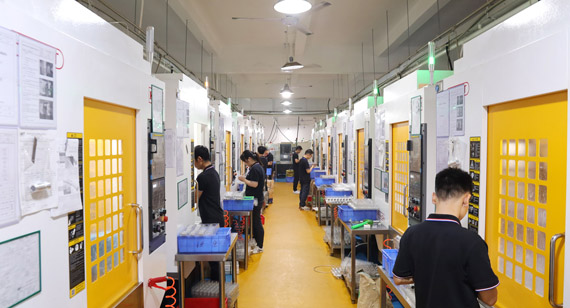
At VMT CNC Machining, we pride ourselves on providing high-quality CNC machining services for a wide range of industries. With years of experience and a commitment to precision, we offer custom solutions to meet your specific manufacturing needs. Our advanced machinery and skilled technicians ensure that every project, whether small or large, is executed to the highest standards of accuracy and efficiency.
What We Offer:
At VMT CNC Machining, we understand that precision, quality, and customer satisfaction are essential. That’s why we leverage the latest technologies and maintain rigorous quality control to ensure that every part we produce is delivered on time, within budget, and to the highest standards of excellence.
Why Choose VMT CNC Machining Services?
Whether you're in aerospace, automotive, medical, or any other industry, VMT CNC Machining is the trusted partner for all your custom metal parts manufacturing needs. Contact us today to learn more about how we can help bring your designs to life with precision machining services.
Send your 2D drawings, 3D CAD models, material requirements, burr-control requirements, critical tolerances, surface-finish requirements, prototype quantity and production quantity. VMT will review manufacturability, deburring strategy, inspection and quotation requirements.
All information and uploaded files are secure and confidential.
1 Tell us what you need
2 Get solution & quote
3 Approve production
Email: inquiry@vimetal.com.cn
1. What is the Difference Between Milling and Deburring?
Milling is a machining process where material is cut away from a workpiece using rotating tools. It is used to shape or create features on a part. Deburring, on the other hand, is a finishing process that removes unwanted burrs or sharp edges left after machining, ensuring parts are safe to handle, assemble, and use. Milling shapes the part, while deburring improves its safety and functionality.
2. How do I remove all sharp edges and burrs?
Sharp edges and burrs can be removed using several methods, including manual deburring with files or sandpaper, mechanical deburring with machines like tumblers or brushes, or chemical and electrochemical deburring. The appropriate method depends on the material, size of the part, and production volume.
3. How much does deburring cost?
The cost of deburring depends on several factors, such as the size and complexity of the parts, the method used, and the volume of parts to be deburred. Manual deburring is less expensive for small batches, while automated methods like CNC deburring or robotic deburring are more cost-effective for larger production runs.
4. Are reaming and deburring the same thing?
No, reaming and deburring are different processes. Reaming is used to enlarge or finish a hole to achieve precise dimensions and surface finish, while deburring is focused on removing sharp edges and burrs from the surface of a part. Both are essential for creating high-quality, functional components, but they serve different purposes.
5. How is deburring used?
Deburring is used to remove sharp edges and burrs created during manufacturing processes like machining, casting, and stamping. It ensures that the parts are safe to handle, fit properly in assemblies, and function as intended without the risk of injury or damage to other components.
6. What is the difference between deburring and chamfering?
Deburring removes sharp edges and burrs, while chamfering involves cutting away the edges of a part at an angle to create a beveled edge. Both processes improve safety and fit, but chamfering is typically a more precise, angled edge cut, while deburring is focused on eliminating rough edges and burrs.
7. What is the purpose of a deburring machine?
A deburring machine automates the process of removing burrs and sharp edges from parts after machining. These machines use various methods such as brushing, grinding, or tumbling to smooth out rough edges and ensure parts meet safety, aesthetic, and functional standards.
8. What are examples of deburring tools?
Common deburring tools include hand files, deburring blades, abrasive brushes, rotary tools with sanding discs, tumblers, and CNC deburring machines. The choice of tool depends on the part's material, size, and the burr's severity.
9. What is the difference between deburring and polishing?
Deburring focuses on removing sharp edges and burrs, while polishing is a process used to smooth the surface of a part for aesthetic purposes or to achieve a specific finish. Polishing typically results in a shinier, smoother surface, while deburring ensures functionality and safety.
10. How do I deburr a part?
Deburring can be done manually using tools like files, brushes, or sandpaper, or through automated methods such as mechanical deburring, CNC deburring, or tumbling. The choice of method depends on the part's material, size, and production volume.
11. Is a deburring tool necessary?
Yes, a deburring tool is necessary for most metal parts manufacturing processes. Without deburring, parts may have sharp edges that can cause injury, poor fit, and reduced performance in assemblies. A deburring tool ensures parts are safe, functional, and meet quality standards.
12. What happens if I don't deburr?
Failure to deburr can lead to several issues, including safety hazards (sharp edges), poor assembly fit, damage to other components, corrosion due to stress points, and an overall decrease in the part's performance and lifespan.
13. Can I use sandpaper to deburr?
Yes, sandpaper is a simple and effective tool for deburring small parts or fine burrs. It is particularly useful for lighter deburring work on soft materials or when a smooth finish is required.
14. Is deburring easy?
Deburring can be easy for small-scale operations using manual methods like files or sandpaper. However, for larger volumes or complex parts, automated deburring methods such as CNC or robotic deburring may be necessary for efficiency and consistency.
15. Why do I need deburring?
Deburring is essential to ensure parts are safe to handle, fit together correctly in assemblies, and perform reliably. It prevents issues like injury, poor fastening, corrosion, and mechanical failure. Without proper deburring, the integrity and safety of your product can be compromised.
16. What is the purpose of removing burrs from pipes?
Removing burrs from pipes is critical to ensure smooth connections, prevent leaks, and avoid damage to seals or fittings. Burrs can interfere with proper flow, cause friction, and result in corrosion at the connection points, compromising the system's functionality.
17. Why do plumbers use reamers and deburring tools?
Plumbers use reamers and deburring tools to smooth the edges of pipes after cutting. This ensures a tight, leak-proof fit between pipe connections and reduces the risk of damage to fittings, valves, and seals.
18. What happens if I don't deburr PVC?
If you don’t deburr PVC pipes, the sharp edges can damage seals, cause leaks, or result in improper fittings. Burrs can also make it harder to connect pipes smoothly, leading to poor performance and possible system failure over time.
These FAQs cover key aspects of deburring and its importance in manufacturing. Understanding deburring processes and their tools is crucial to ensuring that your parts are safe, functional, and durable, ultimately improving product quality and performance.
The technical information and manufacturing advice shared on the VMT website are for general guidance only. While we strive for accuracy, VMT does not guarantee that the processes, tolerances, or material properties mentioned are applicable to every specific project. Any reliance you place on such information is strictly at your own risk. It is the buyer's responsibility to provide definitive engineering specifications for any production orders. Final specifications and service terms shall be subject to the formal contract or quotation confirmed by both parties.


 +86 15099911516




 Read more