
16 years one-stop China custom CNC machining parts factory
The VMT blog is dedicated to sharing our hard-earned knowledge in prototype manufacturing. We hope these articles will help you optimize your product designs and gain deeper insight into the world of rapid prototyping. Enjoy the read!
Get an Instant Quote All uploads files are safe and confidential
 VMT
VMT  2026 05 19
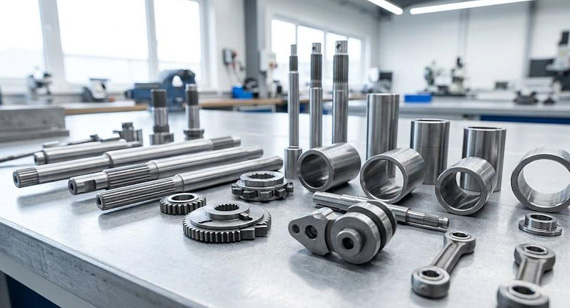
 If there’s a metal that not only provides excellent impact resistance and toughness but also outstanding wear resistance and durability—yeah, we say the 1075 high carbon spring steel. Would you like to use it for mechanical components that must withstand high loads and frequent impacts, and perform with an exceptionally long fatigue life? If you search for 1075 steel, the web will most likely lead you to springs or knives. However, it can also be used for precision CNC machining to make parts like transmission shafts, ratchets, sleeves, or liners—only when high impact toughness and high elasticity are required. Otherwise, alloy steels like 4140 or 4340 might be more popular choices.
 66
66
 Read more
 VMT 2026 05 18
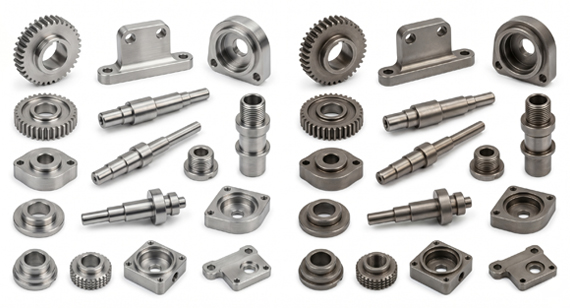
 If you are now sourcing a custom precision shaft part, would you like the part to be more tough and wear-resistant, or to be more corrosion-resistant? D2 tool steel and 1095 high-carbon steel are apparently high-strength and high-hardness steels—you can take advantage of the higher toughness and impact resistance of 1095, and you can also use the “semi-stainless” steel D2’s better corrosion resistance due to its high chromium content.
66
Read more
 VMT 2026 05 15
 In this guide, we have shortlisted the top 10 carbon steel parts manufacturers in China. All of them are analized based on their manufacturing capacity, certifications (like IATF 16949), material range, and core strengths. Whether you are looking for a partner for automotive components, hardwares, or other custom carbon steel parts, this list will help you make a quick decision for finding the reliable manufacturer.
66
Read more
 VMT 2026 05 14
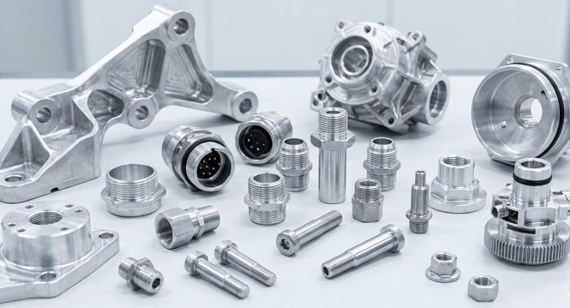
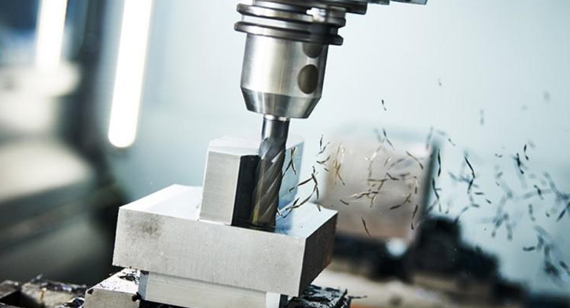
 This free-machining alloy 2011 can provide good strength, hardness, and an excellent surface finish for mass CNC machining with short chips and less tool damage. Whether you are sourcing components for lightweight automotive sensors, electronics, or precision valve parts, you can trust the 2011 aluminum alloy in aspects of efficiency and tight tolerance. It seems aluminum 2011 is similar to the versatile aluminum 6061 from the introduction above, right? But it’s not. In this blog, we will also share a case study on how we solved the issue of achieving “strict dimensional tolerances without boosting production costs or extending delivery cycles” for one of our clients.
66
Read more
 VMT 2026 05 13
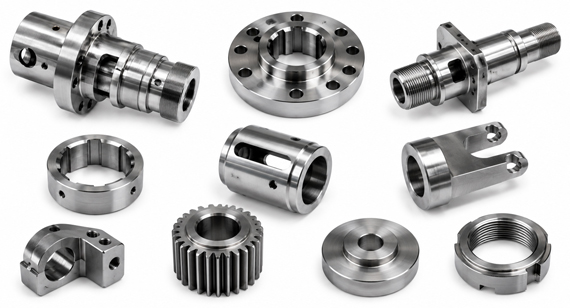
 In this guide, we will break down the differences between these steels and help you understand their applications, advantages, and disadvantages, so you can make a more suitable choice. At the very end, we will share a case study of how we optimize high-volume production for RoHS-compliant components for one of our clients.
66
Read more
 VMT 2026 05 12
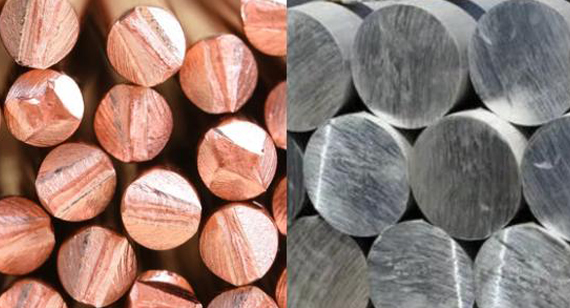
 Are you now seeking steel parts required to be subjected to extreme pressure, frequent friction, or high-load rotation? If so, you can take a look at what we will introduce in this blog—52100 alloy steel (also named as 52100 bearing steel). Of course, it’s important to understand this high-carbon chromium alloy steel’s properties, composition, uses, and pros. It is also important for you to consider whether the 52100 alloy steel parts can be precisely assembled or not, and to look at detailed data like hardness to know their limit for preventing premature failure. In this article, we will dive into these issues. At the very end, we will also share a case study on how we solved the precision (±0.01 mm) and hardness (HRC 62) requirements of precision 52100 steel drive shafts for high-load robotics for our clients.
66
Read more
 VMT 2026 05 11
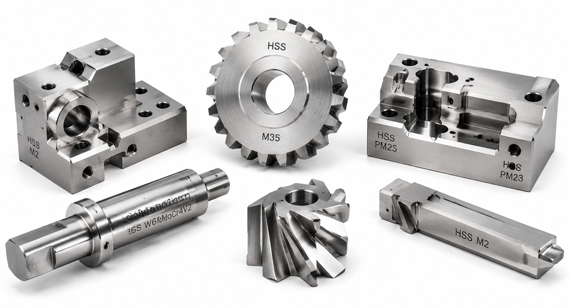
 It is very easy to tell copper and stainless steel apart with the naked eye—obviously, the rose-red metal is copper, and the silver-luster metal is stainless steel. For copper, you can use it primarily for electronic components like lead frames, PCBs, heat dissipation components, conductive terminals, and connectors due to its good conductivity, thermal conductivity, and ease of processing. While for the other totally different material, stainless steel, you could use it for a wider range of applications such as medical containers, parts in food equipment, valve parts for ships, or gears and shafts in automotive—this versatility is mainly due to its good corrosion resistance, good strength, and toughness according to different types and grades.
66
Read more
 VMT 2026 05 09
 High Speed Steel (HSS) Guide: Characteristics, Types, and Applications in Custom Machining When it comes to high speed steel (HSS), you can tell from its name what it is primarily used for — “high-speed” machining, drilling, or millin
66
Read more


 +86 15099911516