16 years one-stop China custom CNC machining parts factory

Hey there I’m VMT Sam!
With 25 years of CNC machining experience we are committed to helping clients overcome 10000 complex part-processing challenges all to contribute to a better life through intelligent manufacturing. Contact us now
 1025 |
Published by VMT at Aug 19 2026 | Reading Time:About 5 minutes
1025 |
Published by VMT at Aug 19 2026 | Reading Time:About 5 minutes


We know that AN hose end fittings are often used in automotive, racing modification, aerospace industry, and other high-pressure fluid delivery systems. AN stands for Army-Navy, because the specification is based on the flexible fluid connection standard used during World War II, so the AN standards ensure absolute reliability, precise sealing, and interchangeability under severe vibration, thermal expansion, and high pressure. AN fittings have a variety of different angles to assist wiring and gaps. They are straight, 30, 45, 60, 90, 120 , 150 or even 180 degrees.
And for designing custom fuel rails, oil cooling systems, dry-sump lubrication, or hydraulic lines, choosing the right AN hose end fittings combination (and understanding AN fitting CNC machining) is essential. This complete guide walks you through AN types, material options, surface finishing, quality control, and cost factors. At the end, we will also share you a case study of how we solved post-assembly sealing cone leaks of an-8 swivel hose fittings.
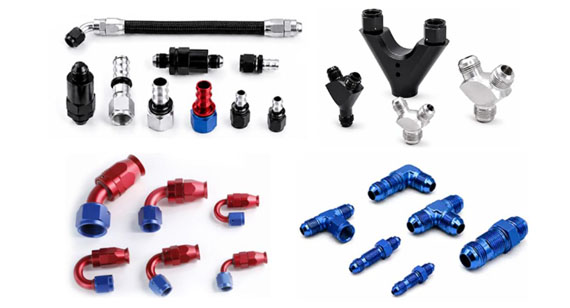
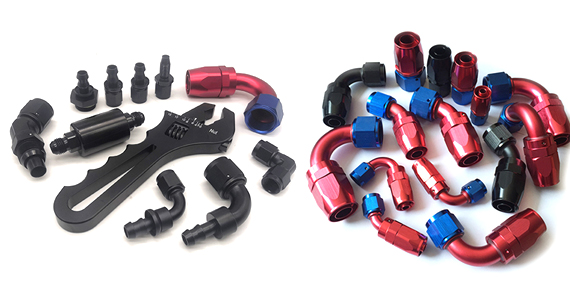
Common types generally consist of crimping types, reusable hose ends, and push locks, and functional machined styles:
Crimp Type Connector:
It requires a hydraulic press with a specific mold to correctly crimp the collar to the end of the hose, so it is often used in facilities that manufacture a large number of hoses. These machines and molds are often expensive, so you won't see individuals or small fleets using them. Crimped hose requires a new crimp ring to be reused, but if crimped correctly, it is considered the strongest and most reliable joint.
Reusable Hose End:
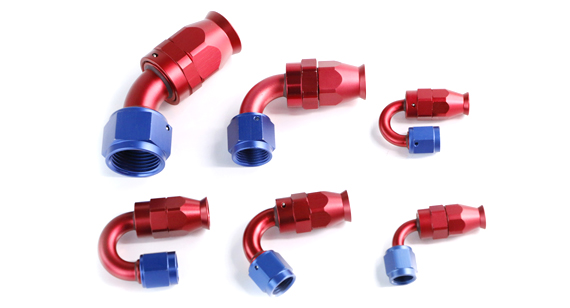
The end of the hose uses a two-part system to hold the hose in place to be reusable. Practical performance is often used with braided hoses made of stainless steel or nylon braid.
AN Push Lock Hose End Fitting:
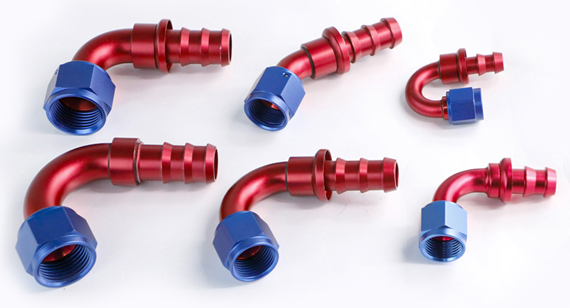
They are single-piece units with barbed ends, so push-lock hoses are the easiest to assemble. Push locks are used with coated hoses because they have no function to prevent the braid from spreading. The barb can be used alone to hold the hose in place, the hose is pressed against the barb and secured, or additional clamps can be used.
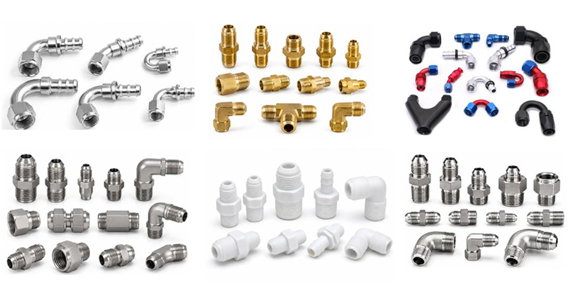
Functional Machined Fitting & Adapter Styles:
Size category:
Each size number has its own standard thread size, which has a specific relationship with the hose inner diameter, tube outer diameter, and SAE thread size. There are 13 types of AN fittings sizes from line 2 to line 32.
As shown below:
| AN Size | Rigid Tube O.D. (Inches/mm) | Thread Size (UNF/UN) | Nominal Hose I.D. (Inches) |
| AN-2 | 1/8" (3.18 mm) | 5/16"-24 UNF | 1/16" (1.58 mm) |
| AN-3 | 3/16" (4.76 mm) | 3/8"-24 UNF | 1/8" (3.18 mm) |
| AN-4 | 1/4" (6.35 mm) | 7/16"-20 UNF | 3/16" (4.76 mm) |
| AN-5 | 5/16" (7.94 mm) | 1/2"-20 UNF | 1/4" (6.35 mm) |
| AN-6 | 3/8" (9.53 mm) | 9/16"-18 UNF | 5/16" (7.94 mm) |
| AN-8 | 1/2" (12.70 mm) | 3/4"-16 UNF | 7/16" (11.11 mm) |
| AN-10 | 5/8" (15.88 mm) | 7/8"-14 UNF | 1/2" (12.70 mm) |
| AN-12 | 3/4" (19.05 mm) | 1-1/16"-12 UN | 5/8" (15.88 mm) |
| AN-14 | 7/8" (22.23 mm) | 1-3/16"-12 UN | 3/4" (19.05 mm) |
| AN-16 | 1" (25.40 mm) | 1-5/16"-12 UN | 7/8" (22.23 mm) |
| AN-20 | 1-1/4" (31.75 mm) | 1-5/8"-12 UN | 1-1/8" (28.58 mm) |
| AN-24 | 1-1/2" (38.10 mm) | 1-7/8"-12 UN | 1-3/8" (34.93 mm) |
When the process or material is different in the manufacturing method, in order to let everyone better understand the aluminum parts as an example, the following shows you the production process.
CNC machining allows for various materials and high-precision manufacturing of AN fittings and hose components. Selecting the right material is critical, as it determines pressure tolerance, fluid compatibility, corrosion resistance, and overall weight in modern automotive, aerospace, motorsport, and marine applications.
| Material | Key Property | Fluid Compatibility | Common Uses |
| 6061 Aluminum | Lightweight, highly machinable, typically anodized for corrosion resistance | Gasoline, diesel, oil, coolant, low-pressure air | Most aftermarket performance fuel, oil, and cooling lines |
| 7075 Aluminum | High tensile strength-to-weight ratio, superior fatigue resistance | Gasoline, racing fuel, hydraulic oil | High-stress motorsport components and aerospace fittings |
| 316 Stainless Steel | Excellent strength, high pressure rating, superior corrosion resistance | E85, methanol, brake fluid, high-temp oil, corrosive chemicals | High-pressure brake lines, turbo feed lines, harsh chemical systems |
| 304 Stainless Steel | Good heat and corrosion resistance, cost-effective | Coolant, oil, fuel, general fluids | High-pressure line sleeves and heavy-duty fittings |
| C36000 Brass | Natural lubricity, excellent thread anti-galling, tight tolerance machining | Air, water, fuel, oil, hydraulic fluids | Olive/ferrule inserts for PTFE hose ends, sensor adapters |
| Titanium (Ti-6Al-4V) | Ultra-lightweight, extreme strength, immune to most corrosion | All racing fuels, oils, hydraulic fluids, aggressive chemicals | Professional motorsport fittings and hoses |
| PTFE (Teflon) Inner Liner | Non-porous, zero vapor permeability, high heat/chemical tolerance | E85, methanol, race gas, power steering fluid, nitromethane | Core inner lining for braided high-pressure fuel and power steering hoses |
| CPE Rubber Inner Liner | Flexible, cost-effective synthetic rubber base | Standard gasoline, diesel, oil, coolant | Traditional braided oil and fuel lines (not recommended for ethanol/E85) |
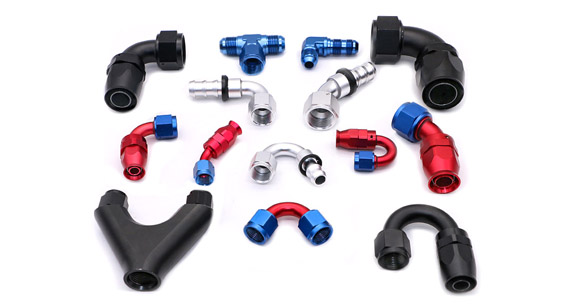
Surface treatment services not only enhance the visual appearance of AN fittings but also provide critical protection against corrosion, wear, and chemical exposure in harsh environments. The most classic surface treatment options include:
A. Polishing: Mechanical buffing that creates a smooth, mirror-like or high-gloss finish, reduces contaminant buildup and eases cleaning.
B. Bead Blasting: Blasting the AN fittings surface with glass or ceramic beads to achieve a uniform matte or satin finish. It hides minor machining marks, and creates a clean industrial appearance.
C. Single / Multi-Color Anodizing: An electrochemical process forming a durable protective oxide layer, available in classic red/blue, solid black, or custom multi-color finishes. It enhances surface hardness, prevents oxidation, and offers resistance to fuels, oils, and chemical exposure.
D. Powder Coating / Painting: Applying a cured powder or liquid paint layer in various solid or custom colors. It provides a thick, durable protective barrier against abrasion, impact, and aggressive environmental elements.
E. Screen Printing / Laser Marking: Applying logos, brand markings, or specification labels directly onto the surface using durable inks or laser etching. It provides permanent product identification and easy size verification during assembly or maintenance.
F. Precision Masking: Using high-temperature tape or custom plugs to protect critical threads and sealing seats from unwanted plating or anodizing during surface treatment.
G. Electroless Nickel Plating: An autocatalytic chemical process that deposits an even layer of nickel-phosphorus alloy over complex geometries, delivering exceptional corrosion resistance and thread wear protection.
H. Passivation: A chemical acid treatment for stainless steel fittings that removes surface iron impurities and enhances the natural protective oxide layer to prevent rust and chemical corrosion.
Understanding the drivers of custom CNC AN fitting and hose costs helps you optimize designs for performance without exceeding project budgets.
For example, aluminum 6061-T6 offers the most cost-effective solution. Titanium Grade 5 and 316L Stainless Steel significantly increase raw material costs and machining cycle times (due to lower cutting speeds and higher tool wear).
For instance, simple 3-axis CNC lathe turned fittings are the most economical. 45° and 90° elbow hose ends or Y-block splitters require multi-axis turn-mill centers or 5-axis CNC machining, increasing cycle time and fixture setup costs.
A common situation is like that: a single-color anodizing is cost effectively. But anodizing requiring hand-applied precision masking plugs for 37° flare cones adds specialized labor costs.
High setup-to-run time ratio makes 1–10 piece prototypes more expensive per unit. Scaling to low-volume or production runs (100–1,000+ pieces) dramatically drops per-unit machining costs.
100% thread gauge verification and dimensional inspection are standard. Adding specialized application-specific pressure testing (e.g., 3,000 PSI hydrostatic test) or CMM port position reporting increases inspection time and cost.
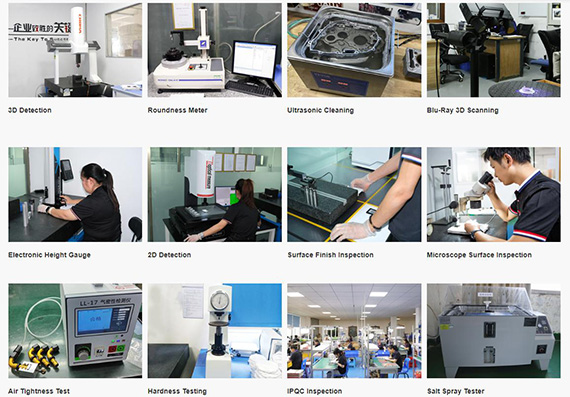
Detection is a complex and precise process. Depending on your project requirements, quality inspection options include:
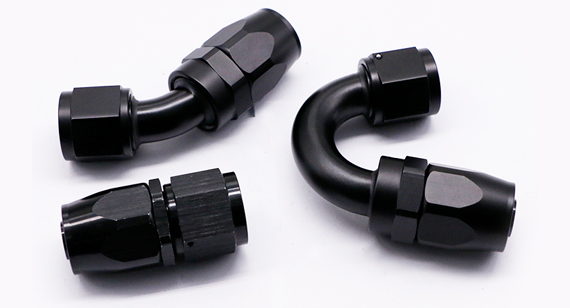
Solving Post-Assembly Sealing Cone Leaks of AN-8 swivel hose fittings
A high-performance motorsport client approached us with persistent micro-leaking on custom 6061-T6 anodized AN-8 swivel hose fittings(made by their previous suppliers) installed on a 150 PSI oil cooler line. While all thread dimensions passed standard Go/No-Go thread gauge checks, fluid continued to weep past the 37° flare seat after 30 minutes of thermal cycling.
Our engineering team performed a detailed optical surface scan and coordinate inspection on the leaking units:
Then, we done the following ways to machine the AN-8 swivel hose fittings
Results
The redesigned custom CNC AN-8 fittings achieved a 100% leak-free seal during hydrostatic testing up to 1,200 PSI, resolving the customer's field failure issues.
When looking for AN fittings parts suppliers, it is sometimes difficult to determine the best fit for your needs. In order to help you choose the right factory, the following points must be met:
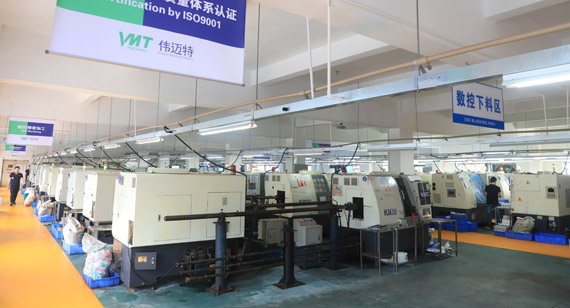
VMT pursues the highest quality products and has passed ISO9001. We can guarantee our quality and service for any single project of our customers. VMT is an in-house manufacturing plant with advanced machines, including manufacturing machines, punching machines, CNC lathes, three-axis CNC machine tools, and high-precision five-axis CNC machine tools. This supports us in providing strong capabilities for any hose end fitting project. No matter how complex they are, Contact VMT to easily handle them. [2D Drawings (PDF files), 3D Drawings (IGS/STP/STEP files)].
Send your 2D drawings, 3D CAD models, material requirements, AN sizes, thread requirements, sealing requirements, surface-finish requirements, prototype quantity and production quantity. VMT will review manufacturability, machining strategy, inspection and quotation requirements.
All information and uploaded files are secure and confidential.
1 Tell us what you need
2 Get solution & quote
3 Approve production
Email: inquiry@vimetal.com.cn
Q1: Can I use NPT fittings directly with AN fittings?
A: No, not directly. AN fittings seal on a 37° metal flare cone with straight UNF threads, whereas NPT fittings seal on tapered threads using thread sealant. To connect them, you must use a custom CNC-machined AN-to-NPT adapter.
Q2: What is the difference between AN 37° fittings and SAE 45° fittings?
A: AN fittings utilize a 37-degree flare angle and specific military UNF thread pitches. Standard automotive flare fittings (often found in plumbing or older domestic cars) use a 45-degree flare angle. Connecting a 37° AN fitting to a 45° SAE fitting will damage the seating surface and cause severe fluid leaks.
Q3: Why is my AN hose end leaking even though the fitting is tight?
A: Over-tightening an AN fitting can deform or crush the 37° aluminum seating cone, creating a permanent leak path. Other common causes include burrs/scratches on the flare cone, unmasked anodizing buildup, or misaligned thread concentricity. Always use proper torque specs and aluminum AN wrenches during assembly.
Q4: How does anodizing affect the dimensions and threading of CNC AN fittings?
A: Type II anodizing typically adds 5–15 µm of surface thickness, while Type III Hardcoat anodizing adds 25–50 µm. Because thread tolerances are tight, non-masked threads must be machined slightly undersized prior to anodizing, or high-precision masking plugs must be used to keep coating off functional threads and sealing cones.
Q5: Can CNC machining or bending cause dimensional errors in AN bent tubes and hose segments?
A: Yes, it may happens. But precision CNC tube benders can prevent these errors by using real-time sensor feedback and automatic springback compensation to ensure accurate flare positioning.
Q6 : How are bent AN fittings and tube components safely rotated and secured during CNC machining?
A: Workpieces are locked using custom-contoured soft jaws, pneumatic clamps, and multi-axis indexable collets. This specialized workholding prevents slippage or tube deformation while allowing full 360-degree rotation for precise port and thread machining.
The technical information and manufacturing advice shared on the VMT website are for general guidance only. While we strive for accuracy, VMT does not guarantee that the processes, tolerances, or material properties mentioned are applicable to every specific project. Any reliance you place on such information is strictly at your own risk. It is the buyer's responsibility to provide definitive engineering specifications for any production orders. Final specifications and service terms shall be subject to the formal contract or quotation confirmed by both parties.


 +86 15099911516




 Read more