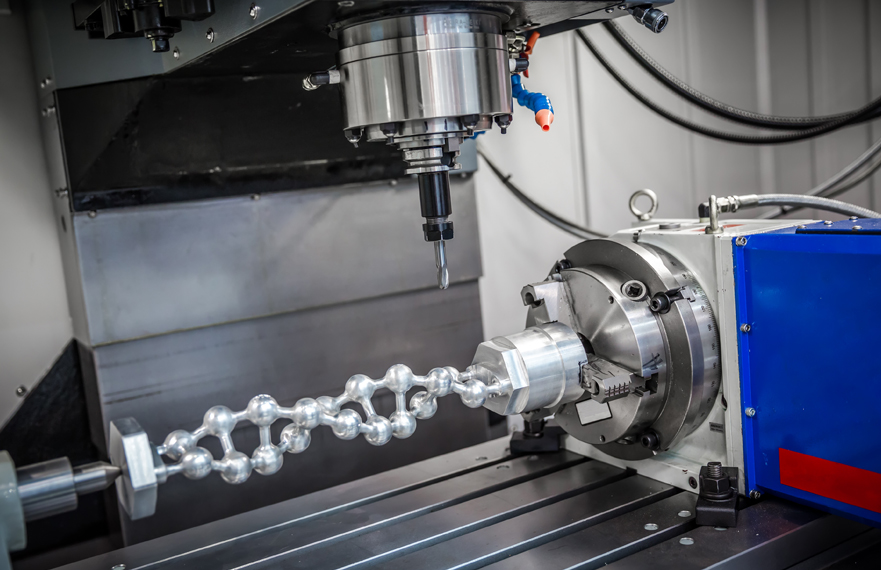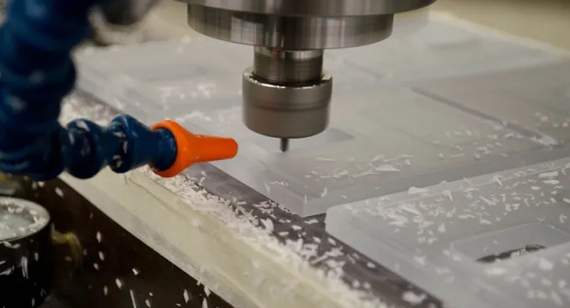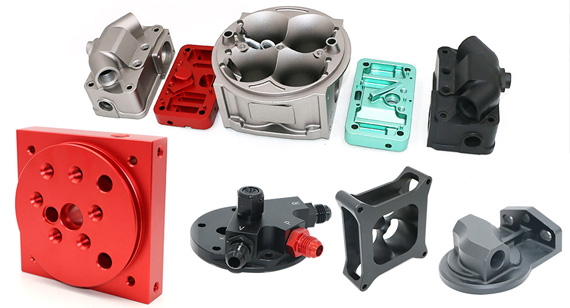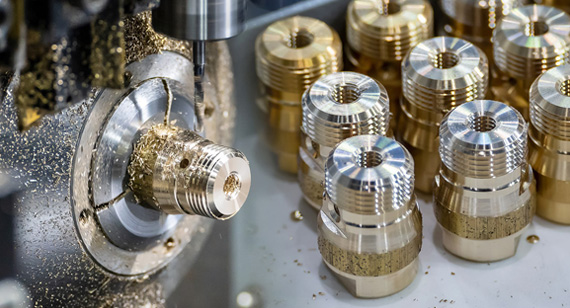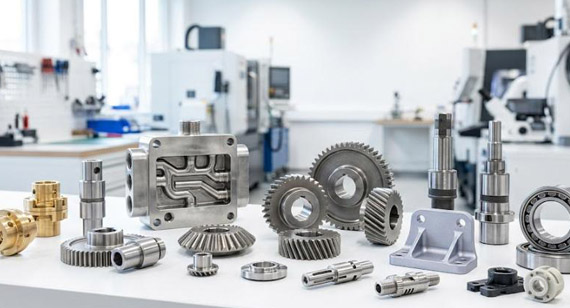
CNC Manufacturing precision industrial equipment parts is facing unprecedented pressure: components are becoming increasingly complex, precision requirements are stricter than ever, lead times are shrinking, and cost controls are tighter than ever. In this challenging environment, traditional methods like casting, stamping, and conventional outsourced CNC machining struggle to balance quality, speed, and cost simultaneously.
CNC machining brings industrial metal components 5 core benefits: lower material scrap and part cost, 24/7 uptime for shorter lead times, prototype-to-run production without transition delays, batch tolerance stability, and predictable strength with clean surface finishes.
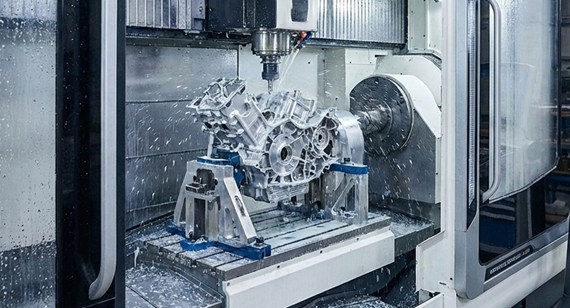
Industrial CNC machining has emerged as the mainstream solution for modern component manufacturing. By leveraging 5-axis simultaneous machining, high-rigidity machine tools, fully automated production lines, 24/7 lights-out manufacturing, and rigorous CMM inspection, the entire process, from prototyping to mass production, can be completed by a single supplier using a unified process route. This blog introduces the 5 core benefits that advanced CNC machining brings to precision industrial equipment parts from three dimensions: cost reduction, efficiency improvement, and quality control.
[At the end of this article, we also share a case study on how our factory helped a German industrial automation manufacturer overcome the challenges of reducing the weight of hydraulic valve blocks and lowering their scrap rates.]
I. Cost Reduction: Lowering Material Waste and Component Costs
The cost pressure of industrial equipment components primarily stems from three factors: low material utilization, high per-unit tooling costs, and high scrap rates. Industrial CNC machining offers structural advantages in all three areas, which is quite friendly to your production cost.
Benefit 1: Lowering Material Waste and Component Costs
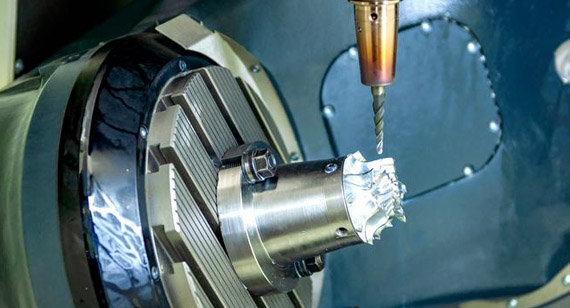
- Optimized Nesting with Low Scrap Rates: CNC machining utilizes advanced nesting algorithms to achieve the tightest possible layout on limited bar stock or sheet metal. Compared to the massive machining allowances required in traditional casting, or the unavoidable skeleton scrap in stamping, advanced industrial CNC machining directly improves material utilization by 15% to 30%. This means more of your material budget goes into the net weight of the actual product, effectively shaving off substantial material costs from the very source.
- Zero Tooling Required with Predictable Unit Costs: Cast, stamped, or injection-molded parts must clear the hurdle of mold-making before production can even begin. Tooling fees—often running into tens or hundreds of thousands of yuan—can severely constrain early-stage budgets. CNC machining completely bypasses the tooling phase. When launching new product trials, you can effectively avoid the financial uncertainty of amortized tooling costs; the per-unit cost of every drawing is locked in early during the quoting stage.
- Superior Total Cost Advantages for Small-to-Medium Batches: For production runs under 5,000 units, the comprehensive cost of CNC (encompassing materials, cutting, post-processing, and full inspection) is typically 10% to 30% lower than that of casting. The economies of scale for casting only kick in once you cross the 5,000-unit threshold. Conveniently, the typical production cycle for modern industrial parts falls precisely between 100 and 5,000 units, landing right within CNC's Total Cost of Ownership (TCO) sweet spot.
- Reusable Programs with Zero Replication Costs: CNC machining programs are fully digitalized. Whether running a 10-unit prototype today or a 5,000-unit mass production next month, the replication and re-development cost of the exact same machining program is zero. When your product requires minor upgrades later, or when you face a high-mix, low-volume (HMLV) production rotation, this characteristic drives your marginal cost down close to zero.
Consequently, industrial CNC machining can boost material utilization by 15% to 30% and slash comprehensive per-unit costs by 10% to 25%. When applied to a batch size of 1,000 units, the unit cost can drop directly by 5 to 15 RMB per piece.
II. Efficiency Enhancement: Shortening Lead Times and Accelerating Mass Production
The lead time pressure for custom industrial CNC machined components primarily comes from two sources: long lead times for first articles (prototypes) and a lengthy transition from prototype to mass production. Industrial CNC machining offers structural advantages in both areas.
Benefit 2: Shorter Lead Times with 24/7 Machine Uptime
- Automated Tool Changing with Zero Manual Intervention: Modern CNC machining centers are equipped with Automatic Tool Changers (ATC) capable of holding 30 to 120 tools at a time. Once the program is set, continuous multi-process machining requires no frequent manual intervention. It has become industry standard for a 5-axis machine to run continuously for 8 to 16 hours completely unattended.
- Lights-out Manufacturing: Driven by a high level of automation, CNC machining can achieve unattended "lights-out production." From the evening shift checkout to the next morning's clock-in, the machines can run uninterrupted throughout the night. For projects with tight deadlines, this round-the-clock capacity allocation gains invaluable time for your schedule.
- Predictive Maintenance with Controlled Downtime: Modern industrial-grade CNC systems feature predictive maintenance capabilities. The system monitors spindle vibration, tool wear, and coolant status in real time, issuing warnings before failures occur. This shifts workshop maintenance from "passive firefighting" to "active planning," ensuring your order's production rhythm is never disrupted by unexpected downtime.
The Overall Equipment Effectiveness (OEE) of industrial CNC machinery typically ranges between 80% and 90%, which is 2 to 3 times that of conventional machining. When applying this efficiency curve to your project, receiving the first article within 2 weeks after issuing an RFQ is standard practice.
Benefit 3: Moving from Prototype to Run Production Without Delays
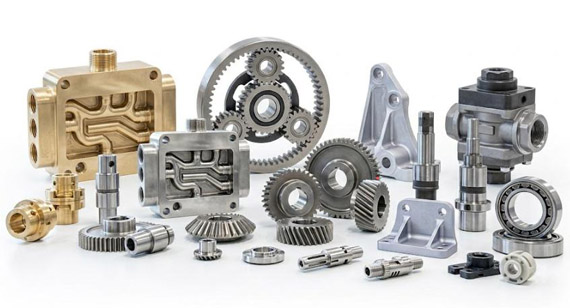
Within the industrial CNC machining process, the components utilize the exact same machine, fixture set, and machining program during both the prototyping and mass production stages. This means that once a prototype is validated, transitioning the project to mass production requires no other machine re-selection, re-programming, or secondary fixture development, getting rid of human errors during the handover.
- Linearly Scalable Process Parameters: Since the underlying machining principles remain identical, the cutting parameters verified during prototyping (such as spindle speed, feed rate, and depth of cut) can be scaled up linearly to full production capacity without repeating process trials. In contrast, cast or injection-molded parts often require a lengthy and unpredictable process of tool modification and trial molding when transitioning from prototype to production.
- Reusable Tooling and Fixtures to Avoid Duplicate Investment: Specialized fixtures or custom inspection gauges invested in during the early prototyping phase can be directly carried over into later batch production. This locks in your tooling costs and prevents the duplicated fixture expenses common in traditional stamping or casting when changing batches or adjusting designs.
Overall, industrial CNC machining can compress the transition time from prototype to mass production from 8–16 weeks down to 3–5 weeks, saving you 60% to 80% of total project time. By entrusting both prototyping and mass production to the same CNC machining facility, the estimated product's time-to-market can be accelerated by over 60%.
III. Quality Control: Stabilizing Tolerances and Ensuring Material Strength
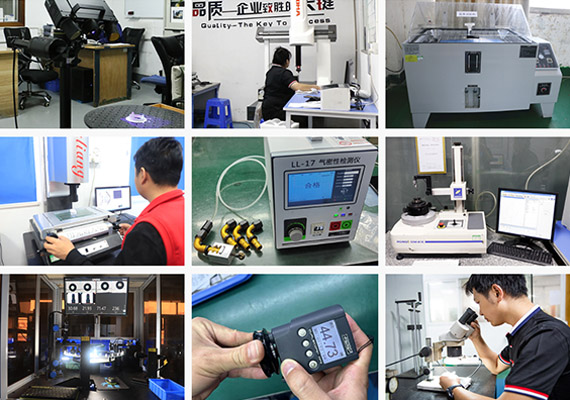
Ensuring the quality of precision industrial equipment components requires batch tolerance consistency, predictable material strength, and high surface finish quality. Industrial CNC machining perfectly fulfills these demanding requirements.
Benefit 4: Holding Tight Tolerances Across Every Batch
- Repeatability held within ±0.005 mm. Modern CNC machining centers hold axis repeatability within ±0.005 mm, and 5-axis simultaneous machines hold contour accuracy within ±0.01 mm. Compared to the ±0.1 to 0.3 mm dimensional swing on conventional castings, CNC machining is one to two orders of magnitude tighter. This micron-level stability removes the need for secondary manual sorting and lets parts flow straight on.
- Batch Cpk stable above 1.5. Cpk is the core engineering metric for batch consistency (1.5 is the industrial threshold, 1.67 is the high-end threshold). Industrial-grade CNC machining holds batch Cpk firmly above 1.5, and reaches 1.67 on critical features. Castings typically run between 1.0 and 1.2.
- 100% CMM Inspection for Full Verification: Industrial-grade manufacturing is usually equipped with Coordinate Measuring Machines (CMM) to perform 100% full inspection on critical dimensions, whereas traditional castings are often limited to random sampling due to process constraints. For projects that require full-inspection delivery to pass quality audits from high-end industrial clients, comprehensive CMM inspection reports save you massive compliance explanation costs.
- Integrated Machining-Measurement Closed Loop: Modern machine tools can integrate in-process probing technology, which performs touch-probe measurements immediately after a specific feature is machined. If a dimension is found to be approaching the tolerance limit, the system automatically applies tool compensation adjustments. This closed-loop mechanism intercepts potential out-of-tolerance parts in real time during production, minimizing your batch defect rate.
Industrial CNC machining stabilizes batch tolerances of industrial equipment components at the IT7 level and maintains a critical feature Cpk above 1.5. On a real project, critical parts can go straight into assembly on arrival, and the labor loss from secondary sorting is skipped.
Benefit 5: Reliable Material Strength and Cleaner Surface Finishes
Preserving Material Strength while Preventing Internal Defects: Castings are prone to defects like porosity, shrinkage, or voids during the cooling process, leading to poor predictability of component strength. In contrast, CNC cutting subtracts material directly from solid forgings, extruded bar stock, or plates, introducing zero internal defects.
- Traceable Mill Certificates (Mill Certs): Each batch of industrial-grade CNC machined parts comes with original material test reports, making chemical composition, mechanical properties, and heat treatment status fully traceable. In comparison, tracing material quality for castings or 3D-printed parts is much more difficult. When conducting compliance audits for critical projects in aerospace, medical, or high-pressure automation, this clear traceability helps your products pass certification smoothly.
- Surface roughness (Ra) held at a high standard. CNC machined parts usually hold surface roughness (Ra) between 0.8 and 1.6 µm, while castings typically sit between 3.2 and 6.3 µm and often need secondary manual polishing. With CNC machining, the as-machined surface already meets the requirements of most industrial assembly scenarios, and the labor of deburring and polishing is removed.
- Comprehensive Post-Processing Options: After CNC machining, a wide variety of surface treatments can be applied—such as anodizing, electroless nickel plating, coating, polishing, and sandblasting—to meet diverse requirements for corrosion resistance, wear resistance, aesthetics, and electrical insulation. Consequently, comprehensive properties like corrosion resistance, wear resistance, and visual appeal can all be achieved at once through a one-stop "CNC machining + post-processing" workflow.
Thus, industrial CNC machining ensures that the strength predictability, surface finish, and surface treatment flexibility of industrial equipment components fully meet delivery standards.
VMT Case Study: Hydraulic Valve Blocks for a German Industrial Automation Manufacturer
A German industrial automation manufacturer had long been sourcing hydraulic valve blocks from three different CNC machining vendors. This fragmented supply chain resulted in an 8-week lead time, a 12% scrap rate, poor strength consistency (with certain batches exceeding porosity limits), and high technical communication costs. The client sought to consolidate their sourcing to a single vendor to unify manufacturing processes, shorten lead times, and improve yield rates.
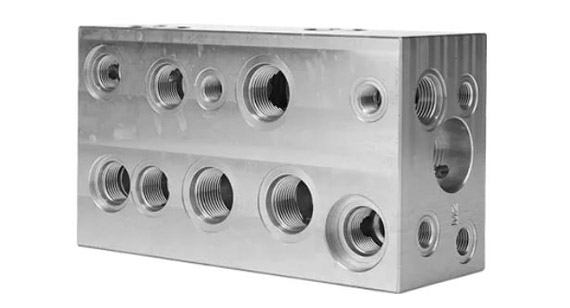
Main challenges
- First, the manifold block measured 380 x 280 x 150 mm (close to the 400 mm limit), and required a long-stroke 5-axis machine for single-piece machining.
- Second, the block carried 8 intersecting oil passages at Ø8 to Ø15 mm, 4 mounting holes at Ø20 mm, and 1 main oil passage at Ø80 mm, with a position tolerance of 0.05 mm on the intersecting passages.
- Third, the working pressure was 35 MPa, calling for a high-strength material (6061-T6 at 310 MPa tensile was not enough, 7075-T7351 at 572 MPa tensile was a fit). Fourth, the 800-piece first order required delivery in 3 weeks, while the conventional cycle ran 5 to 8 weeks.
Solution
Our engineering team proposed a "material upgrade + process consolidation + 5-axis single-setup" approach.
- Step 1 material upgrade: Switched from 6061-T6 to 7075-T7351 forged stock, lifting tensile strength from 310 MPa to 572 MPa (+84%), providing enough safety margin against 35 MPa working pressure.
- Step 2 process consolidation: Brought all three suppliers into a single VMT workflow, with unified drawing revision, unified inspection standard, and unified delivery package.
- Step 3 5-axis single setup: Used a DMG MORI DMU 125 P 5-axis simultaneous machining center (1250 x 1000 x 750 mm stroke) to complete all 8 intersecting oil passages, 4 mounting holes, and 1 main oil passage in a single setup.
- Step 4 surface treatment: After CNC machining, applied bead blasting (80-grit glass beads) plus Type II anodizing (film thickness 15 µm), passing 500 h salt spray with no corrosion.
- Step 5 parallel acceleration: Programming, stock preparation, fixture build, and surface treatment scheduling ran in parallel on four tracks, compressing 3 weeks into 2.
Results.
- 800 pieces delivered in 2 weeks, 1 week ahead of schedule;
- Scrap rate cut from 12% to 0.4% (-97%);
- Part weight reduced from 3.2 kg to 2.4 kg (-25%), as higher strength allowed thinner walls;
- Tensile strength raised from 310 MPa to 572 MPa (+84%), well above the 35 MPa working pressure requirement;
- Critical oil passage position tolerance held at 0.038 mm (better than the 0.05 mm spec);
- Type II anodizing plus 500 h salt spray with no corrosion;
- Yield 99.5% (4 of 800 pieces accepted on concession for material defects, no machining-related defects);
- Critical oil passage position Cpk 1.67, meeting the high-end industrial standard;
- The customer added VMT to the long-term CNC supplier list for hydraulic manifold blocks, and started consolidation talks on 6 other hydraulic parts.
FAQs
Which industrial sectors are best suited for industrial CNC machining?
Key Industries: Industrial automation (hydraulic valve blocks, sensor brackets), aerospace (structural components, connectors), medical devices (surgical instruments, implant housings), automotive (powertrain, chassis components), semiconductors (vacuum chambers, pipe fittings), and robotics (joints, end-effectors). These fields all share a need for low-to-medium volumes, extreme precision, and high material strength.
What is the difference between industrial CNC machining and conventional CNC machining?
- Industrial CNC machining specifically targets components used in heavy industrial equipment and machinery, setting it apart from the production of consumer goods or decorative parts.
- Industrial-Grade Standards: It demands 24/7 continuous operation, 5-axis simultaneous machining, strict 100% CMM inspection, and fully traceable mill certificates. Conventional CNC machining, on the other hand, typically caters only to basic prototypes or cosmetic batches, falling short of industrial-grade full-verification and mass-production compliance.
How much cheaper is industrial CNC machining compared to casting?
- For production runs under 5,000 units, the comprehensive cost of industrial CNC machining is typically 10% to 30% lower than casting, depending on the material, geometric complexity, and tolerance requirements.
- Casting only achieves economies of scale once production exceeds 5,000 units. The typical batch sizes for modern industrial equipment components (100 to 5,000 units) land right within CNC’s Total Cost of Ownership (TCO) sweet spot.
Can 5-axis CNC machining truly achieve 24/7 unattended operation?
Yes. Modern 5-axis machining centers are equipped with Automatic Tool Changers (30 to 120 tools), automated cooling systems, automatic chip evacuation, and in-process probing/monitoring. Running a continuous 8-to-16-hour shift in a "lights-out" (unattended) factory environment is standard industry practice. However, this relies heavily on fully verified programming, robust fixturing, and predictable tool life management.
How long does the timeline take from prototyping to a 1,000-unit production run?
When sticking with the same supplier and the same process routing, the typical timeline breaks down as follows:
- Prototyping: 5 to 10 working days
- 1,000-unit Small Batch: 2 to 3 weeks
- 5,000-unit Mass Production: 3 to 5 weeks
- Total End-to-End Timeline: 4 to 6 weeks
What is the typical tolerance of industrial CNC machining?
Modern 5-axis machining centers hold axis repeatability within ±0.005 mm and contour accuracy within ±0.01 mm. Batch tolerances are stable at IT7 grade (around ±0.02 mm), with critical parts holding Cpk above 1.5 and high-end parts above 1.67.
Final Thought
By consolidating a fragmented, unpredictable traditional supply chain into a full-process, high-standard industrial CNC machining ecosystem, you transform more than just product precision, surface finish, and assembly consistency—you optimize your entire project lifecycle through shorter lead times and maximized yield rates.
Are you looking for a tailored quotation that perfectly balances cost reduction, efficiency enhancement, and quality control? Contact our senior engineering team today to receive a customized industrial CNC machining process analysis and quote.

Disclaimer
The technical information and manufacturing advice shared on the VMT website are for general guidance only. While we strive for accuracy, VMT does not guarantee that the processes, tolerances, or material properties mentioned are applicable to every specific project. Any reliance you place on such information is strictly at your own risk. It is the buyer's responsibility to provide definitive engineering specifications for any production orders. Final specifications and service terms shall be subject to the formal contract or quotation confirmed by both parties.


 87 |
Published by VMT at Jun 25 2026 | Reading Time:About 3 minutes
87 |
Published by VMT at Jun 25 2026 | Reading Time:About 3 minutes 


 +86 15099911516




 Read more