Free cookie consent management tool by TermsFeed Cookies

Home / Resources / Blog /

The Ultimate Guide to CNC Machining for New Energy Vehicle (EV) Parts

30   |   Published by VMT at Jun 26 2026   |   Reading Time:About 4 minutes

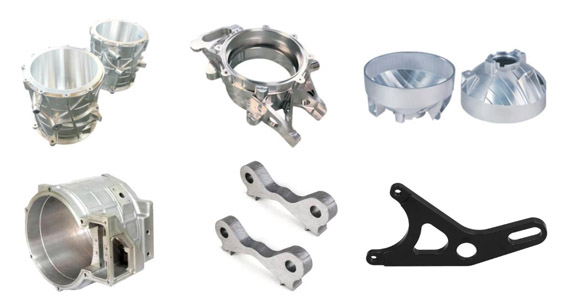
CNC Machining New Energy Vehicle (EV) Parts


Get an Instant Quote


New Energy Vehicles (NEVs) demand far more stringent requirements for component precision, lightweighting, thermal management, and electrical insulation. From battery trays that require extreme sealing performance, to motor housings that must maintain strict coaxiality under high thermal gradients, to inverter cold plates integrated with complex fluid channels—these highly challenging structures make precision CNC machining an indispensable manufacturing process.


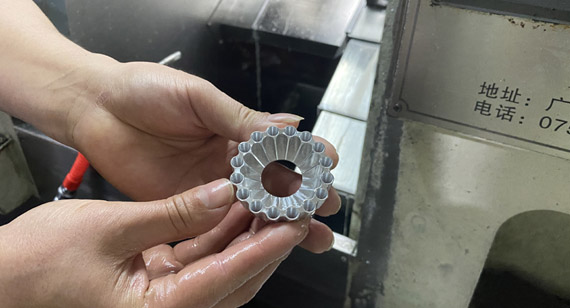
CNC machining for NEV parts: EV battery enclosures, motor housings, inverter chassis. VMT supports prototype to production with 5-axis CNC and CMM inspection.


This guide will comprehensively deconstruct the application of CNC machining in the NEV sector across key dimensions, including core components, critical materials, machining tolerances, and mass-production workflows. It will also showcase a case study from our factory: how we successfully supported an NEV project from a 3-piece prototype run all the way to 5,000-piece mass production.


Why CNC Machining Is Critical for New Energy Vehicles


Can't we cast or sheet-metal-form most of these parts and reserve CNC for finishing? For some components, yes. For most, no. 


CNC machining matters for NEV because the parts demand geometric precision, batch-level repeatability, and material properties that alternative processes cannot deliver in a single workflow.


Three drivers sit behind the decision to use CNC for EV parts:


  • Thin-wall and lightweight constraints. EV battery enclosures and motor housings need 2–4 mm wall sections with structural load. Casting produces uneven wall thickness that fails fatigue testing. CNC machining with vacuum fixturing and custom soft jaws holds wall tolerances within ±0.1 mm while removing 30–40% of the original billet weight through pocketing.
  • Tolerance stacks that determine drivetrain function. A motor housing bore that holds a rotor bearing needs roundness below 0.01 mm and concentricity between the drive-end and non-drive-end bores below 0.02 mm. The gearbox housing bolt pattern must align with the inverter mounting pattern to within 0.05 mm or the drivetrain introduces NVH. Casting and 3D printing struggle to hit these numbers without finish-machining, which brings you back to CNC anyway.
  • Prototype-to-production continuity. NEV programs move fast. The same part that ships in a 3-piece prototype batch needs to ramp to 500- or 5,000-piece production without a tooling change. CNC machining delivers that continuity because the digital tool path is the same on day one and month twelve. The CAM file travels with the part design, the fixtures are reusable, and the inspection routine applies to every unit.


The practical outcome: a CNC-machined battery tray rib arrives at the prototype bench 5 days after CAD release, the same rib pattern produces 5,000 units three quarters later with no tooling investment, and every batch ships with the same CMM inspection report your homologation team needs.


CNC Machining vs. Other Methods: For Various Types of NEV Parts


Every manufacturing process comes with its own set of advantages and disadvantages. Its compatibility varies significantly depending on the specific requirements or the type of New Energy Vehicle (NEV) component involved.


The following table allows you to quickly check the suitability of various processes for different NEV parts:


NEV Part
CNC Machining
Die Casting
Sheet Metal
3D Printing (Metal) 
Injection Molding
Battery enclosure (large, ribbed)
Best for prototype + low-volume; full CNC production for batches under 5,000 Cost-effective above 10,000 units; finishes CNC-machined on critical surfaces Possible for non-structural covers; not for sealed battery housings Useful for prototype topology; not for production battery enclosures Not applicable (thermoplastics)
Motor housing
Required for bore concentricity and sealing surfaces Common for high-volume; bore and face surfaces finish-machined Not applicable Prototype only; porosity limits sealing Not applicable
Inverter chassis (with cold plate)
Best for internal coolant channels; 5-axis single-setup Difficult due to internal channel geometry Possible for cover plates only Excellent for prototype internal channels Not applicable
Gearbox housing
Required for bearing bores and bolt patterns Common; critical bores CNC-finished Not applicable Prototype only Not applicable
BMS chassis
CNC ideal for small batch + precision Overkill for low-volume Possible for enclosures Prototype only Plastic covers only
Charging station aluminum parts
CNC best for prototype + small-batch enclosures High-volume station housings Common for external panels Not needed Not applicable
Lightweight brackets and linkages
CNC ideal; weight-saving pockets machined directly Not cost-effective Possible but heavier Topology-optimized prototypes Not applicable
Bus bars and conductive components
CNC for copper; tight tolerance + clean edges Not applicable Possible for flat sections Not applicable Insulated plastic carriers only


For NEV projects, all four processes are typically available, but it is important to keep the following in mind:


  • CNC Machining is the best choice when tolerances, surface roughness, prototype-to-production continuity, or internal geometries (such as fluid channels and weight-reduction cavities) define the part.
  • Casting wins when production volumes are high enough, geometries are mold-friendly, and the piece part cost justifies amortizing the tooling investment.
  • Sheet Metal Fabrication wins for non-structural covers and large panels (where weight is not the primary constraint).
  • 3D Printing wins during the prototype topology optimization phase, as well as for low-volume metal parts with geometries that cannot be machined.


Key NEV Parts and Their CNC Machining Requirements


Below is a step-by-step breakdown of the core CNC machining essentials by component category: typical materials, process challenges, critical tolerance dimensions, and the key capabilities required when evaluating a machining solution. Every type of component comes with its own set of trade-offs, which you should judge based on your actual operating conditions during selection.


1.EV Battery Enclosures and Trays


Battery enclosures are the single largest CNC-machined NEV part by surface area. 


A typical EV battery tray is 1,800–2,200 mm long, 1,400–1,600 mm wide, and 120–200 mm deep, machined from 6061-T6 or 7075-T6 aluminum plate.


The challenges:


  • Floor pan and rib pattern: 2–4 mm thick floor with internal rib structure that adds stiffness without weight. Pocketing cuts the rib pattern in a single 5-axis setup to keep wall thickness uniform.
  • Coolant channel integration: Some designs mill serpentine coolant channels directly into the tray floor. These channels need internal surface finish below Ra 1.6 µm to limit flow resistance, and channel depth control to within ±0.1 mm.
  • Sealing surface flatness: The lid-to-tray interface must hold flatness below 0.2 mm across the full perimeter to maintain IP67 sealing. Five-axis face milling with a single-setup fixture achieves this.
  • Mounting hole pattern: Battery module mounting holes number 200+ per tray. CNC drilling with a pallet-changing system keeps cycle time manageable while holding position tolerances within ±0.05 mm.


2. Electric Motor Housings


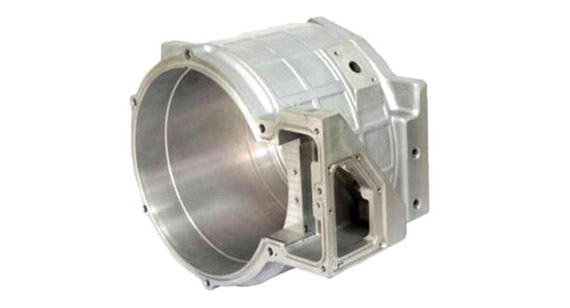
CNC Machining EV Electric Motor Housing


Get an Instant Quote


Motor housings demand the tightest tolerance stacks in any NEV drivetrain. 


The drive-end and non-drive-end bearing bores must hold concentricity below 0.02 mm; the rotor fit surface needs roundness below 0.01 mm. Material is typically 6061-T6 for cost-sensitive programs or 7075-T6 for high-stress applications; some premium motors use 6Al-4V titanium for weight-critical programs.


Key CNC considerations:


  • Bore concentricity: Multi-axis CNC turning with live tooling completes the housing body and both bearing bores in a single clamping, eliminating the concentricity drift that comes from re-fixturing between operations.
  • Cooling jacket integration: Some liquid-cooled motors mill cooling channels directly into the housing wall. These channels need smooth internal surfaces for flow efficiency and tight depth control to avoid hot spots.
  • Stator-to-rotor alignment: The housing's mounting flange to the gearbox must align to within 0.05 mm. Five-axis machining completes the flange and the bearing bores in a single setup, locking in the alignment at the machine.
  • Surface finish: Bearing bore surface finish typically targets Ra 0.4–0.8 µm. Honing may follow CNC for premium motors, but the CNC finish determines whether honing is even necessary.


3. Inverter and Converter Chassis


Inverters and DC-DC converters generate significant switching heat from IGBT or SiC modules. The chassis must transfer that heat to a liquid cold plate while keeping the high-voltage bus bars electrically isolated from the chassis structure. 


Challenges or requirements:


  • Cold plate integration: A 5-axis CNC mill cuts the coolant channel pattern directly into the chassis bottom face, with channel depth held to ±0.05 mm. The mating surface for the IGBT module is then finish-machined to flatness below 0.03 mm to ensure thermal contact.
  • Bus bar mounting features: Insulator standoffs, mounting bosses, and high-voltage interlock features are machined in the same setup to maintain their relative positions.
  • Weight reduction: The chassis often pocketed to reduce mass. Five-axis pocketing with custom tool paths maintains wall thickness uniformity while removing 30–40% of the original plate weight.
  • Material choice: 6061-T6 is the standard, with 7075-T6 for higher-stress applications. Copper heat spreaders may be vacuum-brazed to the chassis for high-power inverters; the CNC chassis surfaces that receive the spreader must be flat and clean.


4.Gearbox Housings for Electric Cars


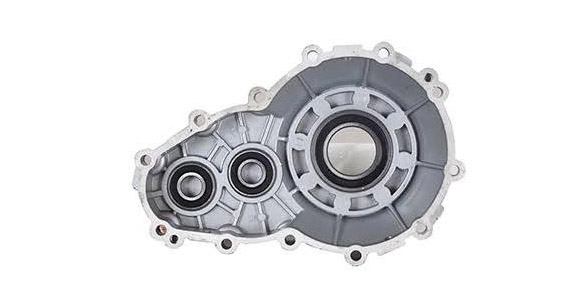
CNC Machining EV Gearbox Housing


Get an Instant Quote


For EV gearboxes, bearing bores for the input and output shafts, mounting flange to the motor housing, and mounting flange to the differential need tight positional tolerances.


Key CNC requirements:


  • Multi-axis turning for bearing bores: The input shaft and output shaft bores are machined in a single multi-axis turning setup, with bore-to-bore concentricity below 0.02 mm.
  • Flange flatness: Both mounting flanges need flatness below 0.05 mm to maintain the drivetrain alignment through the gearbox. Five-axis face milling in a single setup achieves this.
  • Lightweight pocketing: The housing body often pockets to reduce mass. CNC pocketing with weight-optimized tool paths cuts 30–50% of the body weight while maintaining structural stiffness.
  • Material: 6061-T6 is standard, with 356-T6 cast aluminum (finish-machined) for higher-volume programs.


5. Battery Management System (BMS) Chassis


The BMS controls cell balancing, thermal management, and safety cutoffs, and the chassis must meet :


  • Maintain precise board-to-board spacing for the cell monitoring PCBs.
  • Provide thermal management features, including heat sink fins, thermal pads, or cold plate interfaces.
  • Include electrical isolation features between high-voltage and low-voltage sections.
  • Hold connector and fastener positions within ±0.05 mm so that automated assembly works.


6.EV Charging Station Aluminum Parts


For charging station aluminum components, the housing, mounting brackets, and cable management components require weatherproofing or cosmetic surface treatments:


  • Enclosure panels: CNC-machined or sheet-metal-formed 5052 or 6061 aluminum panels with powder coating or anodizing for weather resistance.
  • Mounting brackets: Structural 6061-T6 or 7075-T6 brackets that hold the charging connector and cable management system. Tight tolerances on mounting hole patterns ensure proper alignment with the station housing.
  • Heat sink components: Liquid-cooled fast chargers need heat sinks and cold plates for the power electronics. CNC machining produces the finned heat sink geometry and the cold plate channels in a single 5-axis setup.
  • Connector bodies: Some premium connectors use CNC-machined aluminum bodies for ruggedness and thermal management.


7. Lightweight Brackets, Linkages, and Suspension Components
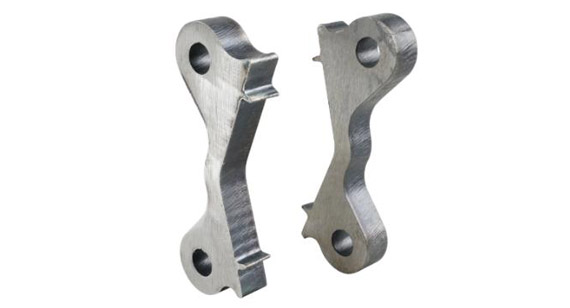
 

CNC Machining EV Caliper Brackets


Get an Instant Quote


  • Suspension components: Control arms, knuckle adapters, and brake caliper brackets are CNC-machined in 7075-T6 for strength-to-weight ratio.
  • Body brackets: Hinge reinforcements, bumper mount brackets, and seat belt anchors are CNC-machined in 6061-T6 with structural ribbing.
  • Interior brackets: Dashboard supports, console brackets, and seat frame connectors use CNC-machined 6061-T6 with cosmetic anodizing.


What Capabilities Should A Partner Have For NEV Parts Machining ?


Materials for EV parts:


  • 6061-T6 and 7075-T6 aluminum, the dominant materials for battery trays, motor housings, inverter chassis, gearbox housings, and brackets.
  • 6Al-4V (Grade 5) titanium, for weight-critical motor housings, suspension components, and premium EV applications.
  • 316 stainless steel, for charging station hardware exposed to weather, and for fasteners and brackets in marine or corrosive environments.
  • C11000 copper, for bus bars, heat spreaders, and high-current connectors, with CNC milling for tight tolerance and clean edges.
  • Engineering plastics for BMS insulators, connector bodies, and lightweight non-structural components.


CNC machining capabilities:


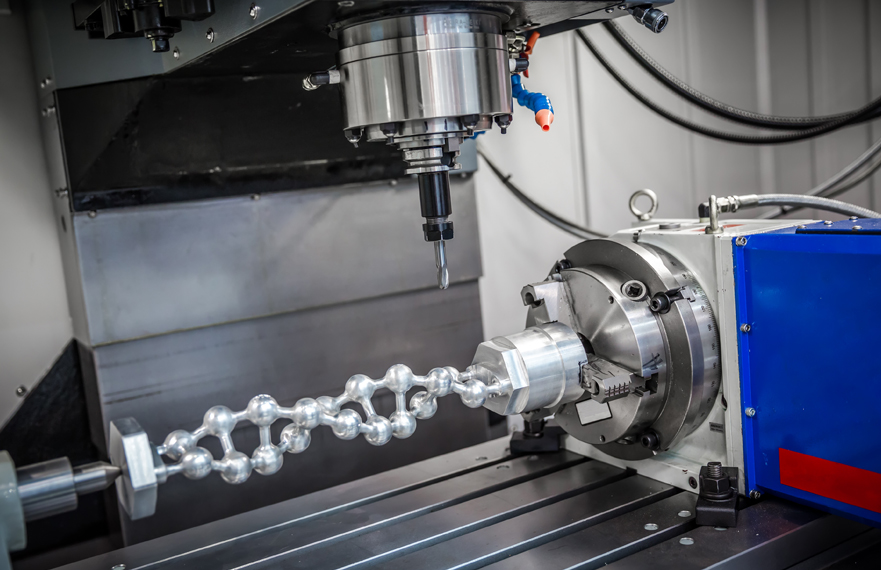
  • 5-axis CNC milling for single-setup production of complex NEV geometries, including battery tray rib patterns, motor end caps with intersecting bearing bores, and inverter cold plates with internal channels.
  • Multi-axis CNC turning with live tooling for motor housings and gearbox housings, parts that combine cylindrical bearing bores with off-axis mounting features in a single clamping.
  • Micro-machining for BMS board-level components and sensor mounting features.
  • Tolerance control to ±0.01 mm; surface roughness Ra 0.8 µm achievable.
  • Capacity from single-piece prototypes to 5,000-unit production runs.


Surface finishing for NEV parts:


  • Type II anodizing (5–15 µm) for cosmetic and corrosion-resistant surfaces.
  • Type III hard anodizing (25–50 µm) for wear surfaces and high-stress parts.
  • Powder coating and wet painting for charging station enclosures and external brackets.
  • Vacuum-brazed copper heat spreaders for inverter chassis.
  • Bead blasting, laser engraving, and custom masking for brand and traceability markings.


Quality systems for NEV programs:


  • ISO 9001:2015 certified quality management.
  • IATF 16949 automotive quality system alignment for serial production NEV programs.
  • Cpk ≥ 1.33 on critical-to-quality features, verified on first article and maintained through production via statistical process control.
  • CMM dimensional inspection on every first article and on AQL 1.0 sampled production units.
  • 7-year traceability, every batch links back to material heat number, CNC machine ID, and inspector record, retrievable within 2 working days.
  • RoHS / REACH compliance for parts shipping to EU and North America, with compliance declarations and SVHC lists available on request.


VMT CNC Machining Factory Case Study: High-Precision Aluminum Inverter Housing for NEV


A European electric vehicle (EV) startup needed a custom high-performance inverter housing (dimensions: 380 mm × 280 mm × 110 mm), to be milled from a solid block of 6061-T6 aluminum alloy. The core challenges were twofold: the internal electronic isolation bays had an extremely thin wall thickness of just 1.5 mm, making them highly prone to chatter and thermal deformation; meanwhile, the flatness of the sealing surface on the bottom serpentine liquid-cooling channel had to be strictly controlled within 0.02 mm.
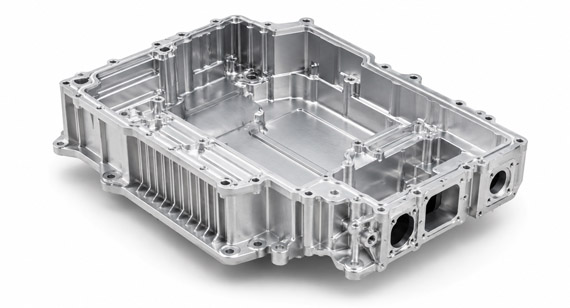


CNC Machining NEV High-Precision Aluminum Inverter Housing


Get an Instant Quote


Solutions


1. Prototyping Phase: Distortion Control & Precision Machining


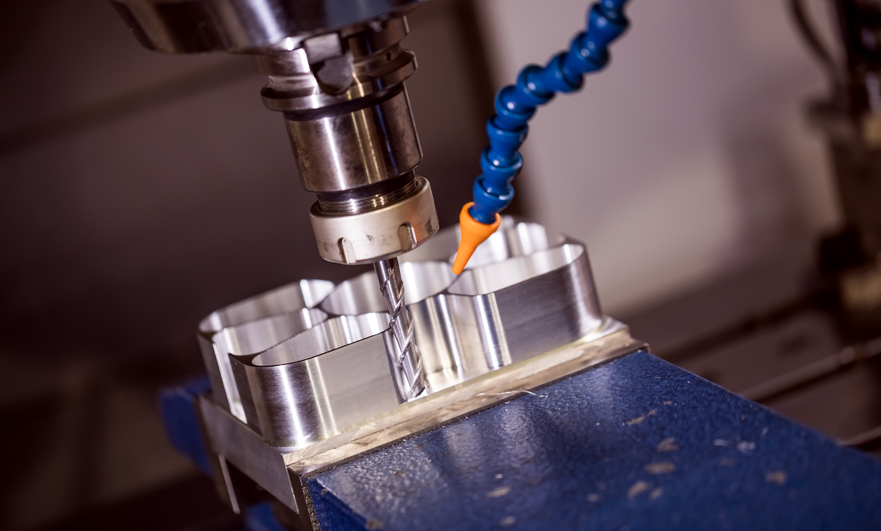
  • Single-Setup 5-Axis Machining: High-speed 5-axis CNC machining centers were used to complete the front, back, and side hole features in a single setup. This completely eliminated cumulative errors caused by flipping parts and re-zeroing tools, ensuring that the coaxiality and position tolerance between the internal isolation bays and mounting holes remained <=0.03 mm.
  • Multi-Chamber Vacuum Fixturing: To handle the 1.5 mm thin walls, traditional mechanical vises (which cause stress deformation) were abandoned. Instead, a custom multi-chamber vacuum suction fixture was engineered to lock the part down with uniform negative pressure, completely suppressing vibration and stress distortion during machining.
  • High-Speed, Light-Load Cutting: Premium 3-flute carbide end mills designed specifically for aluminum were selected. Running at high spindle speeds of 15,000–18,000 RPM with a shallow depth of cut (leaving a 0.15 mm allowance for finishing) and fast feed rates, over 90% of the cutting heat was carried away by the chips, preventing thermal deformation of the thin walls.
  • CMM Full-Element Inspection: Upon completion, the prototypes were sent to a climate-controlled quality room. A Zeiss Coordinate Measuring Machine (CMM) performed high-density point mapping on the sealing surface to ensure it met the strict 0.02 mm flatness requirement. All 5 prototypes were delivered within 7 business days complete with full GD&T data reports.


2. Production Phase: Process Continuity & Efficiency


  • Digital Twin Path Locking: When transitioning to small-batch production, the validated 3D Model-Based Definition (MBD) data and vacuum fixtures from the prototyping phase were locked and carried over directly. This guaranteed "zero-deviation" geometric replication between production parts and the original functional prototypes.
  • Dual Pallet Changer Optimization: The established process was deployed onto CNC centers equipped with automatic pallet changers. While the operator loaded a raw blank and ran vacuum pressure checks on the external pallet, the internal pallet was fully automated and cutting at high speed. This eliminated machine downtime for part loading and re-calibration, reducing the overall component cycle time (Takt Time) by 28%.


Results


Moving into small-batch production, VMT maintained a stable and efficient output of 500 pieces per batch. Every single batch was delivered with its original mill material certificate (traceable by heat number) and a comprehensive CMM dimensional report. Utilizing the strict AQL 1.0 sampling standard, zero-defect delivery was achieved, successfully helping the client keep their new vehicle launch exactly on schedule.
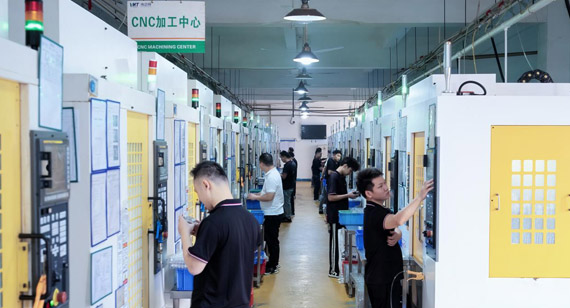


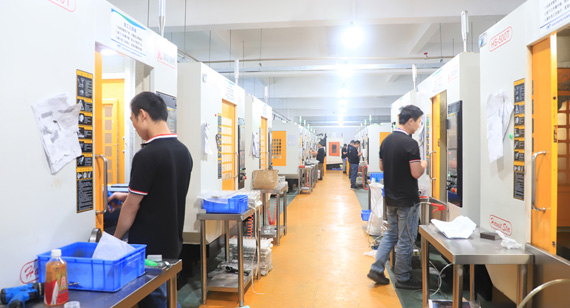
VMT CNC Machining Parts Factory China


Get an Instant Quote


Final Thought


CNC machining is, without question, the core manufacturing process for New Energy Vehicle parts. From oversized battery trays and high-tolerance motor housings to inverter cold plates with integrated precision flow channels, every core component's strict demands on material, tolerance, and surface treatment ultimately point to the same set of capabilities: 5-axis simultaneous single-setup machining, thin-wall rigidity control, and rigorous tolerance stack management.


Concerned about tolerance stack failure or structural deformation from material stress? Send us your technical challenges and drawings 2D drawings (PDF file) or 3D drawings (IGS/STP/STEP file)  . Get your DFM review and quote now and let us apply efficient, high-quality precision machining standards to accelerate the landing of your new energy project.

 

Get your parts into production today, Get an instant quote


FAQs


Q1: How are EV battery enclosures machined?


EV battery enclosures are typically machined from 6061-T6 or 7075-T6 aluminum plate using 5-axis CNC milling; The floor pan, internal rib pattern, and module mounting holes are cut in a single setup with vacuum fixturing to support the thin floor sections; Some designs integrate coolant channels directly into the enclosure floor, with 5-axis milling cutting the serpentine channel pattern to ±0.1 mm depth control. 


Q2: Why is CNC machining critical for New Energy Vehicles?


CNC machining delivers : thin-wall stability for lightweight battery enclosures and motor housings, tolerance stacks below 0.02 mm for bearing bores and drivetrain alignment, and prototype-to-production continuity that lets the same manufacturer run 3 prototype units and 5,000 production units with the same digital tool path. 


Q3: What metals are used in EV CNC machining?


The dominant materials are 6061-T6 and 7075-T6 aluminum for structural components (battery enclosures, motor housings, inverter chassis, gearbox housings, brackets), 6Al-4V titanium for weight-critical motor housings and suspension components, 316 stainless steel for charging station hardware and marine-corrosion environments, and C11000 copper for bus bars and heat spreaders. Engineering plastics (PEEK, PPS, nylon) appear in BMS insulators and connector bodies. Material choice depends on strength-to-weight ratio, corrosion resistance, thermal conductivity, and cost.


Q4: What are the precision requirements for electric vehicle motor housings?


Motor housings typically require bearing bore roundness below 0.01 mm, bore-to-bore concentricity below 0.02 mm, and surface finish in the Ra 0.4–0.8 µm range. Mounting flange flatness should be below 0.05 mm to maintain drivetrain alignment. 


Q5: What are the advantages of CNC machining in NEV prototyping?


  • Zero Tooling & Fast Turnaround: No molds required. CAD models directly drive the machining, shortening lead times from weeks to days.
  • Low Cost & Rapid Iteration: Modifying ribs or hole positions only requires adjusting the digital toolpath, incurring zero mold-modification costs.
  • Flexible Material Selection: Test different aluminum grades (like 6061 or 7075) freely without changing fixtures.
  • Full-Functional Verification: Perfectly replicates internal fluid channels, precision threads, and sealing surfaces for immediate on-vehicle testing.


Q6: What are the Effects for CNC EV parts cost?


CNC machining cost for NEV parts depends on four variables: material (aluminum is the cost baseline, titanium and copper add 3–10×), part complexity (5-axis features and internal channels add cost over 3-axis prismatic parts), tolerance stack (sub-0.02 mm tolerances require slower cutting and more inspection), and batch size (prototype batches of 1–50 units cost more per piece, production runs of 500–5,000 units spread the setup cost). 


Disclaimer


The technical information and manufacturing advice shared on the VMT website are for general guidance only. While we strive for accuracy, VMT does not guarantee that the processes, tolerances, or material properties mentioned are applicable to every specific project. Any reliance you place on such information is strictly at your own risk. It is the buyer's responsibility to provide definitive engineering specifications for any production orders. Final specifications and service terms shall be subject to the formal contract or quotation confirmed by both parties.


> <

Latest posts

Upload 2D/3D drawings

Upload Your Files or Contact inquiry@vimetal.com.cn to Get Instant Quote (Please attach 2D CAD drawings and 3D CAD models in any format including STEP, IGES, DWG, PDF, STL, ZIP, etc.).

Upload files ( Max file size: 20MB )
+86 15099911516
loading