16 years one-stop China custom CNC machining parts factory

Hey there I’m VMT Sam!
With 25 years of CNC machining experience we are committed to helping clients overcome 10000 complex part-processing challenges all to contribute to a better life through intelligent manufacturing. Contact us now
 953 |
Published by VMT at Jan 26 2026 | Reading Time:About 3 minutes
953 |
Published by VMT at Jan 26 2026 | Reading Time:About 3 minutes


You might be familiar with the brilliant luster of standard chrome plating. Its ability to provide a durable, corrosion-resistant silver finish is well-suited for various industrial parts. Yet, in the realms of precision engineering and high-end design, black chrome is emerging as a surface process for those seeking not only a unique smoke-grey or deep-black aesthetic but also durable and non-reflective performance. But how does this process differ from conventional plating? What chemical additives are required to manipulate its performance? What about color changes and texture? What about the price? These are the key points this article will share with you.
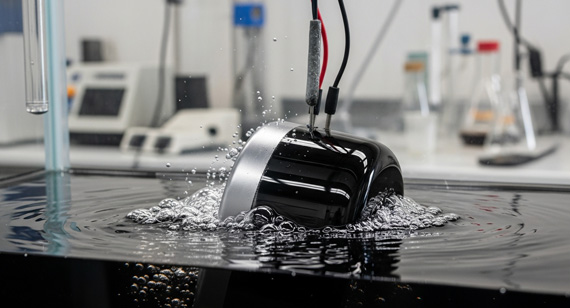
Black chrome electroplating is the surface treatment that first electrically coating a layer of nickel or copper as the base, and then electrically deposits a layer of black chromium on the metal substrate. Unlike standard bright chrome, black chrome achieves its dark hue—ranging from smoky charcoal to deep jet black—through the addition of specific agents (like sulfides or other chemistries) in the plating bath(chemical solution).Specific agents break the bright white metallic structure of chromium.
The typical process of black chrome electroplating include:
Durability, corrosion resistance, and heat resistance can be realized so as to causing the relative higher cost black chrome electroplating being used especially in high-end electronic components, heat dissipation parts, and optical parts.
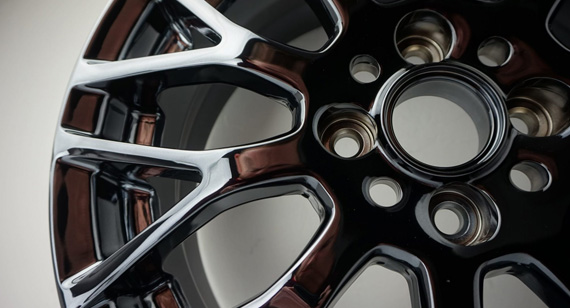
The black chrome coating is formed by chromium and its amorphous oxide, which is typically achieved by adding specific reagents to the plating solution. In addition to specific reagents to the plating solution, the "blackness" is achieved by breaking the bright white metallic structure of chromium. Here are a breakdown of the specific agents and their functions involved:
Table 1: Specific Reagents in Black Chrome and Their Roles in Performance and Color
| Reagent Category |
Specific Substances |
Role |
| Darkening Agents |
Sodium Thiosulfate, Ammonium Thiocyanate | Introduces sulfur to form black modified oxides with chromium. |
| Structure Modifiers |
Formic Acid, Oxalic Acid | Promotes non-crystalline oxide mixtures to increase light absorption. |
| Complexing Agents |
EDTA, Citric Acid | Stabilizes metal ions in Trivalent systems for a uniform tone. |
| Catalysts |
Fluosilicic Acid (H2SiF6) | Improves current efficiency and activates the surface, assisting in the formation of specific surface morphologies with high solar absorbance. |
| Alloy Metal Ions |
Iron (Fe2+), Cobalt (Co2+) | Co-deposits as alloy components to adjust the hardness, wear resistance, and depth of the black color (e.g., "Gun Metal" vs. "Deep Black"). |
Black chrome isn’t just one color; it’s a spectrum. Besides the specific reagents to the plating solution, the final appearance depends on the underlying nickel layer and the plating parameters.
Table 2: Color Control in Black Chromium Plating
| Process Parameter / Target |
Light Smoke Gray |
Gun Metal |
Deep Pure Black |
Matte Black |
| Corresponding Undercoat |
Bright Nickel | Bright Nickel | Satin / Pearl Nickel | Sandblasting + Nickel |
| Current Density (A/dm²) |
0.1 – 0.3 (Low) | 0.5 – 1.2 (Med) | 2.0 – 5.0 (High) | 5.0 – 10.0 (V. High) |
| Bath Temp (°C) |
45 – 55 (High) | 25 – 35 (Room) | 18 – 25 (Low) | 15 – 20 (V. Low) |
| Blackening Agent Conc. (g/L) |
0.5 – 1.5 (Low) | 2.0 – 5.0 (Med) | 8.0 – 12.0 (High) | 15.0 – 25.0 (V. High) |
| Surface Physics |
Smooth, High Reflectivity | Smooth, High Reflectivity | Micro-asperities, Diffuse Reflection | Rough surface, "Light Trap" effect |
| Visual Description |
Mirror-like gray with slight translucency | Classic deep gray metallic texture | Silk-like texture, premium and subtle | Deepest black, near-zero reflection |
Relationship Between Undercoat and Gloss Level
Because the black chromium layer is extremely thin (micron-scale), the final Gloss Level is primarily dictated by the physical morphology of the Undercoat.
Glossy Finish (High Shine)
The glossy effect is achieved using Bright Nickel as the undercoat. Because bright nickel provides exceptional leveling and a mirror-like surface, the subsequent black chromium layer—which is typically only a few microns thick—conforms perfectly to this smooth plane. The result is a deep, dark mirror finish where light reflects directly off the surface, making it ideal for high-end decorative applications like smartphone housings, luxury automotive trim, and jewelry.

Semi-Gloss Finish (Satin/Pearl)
A semi-gloss or "satin" look relies on a Satin or Pearl Nickel undercoat. This layer contains microscopic peaks and valleys created through specialized chemical additives or mechanical brushing. When the black chromium is deposited over this textured base, it creates a surface that scatters incident light in multiple directions rather than reflecting it directly. This diffuse reflection produces a soft-focus, sophisticated "misty" texture that is highly popular for premium appliance panels and modern bathroom hardware.
Matte Finish (Non-Reflective)
The most non-reflective "pure black" is achieved through Sandblasting Pre-treatment followed by a nickel strike. Sandblasting creates macro-level irregularities and a high degree of roughness on the base metal. This geometry acts as a "Light Trap": light rays entering the surface are forced to bounce multiple times between the deep crevices of the rough plating. Since the black chromium absorbs a portion of light with every bounce, almost no visible light escapes the surface, resulting in the deep, flat black required for tactical gear, optical instruments, and solar thermal absorbers.
So, you may find that the smoother the undercoat, the more glossy the finish; and higher current density and lower temperature result in finer black crystal structures, leading to a deeper color; while higher blackening agent concentration introduces more sulfur or oxides into the deposit, pushing the color toward pure black. But one thing you may watch out for sandblasting mentioned above; It is a pre-treatment for the substrate and never performed directly on the final black chrome layer as it would damage the finish.
Black chrome plating is more than just an aesthetic choice; it is a high-performance functional coating with exceptional properties. It excels in durability, corrosion protection, thermal management, and optical control. Below is a detailed analysis of its four core functional characteristics:
1. Durability and UV Stability
Unlike traditional black paints, electrophoretic coatings, or powder coatings, black chrome is a completely inorganic metal-oxide coating.
2. Good Corrosion Resistance
The stability of black chrome in humid or marine environments is not a result of the chrome layer alone, but rather a multi-layer protection system.
3. Thermal Management and Heat Resistance
Black chrome plating maintains parts’ physical stability under high thermal conditions, offering unique advantages in high-performance industrial sectors.
4. Light Absorption and the "Light Trap" Effect
Black chrome is an ideal material for solar collectors and precision optical instruments due to its microscopic ability to "capture" light:
Black chrome is almost always applied over a semi-gloss or matte nickel layer to provide the necessary "body" and protection for the finish. A variety of metal or non-metal materials can do the black chrome plating. Below table shows the materials for black chrome plating as well as their suitability:
Table 3: Materials for Black Chrome Plating and Suitability
| Material |
Ease of Plating |
Notes |
| Nickel / Nickel Alloys |
Easy | The best underlayer. Most materials are pre-plated with bright nickel to achieve optimal depth of color and corrosion resistance. |
| Copper / Brass |
Easy | Excellent conductivity and adhesion. Frequently used for bathroom fixtures and decorative hardware. |
| Carbon Steel |
Medium | Requires a nickel undercoat to prevent rusting through the porous black chrome layer. Common in tools and firearms. |
| Zinc Alloy |
Medium | Requires heavy copper or nickel plating first to seal the substrate and prevent acid bath damage. |
| Stainless Steel |
Medium/Hard | Surface passivation requires Wood's Nickel Strike or specialized activation to ensure adhesion. |
| Aluminum Alloy |
Difficult | Requires a Zincating process followed by nickel before the final black chrome layer. |
| Magnesium Alloy |
Very Difficult | Highly reactive; requires a complex multi-strike process (Zincate → Copper → Nickel). Used in ultra-light aerospace parts. |
| ABS Plastic |
Difficult | Needs etching, sensitization, and Electroless Nickel plating to become conductive. Used for automotive trim. |
| PC + ABS Blends |
Very Difficult | Harder to etch than pure ABS; requires specific chemical pretreatment. Common in high-end consumer electronics. |
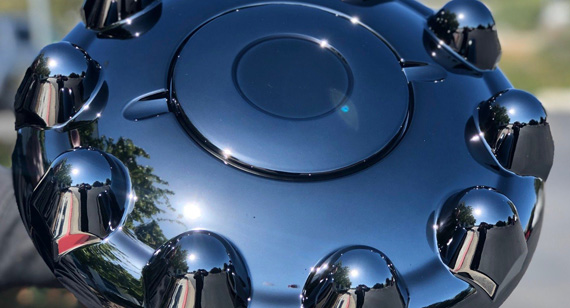
Black chrome plating is widely used among many industries due to its special looks, durability, corrosion resistance, heat resistance, and light- absorption. Here I list some of the examples of black chrome plating applications:
CNC machined parts are highly suitable for black chrome. This combination is a standard for achieving "high performance + premium aesthetics" in aerospace, medical, high-end photography, and custom automotive industries. But there are two things are critical you may watch out for:
Black chrome is a mid-to-high-tier plating process. It is more expensive than standard decorative chrome or zinc plating but much cheaper than precious metal plating (e.g., Gold, Rhodium).
Although unit cost is higher than painting or chemical oxidation (black oxide), black chrome offers superior wear and corrosion resistance. In precision optics or solar applications, it remains the most cost-effective solution compared to ultra-expensive coatings like carbon nanotubes.
Can Black Oxide or Powder Coating Replace Black Chrome?
Black oxide or powder coating can be the alternative cost-effective solution if you only require a black appearance in mild environments.
If your parts are CNC machined and used in high-end electronics, automotive, or outdoor equipment, black chrome plating is the most effective and durable option for enhancing product value and appeal.
In summary, Black Chrome Electroplating is a special surface treatment that merges high-end aesthetics with rugged industrial performance. By manipulating the metallic structure of chromium through specific chemical reagents, manufacturers can achieve a spectrum of finishes—from a "smoke" gray to a deep, light-absorbing "jet" black. Its inorganic nature provides superior UV stability and heat resistance compared to organic coatings, making it indispensable for the automotive, aerospace, and optical industries. While the process involves higher complexity and cost than standard zinc or painting, its longevity and unique functional properties—such as the "light trap" effect and high thermal emissivity—provide an engineering value that few other finishes can match.

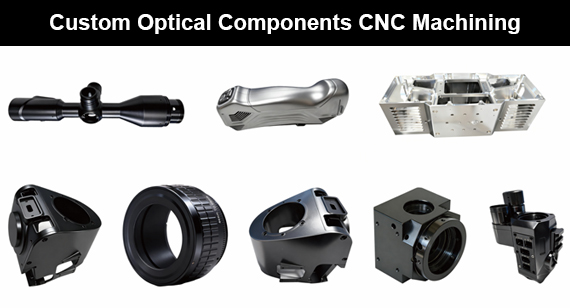

Our engineering team managed the entire lifecycle from machining to the final finish:
Results:
Q1: How to electroplate black chrome?
A: The process involves immersing a conductive part (usually pre-plated with nickel) into a chromium electrolyte bath. By adding darkening agents like sulfides and using specific parameters—such as higher current densities and lower bath temperatures compared to standard chrome—the chromium deposits as a complex of metal and oxides rather than a pure bright metal, resulting in the black color.
Q2: How much does black chroming cost?
A: Black chrome is typically 20% to 50% more expensive than standard bright chrome. This is due to the lower "throwing power" (efficiency) of the black chrome bath, the cost of specialized darkening reagents, and the necessity of a high-quality multi-layer nickel undercoat to ensure corrosion resistance.
Q3: Is there a way to make existing bright chrome black?
A: No, you cannot "turn" existing bright chrome into black chrome through a chemical dip. You must strip the original chrome layer down to the nickel or the substrate and then re-plate it using the specific black chrome electrochemical process.
Q4: Can you electroplate in black on non-metallic surfaces?
A: Yes, but the material (like ABS plastic) must first be made conductive. This is done through a process called "electroless plating," where a thin layer of nickel or copper is chemically deposited on the plastic before the final electroplated black chrome layer is applied.
Q5: Does black chrome fade or peel over time?
A: Unlike black paint or powder coating, black chrome is an inorganic metallic finish. It does not fade under UV light. If the pre-treatment and nickel underplating are done correctly, it will not peel. However, like all chrome, it can be scratched if subjected to heavy abrasive force.
Q6: Is black chrome environmentally friendly?
A: Modern black chrome plating utilizes Trivalent Chromium (Cr III), which is significantly safer and more eco-friendly than the traditional Hexavalent Chromium (Cr VI). Most high-end shops, including VMT’s partners, now use Trivalent processes to comply with RoHS and REACH standards.


 +86 15099911516




 Read more