16 years one-stop China custom CNC machining parts factory
Hey there I’m VMT Sam!
With 25 years of CNC machining experience we are committed to helping clients overcome 10000 complex part-processing challenges all to contribute to a better life through intelligent manufacturing. Contact us now
 0 |
Published by VMT at Oct 22 2026 | Reading Time:About 7 minutes


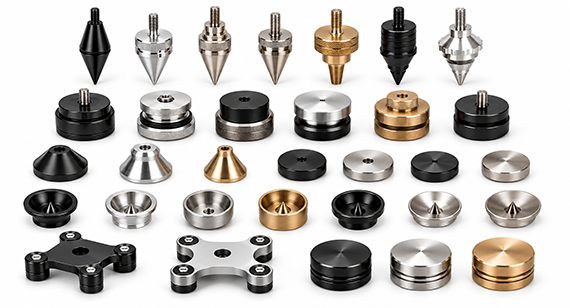
The performance and yield rate of custom CNC machined speaker spikes depend on factors such as accurate thread engagement (to prevent jamming), tight concentricity (to avoid blunt/tilted tips), and batch-consistent surface finishing (to prevent color variations), etc. Additionally, choosing the wrong material or finish also leads to high reject rates and excessive rework.
This guide will break down exact application scenarios to help you select the right alloy, choose best-fit surface treatments, troubleshoot common CNC machining defects, and apply DFM optimizations to lower your unit cost.
At the end, we will also share a case study on how we helped a client maintain a tight concentricity tolerance within ±0.01 mm for their custom audio components, ensuring fully thread gauge compliance while resolving matte black anodizing color inconsistencies issues.
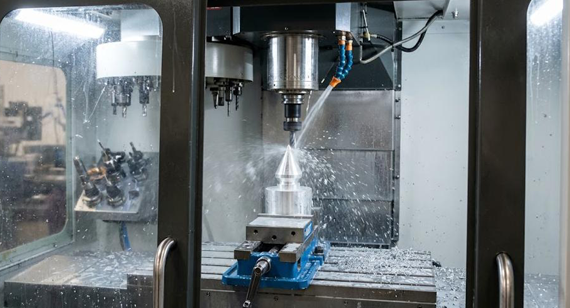
A custom CNC machined speaker spike is a high-precision isolation component designed to mechanically couple or decouple audio equipment (speakers, subwoofers, turntables, amplifiers) from floors or racks. By minimizing the contact area, it dissipates cabinet vibration, resulting in tighter bass and clearer soundstage.Unlike mass-produced die-casting, CNC machining carves spikes from solid metal bars (aluminum, brass, stainless steel). This delivers tight tolerance (±0.005mm to ±0.01mm ), structural symmetry, and premium surface quality.
Advantages of CNC Machined Speaker Spikes
Common Types of CNC Speaker Spikes and Feets
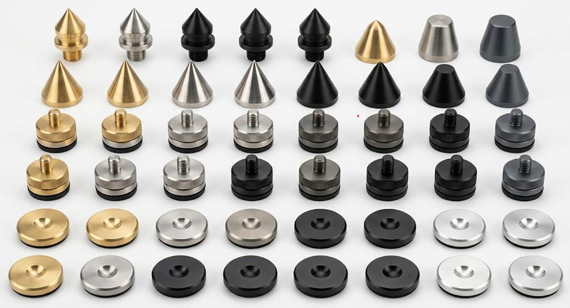
The material options for speaker spikes are extensive, including:
Among these numerous choices, selecting among so many materials requires matching your specific application needs with the appropriate mechanical, acoustic, and environmental properties. Here let’s check the most common scenario:
1. Structural Load and Mass Distribution
Aluminum (6061-T6 / 7075-T6) offers structural stability while keeping component mass low, making it suitable for compact speaker designs and standard isolation platforms.
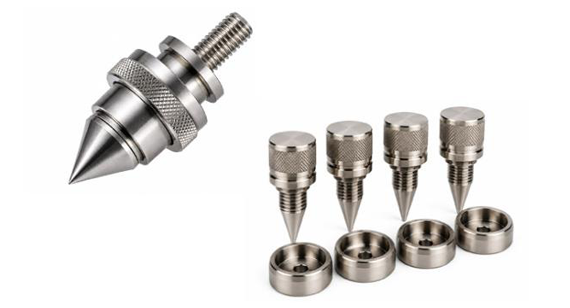
Heavy cabinets exert massive pressure on small spike tips. Stainless Steel (17-4 PH) or Titanium (Gr5) provides the necessary tensile strength to prevent pointed tips from blunting and threads from deforming over time.
2. Acoustic Performance and Vibration Characteristics
Brass (C36000) provides favorable mechanical vibration damping. Its metallurgical structure helps absorb micro-vibrations, making it ideal for precision audio mounting hardware.
If the goal is to rapidly channel cabinet vibration into the floor, Stainless Steel (303/304) delivers high density and structural rigidity for direct mechanical coupling.
3. Thread Durability and Adjustability
For spikes requiring frequent leveling adjustments, Stainless Steel 303 or Brass C36000 provides high wear resistance and smooth thread engagement, preventing thread binding.
When aluminum 6061 or 7075 is selected, specifying Hard Anodizing or incorporating custom thread reliefs is recommended to prevent soft aluminum threads from galling during assembly.
4. Environmental Resistance
For products intended for high-humidity areas, Stainless Steel 316L or Pure Titanium (TA2/Gr2) guarantees zero oxidation, preventing corrosion on contact surfaces.
Aluminum (6061/6063) or Brass performs exceptionally well in standard indoor environments when protected by decorative surface plating or anodizing.
5. Machinability and Aesthetic Requirements
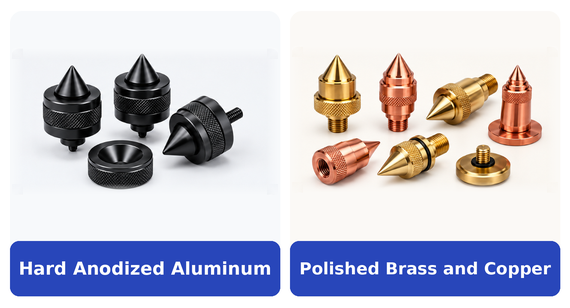
Brass (C36000) features excellent machinability, enabling micro-machining and low surface roughness (Ra) prior to polishing.
Aluminum 6061-T6 acts as an ideal substrate for sandblasting and anodizing, delivering uniform matte black, silver, or custom color tones.
6. Budget and Project Scalability
Aluminum 6061-T6 and Carbon Steel (4140/Q235) provide short CNC cycle times and low raw material costs, making them optimal for commercial high-volume production.
Titanium (TC4) involves higher tooling and raw material costs, but provides extreme hardness, corrosion resistance, and premium product positioning.
About the above scenarios if they are not match your project, you can check here with fully materials and recommendations:
| Material Category | Specific Grade | Evaluation or the Recommendation | Benefits |
| Aluminum | 6061-T6 | Lightweight / medium load, mass production anodized color schemes | Most cost-effective, excellent machinability, ideal for matte anodizing in various colors. |
| 6063 | Complex aesthetic designs, high surface finish requirements | Outstanding extrusion and machining performance, high surface finish, excellent corrosion resistance. | |
| 7075-T6 | High-strength lightweight spikes, high-stress components | Aircraft-grade aluminum with strength comparable to steel; ideal for high load capacity where weight must be controlled. | |
| 2014 | Heavy-duty racks / speaker stands, high-load aluminum components | High copper content providing exceptional hardness and load capacity. | |
| 2017 | Precision structural parts requiring high strength and machinability | Features excellent mechanical machinability and high tensile strength. | |
| 2011 | Ultra-high turning efficiency, low surface roughness (Ra) specs | Free-cutting aluminum alloy with maximum machining efficiency, suited for ultra-precise micro-surface turning. | |
| Stainless Steel | 303 | Frequent thread adjustments, high-precision free-cutting parts | Free-machining stainless steel with excellent anti-galling properties; perfect for frequent height leveling. |
| 304 | Standard indoor floor-standing speakers under heavy loads, general anti-corrosion | Industry-standard stainless steel with high rigidity that rapidly transmits resonance; good rust resistance. | |
| 316L | High-humidity / coastal areas, high-end outdoor / anti-corrosion audio setups | Marine/medical grade corrosion resistance with superior salt-spray protection; zero rust spots over long-term use. | |
| 17-4 (SUS630) | Ultra-heavy subwoofers, high-compression pointed spike tips | Precipitation-hardening stainless steel with extremely high yield strength; tips will not flatten under long-term heavy load. | |
| Brass / Copper | C36000 (HPb62) | Audiophile-grade damping spikes, ultra-smooth mirror turning | Free-cutting brass whose internal crystalline structure offers superior acoustic damping for a warm sound; easy to mirror-cut. |
| C37700 (HPb59) | Complex geometric parts requiring hot forging before CNC finishing | Outstanding hot-forging and machining properties, suitable for manufacturing complex speaker base hardware. | |
| C26800 (H68) | Components / washers requiring moderate elasticity and wear resistance | Good overall mechanical properties and cold-working plasticity. | |
| C22000 (H90) | Vintage style golden accessories, corrosion-resistant brass trims | High copper content with a unique reddish-gold tone and superior resistance to stress corrosion cracking. | |
| Steel / Iron | 4140 | High-strength, cost-effective heavy-load parts, heat-treated components | Alloy structural steel with exceptional toughness and strength after quenching and tempering; ideal for high-strength threaded studs. |
| Q235 | Ultra-low-cost mass production of basic washers / base plates | General carbon structural steel with minimal raw material cost, suitable for hidden or plated high-volume parts. | |
| Q345B | Heavy-load structural chassis, high-strength welded / modular assemblies | Low-alloy high-strength steel with massive load-bearing capacity for heavy audio rack support frames. | |
| 20# | Cylindrical parts needing surface carburizing and wear resistance | High-quality low-carbon steel; achieves high surface hardness after carburizing while maintaining a tough core. | |
| 45# | Medium-carbon general high-rigidity spikes, cost-effective heavy-load parts | Standard medium-carbon steel with good post-quenching hardness; ideal for budget-conscious heavy-duty rigid spikes. | |
| Titanium | TA1 | Pure titanium lightweight parts, high-end anti-corrosion components | Commercially pure titanium with good formability, excellent corrosion resistance, and a distinct metallic texture. |
| TA2 / GR2 | High-end flagship spikes for humid environments, biocompatible / non-toxic trim | The most widely used pure titanium grade; corrosion-resistant, lightweight, and offers a premium tactile appearance. | |
| TA4 / GR5 | Flagship luxury audio gear, extreme strength and scratch-resistant parts | Equivalent to TC4 titanium alloy; offers high strength-to-weight ratio and scratch resistance for top-tier audiophile brands. | |
| TC4 | Extreme hardness, luxury marketing appeal, anti-scratch components | Mainstream high-strength titanium alloy; difficult to machine, but commands maximum brand premium. |
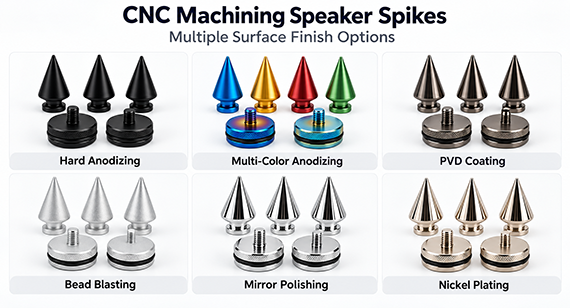
Surface finishing plays a dual role in manufacturing custom speaker spikes: it elevates the aesthetic appeal and tactile quality of the hardware while providing vital physical protection against wear, oxidation, and scratches. Choosing the correct finish requires aligning your visual expectations, target environment, and substrate material to ensure long-term durability and batch-to-batch consistency.
Below are the primary surface finishing recommendations tailored to specific application scenarios:
1. Premium Matte Texture and Versatile Color Customization
2. Luxury Mirror Shine, High Hardness, and Premium Metallic Coatings
3. Removing Machining Tool Marks for a Smooth Matte Feel
4. Industrial Vintage Texture or High-Reflective Mirror Finish
Manufacturing precision speaker spikes involves strict geometric and surface requirements. Without precise control during CNC turning, milling, and post-processing, you can encounter quality defects that compromise both performance and branding:
How Partnering with an Experienced CNC Manufacturer Delivers Optimal Results
Working with a specialized CNC machining factory who understands precision audio hardware directly addresses these common manufacturing hurdles:
Yes, absolutely. Performing a Design for Manufacturability (DFM) review before starting full-scale production is one of the most effective ways to lower unit costs. By identifying design bottlenecks early, you can streamline CNC machining cycles without compromising precision or aesthetic quality.
Key Feasibility Checks for Speaker Spike Projects
Universal DFM Optimization Tips You Can Use
How We Machined Custom One-Piece Aluminum Conical Spikes to Resolve Concentricity and Anodizing Issues
A high-end audio equipment manufacturer required custom one-piece aluminum conical speaker spikes for their flagship speaker line. The component specifications demanded matched set heights, reliable thread engagement, centered sharp tips, and a uniform matte black anodized surface suitable for prototype approval and volume production.
The Problem: Thread Fit Issues and Color Variations
Prior to working with us, the client tested initial prototypes from another vendor but encountered quality issues:
Upon inspecting the sample parts, our engineering team estimated that the previous vendor likely did not compensate thread pitch dimensions for post-anodize coating buildup, and may have used inconsistent racking during the anodizing process.
Our CNC Manufacturing Solution
1.Precision Thread Pitch Compensation and Gauge Testing:
We adjusted the CNC turning program to apply a controlled pre-anodize thread offset. After anodizing, every thread was verified using standard Go/No-Go thread plug gauges to ensure smooth thread engagement.
2.Single-Pass Turning for Concentricity:
To address tip eccentricity, we processed the parts on CNC Swiss-type lathes. The threaded stud, conical body, and sharp tip were turned in a single clamping setup, keeping tip concentricity within plus or minus 0.01 mm.
3.Standardized Anodizing Process:
We utilized custom titanium hanging fixtures to ensure uniform current distribution across all parts. Controlled bath temperatures maintained consistent matte black color and surface texture.
Results and Ongoing Partnership
This article has explored the core engineering factors involved in custom CNC speaker spikes. From matching specific metal grades to selecting durable and aesthetic surface finishes, and addressing common machining challenges like thread binding, color variation, and tip eccentricity, we have provided a complete B2B sourcing and design evaluation guide.
By understanding DFM (Design for Manufacturability) reviews and critical tolerance controls, your engineering and procurement teams can effectively lower unit machining costs, eliminate assembly failures in volume production, and ensure every hardware set delivers stable, reliable physical support alongside a high-end visual appearance.
Ready to Launch Your Custom Speaker Spike Project?
Seeking a CNC machining partner with precision manufacturing capabilities, or need a DFM evaluation and cost optimization for your current spike design? Our engineering team is ready to assist!
Contact Our Engineering Experts Today:
Click the button below to initiate a consultation with our technical team. [ We support 2D Drawings (PDF files), 3D Drawings (IGS/STP/STEP files)].
Send your 2D drawings, 3D CAD models, material, thread specification, tolerance requirements, surface finish, prototype quantity and production quantity. VMT will review material selection, DFM, CNC turning or Swiss machining, thread control, surface finishing, inspection and quotation requirements.
All information and uploaded files are secure and confidential.
1 Tell us what you need
2 Get solution & quote
3 Approve production
Email: inquiry@vimetal.com.cn
1. What is the available surface finish range for speaker spikes, and which one is recommended for specific scenarios?
The typical surface roughness (Ra) ranges from 0.1 um to 3.2 um.
2. Why are metric or imperial threads, engagement length, fit tolerance, multi-part stacking, and assembly clearance checks important?
These 5 checks prevent mechanical assembly failures. Proper thread matching (such as 6H/6g tolerance) ensures smooth installation without binding. Managing engagement length and clearance guarantees that multi-part spikes and pads lock together securely without wobbling or tilting under heavy speaker loads.
3. What results from eccentricity and tip deviation in CNC-machined speaker spikes, and how do factories prevent it?
Eccentricity or off-center tips cause uneven weight distribution, making the speaker wobble and reducing vibrational energy transfer efficiency. To prevent this, experienced factories utilize CNC Swiss-type lathes to complete turning in a single setup and employ optical comparators or coordinate measuring machines (CMM) for strict concentricity inspection.
4. How can I confirm that my speaker spike products are protected against tip damage during shipping?
You should ask your supplier directly about their packaging methods (such as individual foam slots, blister trays, or protective plastic caps over sharp tips). Always request pre-shipment packaging photos or drop-test verification to ensure the sharp points arrive undamaged.
5. What causes color inconsistencies in speaker spike anodizing, and how do professional factories prevent it?
Inconsistencies usually result from improper part racking, unstable bath temperatures, or uneven current density during the anodizing process. Experienced factories prevent this by using dedicated custom titanium racks, maintaining strict chemical and temperature controls, and monitoring electrical current parameters across every batch.
6. How can I add a brand logo or pattern to my speaker spikes?
You can choose from three main identification methods:
The technical information and manufacturing advice shared on the VMT website are for general guidance only. While we strive for accuracy, VMT does not guarantee that the processes, tolerances, or material properties mentioned are applicable to every specific project. Any reliance you place on such information is strictly at your own risk. It is the buyer's responsibility to provide definitive engineering specifications for any production orders. Final specifications and service terms shall be subject to the formal contract or quotation confirmed by both parties.


 +86 15099911516




 Read more