16 years one-stop China custom CNC machining parts factory

Hey there I’m VMT Sam!
With 25 years of CNC machining experience we are committed to helping clients overcome 10000 complex part-processing challenges all to contribute to a better life through intelligent manufacturing. Contact us now
 370 |
Published by VMT at Mar 23 2026 | Reading Time:About 2 minutes
370 |
Published by VMT at Mar 23 2026 | Reading Time:About 2 minutes


H13 Hot-Work Tool Steel (AISI H13 / DIN 1.2344) is globally recognized as a high-strength, chromium-based alloy steel, engineered for exceptional red hardness and thermal fatigue resistance.
Beyond its ability to withstand extreme thermal shocks, it is a premier material for CNC Machining to high-durability molds and industrial tools. H13 stands out in the tool steel category for its ability to achieve a superior surface finish while offering relatively high machinability. Whether you are sourcing an H13 equivalent grade or looking to optimize the machining parameters for H13 components, this guide provides an in-depth analysis—from core material properties to precision cutting details.
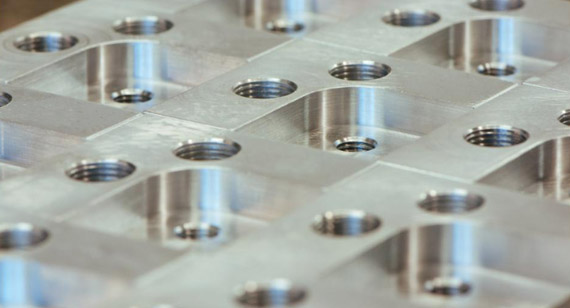
Thanks to its exceptional hardenability and resistance to thermal cracking( excellent property causes widespread supply available), H13 is governed by several equivalent standards globally. When navigating international procurement or engineering design, identifying these H13 equivalent grades is helpful for you to quickly find the substitution in your located area:
Table 1: H13 Tool Steel Equivalent Grades Globally
|
Region |
Equivalent Grade |
Technical Notes |
|
USA (AISI) |
H13 |
The global industry benchmark; a premium Chromium-Molybdenum-Vanadium alloy. |
|
Germany (DIN/W-Nr.) |
1.2344 (X40CrMoV5-1) |
Features high purity and exceptional dimensional stability during heat treatment. |
|
Japan (JIS) |
SKD61 |
The predominant standard for high-performance die casting and injection molds. |
|
China (GB) |
4Cr5MoSiV1 |
Widely utilized in heavy-duty hot forging and aluminum extrusion tooling. |
|
International (ISO) |
40CrMoV5 |
Classified under ISO 4957; a universally recognized classification for hot-work steel. |
|
United Kingdom (BS) |
BH13 |
The designated equivalent grade within British National Standards. |
|
Sweden (SS) |
2242 |
Swedish steel standard; often associated with high-quality specialty tool steels. |
|
France (AFNOR) |
Z40CDV5 |
The French national standard equivalent for chromium-based tool steels. |
|
Russia (GOST) |
4Kh5MF1S (4Х5МФ1С) |
A high-performance alloy with properties highly similar to AISI H13. |
|
North America (UNS) |
T20813 |
The Unified Numbering System (UNS) designation for this specific alloy group. |
|
Italy (UNI) |
X40CrMoV5-1 KU |
The official Italian national standard designation for H13 tool steel. |
For its composition and key characteristics, H13 is a versatile Cr-Mo-V alloy steel belonging to the hot-work tool steel family; With a carbon content precisely balanced between 0.32% and 0.45%, it is engineered to deliver a unique combination of high-temperature fatigue resistance and superior red hardness.
Table 2: H13 Tool Steel Key Characteristics and Composition
|
Classification |
Key Metric / Element |
Details |
Industrial Value |
|
Core Characteristics |
Strengthening Method |
Quenching & Tempering |
Hardness is increased from 200 HB to 45-55 HRC through precise heat treatment. |
|
Red Hardness |
500°C - 600°C Stability |
Maintains cutting edge and cavity integrity during high-temperature operations like die casting. |
|
|
Thermal Fatigue Resistance |
High Toughness & Crack Resistance |
Exceptional resistance to thermal shock, preventing "heat checking" (cracking) during rapid thermal cycles. |
|
|
Melting Point |
1427°C (2600°F) |
Far exceeds Aluminum (660°C) and Magnesium (650°C), making it the ideal substrate for processing these non-ferrous metals. |
|
|
Main Alloying Elements |
Carbon (C) |
0.32% - 0.45% |
Achieves the "golden balance" between hardness and toughness while ensuring wear resistance. |
|
(Typical) |
Chromium (Cr) |
4.75% - 5.50% |
Provides deep hardenability and superior resistance to high-temperature oxidation. |
|
Molybdenum (Mo) |
1.10% - 1.75% |
Enhances red hardness and effectively prevents temper brittleness. |
|
|
Vanadium (V) |
0.80% - 1.20% |
Refines grain structure, significantly boosting wear resistance and high-temperature strength. |
The primary application for H13 tool steel is in the design of die casting dies, extrusion tools, hot forging dies, and injection molds. Based on precise technical drawings, these tools are transformed into their final shapes through Precision CNC Machining.
To ensure your mold design is optimized for both performance and manufacturability, understanding the core physical and mechanical properties of H13 is essential:
Table 3: H13 Tool Steel Physical & Mechanical Properties
|
Property |
Typical Value |
|
Density |
Approx. 7.80 g/cm³ (0.282 lb/in³) |
|
Polishability |
Excellent; achieves a Mirror Finish after CNC & fine polishing. |
|
Melting Point |
1427°C (2600°F) |
|
Annealed Hardness |
200 - 230 HB |
|
Hardness (Post-Quench) |
45 - 55 HRC (Adjustable via tempering) |
|
Tensile Strength |
Approx. 1200 - 1590 MPa (Post-heat treatment) |
|
Yield Strength |
Approx. 1000 - 1380 MPa |
|
Thermal Conductivity (20°C) |
24 - 28 W/(m·K) |
|
Thermal Expansion (20-100°C) |
10.4 - 10.8 (10⁻⁶/°C) |
|
Modulus of Elasticity |
210,000 MPa (210 GPa) |
|
Max Working Temperature |
Approx. 600°C (1100°F) |
Tip: If you are designing aluminum die casting molds, prioritize thermal conductivity and thermal fatigue resistance. For high-precision injection molds, focus on polishability and dimensional stability after heat treatment to ensure the highest part quality.
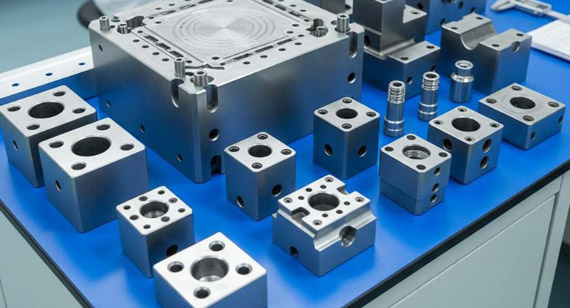
Because H13 can withstand severe temperature fluctuations without failing, it is the global standard for manufacturing tools that process metals with lower melting points than H13 itself (such as Aluminum, Magnesium, and Zinc). Furthermore, its excellent machinability makes it ideal for complex, high-precision plastic injection molds.
H13 Die Casting Molds
These are engineered to resist the erosion and "washing" effect of molten metal, significantly extending mold service life.
These are specifically used for processing high-melting-point or high-performance advanced engineering plastics.
H13 Extrusion Tools
This can provide superior wear resistance and toughness required for the high-pressure extrusion of aluminum profiles.
H13 Hot Forging Dies
These can maintain structural integrity and edge sharpness under extreme impact loads and high-temperature environments.
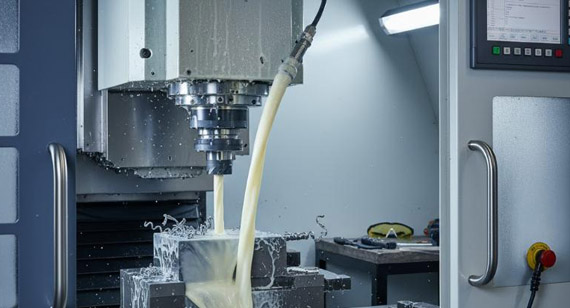
Machining H13 tool steel requires a strategic approach. Selecting the correct material temper (Annealed vs. Hardened) is the most critical decision for optimizing efficiency and tool life.
1. Machining in the Annealed State
2. Hard Machining (Hard Milling)
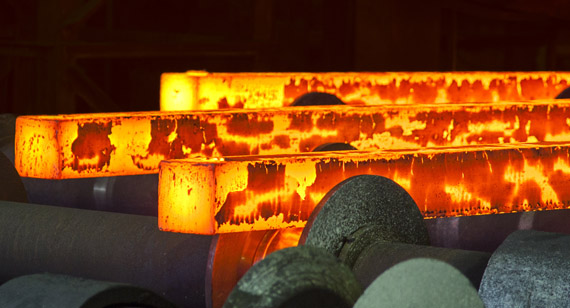
The service life of an H13 mold is determined by the quality of its heat treatment. If the parameters are not strictly controlled, the mold is prone to premature thermal cracking. Always follow these four critical steps:
Table 4: H13 Tool Steel Heat Treatment Process Step
| Process Step |
Temperature |
Technical Detail & Purpose |
| Preheating |
815°C (1500°F) | Use a two-stage preheat to prevent distortion caused by internal temperature gradients. |
| Austenitizing |
1010°C - 1030°C | Soak time is calculated by thickness. Note: Overheating leads to grain coarsening, which drastically reduces toughness. |
| Quenching |
Air or Salt Bath | Cooling must be fast enough to achieve a martensitic structure but controlled to avoid catastrophic cracking. |
| Tempering |
550°C - 650°C | Mandatory triple tempering is recommended. This determines the final hardness (typically 48-52 HRC) and relieves residual stresses. |
Welding H13 Tool Steel
When repairing molds or modifying designs, welding may be necessary. However, H13 is classified as a "difficult-to-weld" material due to its high carbon and alloy content, you may pay attention to:
H13 Steel: From CNC Machining to Mirror Polishing
H13 possesses exceptional polishability, making it the top choice for high-quality injection molds and aluminum extrusion dies. Achieving a high-grade mirror finish requires a meticulous, multi-step process:
Table 5: H13 Steel Mirror Finish Process Step
| Process Step |
Tool / Medium Used |
Resulting Quality |
| Precision CNC Milling |
Coated Carbide Ball Mill (R < 0.5) | Achieves a base roughness of Ra < 0.8, significantly reducing manual labor. |
| Mechanical Grinding |
400# - 1500# Oil Stone / Sandpaper | Removes CNC tool marks and ensures perfect surface flatness. |
| Diamond Paste Polishing |
3μm - 0.5μm Paste + Wool Felt | Progressively eliminates micro-scratches. |
| Final Mirror Finish |
High-Purity Polishing Liquid | Achieves A1/A2 Grade Mirror Finish; clear, fog-free reflection. |
Tip: Only ESR (Electroslag Remelted) grade H13 steel can achieve a truly flawless mirror finish. For projects requiring high aesthetic standards, we always specify ESR-grade material during the procurement phase to ensure zero-defect results for our clients.
As a leading CNC machining factory, we recently completed a high-stakes project: mass-producing H13 high-pressure die casting molds for motor controller cooling housings for a Tier 1 automotive supplier.
Project Scope: The client required 50 sets of multi-cavity high-precision die casting molds designed for aluminum alloy cooling housings in New Energy Vehicles (EV). AISI H13 (ESR Grade) was selected for its extreme purity and ability to support a mirror polish. The core challenge involved machining a vast number of ultra-thin cooling fins (depth exceeding 50mm) while maintaining exceptionally tight tolerances.
Technical Challenges & VMT Solutions
During the production of these H13 molds, VMT addressed several critical engineering hurdles:
Final Technical Specifications
Through VMT’s precision machining, the H13 molds met the highest quality standards:
What is the difference between H11 and H13 tool steel?
H13 has a higher Vanadium content than H11, providing superior wear resistance and red hardness at high temperatures, making it better suited for extreme hot-work environments.
What is the price of H13 tool steel?
Pricing depends on purity (e.g., ESR grade commands a premium), dimensions, and market fluctuations. For a precise quote on custom H13 part machining, contact VMT directly for real-time pricing tailored to your design.
What are the primary applications of H13 tool steel?
It is primarily used for aluminum/magnesium alloy die casting molds, aluminum extrusion tooling, hot forging dies, and high-strength plastic injection molds.
Does H13 steel rust?
Yes. Although it contains 5% Chromium, it is not a stainless steel. In humid environments, it must be protected with rust-preventative oil or surface treatments like Nitriding or PVD coating.
Which is better: D2 or H13 material?
It depends on the application: D2 is a cold-work steel with extreme hardness for stamping; H13 is a hot-work steel with superior toughness and heat resistance, making it the top choice for high-temperature molds.
What do the "H" and "13" stand for in H13 steel?
"H" stands for Hot-work (mold steel), and "13" is the specific series number assigned to this Chromium-Molybdenum-Vanadium alloy group under AISI standards.


 +86 15099911516





 Read more