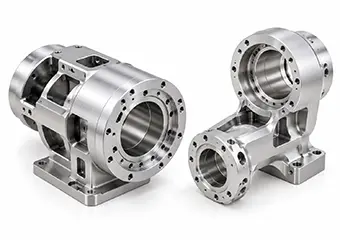
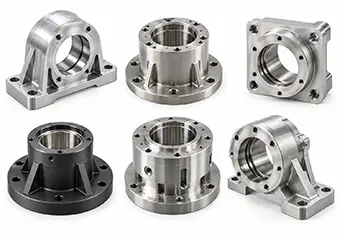
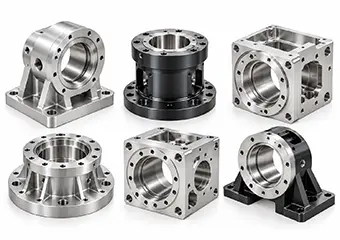
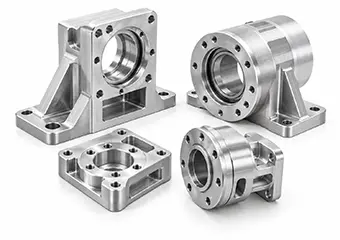
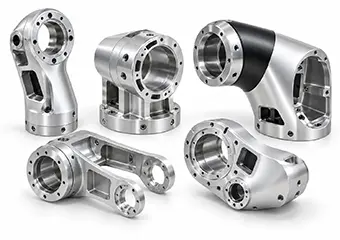
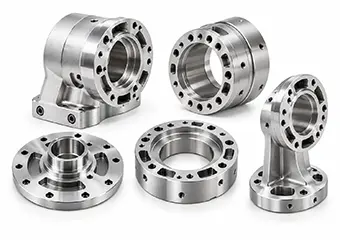
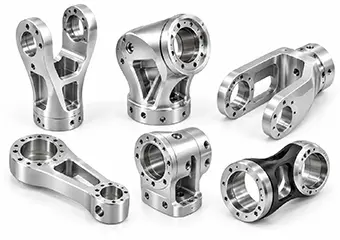
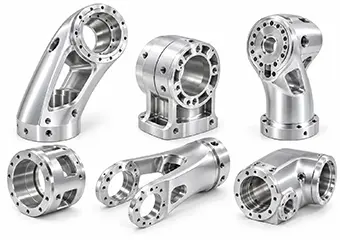
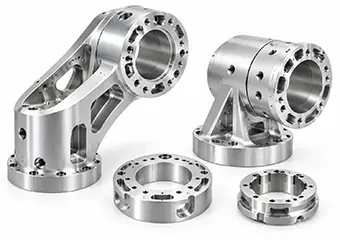
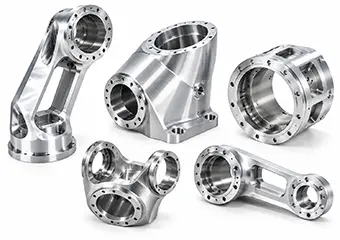
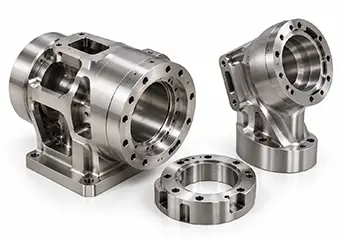
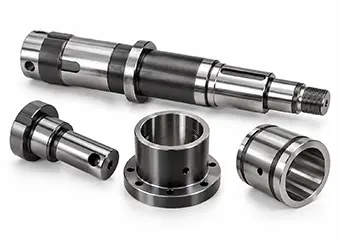
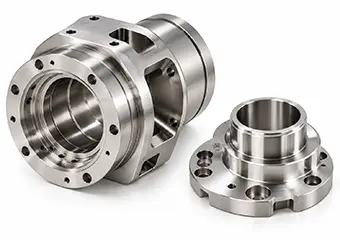
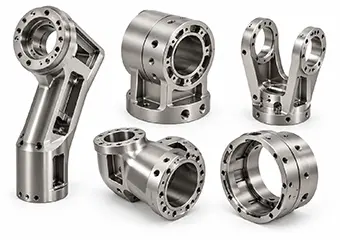
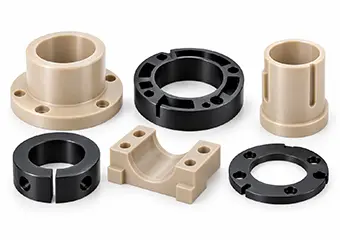
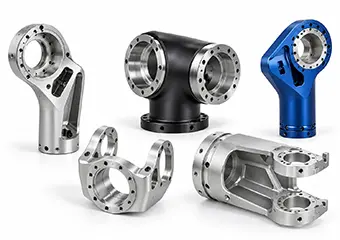
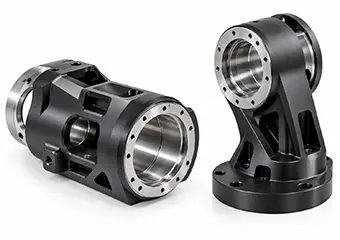
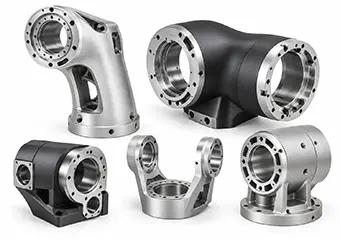
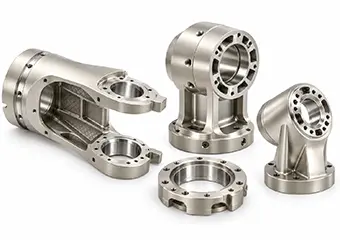
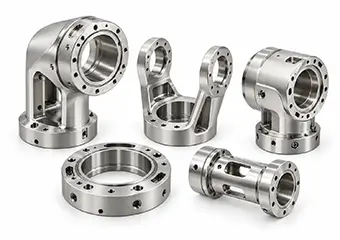
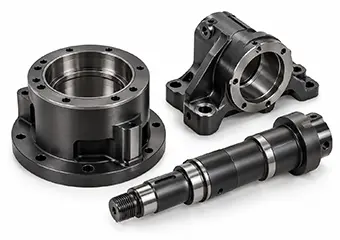
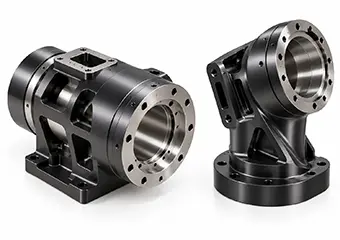
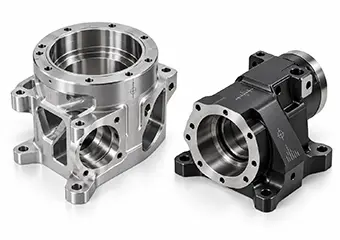
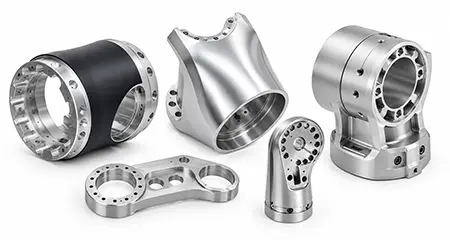
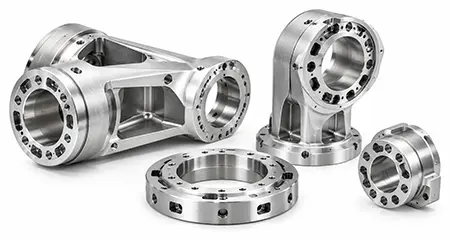
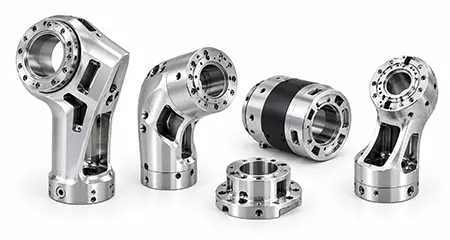
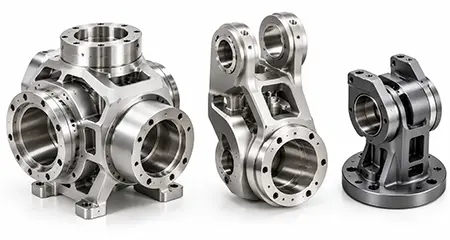
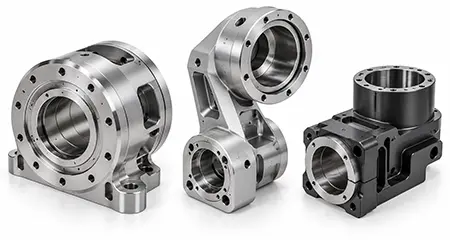
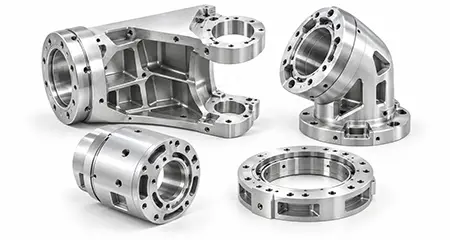
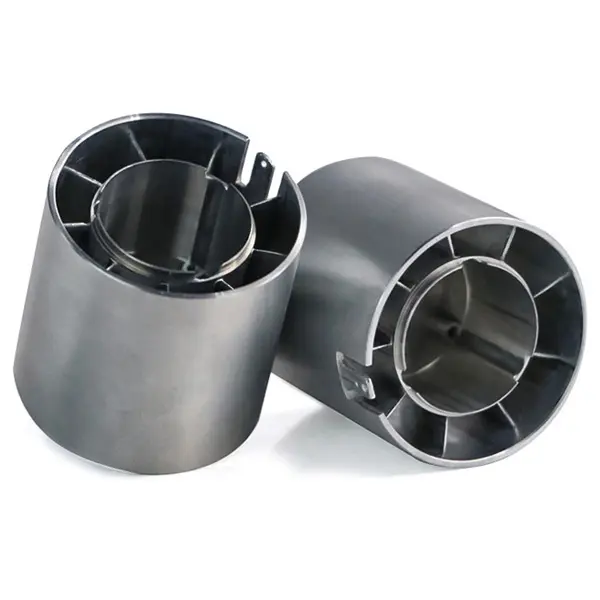
Robot joint housings are frequently pocketed, ribbed or hollowed to reduce moving mass, but every pocket changes how the part behaves during machining and assembly. The design question is not simply how much aluminum can be removed. The more important question is where material can be removed without making bearing bores, reducer interfaces, motor registers or output faces unstable. Deep pockets beside thin walls, large unsupported rings and abrupt section changes can allow clamping force or roughing stress to move the geometry.
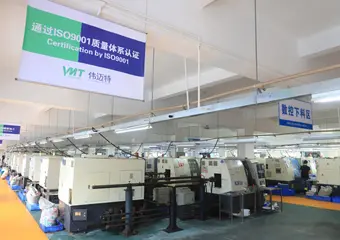
During DFM, VMT reviews wall thickness, rib support, pocket depth, tool reach and the position of the critical interfaces. If the structure is deformation-sensitive, the machining route can separate heavy roughing from final finishing, leave stock on functional features until the housing has stabilized and use fixture support that does not force the part into shape only while clamped. This turns lightweighting into a manufacturing decision as well as a structural-design decision, helping the customer reduce moving mass without creating a housing that becomes difficult to assemble consistently.
2. Why Do Functional Datums Matter More Than Tight Tolerances Everywhere?
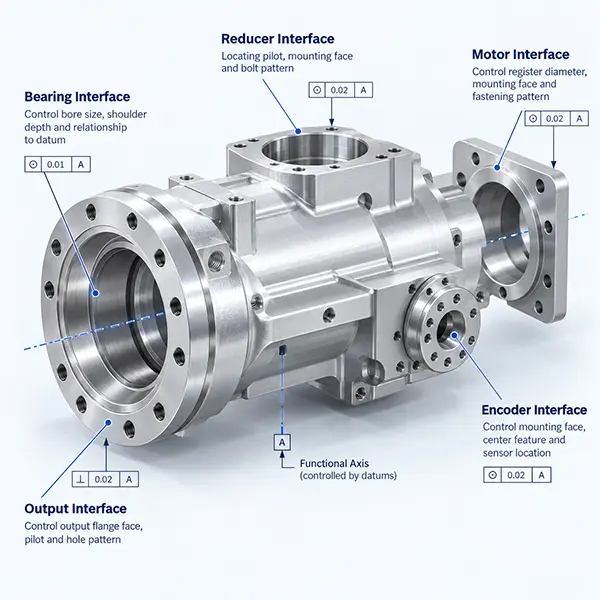
A robot joint can fail assembly even when many individual dimensions are within tolerance because the joint depends on relationships. A bearing bore may need to stay aligned with a reducer pilot, a motor register may relate to the same rotational axis, and an output flange may need to remain square or concentric to the reference features. If these features are machined from unrelated setups, stack-up can appear even when the separate dimensions look acceptable.
VMT first identifies the features that define the functional datum chain. Where geometry permits, related features are kept on common references, setup changes are reduced, and 5-axis machining or combined turning-and-milling is used when it protects those relationships. Precision is then concentrated on the interfaces that affect motion and assembly instead of applying unnecessarily tight tolerances to every feature.
3. How Should Material Be Selected for a Robot Joint Housing?
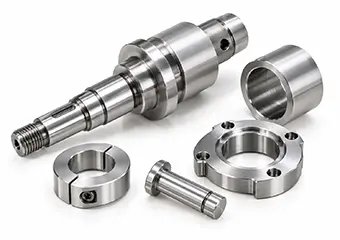
Material choice should follow the function of the component rather than a generic “stronger is better” rule. 6061-T6 is often practical for housings because it is lightweight, machinable and compatible with common anodizing processes. 7075-T6 is attractive when higher strength and stiffness are needed without increasing moving mass. Stainless steels, 4140/42CrMo and Grade 5 titanium are more suitable for selected shafts, hubs, sleeves or load-bearing interfaces depending on wear, rigidity and weight requirements.
The manufacturing consequences matter as much as the datasheet. Material hardness affects tool wear and cycle time, thin-wall behavior affects fixturing, and the selected finish can change mating dimensions. VMT reviews material, geometry, finish and critical fits together before recommending the machining route.
4. How Should Surface Finishing Be Planned Around Critical Fits?
Anodizing, hard anodizing, electroless nickel, PVD/DLC and other treatments can change the effective size or condition of bearing seats, locating diameters, threads and mating faces. A housing can meet its machined dimensions and still become too tight, too loose or difficult to assemble after finishing if the drawing does not define the final condition.
VMT can coordinate masking, machining allowance and post-finish verification for critical interfaces according to the selected treatment. Planning machining and finishing as one process helps reduce rework after coating and protects the final assembly fit.
5. What Should Be Included in the Inspection Plan?
Inspection should follow the function of the joint. Bearing bores, reducer pilots, motor registers, output faces, mounting patterns and critical threads usually deserve more attention than non-functional pockets or cosmetic surfaces. Some dimensions should be checked during machining, thin-wall geometry may need verification after unclamping, and finished interfaces may require post-treatment inspection.
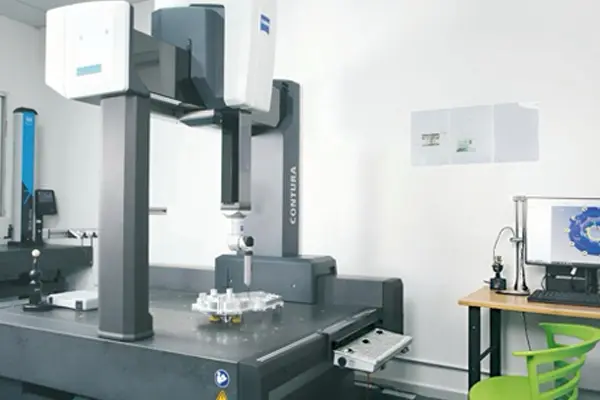
VMT combines drawing review, in-process checks, CMM verification and final inspection according to project requirements. The goal is to catch process drift before it becomes an assembly problem and provide inspection evidence that matches the actual functional risk.
6. How Do You Move From Prototype Validation to Repeat Production?
A successful prototype proves that one manufacturing route can produce a usable part; it does not automatically prove that the same result will remain stable when quantities increase. Repeat production depends on controlling the fixture location, tool sequence, offsets, inspection checkpoints and finishing route used for the approved part.
VMT uses prototype validation to establish the process. First-article inspection confirms critical features, pilot production verifies repeatability and production inspection focuses on the characteristics that affect joint function. Drawing revisions should trigger a new engineering review rather than being silently absorbed into an old route.
7. What Information Should Be Included in a Robot Joint Housing RFQ?
A useful RFQ should include the 3D model and 2D drawing when available, material grade, quantity, finish and critical GD&T or fit information. Assembly context is especially valuable: bearing specifications, reducer or motor interface data, mating-part information and notes identifying the functional axis help VMT understand which dimensions cannot be treated as isolated features.
It also helps to state whether the project is a prototype, pilot build or repeat-production program and whether tolerances apply before or after finishing. This reduces assumptions during quotation and allows manufacturability, tool access, inspection access and cost drivers to be reviewed earlier.
8. What Are the Main Cost Drivers in Robot Joint Housing CNC Machining?
The largest cost drivers are usually material removal, machine time, number of setups, tolerance level, inspection effort, difficult tool access and finishing requirements. Deep lightweight pockets can extend cycle time, tight concentricity can require more controlled finishing and CMM verification, and unnecessarily tight tolerances on non-critical features increase cost without improving joint performance.
VMT reviews whether 3/4-axis machining can replace unnecessary 5-axis time, whether rotational features are better turned than milled, whether smaller shafts or spacers are better suited to Swiss machining, and whether standard tooling can replace special geometry. The goal is to reduce unnecessary complexity while protecting the features that control motion and assembly.
 +86 15099911516
 inquiry@vimetal.com.cn



 4-Hour DFM Review for Critical Robot Joint Interfaces