16 years one-stop China custom CNC machining parts factory

Hey there I’m VMT Sam!
With 25 years of CNC machining experience we are committed to helping clients overcome 10000 complex part-processing challenges all to contribute to a better life through intelligent manufacturing. Contact us now
 110 |
Published by VMT at May 18 2026 | Reading Time:About 2 minutes
110 |
Published by VMT at May 18 2026 | Reading Time:About 2 minutes


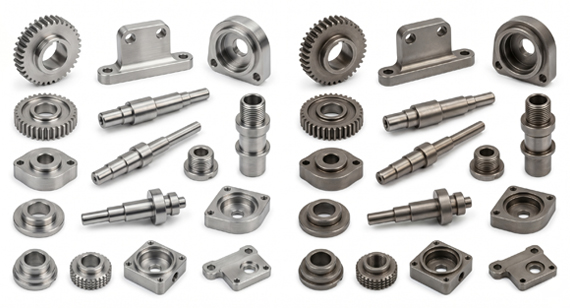
If you are now sourcing a custom precision shaft part, would you like the part to be more tough and wear-resistant, or to be more corrosion-resistant? D2 tool steel and 1095 high-carbon steel are apparently high-strength and high-hardness steels—you can take advantage of the higher toughness and impact resistance of 1095, and you can also use the “semi-stainless” steel D2’s better corrosion resistance due to its high chromium content.
It seems that both are perfect for heavy-duty gears, mechanical components, manual tools, or mold components, right? But there are lots of differences. They are different from each other in terms of mechanical properties, corrosion resistance, cost when CNC machining, and surface treatment selections (for enhanced wear resistance/rust prevention); this is what this blog will introduce. At the end, we will also share a case study of how our factory recommends suitable steel and manufacturing solutions for our clients according to the usage environment and assembly requirements, ultimately producing satisfying parts.
D2 is generally considered to have superior dimensional stability compared to 1095.If your parts need to operate in precision environments with fluctuating temperatures or high humidity, D2 is the better choice.
In such conditions, 1095 not only suffers from dimensional changes but may also lose its assembly integrity entirely due to rust.
Elastic Modulus (E): Both are nearly identical.
Most steels have an elastic modulus around 200-210 GPa. This means if you use D2 and 1095 for gears, their "stiffness" remains the same under identical pressure before any permanent deformation occurs.
Yield Strength: D2 is Typically Higher.
Yield strength is the threshold where a material begins to deform permanently. Because D2 contains high levels of alloying elements (primarily chromium carbides distributed throughout the matrix), it possesses very high yield strength. If used for molds or gears, D2 is much harder to deform.
Toughness: 1095 Performs Better.
1095 has a more uniform internal structure (lacking the large chromium carbides found in D2). While it isn't as wear-resistant as D2, it is far better at absorbing impact. If your components operate in high-vibration or high-impact environments, 1095 is the correct choice.
Supplementary Table for D2 vs. 1095 Steel Properties
| Property |
D2 Tool Steel |
1095 High Carbon Steel |
Notes |
| Rockwell Hardness (HRC) |
58 - 62 | 54 - 59 | D2 has a higher ceiling; much harder to scratch. |
| Tensile Strength |
~1,700 - 2,100 MPa | ~700 - 1,200 MPa | D2 handles significantly higher ultimate loads. |
| Yield Strength |
~1,500 - 1,800 MPa | ~500 - 900 MPa | D2 is extremely resistant to permanent plastic deformation. |
| Elastic Modulus (E) |
~210 GPa | ~205 GPa | Nearly identical; they share the same elastic stiffness. |
| Charpy V-notch Impact |
~20 - 40 J (Very Low) | ~60 - 100+ J | 1095 wins. D2 is prone to chipping/cracking under heavy impact. |
| Coefficient of Thermal Expansion (10−6/∘C) |
~10.4 (20–100∘C) | ~11.5 - 12.0 | D2 expands less when heated, ensuring better precision. |
| Thermal Conductivity |
~20 W/m⋅K | ~45 - 50 W/m⋅K | 1095 dissipates heat faster; D2 may trap heat from friction. |
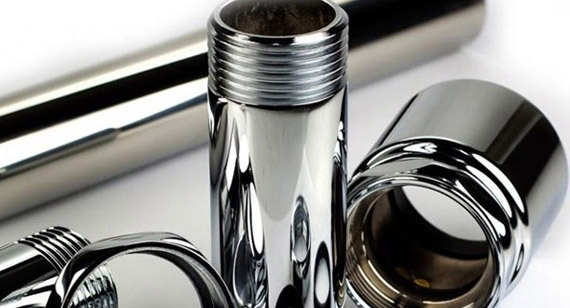
Surface Treatment for 1095 Parts
Since 1095 high carbon steel is prone to rusting, the factory will almost always recommend surface treatment. You can choose one of them based on the budget and how the part functions:
Surface Treatment for D2 Parts
D2 tool steel is already quite resistant in mild environment, but if you want to push its performance further for surface, consider these:
D2 vs. 1095: Cost Comparison
From a budget perspective, you'll find that 1095 is much cheaper upfront. The raw material is affordable because it lacks expensive alloys, and it’s relatively easy to machine and heat treat. However, you must factor for costs of surface protection. Since 1095 rusts easily, you will almost certainly spend extra on plating or phosphating to keep your parts from degrading in the field.
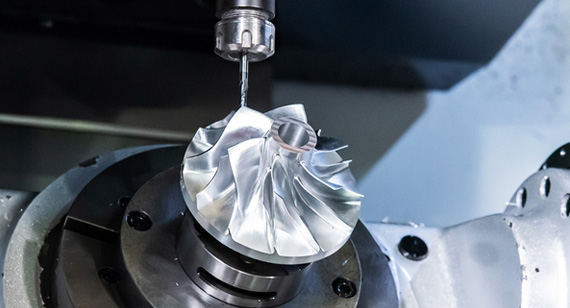
In contrast, D2 is a durable material in mild environment. It is indeed that you should pay more for the raw material and the specialized CNC tooling required to cut such a hard metal. But money can be saved on post-processing and surface treatment because D2 often requires nothing more than a simple grind and light oiling to stay rust-free(indoor uses). D2 usually offers the better long-term usage time only not for impact-resistant environment.
A client recently approached us to manufacture high-load drive shafts, initially specifying 1095 high-carbon steel. While the 1095 steel provided sufficient initial strength during the prototype phase, the parts began to show signs of surface corrosion and a rapid drop in hardness during stress testing. It became clear that the material could not handle environments and assembly.
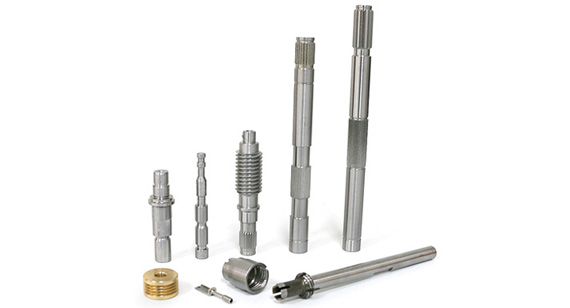
Upon analyzing the working environment, our engineering team intervened and recommended switching to D2 Tool Steel. To address D2’s natural brittleness, we optimized the vacuum heat treatment process, specifically adjusting the tempering cycles to achieve the suitable range to keep its hardness and impact resistance. For the machining phase, we utilized high-precision CNC grinding to ensure a surface finish of Ra < 0.4 μm, which maximized the steel's natural corrosion resistance without the need for thick, tolerance-altering coatings.
The results were immediate and highly effective. By upgrading to D2, the shafts achieved a 300% increase in wear life and maintained their dimensional integrity even under high-temperature friction.
If your part needs to perform high-precision with high hardness and good corrosion resistance—like cold-work dies, gauges, complex sliding components—you should choose D2. Its ability to hold a sharp edge and resist wear over millions of cycles makes it the excellent for precision uses. On the other hand, if your part is going to take a literal beating, go with 1095. Because it lacks the brittle carbides found in D2, it’s much better at absorbing sudden shocks and vibrations. You’ll want this for heavy-duty gears, springs, or structural parts where you need the metal to be tough and resilient rather than just extremely hard. Ready to upload your STEP/DWG drawings? Let VMT engineers help you evaluate the optimal machining solution for D2 and 1095.

D2 Steel Vs 1095: Which Is More Difficult For CNC Machining?
Definitely the D2 steel is harder to be cut or drilled because of its high chromium and carbon content while 1095 has a simpler composition and structure. Thus, you can sequently find that the machining cost of D2 is also higher caused by longer machining time and tool damages when CNC machining.
1095 Steel Vs D2: Why Did My 1095 Parts Rust During Storage?
It’s probably that the parts were not surface protected well when production, especially if you store them in dry and indoor places. The 1095 steel parts must be coating oils and other coatings to prevent rusting.
1095 vs D2: Which Steel Is Less Likely To Break Under High Impact Loads?
The 1095 steel is tougher due to it isn’t like the D2 tool steel which has chromium carbide hard particles after hardened by heat treatment. You can use 1095 steel for parts that will go through impact.
1095 Carbon Steel Vs D2: Are Their Hardness Testing Standards The Same?
Yes, surely. Both of them can be measured using the Rockwell C scale (HRC), though D2 consistently reaches higher values (58–62 HRC) than 1095 (55–59 HRC).
1095 High Carbon Steel Vs D2: Which Is More Dimensionally Stable?
D2 is far more stable; its alloy composition is designed to resist warping and shrinking (chromium carbide hard particles) during the cooling process, unlike 1095 which can distort easily.
D2 vs 1095 Carbon Steel: How Do I Balance Performance And Budget?
Use 1095 for high-impact structural brackets or springs to cost effectiveness, but use D2 for high-wear molds or transmission components for better precision and longevity.
The technical information and manufacturing advice shared on the VMT website are for general guidance only. While we strive for accuracy, VMT does not guarantee that the processes, tolerances, or material properties mentioned are applicable to every specific project. Any reliance you place on such information is strictly at your own risk. It is the buyer's responsibility to provide definitive engineering specifications for any production orders. Final specifications and service terms shall be subject to the formal contract or quotation confirmed by both parties.


 +86 15099911516




 Read more