16 years one-stop China custom CNC machining parts factory

Hey there I’m VMT Sam!
With 25 years of CNC machining experience we are committed to helping clients overcome 10000 complex part-processing challenges all to contribute to a better life through intelligent manufacturing. Contact us now
 196 |
Published by VMT at May 09 2026 | Reading Time:About 3 minutes
196 |
Published by VMT at May 09 2026 | Reading Time:About 3 minutes


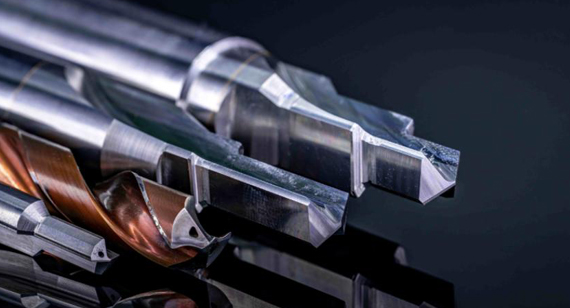
When it comes to high speed steel (HSS), you can tell from its name what it is primarily used for — “high-speed” machining, drilling, or milling. These HSS cutting tools, like drill bits, end mills, and taps and dies, are undeniably the most common tool sets you will see in many shops.
Aside from cutting tools, if you want components like aerospace bearings or automotive fuel injector needle valves — which can resist very high wear and maintain strength and toughness under temperatures as high as 1100°F (593°C) — you can also consider high speed steel materials.
But it is insufficient to only learn that high speed steel has outstanding hardness, toughness, and red hardness. You should also understand its types and grades, its differences from other high-hard steels, its applications, pros, and costs to make a better choice. At the very end, we will also share a case study of how our factory deals with this hard-to-machine steel to satisfy precision bearing requirements (±0.01mm) with a good surface finish (Ra 0.8) for our clients.
High speed tool steel is a high-alloy steel with a chemical composition containing a total of 10–25% (or higher) of tungsten, molybdenum, chromium, vanadium, and cobalt. Other elements include 0.7–1.5% carbon, with the balance being iron. Whether you are designing high-load automotive components or valve parts for high-temperature use, these elements ensure dimensional accuracy and functional integrity under the most demanding conditions.
M-Series (Molybdenum), T-Series (Tungsten), and PM (Powder Metallurgy) represent the three core categories of HSS. You can choose the M-Series due to its friendly cost performance and toughness. In addition, you may choose Powder Metallurgy (PM) for its advanced fine grains with uniform composition—excellent for high-performance cutting tools.
But what you need to pay attention to is that the T-Series, while historically significant, is less common today due to the high cost and scarcity of tungsten.
To assist in your decision-making process, here summarized the core characteristics of these HSS categories in the table below:
| Category | Typical Grades |
Key Chemical Characteristics |
Hardness (HRC) |
Red Hardness |
Toughness |
Wear Resistance |
Typical Applications |
| M-Series (Moly) |
M2 (Universal) |
Balanced Mo, W, Cr, V |
63-65 |
Medium |
Excellent |
Medium |
Twist drills, taps, precision bushings, connecting rods |
| M42 (Cobalt) |
High Cobalt (8%), High Mo |
66-68 |
Excellent |
Fair |
Excellent |
Aerospace alloys, high-temp fuel nozzles |
|
| T-Series (Tungsten) |
T1 (Classic) |
High Tungsten (18%) |
63-65 |
Excellent |
Medium |
Medium |
Lathe tools, forming tools, wear shims |
| Powder Metallurgy (PM) |
PM T15 |
Ultra-fine grain, uniform structure |
64-67+ |
Excellent |
Ultra-High |
Ultra-High |
High-end CNC tooling, high-volume stamping dies |
The Following Principles Can Help to Optimize the Selection:
If your parts need to balance wear resistance with impact strength (such as high-performance bearings, bushings, or complex connecting rods), M2 offers the highest cost performance. It is the most widely used HSS grade in CNC machining and meets the vast majority of general industrial standards.
When your components must function in high-friction or high-temperature environments (such as aerospace engine components), or if you need to machine harder metals, M42 is the more durable choice. Its 8% cobalt content ensures the part maintains its dimensional accuracy even when the material becomes "red hot" during operation.
In precision stamping or high-load automation equipment, parts must be hard yet resilient against cracking. Powder Metallurgy (PM) steel eliminates the carbide segregation found in traditional steel, providing you with the highest fatigue life and toughness available.
Below key characteristics of high speed tool steel could be the reasons for choosing HSS for your project:
Excellent Impact Resistance
If your designed components face unexcepted shocks, HSS parts are not prone to cracking due to its high yield strength of 1500-2500 MPa!
Outstanding Heat Resistance
This is closely related to HSS’ high red hardness—if your designed components are operated in about 600℃ high temperatures (especially for high speed machining, or demanding aerospace/automotive uses), the steel parts can still keep hardness over 60HBC!
Out-performed Durability
If you want custom bushings, wear plates, or gear cutters to be less replaced, HSS steel can surely ensure this because of its high wear resistance—maintain parts’ functional integrity for much longer cycles.
Moderate Machinability (40%-50%) Under Annealed State
This allows for the creation of highly complex geometries and intricate details using CNC milling and CNC turning. It makes HSS the ideal material for custom precision parts that require tight tolerances and sophisticated shapes that would be too difficult or expensive to grind from solid carbide.
Compatibility with Advanced Surface Coatings
HSS is an excellent substrate for physical vapor deposition (PVD) coatings such as titanium nitride (TiN) or titanium aluminum nitride (TiAlN). You can ask the partner factory to apply a coating to an HSS part to increase its surface hardness to over 80 HRC, further doubling or tripling its lifespan in high-wear applications.
Cost-Effectiveness for Complex Tooling
When you consider the total cost of ownership—including material costs, machining time, and tool life—HSS is often the most economical choice for large-diameter tools or complex custom components. It is more durable than standard tool steel, and more resilient (and less expensive) than carbide for large-scale or impact-heavy applications.
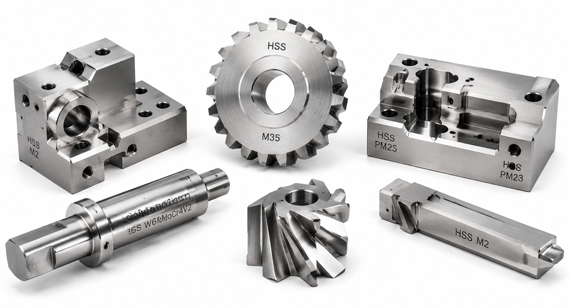
If your project demands a material that survives where others fail—due to heat, friction, or impact—HSS is the good choice. Here are some of the examples of HSS parts:
High-Performance Cutting Tools
This is the most traditional application. A sharp edge can even when running at high temperatures, so you might see it being made into:
In the automotive sector, parts are often subjected to constant friction and thermal cycling. You can use HSS for high-load environments:
Aerospace and Defense
For example,
Cold Work Dies
Other Precision Components
High Speed Steel vs. High Carbon Steel: Which Is Better?
The fundamental difference lies in thermal stability. While high carbon steel is cost-effective than HSS, it loses its hardness (softens) as soon as friction temperatures exceed 200°C. In contrast, high speed steel maintains its structural integrity and sharp edges at temperatures up to 600°C.
Therefore, if your project involves manual tools, simple hand-operated fixtures, or components where heat isn't a factor, choose high carbon steel(e.g. High carbon steel 1095) to save cost. However, if your components must survive high-speed automation, continuous friction, or heavy-duty industrial cycles, high speed steel is the necessary choice.
Cobalt Steel vs. High Speed Steel: Which Is Better?
You can think of cobalt steel (like M42) as "HSS on steroids" for high-heat applications. By adding 5–8% Cobalt to the HSS matrix, the material's red hardness is significantly boosted.
If you are designing components for extreme-friction environments (high temperature)—such as high-speed internal engine parts, aerospace bushings, or heavy-duty valve components—Cobalt HSS (M42) is the superior choice. However, if your parts are subject to high impact or intermittent loading (such as punch pins or gears that snap into place), standard HSS (M2) might actually be the safer bet.
High Speed Steel vs. Carbide: Which Is Better?
Carbide is even harder and can run at high speeds, but it is notoriously brittle—it can shatter under vibration or shock. If your design involves complex geometries, interrupted cuts, or environments with unexpected shocks, high speed steel is the safer, more reliable choice. If you are designing a part that requires maximum wear resistance over millions of cycles, and the assembly must provide a stable, vibration-free environment, choose Carbide.
Precision HSS Bushings for High-Load Bearings
A European automotive client approached us with a challenge involving the production of high-precision bushings made from M2 high speed steel. These components were intended for use in high-load bearing assemblies, where they would be subjected to constant friction and thermal stress. The client’s primary requirement was a strict dimensional tolerance of ±0.01mm and a superior surface finish of Ra 0.8, which are difficult to achieve consistently with HSS due to the material’s inherent hardness and tendency to cause tool wear.
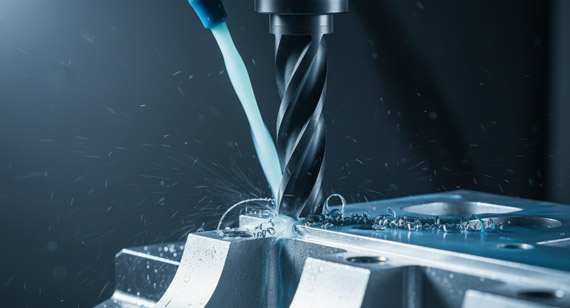
To address these technical challenges, our engineering team optimized the CNC machining process by utilizing high-rigidity equipment and specialized cutting tools. We implemented a multi-stage machining strategy, starting with a precision turning process in the annealed state, followed by a controlled vacuum heat treatment to reach a hardness of 63-65 HRC. For the final finishing stage, we utilized high-precision grinding to meet the micron-level tolerances and ensure the surface roughness met the Ra 0.8 specification without inducing thermal cracks in the material.
The result was a successful production run that fully satisfied the client’s stringent quality standards. By balancing precise heat treatment with advanced grinding techniques, we delivered HSS components that offer both the required mechanical toughness and the smooth finish necessary for high-speed bearing applications.
High speed steel remains an irreplaceable place due to its ability to balance high hardness with necessary toughness and thermal stability. Whether you are selecting a cost-effective M2 grade for general industrial use or a high-performance powder metallurgy steel for specialized aerospace components, the key to success lies in matching the material’s properties to the operational demands of your project.
Whether you are facing tight tolerances or surface finish requirements, our team—VMT CNC machining factory— is ready to provide the technical support and manufacturing precision your business needs to succeed. Contact us , and let our professional team help optimize your next industrial project.

Is high speed steel rust-proof?
No, HSS is not rust-proof because it contains a high percentage of iron and lacks the high chromium content found in stainless steel. You must apply a protective oil coating or surface treatment to prevent corrosion in humid environments.
Can high speed steel be welded?
Yes, HSS can be welded, but it requires specialized techniques such as pre-heating and post-weld heat treatment to prevent cracking. It is commonly friction-welded to carbon steel shanks to combine toughness with cost-efficiency.
Can you bend high speed steel?
HSS cannot be bent at room temperature due to its high hardness and low ductility; attempting to do so will cause the material to snap. Any forming or bending must be performed while the steel is in its fully annealed state before heat treatment.
What are the common forms of HSS?
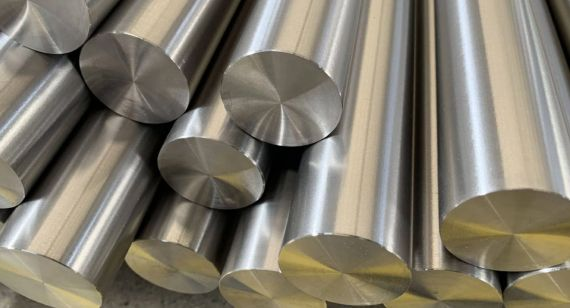
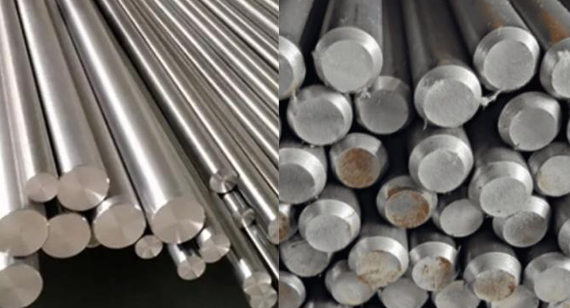
High speed steel is typically supplied in standard industrial shapes including round bars, flat plates, square blocks, and drill blanks. For complex or high-end requirements, it is also available as high-density blocks produced via powder metallurgy.
What are the disadvantages of high speed steel?
The primary disadvantages are its higher cost compared to standard tool steel and its lower maximum cutting speed compared to carbide. Additionally, it requires precise controlled heat treatment to achieve its optimal mechanical properties.
Does high speed steel require heat treatment?
Yes, HSS must undergo a rigorous heat treatment process involving hardening and multiple tempering cycles to reach its functional hardness. Without this professional thermal processing, the material will not exhibit its characteristic red hardness or wear resistance.
The technical information and manufacturing advice shared on the VMT website are for general guidance only. While we strive for accuracy, VMT does not guarantee that the processes, tolerances, or material properties mentioned are applicable to every specific project. Any reliance you place on such information is strictly at your own risk. It is the buyer's responsibility to provide definitive engineering specifications for any production orders. Final specifications and service terms shall be subject to the formal contract or quotation confirmed by both parties.


 +86 15099911516




 Read more