16 years one-stop China custom CNC machining parts factory

Hey there I’m VMT Sam!
With 25 years of CNC machining experience we are committed to helping clients overcome 10000 complex part-processing challenges all to contribute to a better life through intelligent manufacturing. Contact us now
 446 |
Published by VMT at Apr 27 2026 | Reading Time:About 2 minutes
446 |
Published by VMT at Apr 27 2026 | Reading Time:About 2 minutes


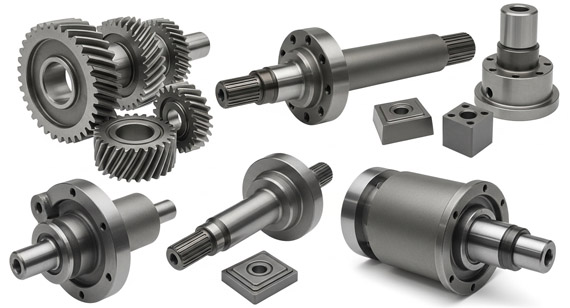
As a steel with primarily 95% iron, 0.4% carbon, 1.65-2% nickel, and 0.7-0.90% chromium, you can tell 4340 steel the low alloy steel or medium carbon steel. Whatever aisi 4340 steel belongs to, its biggest value for engineering is versatile for heavy-duty industry applications such as aerospace landing gear, heavy-duty drive shafts, mining drill bits, high-strength fasteners.
Besides the apparently ultra strength, excellent fatigue resistance, good wear-resistance, and impact resistance, 4340 steel other detailed properties will be dived into from this blog. In the end, we will also share a case of how we take advantage of aisi 4340 steel’s high hardenability to provide a perfect CNC machining solution for one of our clients.
4340 steel (aisi 4340 steel/ sae 4340 steel/ astm 4340 steel) has a density of ~7.85 g/cm³. It’s just like many other steels, heavy and not a good ideal for a light-weight design. And if you are going to manufacture large 4340 parts, you surely need to consider shipping fees of the goods.
With primarily 95-96% iron content and low content of other alloying elements, 4340 steel is absolutely magnetic at all times. So, if you are going to design precision instruments or electronic components that can’t be affected by magnetic interference—magnetic interaction can lead to measurement inaccuracies and reading fluctuations.
If you want to use 4340 steel for high friction application, then you may pay attention to its moderate thermal conductivity (44.5 W/mK)— better than stainless steel, but worse than aluminum and copper.
One shiny advantage of 4340 steel is that it can keep its high strength in 300°C - 450°C usage environment. So, you can take ease using 4340 steel to manufacture landing gear, high-load gears, and engine shafts.
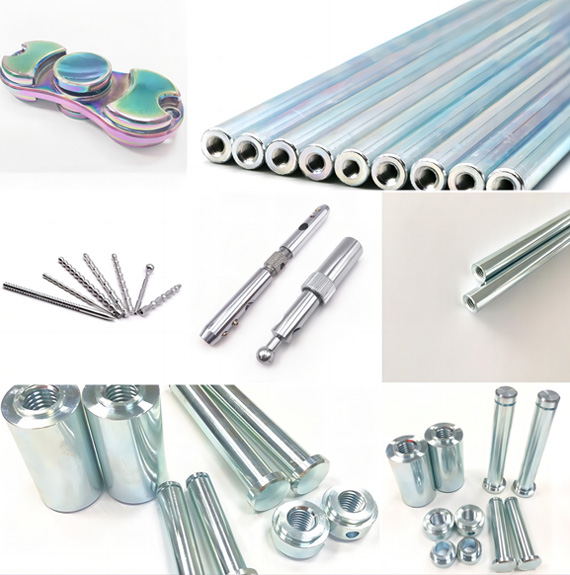
This is when 4340 steel takes extra cost from you— you’d better choose one of the methods to protect 4340 steel gears or shafts from rust: plating, electroplating, or blackening treatment.
This is because 4340 steel only contains very few alloy elements: 1.65-2% nickel, and 0.7-0.90% chromium— just better than common carbon steel in corrosion resistance, but far worse than stainless steel, which has at least 10.5% chromium to form a natural protective layer.
Thus, you need to consider whether the 4340 parts are used in relatively dry places; if it’s in marine condition, do not choose 4340 steel, otherwise it’s a waste of your time and money.
When it comes to mechanical properties of 4340 steel material, it's not the fixed data. What you should learn about is that 4340 steel in annealed state is soft, while in quenched and tempered state( strengthen by heat treatment) 4340 is quite stronger.
| Property |
Annealed (Typical) |
Quenched & Tempered (205°C / 400°F) |
Insight |
| Tensile Strength |
~745 MPa (108 ksi) | ~1800–1950 MPa (260–280 ksi) | Massive strength-to-weight ratio for high-load applications. |
| Yield Strength |
~470 MPa (68 ksi) | ~1500–1650 MPa (220–240 ksi) | Exceptional resistance to permanent deformation under stress. |
| Hardness (Rockwell) |
~15–22 HRC | 50–55 HRC | Delivers superior wear resistance and surface durability. |
| Elongation (in 50mm) |
22% | 10–12% | Maintains critical flexibility even at ultra-high strength levels. |
| Reduction of Area |
50% | 35–40% | High ductility indicates that the material won't fail catastrophically. |
| Impact Energy (Charpy V-Notch) |
~50–60 J | ~20–25 J | Proven toughness: Resists cracking under sudden shock/impact. |
This is very clear data shown in the table: 50–55 HRC. You just ask the factory to produce the needed 4340 steel parts ( e.g. through CNC machining process), and then put the parts go through heat treatment to gain a batch of really durable parts with outstanding wear resistance.
Nickel gives 4340 steel excellent fatigue resistant capability, which means — if you use 4340 for crankshaft, landing gear, the parts won't be prone to bring fatigue cracks. This durable use can keep your equipment in a good state— so as to save you the maintain time and cost.
Although 4340 heat treated steel is quite excellent in ultra strength performance, 4340 annealed steel can keep in an appropriate strength— you can use 4340 annealed for cold forming uses if needed. This flexibility of 4340 manufacturing gives you more choices to gain the ideal components.
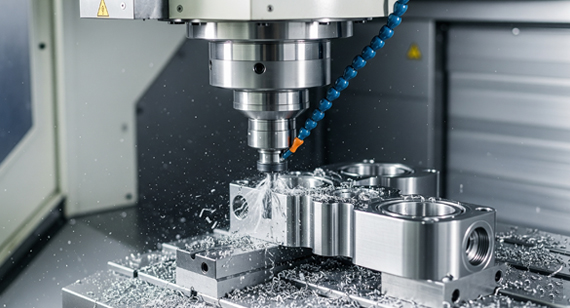
Nope, actually annealed 4340 can be machined in a moderate speed while hardened 4340 only recommended to do the grinding.
CNC machining is the best process if you want precision 4340 steel with customed drawings — the big machine contains various cutting tools and controlled by a computer to produce your wanted parts effectively.
Machinability of 4340 annealed steel is rated at 50-60% ( based on the 100% B1112)— machining it is not too difficult, also not too easy. Engineers usually take your drawings to computer designing the tool paths— 4340 annealed steel is roughly machined first not the hard-to- machine 4340 heat treat steel. This saves you money of manufacturing because CNC machining counts for minutes. 4340 annealed steel can be machined at 25-35 m/min, and 4340 heat treat steel is processed best in grinding. (While grinding is traditional for hardened 4340, modern CNC centers using CBN inserts can perform hard-milling on parts up to 55 HRC, significantly reducing lead times.)
Yes, you can weld the 4340, but it's not a very easy process. If you need the detailed procedure, here is the resource: AISI 4340 Welding Procedure Specification.
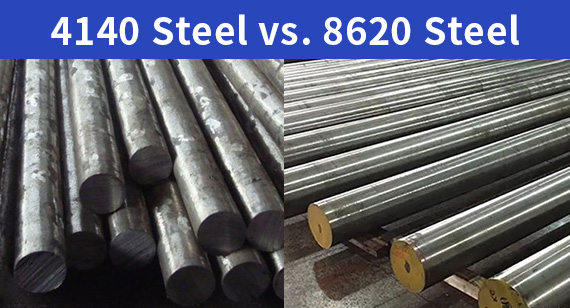
The important thing is that you may prepare a higher welding budget if there's a must for much 4340 welding— extra processes of preheating and post-weld treatment are necessary to prevent its potential welding crack. But if you can accept a slight lower strength, 4330 steel or 8620 steel is recommended for cost-saving.
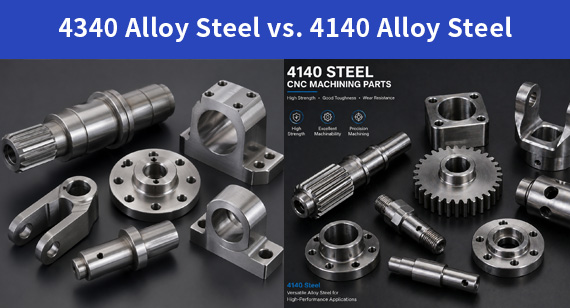
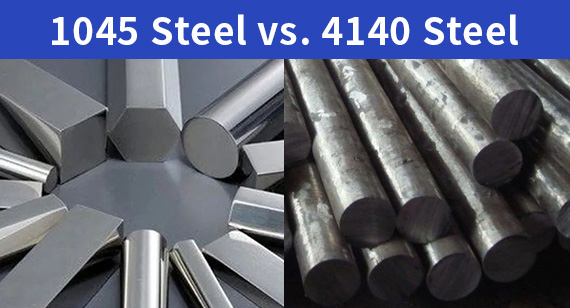
The key is: you can choose 4140 steel for small size parts (thickness is less than 50mm) if you want the parts being whole hardened after heat treatment. Otherwise, you should use the 4340 steel (because 4340 has higher hardenability).
But this doesn't mean you can't use 4140 steel for thick parts—after all, soft core can also bring the advantage of good impact-resistance.
Thus, if you require small parts with good strength and medium load, and lower cost, or large parts but not require the whole parts hardened, 4140 steel is the suitable one.
If you want large section parts with whole parts hardened, and used for highly loaded aerospace areas, 4340 steel is the suitable one.
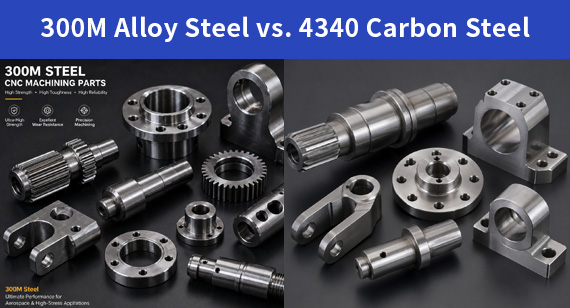
The best pro of 300M compared to 4340 steel is that it can achieve higher tensile strength of 2100 Mpa ( than that of 1900 Mpa of 4340)—just an addition of 1.6% silicon and trace vanadium to the 4340 steel becoming the upgraded 300M.
If you are looking to improve the strength-to-weight ratio of the parts for better reliability, 300M is the superior one for components that simply cannot afford to fail under extreme stress. By choosing 300M, you are choosing a material that handles higher peak loads while maintaining the critical fracture toughness required for the most demanding aerospace loading applications.
At VMT CNC Machining Factory, we recently solved a critical performance issue for a client in the industrial equipment sector. They required a compact drive shaft capable of withstanding extreme torque while maintaining high wear resistance.
The Challenge: The part featured varying cross-sectional thicknesses. Using standard 4140 steel resulted in "soft spots" because 4140 lacks the depth of hardenability needed for thicker sections, leading to premature fatigue failure.
The Solution: Our engineering team recommended a switch to AISI 4340 steel.
The Result: The fatigue life of the component increased by 40% compared to the previous 4140 design. By preventing frequent replacements, the client significantly reduced their long-term operational costs.
Choosing the right steel is closely related to cost and parts’ performance of any engineering project. AISI 4340 steel is a standout performer, offering a rare combination of ultra-high strength, deep hardenability, and exceptional fatigue resistance that few other alloys can match.
By understanding the unique characteristics of 4340, our CNC machining factory has helped our clients optimize their steel parts’ design, choose the right heat treatment cycles, and achieve tolerances that ensure long-term reliability in the field.
Ready to elevate your project with 4340 steel? Contact our engineering team for a professional DFM analysis and a competitive quote!

How is 4340 steel manufactured?
4340 steel is typically produced in Electric Arc Furnaces (EAF) or induction furnaces. For high-end aerospace applications, it often undergoes Vacuum Degassing or Electroslag Remelting (ESR) to remove impurities and ensure a highly uniform chemical structure.
What are the common equivalents for 4340 steel?
Depending on the region and standard, 4340 is equivalent to:
What are the common supply forms of 4340 steel?
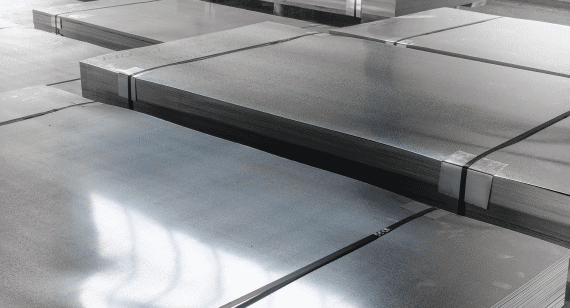
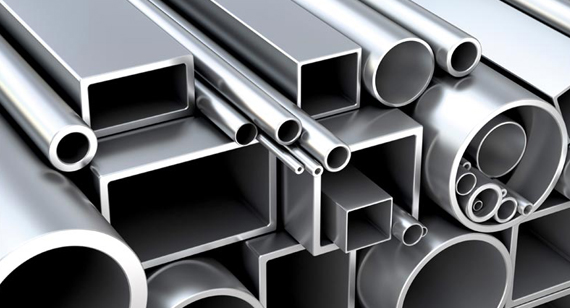
It is most commonly available as:
4330 vs. 4340 steel: Which is better?
It depends on your priority. 4330 is a close grade of 4340 with lower carbon content, offering superior toughness and weldability. If you need maximum hardness and tensile strength, 4340 is better. If the part requires welding or extreme impact resistance at low temperatures, 4330 is often preferred.
What grade of steel is 4340?
AISI 4340 is a Nickel-Chromium-Molybdenum low-alloy steel. It is categorized as a "high-hardenability" steel, making it the premier choice for heavy duty or high pressure uses like aerospace landing gear, heavy-duty drive shafts, mining drill bits, high-strength fasteners.
Can 4340 steel be hardened?
Yes, exceptionally well. It can be hardened via oil quenching and tempering to reach 50–58 HRC. And this is primarily due to its approximately 0.4% carbon and other elements.


 +86 15099911516




 Read more