16 years one-stop China custom CNC machining parts factory

Hey there I’m VMT Sam!
With 25 years of CNC machining experience we are committed to helping clients overcome 10000 complex part-processing challenges all to contribute to a better life through intelligent manufacturing. Contact us now
 252 |
Published by VMT at Apr 08 2026 | Reading Time:About 2 minutes
252 |
Published by VMT at Apr 08 2026 | Reading Time:About 2 minutes


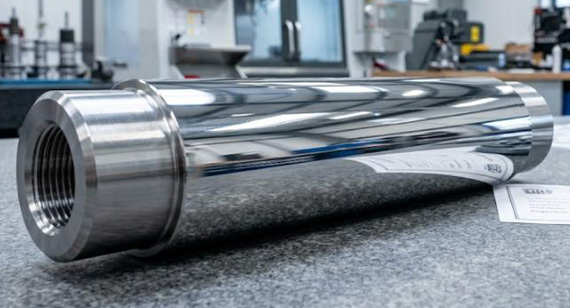
As a heat treatable martensitic stainless steel, 420J2 is famous for its good hardness, good corrosion resistance, and excellent machinability. From impact-resistant and moderate rust-proof bushings, bolts, to decorative hardware requiring mirror polishing, 420J2 stainless steel can be your popular choice as it can balance between performance and cost.
However, despite its excellent machinability, achieving a high hardness of 50-54 HRC while maintaining sub-0.01mm precision during the CNC process can be quite challenging.
In this guide, we will delve into the chemical composition, key properties, and industrial applications of 420J2. Furthermore, we will reveal our proprietary machining protocols at the end—specifically how we manage dimensional distortion during heat treatment and prevent surface micro-cracks to achieve a Ra 0.4 surface finish—bringing your most demanding designs to life.
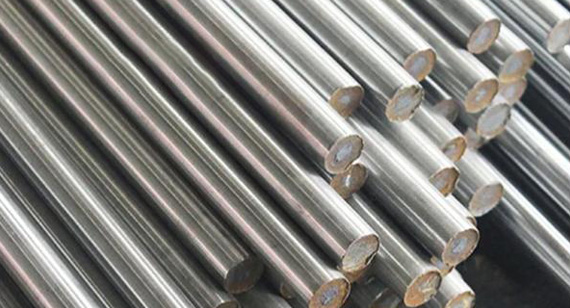
420J2 is a high-carbon martensitic stainless steel. Unlike austenitic steels (like 304 or 316), 420J2 can be hardened through heat treatment. It is essentially an improved version of 420J1, containing a slightly higher carbon content to achieve better hardness and wear resistance after quenching.
At VMT CNC machining factory, we often recommend 420J2 for parts that require a keen edge, basic structural strength, and high surface finish without the premium cost of high-end alloys like 440C.
While 420J2 is excellent for general use, high-precision components often require more hardness. Check out our in-depth comparison: 440C vs. 420J2: Which Grade is Right for Your CNC Parts? to see if you need an upgrade.
The good machinability, corrosion-resistant, wear-resistant, strength and toughness performance of 420J2 is driven by its specific elemental composition. Below is its main chemical composition:
| Element |
Content (%) |
Role in Material |
| Carbon (C) |
0.26% - 0.40% | Increases hardness and strength |
| Chromium (Cr) |
12.0% - 14.0% | Provides fundamental corrosion resistance, can form a surface protective layer. |
| Manganese (Mn) |
≤ 1.00% | Improves deoxidation and strength |
| Silicon (Si) |
≤ 1.00% | Increases oxidation resistance |
| Phosphorus (P) |
≤ 0.04% | Residual element |
| Sulfur (S) |
≤ 0.03% | Residual element |
Hardness (Rockwell C)
In its annealed state, 420J2 is relatively soft and easy to machine. However, after quenching and tempering, it typically reaches a hardness of 50-54 HRC. This makes it hard enough for most industrial components while maintaining enough toughness to resist brittle failure.
Corrosion Resistance
Thanks to its 12-14% Chromium content, 420J2 offers excellent resistance to fresh water, mild acids, alkalis, and food acids. To maximize its corrosion resistance, parts should undergo a passivation process to better protect 420J2 parts surface after CNC machining.
Machinability Rating
One of the main reasons 420J2 is popular in CNC factories is its machinability (45% and very clean chips). It is significantly easier to cut than 440C or 17-4 PH stainless steel, leading to:
(CNC machining is a common way to produce parts—by cutting, drilling, milling, and turning the metal with a computer-design cutting tool path to form your wanted shape.)
Tensile Strength
In its annealed (soft) state, the tensile strength is approximately 650 - 700 MPa. However, after proper quenching and tempering (at 200°C), the ultimate tensile strength (UTS) can soar to over 1500 - 1600 MPa.
Yield Strength of 420J2 (Post-Heat Treatment)
The yield strength (0.2% Offset) of 420J2 increases dramatically after professional heat treatment. While the exact value depends on the tempering cycle, here are the industry-standard benchmarks for CNC machined parts:
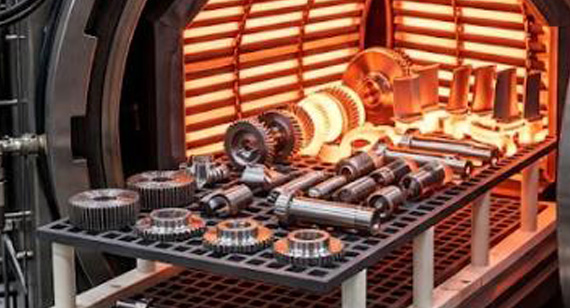
To achieve its full potential, 420J2 must be heat-treated correctly. At VMT, we utilize vacuum heat treatment to prevent surface decarburization and ensure dimensional stability.
(Vacuum furnaces utilize high-purity gases (such as nitrogen or argon) for rapid cooling (gas quenching), resulting in more uniform heating and cooling processes, significantly reduced thermal stress, and minimal workpiece deformation. This is crucial for precision components with tight tolerances.)
Dimensional Stability during Heat Treatment
When processed with professional vacuum heat treatment, it minimizes warping and distortion for 420J2 precision components, allowing us to maintain tight tolerances even after the material reaches its peak hardness.
Exceptional Polishability
Due to its fine-grained structure after tempering, 420J2 is capable of achieving an extraordinary mirror finish (Ra < 0.4 μm). This makes it the ideal choice not just for functional parts, but for high-end decorative hardware and optical mounts that require a defect-free, reflective surface.
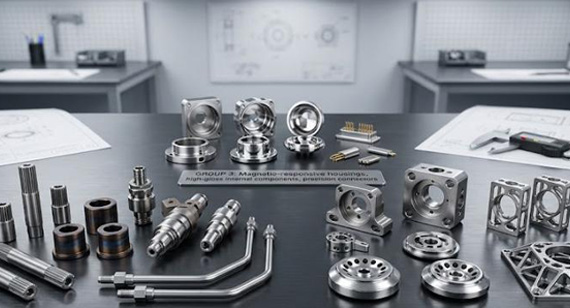
Because of its good machinability, good strength, toughness and corrosion resistance, 420J2 is found in a wide range of precision parts such as :
If your drawing specifies a different international standard, 420J2 (Japanese SUS standard) is generally equivalent to the following grades:
| Country |
Equivalent Grade |
Notes |
| USA (ASTM/AISI) |
AISI 420 / UNS S42000 | The most common US reference. |
| Germany (DIN, WNr) |
1.4028 / X30Cr13 | Standard for high-precision German engineering. |
| China (GB/T) |
30Cr13 (New) / 3Cr13 (Old) | Widely used in Asian manufacturing chains. |
| European (EN) |
X30Cr13 | Euro-norm standard for martensitic steel. |
| Japan (JIS) |
SUS420J2 | The origin of the 420J2 designation. |
| United Kingdom (BS) |
420S45 / En56D | Often found in older British aerospace or naval drawings. |
| France (AFNOR) |
Z30C13 | Specific to French industrial specifications. |
| Russia (GOST) |
30Ch13 / 30Х13 | Common in Eastern European technical documents. |
| Italy (UNI) |
X30Cr13 | Italian national standard equivalent. |
| Sweden (SS) |
2304 | Occasionally seen in Nordic hydraulic or tool specs. |
420J2 stainless steel is a versatile and cost-effective martensitic grade that has the property of basic corrosion resistance and good mechanical strength. Precision industrial components, from automotive shafts to high-gloss medical housings, are what you are seeking for 420J2 stainless steel for your project. But if you want to manage 420J2 precision parts' heat-treat distortion and achieving a Ra 0.4 mirror finish requires a deeper understanding of the material's properties and advanced CNC machining protocols.
We recently completed a project involving 420J2 pump plungers for a hydraulic system. This case perfectly illustrates the material’s performance when pushed to its limits.
The project required a combination of 50-54 HRC hardness and a flawless Ra 0.4 mirror finish. The primary difficulty was ensuring the plungers remained perfectly straight and dimensionally stable after the hardening process, as any slight warpage would compromise the hydraulic seal.
Our Approach at VMT CNC Machining Factory:
The final 420J2 plungers provided the exact balance of impact toughness and surface hardness the application demanded. By controlling the transition from soft machining to hard finishing, we ensured the parts met all functional requirements without the common issues of cracking or distortion.
Is 420J2 stainless steel magnetic?
Yes, as a martensitic steel, 420J2 is magnetic in both the annealed and hardened states.
Can 420J2 be welded?
It is possible but challenging. Due to its air-hardening characteristics, pre-heating and post-weld annealing are required to prevent cracking.
How does 420J2 compare to 440C?
420J2 has lower carbon and is easier to machine/tougher, while 440C has higher carbon, making it much harder and more wear resistant.
Can 420J2 stainless steel rust?
Yes. While 420J2 offers good resistance to fresh water and mild acids, it still rusts in salt water or harsh chemical environments. For maximum protection, parts should be properly passivated.
Is 420J2 stainless steel good?
Yes. It is an excellent choice for parts requiring a balance of moderate corrosion resistance, high toughness, and cost-efficiency. It is particularly "good" for industrial components that must withstand impact without being as brittle as higher-carbon steels.
Which is easier to polish, 440C or 420J2?
420J2 is generally easier to polish. Its lower carbon content and finer grain structure allow it to achieve a high-gloss mirror finish and more consistently than 440C.


 +86 15099911516




 Read more