16 years one-stop China custom CNC machining parts factory

Hey there I’m VMT Sam!
With 25 years of CNC machining experience we are committed to helping clients overcome 10000 complex part-processing challenges all to contribute to a better life through intelligent manufacturing. Contact us now
 222 |
Published by VMT at Mar 04 2026 | Reading Time:About 2 minutes
222 |
Published by VMT at Mar 04 2026 | Reading Time:About 2 minutes


You might not be very familiar with 308 austenitic stainless steel. However, you’ve almost certainly heard of 304 and 316, which account for over half of the stainless steel used worldwide. 308 stainless steel actually sits right between the two: its corrosion resistance is close to (or slightly higher than) 304, while its strength, hardness, ductility, and machinability are more comparable to 316.
Another most important distinction is the use of 308 stainless steel as a welding material (usually applied for welding 304).
This article will guide you through the core properties (properties) of 308 stainless steel and the reasons behind them. Additionally, you will learn about its cost, applications, machining , and its pros and cons.
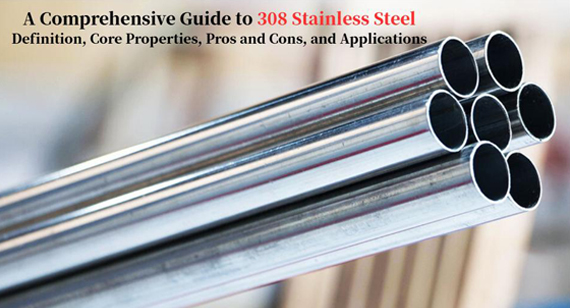
308 stainless steel is a high-chromium, high-nickel austenitic stainless steel. In terms of composition and market positioning, you can think of it as an "upgraded version" of 304 SS (which has slightly lower chromium and nickel content). A higher percentage of Chromium (Cr) and Nickel (Ni) of 308 SS makes it offer slightly improved oxidation resistance and strength. This makes it ideal for CNC machining projects—such as structural support brackets or general industrial fasteners—that require good strength and corrosion resistance.
More importantly about 308 SS is that: it is widely recognized as a filler metal (such as 308 welding wire or rod) specifically designed for welding 304 stainless steel or other similar austenitic grades.
You can refer to the following 308 stainless steel chemical composition table to differentiate it from other austenitic stainless steels and understand the origins of its fundamental properties.
Table 1: Chemical Composition of 308 Stainless Steel
| Element |
Content (Percentage) |
Key Point |
| Iron (Fe) |
~66% | Base metal |
| Chromium (Cr) |
19% - 21% | Provides core corrosion and oxidation resistance |
| Nickel (Ni) |
10% - 12% | Stabilizes the austenitic structure and improves toughness |
| Manganese (Mn) |
2.0% | Aids in deoxidation and increases hardness |
| Silicon (Si) |
1.0% | Enhances high-temperature oxidation resistance |
| Carbon (C) |
≤ 0.08% | Controls strength, but note the risk of sensitization |
| Phosphorus (P) |
≤ 0.045% | Impurity control |
| Sulfur (S) |
≤ 0.030% | Impurity control |
308 stainless steel occupies a "middle ground" in terms of performance: its corrosion resistance is comparable to or slightly better than 304, while its hardness, ductility, and machinability lean towards 316. Its durability and cost also fall right between 304 and 316.
Corrosion Resistance
The corrosion resistance of 308 stainless steel is at a level that easily handles common atmospheric humidity or mild chemical corrosion. That is to say, its corrosion resistance is similar to 304 stainless steel, or you could even consider it slightly higher (as the Chromium (Cr) and Nickel (Ni) content in 308 is slightly higher than in 304). However, because it does not contain Molybdenum (Mo), its corrosion resistance is inferior to 316 stainless steel, causing it lacks resistance to chlorides and pitting (for example, when facing seawater, salt spray, or bleach).
High and Low-Temperature Resistance
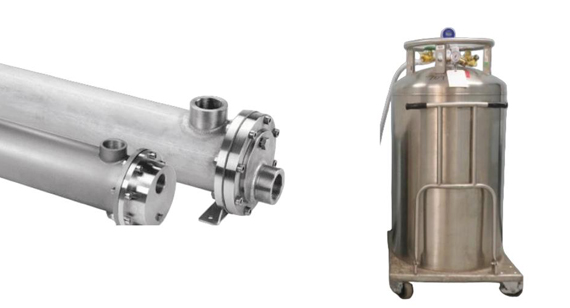
308 stainless steel possesses good thermal stability. Its continuous service temperature can reach 870°C (1600°F), and it can withstand up to 925°C (1700°F) during intermittent use, making it perfectly suitable for manufacturing general heat exchanger components. In cryogenic environments (-196°C), it still maintains excellent impact toughness. This means that 308 stainless steel can also (like 304 stainless steel) be used for liquid nitrogen storage tanks—though the price is slightly higher, the enhanced corrosion resistance and strength help maintain safety.
Durability
Thanks to the stable austenitic structure provided by its high nickel content, 308 stainless steel exhibits excellent long-term stability. In non-severely corrosive environments, the self-repairing capability of the 308 stainless steel surface passivation layer is strong. Therefore, CNC machined parts made from 308 stainless steel have a relatively good service life.
Non-Heat Treatable
As an austenitic stainless steel, 308 stainless steel cannot be hardened through heat treatment. The only heat treatment processes involved are annealing—used for softening before machining (Solution Annealing: 1040°C – 1120°C followed by quenching), or eliminating stress after cold drawing (Stress Relieving: 290°C – 425°C followed by natural cooling). Its strength can only be slightly increased through cold working (such as rolling, bending, or cold drawing).
Mechanical Strength
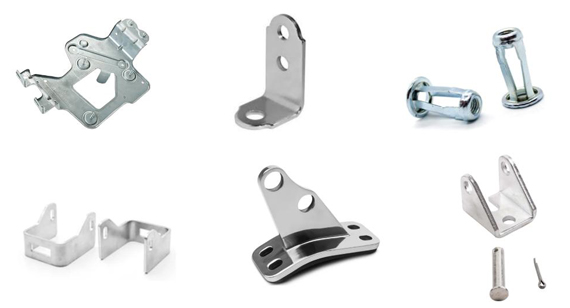
The tensile strength of 308 stainless steel is typically around 550 - 650 MPa, with a yield strength of approximately 205 - 280 MPa. It does not belong to the category of high-strength steels; therefore, it is not suitable for high-load or high-stress structural supports. It is only applicable for general load-bearing projects such as architectural door and window frames, automotive light-load support brackets, and general hardware.
Hardness
The Brinell hardness (HB) of 308 stainless steel is usually between 150 - 170, and the Rockwell hardness (HRB) is about 80 - 90. This hardness level ensures that the material has a certain degree of wear resistance while retaining sufficient plasticity.
Ductility
308 possesses excellent ductility, with elongation typically exceeding 40%. This means it can undergo significant plastic deformation before fracturing (excellent formability), making it very suitable for processing techniques that require cold bending, stamping, or deep drawing.
Machinability
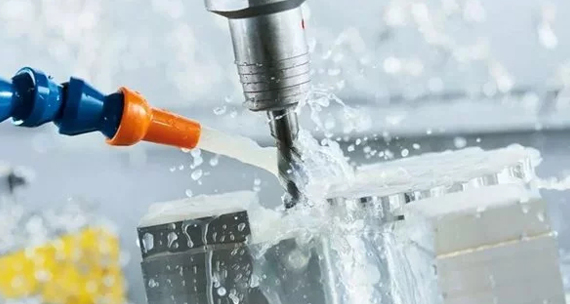
The machinability rating of 308 stainless steel is approximately 30% - 43% (based on 1212 carbon steel as 100%). In CNC machining , it is prone to work hardening (similar in machining difficulty to 316 stainless steel), which means the material under the cutting edge hardens rapidly. Therefore, you need to strictly control cutting parameters, using lower speeds, higher feed rates, and ensuring tools are sharp with adequate lubrication. Additionally, you should use Carbide (Carbide) tools or coated (AlTiN) tools to deal with the machining inconveniences caused by the high toughness of 308 stainless steel.
Weldability
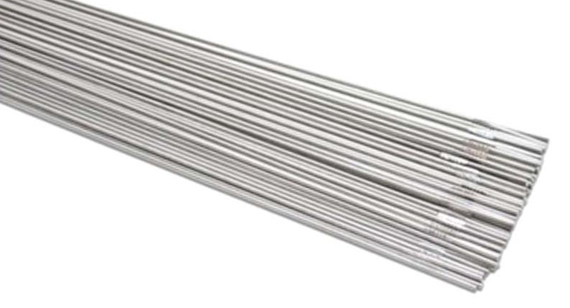
The weldability of 308 stainless steel is excellent (308 plates are easy to weld together using ER308 or ER308L to weld itself), and it is frequently used to make welding wire (such as ER308) commonly used for TIG (Tungsten Inert Gas) or MIG welding of 304 stainless steel.
However, you need to be aware of the potential sensitization of 308 stainless steel (C ≤ 0.08%)—when exposed to the 400–850°C (752–1562°F) range, chromium carbides precipitate along the grain boundaries. This leads to a reduction in chromium content near the grain boundaries, weakening the passivation layer and inducing intergranular corrosion. Therefore, to avoid sensitization, I highly recommend using the low-carbon version of 308SS—308L (C ≤ 0.03%).
Due to its good corrosion resistance, formability, durability, and weldability, as well as its balanced strength and hardness, you can find 308 stainless steel in the following applications:
When choosing 308 stainless steel, budget is a factor that cannot be ignored:
308 SS Pros:
308 SS Cons:
308 stainless steel is a highly practical material within the austenitic series—an excellent choice for various forming applications (such as piping and storage exhausts), CNC machining projects (like structural brackets and fasteners), and as a filler metal. If you are looking for moderate strength, good corrosion resistance and durability, or an outstanding welding material, and your budget falls between 304 and 316 stainless steel, 308 is an excellent choice. However, you still need to carefully consider the specific usage environment, product requirements (such as load-bearing needs), and your budget.

Customer Challenge and Requirements
An automotive component supplier approached VMT to customize a batch of 308 stainless steel support brackets for high-performance exhaust systems. Due to the long-term exposure to high temperatures and vibration, the customer selected 308SS to balance cost with oxidation resistance. However, the primary challenge lay in the part's complex geometry and multiple thin-walled holes. When working with a previous supplier, the 308 stainless steel’s tendency toward work hardening led to severe tool wear, resulting in hole tolerances frequently exceeding the required ±0.05mm and visible tool marks on the surface that hindered assembly precision.
VMT’s Technical Solutions
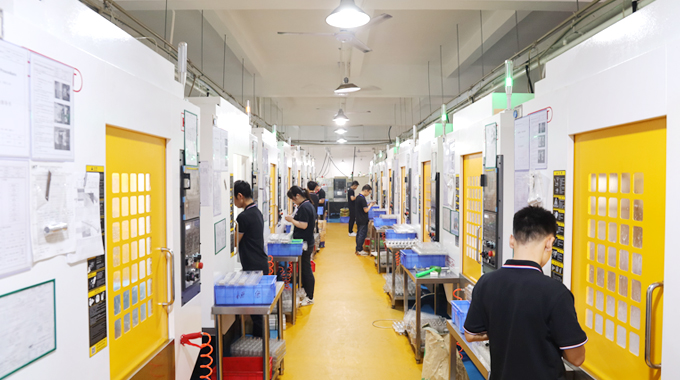
In response to the material properties of 308SS, the VMT technical team optimized the entire CNC machining process. We utilized high-rigidity 5-axis machining centers equipped with AlTiN-coated carbide tools specifically designed for high-toughness stainless steel. To suppress work hardening, we recalculated the cutting parameters, adopting a "low speed, constant high feed" strategy to ensure the tool edge consistently cut into the base material rather than rubbing against the hardened layer. Additionally, we implemented a high-pressure internal cooling system to rapidly dissipate cutting heat and prevent thermal deformation. For the thin-walled structures, we designed custom hydraulic fixtures to minimize vibration during machining.
Quantifiable Results and Feedback
Through process optimization, VMT successfully resolved the 308SS machining difficulties and achieved mass production. The measured data showed that critical hole tolerances were stabilized within ±0.02mm, and surface roughness was improved from Ra 1.6 to Ra 0.8, resulting in a smooth and uniform finish. By optimizing the tool paths, we reduced the per-part cycle time by 15% and slashed the scrap rate from 12% to less than 1%. Currently, these brackets have successfully passed the customer’s 1,000-hour high-temperature fatigue test, and VMT’s professional machining capabilities have earned high praise from the client.
What is the difference between 308 and 304 stainless steel?
308 stainless steel contains higher chromium (19-21%) and nickel (10-12%), whereas 304 stainless steel typically has an "18-8" chemical composition (18% Chromium, 8% Nickel). Consequently, the strength and corrosion resistance of 308 are slightly higher than those of 304. Additionally, 308 is frequently used as a filler material for welding 304.
What is the difference between 308 and 316 stainless steel?
The core difference is that 316 stainless steel contains 2-3% Molybdenum (Mo), while 308 does not. This allows 316 to resist pitting in marine environments and against chlorides, whereas 308 is prone to oxidation and corrosion in these settings. For marine components, 316 stainless steel is more highly recommended.
What is the main difference between 308 and 309 stainless steel?
309 stainless steel has a higher alloy content (approx. 23% Chromium and 13% Nickel). Filler metals made from 309 are specifically used for extreme high-temperature environments (oxidation resistance) or for welding dissimilar metals (such as welding stainless steel to carbon steel). 308 filler metal is intended for joining similar austenitic stainless steels.
What are the major national equivalent grades for 308 stainless steel?
308 stainless steel equivalents across major national standards are: UNS S30800 (USA), SUS308 (Japan), 1.4303 (Germany/EN), X4CrNi18-12 (European/ISO), 06Cr20Ni11 (China/GB), 20Ch11 (Russia/GOST), and Z6CN18-12 (France/AFNOR).
What are the main supply forms of 308 stainless steel?
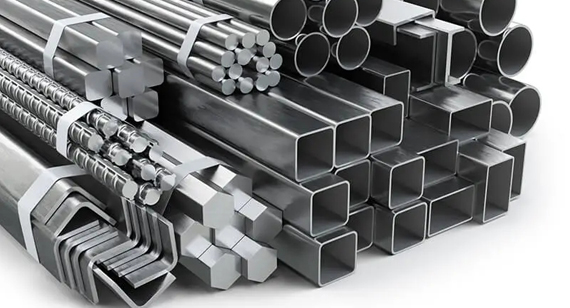
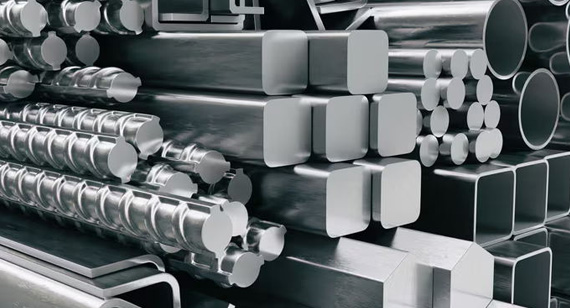
308 stainless steel is typically supplied in the following forms:
How to perform surface maintenance on 308 stainless steel?
For daily maintenance, simply wipe the surface regularly with a neutral detergent and keep it dry. If you need to remove surface impurities, a passivation treatment is required—after cleaning the surface with a pickling solution, a nitric acid passivation process is used to repair the damaged chromium oxide protective film.


 +86 15099911516




 Read more