16 years one-stop China custom CNC machining parts factory

Hey there I’m VMT Sam!
With 25 years of CNC machining experience we are committed to helping clients overcome 10000 complex part-processing challenges all to contribute to a better life through intelligent manufacturing. Contact us now
 192 |
Published by VMT at Mar 03 2026 | Reading Time:About 3 minutes
192 |
Published by VMT at Mar 03 2026 | Reading Time:About 3 minutes


The key characteristic of 446 stainless steel is its exceptional high-temperature oxidation resistance, that is—If you are looking for a material for high-temperature nozzles, exhaust manifolds, or specialized cookware. Specifically one that offers extreme heat resistance combined with moderate strength, reliable corrosion resistance, and a manageable cost—then this guide to 446 stainless steel is for you.
But if you are looking for standard room-temperature applications— projects requiring higher mechanical strength or corrosion resistance, 446 stainless steel may not be the most cost-effective or high-performing choice.
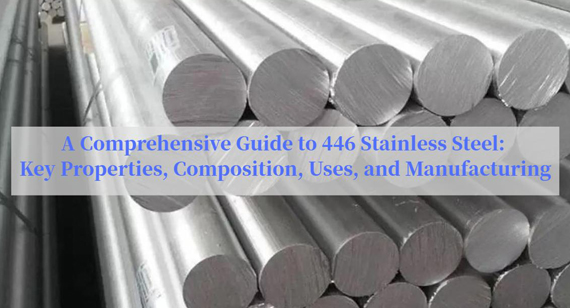
446 stainless steel is a prominent member of the ferritic stainless steel family, characterized by its body-centered cubic (BCC) crystal structure. Due to this ferritic nature, 446 is inherently magnetic. A key point to note is that 446 stainless steel cannot be hardened through heat treatment; But its strength can be slightly increased through cold working processes such as bending or rolling.
Its most defining composition is its high chromium content (23–27%), which significantly enhances its protective oxide layer(stainless steel all has chromium over 10% to form a natural passive layer). While this chromium promotes relatively good resistance, it also results in reduced flexibility and lower ductility of SS446.The core characteristics of 446 stainless steel include:
Superior High-Temperature Oxidation Resistance
Among the 400 series alloys, 446 ferritic stainless steel offers the best oxidation resistance. It is uniquely capable of resisting corrosion from molten metals such as copper, lead, tin, and brass. So, you can consider SS446 as the most suitable stainless steel for molten metal conveying pipes and nozzles. In extreme high-temperature environments, 446 is often considered a cost-effective alternative to Inconel grades, though Inconel generally offers better overall high-temperature performance.
Exceptional Heat Resistance
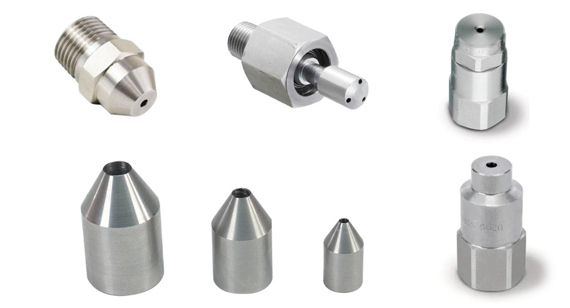
As one of the most heat-resistant ferritic steels in the 400 series, 446 can withstand continuous service temperatures up to 1093°C (2000°F)—making it ideal for nozzles, stirrers, or molds in high-heat applications. However, it is important to monitor that this high-temperature can lower SS446’ strength. For components that must bear heavy loads at high temperatures (such as conveyor belts in industrial kilns), austenitic steel like 310S is better preferred.
Reliable Corrosion Resistance
The high chromium content (23–27%) ensures a more reliable passive layer to resist corrosion. While it easily handles high humidity and mild chemical exposure, it is not the first choice for marine environments; for seawater resistance, 316L stainless steel or 2205 duplex stainless steel are recommended. In terms of general corrosion, 446 stainless steel is comparable to 304 stainless steel, but its high chromium levels give it a distinct advantage in high-temperature settings.
Magnetic Property
Its ferritic structure makes 446 stainless steel naturally magnetic. This allows the material to be heated via induction heating, though it may interfere with sensitive electronic equipment. On the manufacturing side, its magnetism is a benefit during CNC machining, as it allows for the use of magnetic chucks during grinding or milling.
Non-Hardenable by Heat Treatment
SS446 cannot be hardened by heating and quenching. Strength increases only slightly through cold working (where the dislocation density within the BCC structure increases during rolling, drawing, or bending). Heat treatment for SS446 is limited to annealing, which softens the material and relieves internal stress, preventing it from becoming too brittle for subsequent machining or cold forming.
Risk of Embrittlement
SS446 is highly susceptible to "885°F embrittlement" when welded or annealed within the 700–1000°F (370–540°C) range. This can lead to a total loss of room-temperature ductility. To maintain the integrity of long-term components, the material must be rapidly cooled (water quenched) from temperatures between 370–525°C after welding or annealing.
Limited Ductility
The same high chromium content that provides protection also makes 446 less flexible and more prone to brittleness compared to other grades. When machining, you will need extremely sharp tools and rigid setups to prevent the material from "snapping" or chipping. Additionally, preheating is necessary if you intend to cold-bend 446 steel.
The concentrations of chromium, nitrogen, and nickel have a significant impact on the properties of 446 stainless steel.
The high chromium content (23–27%) enables 446 stainless steel to form a dense chromium oxide film, which provides excellent corrosion resistance. Nitrogen is added to refine the grain structure of the 446 ferritic steel, enhancing its toughness and preventing it from becoming overly brittle during the heating process.
Additionally, because it contains almost no nickel (or only trace amounts), the price of 446 is generally more stable than high-nickel heat-resistant steels like 310S. Due to the lack of nickel, it also does not possess the same excellent weldability as austenitic stainless steel such as 304.
For the specific chemical composition of 446 stainless steel, please refer to the table below:
Table 1: Chemical Composition of 446 Stainless Steel
| Element |
Symbol |
Content (%) |
| Chromium |
Cr | 23.0 – 27.0 |
| Iron |
Fe | Balance |
| Manganese |
Mn | 1.50 Max |
| Silicon |
Si | 1.00 Max |
| Nickel |
Ni | 0.75 Max |
| Carbon |
C | 0.20 Max |
| Nitrogen |
N | 0.25 Max |
| Phosphorus |
P | 0.040 Max |
| Sulfur |
S | 0.030 Max |
446 high-chromium ferritic heat-resistant steel is characterized by a low thermal expansion rate and moderate hardness at room temperature; notably, it is non-hardenable by heat treatment. While it possesses moderate tensile strength, its high-temperature creep strength is extremely low. Additionally, its ductility is relatively average, which leads to the potential risk of 885°F embrittlement. For the primary physical and mechanical properties of 446 stainless steel, please refer to the table below:
Table 2: Typical Properties of 446 Stainless Steel
| Mechanical (At Room Temp) |
Tensile Strength | 515 – 585 MPa (75-85 ksi) |
| Yield Strength (0.2%) | 275 – 485 MPa (40-70 ksi) | |
| Elongation (in 2") | 20% | |
| Hardness (Max) | 95 HRB / 217 HB | |
| Thermal |
Max Service Temp | 1093°C (2000°F) |
| Thermal Expansion | ||
| Thermal Conductivity | ||
| Physical |
Density | 7.7 – 7.8 g/cm³ |
| Crystal Structure | BCC (Ferritic) | |
| Modulus of Elasticity | 200 GPa(psi) |
For a completely physical and mechanical properties, you can check here: azom grade 446
CNC Machining 446 Stainless Steel
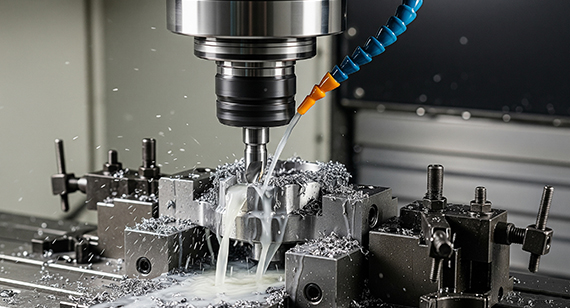
While 446 stainless steel performs exceptionally well in high-temperature environments, its high chromium content and significant hardness make it more challenging to machine compared to other stainless steel grades (it has a machinability rating of approximately 36%, based on AISI 1212 steel as 100%). When selecting 446 stainless steel for CNC machining projects, it is essential to use low speeds, positive feeds, and sharp tools. Carbide tools are the preferred choice. We recommend using AlTiN (Aluminum Titanium Nitride) or AlCrN (Aluminum Chromium Nitride) coatings, as they offer extreme heat resistance and superior wear protection.
(Note: CNC machining is a process where computer-controlled machines use various cutting tools to remove material from a solid block to create high-precision parts with strong structures and smooth surfaces; it is the primary manufacturing process for high-quality components in modern industry).
Welding 446 Stainless Steel
Because it does not contain high nickel levels like 304 austenitic stainless steel, the weldability of 446 stainless steel is considered moderate. Welding 446 typically requires preheating to 300–600°F (150–315°C) to prevent cracking. Most conventional welding methods, such as MIG or TIG, are feasible. However, oxy-acetylene welding is not recommended—this method involves slow heating and a large heat-affected zone, which can lead to severe grain coarsening and embrittlement in this high-chromium steel.
Annealing 446 Stainless Steel
Annealing is a critical heat treatment step in the manufacturing and processing of 446 stainless steel. The process is primarily carried out at 1550–1650°F, followed by a rapid water or air quench. As a high-chromium ferritic stainless steel, its physical properties dictate that annealing is necessary to ensure subsequent workability and overall service life. After casting, forging, or cold working (such as drawing or bending), the high chromium content (23–27%) causes the material to become extremely hard and brittle. Annealing softens the material, making it easier to cut, bend, or undergo further cold deformation.
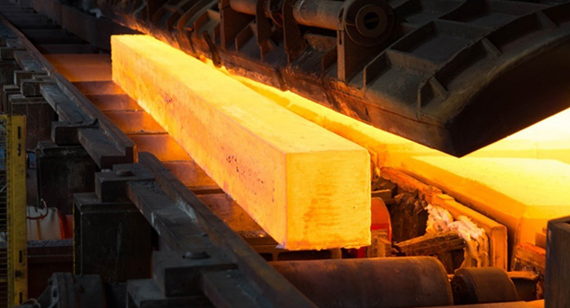
If you are considering 446 stainless steel, it is vital to confirm that its properties meet your specific requirements for temperature, strength, and corrosion resistance. Remember: it offers excellent high-temperature oxidation resistance but cannot bear heavy loads and is best suited for mild chemical environments. Here lists a few use examples of 446 stainless steel:
After reading this guide, its surely that you have a solid understanding of 446 stainless steel’s chemical composition, mechanical properties, manufacturing processes, and typical applications. While it requires specific care—such as preheating to prevent embrittlement and navigating its challenging machinability—it remains virtually irreplaceable for applications like molten metal delivery pipes and nozzles. As the most oxidation-resistant grade in the 400 series, it is widely used in combustion components and high-heat environments. But when deciding whether to choose 446 stainless steel for your next project, you may be sure to weigh your specific requirements for load-bearing capacity, operating temperature, corrosive environment, and budget.

A leading manufacturer of industrial combustion equipment approached VMT CNC Machining Factory to produce a series of fuel injection nozzles designed for extreme thermal environments. The components were required to operate continuously at temperatures exceeding 1,000°C (1,832°F) while resisting oxidation and sulfurization. After evaluating several materials, 446 stainless steel was selected for its superior high-temperature oxidation resistance compared to the 300-series. The project demanded strict dimensional accuracy, particularly for the internal flow channels, to ensure consistent fuel atomization and system efficiency.
The primary difficulty in machining 446 stainless steel lies in its high chromium content and relatively low machinability rating (36% compared to AISI 1212). During initial trials, the material exhibited significant work hardening, and its poor thermal conductivity led to rapid heat buildup at the tool tip, causing premature tool failure. VMT’s engineering team resolved these issues by utilizing high-performance carbide tooling with AlCrN (Aluminum Chromium Nitride) coatings, which are specifically designed for high-heat applications. We implemented a strategy of low cutting speeds combined with a constant, positive feed rate to prevent the tools from "rubbing" against the surface. Additionally, high-pressure through-spindle cooling was employed to stabilize temperatures and ensure efficient chip evacuation from the deep nozzle cavities.
The finalized production process achieved a high degree of precision, maintaining dimensional tolerances within ±0.015mm and a surface roughness of Ra 0.8, meeting the client's stringent flow requirements. By optimizing the tool paths and coating selection, VMT successfully reduced the initial estimated cycle time by 18%, effectively lowering the overall production cost for the client. The first batch of 500 units passed all high-temperature pressure tests with a 100% acceptance rate. Consequently, the client has extended their partnership with VMT for the long-term supply of their entire high-temperature manifold and nozzle product line.
Is 446 stainless steel expensive?
The price of 446 stainless steel is relatively high and subject to market volatility. Because of its exceptionally high chromium content (23%–27%) and its status as a specialty heat-resistant steel, its raw material costs are significantly higher than standard grades like 304 or 430. Additionally, due to lower market demand and production volumes, it often requires custom orders or sourcing from specialized inventories, which can increase procurement costs.
Are the CNC machining costs for 446 stainless steel high?
Yes, machining 446 stainless steel is generally more expensive. The high chromium content results in greater hardness and brittleness, leading to rapid work hardening and severe tool wear. Furthermore, its poor thermal conductivity limits cutting speeds, which extends production cycles and increases labor and consumable costs.
How do you maintain the corrosion resistance of 446?
Passivation is highly recommended to enhance the corrosion resistance of 446 stainless steel. After machining, parts should be thoroughly degreased and cleaned, then immersed in a nitric acid solution (20%–50% concentration) containing sodium dichromate to form a dense, protective chromium oxide film. For long-term maintenance, regular cleaning to remove surface contaminants and keeping the material dry will help prevent pitting corrosion.
In what forms is 446 stainless steel commonly available?
Supply forms for 446 are somewhat limited compared to commodity grades. It is most commonly found as bars (round steel) and plates, which are used for furnace parts, nozzles, and combustion chambers. Tubes and wires are less common and typically must be pre-ordered from specialty steel suppliers.
What are the main equivalent grades for 446 stainless steel?
In international standards, 446 stainless steel corresponds to UNS S44600 (USA), 1.4762 (EU/German DIN), and SUS 446 (Japan). In Chinese standards, the most similar grades are 1Cr25Ti or 00Cr27Mo.
What is the main difference between 446 and 316 stainless steel?
The primary difference lies in their specialization: 446 is renowned for its heat resistance, capable of withstanding oxidation and sulfidation at temperatures above 1000°C, making it ideal for industrial kilns and glass molds. In contrast, 316 stainless steel is designed for chemical corrosion resistance; the addition of molybdenum makes it superior in chloride-rich environments (like seawater) and highly corrosive food processing settings.


 +86 15099911516




 Read more