16 years one-stop China custom CNC machining parts factory

Hey there I’m VMT Sam!
With 25 years of CNC machining experience we are committed to helping clients overcome 10000 complex part-processing challenges all to contribute to a better life through intelligent manufacturing. Contact us now
 354 |
Published by VMT at Mar 02 2026 | Reading Time:About 3 minutes
354 |
Published by VMT at Mar 02 2026 | Reading Time:About 3 minutes


Austenitic stainless steel stands as the most versatile and widely used family of corrosion-resistant alloys. For example, the most well-known 304 and 316 stainless steel that you must have heard—they belong to the austenitic families. Accounting for over 70% of total stainless steel production globally, these materials are made into so many parts, components, or products of industries ranging from food processing and medical devices to aerospace and chemical engineering.
Whether you are an engineer selecting materials for a design or manufacturing need or a machinist looking to optimize your CNC processes, understanding the nuances of austenitic stainless steels is necessary and helpful. In this comprehensive guide, you will explore the chemical composition, key properties, common grades, and the specific challenges of machining the austenitic stainless steels.
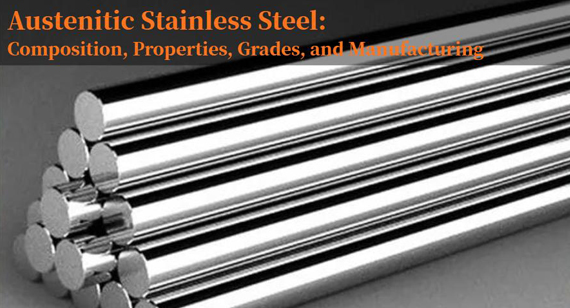
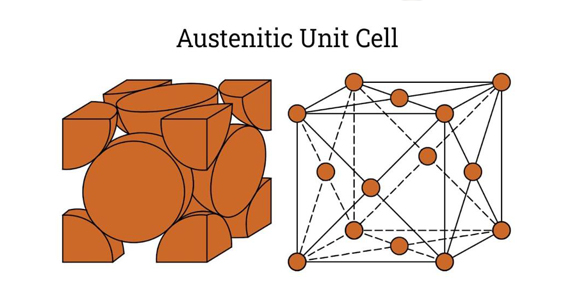
Austenite stainless steel is defined by its primary crystalline structure: the Face-Centered Cubic (FCC) lattice. This atomic level is naturally no magnetism and cannot be hardened by heat treatment while this FCC lattice also make it tough and "gummy" if you want to machining austenite stainless steel.
Chemical Composition and Microstructure
The "austenitic" name comes from the microstructure(FCC and alloying elements to keep structure stable), which remains stable from cryogenic temperatures up to the melting point. Unlike ferritic steels, which are primarily iron and chromium, austenitic chromium nickel stainless steel relies on "austenite stabilizers"—primarily Nickel (Ni), but also Manganese (Mn) and Nitrogen (N)—to maintain its unique crystal structure. Key chemical composition of austenitic stainless steel include:
Austenitic stainless steel is the preferred choice for a vast range of applications—from everyday kitchenware to many common automotive components or common industrial parts like fasteners. Mechanical and physical properties are necessary factors you should take into consideration.
Physical Properties of Austenitic Stainless Steel
Mechanical Properties of Austenitic Stainless Steel
Austenitic stainless steels usually take advantages of good ductility, allowing for complex forming and deep drawing. Hardness is usually moderate in the annealed state but increases only through cold working rather than heat treatment like the martensitic steels. The following table shows mechanical properties of austenitic stainless steels:
Table 1: Mechanical Properties of Austenitic Stainless Steel(Annealed)
| Types |
Grade |
Yield Strength (0.2% Offset) |
Tensile Strength (Ultimate) |
Elongation (in 50mm) |
Modulus of Elasticity |
| Standard 300 |
304 | 205 – 250 MPa | 515 – 700 MPa | 45% – 60% | 193 – 200 GPa |
| 316 | 240 – 290 MPa | 550 – 750 MPa | 40% – 55% | 193 GPa | |
| High Temp/Stable |
310S | 205 – 245 MPa | 520 – 620 MPa | 40% – 45% | 200 GPa |
| 321 | 205 – 240 MPa | 515 – 660 MPa | 40% – 45% | 193 – 200 GPa | |
| Low-Nickel (200) |
201 | 310 – 380 MPa | 680 – 800 MPa | 40% – 50% | 197 GPa |
| 202 | 275 – 350 MPa | 620 – 750 MPa | 40% – 50% | 197 GPa | |
| Super Austenitic |
904L | 220 – 250 MPa | 490 – 600 MPa | 35% – 45% | 190 GPa |
| 254 SMO | 300 – 310 MPa | 650 – 700 MPa | 35% – 50% | 195–200 GPa |
The family of austenitic stainless steel grades is broadly divided into two main categories: the 300 series and the 200 series. In addition, specialty alloys such as 254 SMO, 904L also belong to austenitic stainless steel family.
The 300 Series (Chromium-Nickel Alloys)
The 300 series are the most famous of austenitic steels which use nickel elements into the stainless steel as the primary austenite stabilizer. These grades include:
The 200 Series (Chromium-Nickel-Manganese Alloys)
In the 200 series, Manganese and Nitrogen are used to replace some of the expensive Nickel.
Specialty Alloys
To select the right material for your project, it is essential to understand how austenitic stainless steel differs from other common stainless steel families. Each type offers a different balance of strength, magnetism, and corrosion resistance.
Austenitic vs. Ferritic Stainless Steel
The primary difference between austenitic vs. ferritic stainless steel lies in their atomic arrangement. Austenitic steels possess a Face-Centered Cubic (FCC) crystal structure, while ferritic steels are characterized by a Body-Centered Cubic (BCC) lattice. This microscopic variation results in a major physical distinction: austenitic grades are generally non-magnetic, whereas ferritic steels are inherently magnetic. Furthermore, the chemical composition varies significantly; austenitic steels are heavily alloyed with nickel to stabilize their structure, whereas ferritic steels contain little to no nickel, making them a more cost-effective but less ductile alternative. Ferritic stainless steel grades (categorized under the 400 series) like stainless steel 430 for polished, cost-effective, indoor decorative use; 434/436 for exterior automotive trim; and 409 for functional, heat-resistant exhaust parts.
Austenitic vs. Martensitic Stainless Steel
The debate between austenitic vs. martensitic stainless steel is essentially a trade-off between extreme hardness and superior ductility. Martensitic grades, such as stainless steel 410 or 440C, are unique because they can be hardened and tempered through heat treatment to achieve exceptional wear resistance, making them ideal for cutlery and surgical tools. In contrast, austenitic steels cannot be hardened by heat; they only increase in strength through mechanical cold working. While martensitic steels offer high strength, they has less corrosion resistance and impact toughness that make austenitic steels has.
Austenitic vs. Duplex Stainless Steel
Duplex stainless steel is engineered as a balanced 50/50 mix of both austenite and ferrite microstructures. Duplex stainless steel has almost double the strength of austenitic grades and way better corrosion resistance. For example, the most typical—duplex 2205 stainless steel— is nearly double the yield strength of standard 304 or 316 austenitic grades. It also provides vastly superior resistance to stress corrosion cracking (SCC)—a common failure point for 300-series austenitic steels in chloride-rich environments.
Annealing Austenitic Stainless Steel
Unlike martensitic steel, you cannot harden austenitic steel by quenching. Annealing austenitic stainless steel (Solution Annealing) involves heating the metal to roughly 1,040°C–1,150°C and then cooling it rapidly. This process dissolves any precipitated carbides and restores maximum corrosion resistance and ductility.
Welding Austenitic Stainless Steel
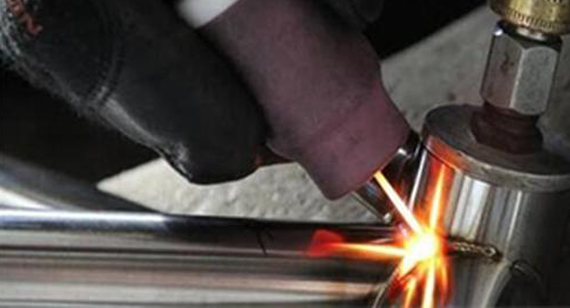
Welding austenitic steels is generally easier than other stainless families. However, one must be wary of sensitization. When heated to 450°C–850°C, chromium carbides can form at grain boundaries, depleting the surrounding area of chromium and leading to "weld decay." This is why low-carbon "L" grades (like 304L or 316L) are preferred for heavy-section welding if needed.
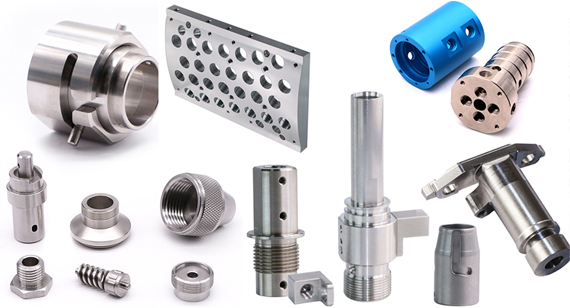
CNC machining is a subtractive manufacturing process where precision tools remove material to form needed parts’ shape; precision, repeatability, and rapid design and response to the market making it one of the most popular manufacturing choices in industry. Austenitic 304 and 316 are the preferred of the CNC machining into versatile parts due to their durability, corrosion resistance, and aesthetic finish.
Core Applications Examples Include
CNC Machining Challenges of Austenitic Stainless Steel
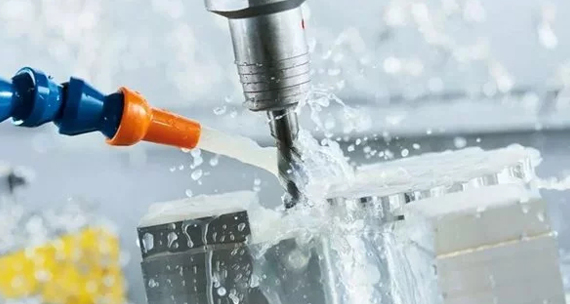
Despite their popularity, these materials are classified as "difficult-to-machine." If you are machining austenitic stainless steels, you will face several hurdles:
1. Severe Work Hardening
This is the most significant challenge. Austenitic steels harden rapidly when compressed by a cutting tool. If the feed rate is too low or the tool is dull, the tool will "rub" rather than "cut," creating a rock-hard surface layer that will destroy the next cutting edge.
2. Low Thermal Conductivity
Austenitic steels are poor at conducting heat. During CNC machining, the heat generated at the tool tip does not dissipate into the part or the chips; it stays at the tool edge. This leads to rapid tool wear and potential thermal deformation of the workpiece.
3. Built-Up Edge (BUE) - The "Sticky" Problem
Because of its high ductility, the material tends to "stick" to the cutting tool. This is known as a Built-up Edge (BUE). BUE ruins the surface finish, making it difficult to achieve high-precision requirements like Ra 0.4μm.
4. Difficult Chip Breakage
Chips from austenitic steel tend to be long, stringy, and incredibly tough. They can wrap around the spindle or tool, scratching the finished surface and creating a safety hazard for the operator.
5.Strategies for Success:
The austenitic stainless steel price is more volatile than ferritic or carbon steels. This is primarily due to the Nickel and Molybdenum content. Nickel is a traded commodity on the London Metal Exchange (LME), and its price fluctuations directly impact the cost of 304 and 316 alloys. Generally, 316 is more expensive than 304 due to the Molybdenum content, and the 200 series remains the budget-friendly option for less demanding environments.
Austenitic stainless steel is an indispensable material in modern engineering. From the ubiquitous 304 stainless steel to the high-performance super austenitic alloys, these metals provide the corrosion resistance and toughness required for demanding projects. While they present significant challenges in CNC machining—notably work hardening and heat management—these obstacles can be overcome with the right technical expertise and tooling. By selecting the correct grade and understanding its properties, you can produce components that are not only precise but built to last a lifetime in needing conditions.

An international Tier-1 automotive supplier approached VMT CNC Machining Factory after struggling to find a reliable partner for the mass production of a specialized fuel sensor housing. The project required the use of austenitic 304 stainless steel due to its corrosion resistance and durability in harsh engine environments. The client’s previous manufacturer had failed to maintain the strict dimensional consistency required for high-pressure sealing, resulting in a rejection rate of over 12%.
The technical challenges were significant, primarily centered around the severe work hardening typical of austenitic stainless steel. During initial trials, the material’s low thermal conductivity caused heat to accumulate at the tool tip, leading to rapid tool wear and inconsistent surface finishes. To solve this, our engineering team implemented a "Deep Cut, Low Speed" strategy, ensuring the cutting tool always penetrated below the work-hardened layer from the previous pass. We utilized custom AlTiN-coated carbide tooling and a high-pressure, through-spindle coolant system to effectively evacuate long, stringy chips and dissipate heat. This precisely controlled environment prevented the "built-up edge" (BUE) effect, allowing us to achieve the complex internal geometries the client required.
The final results exceeded the client’s expectations. VMT successfully held critical tolerances within ±0.01mm, well beyond the client’s original ±0.015mm requirement. By optimizing the tool paths, we achieved a consistent surface finish of Ra 0.4μm, which eliminated the need for secondary manual polishing and reduced the overall production cost per part by 18%. Most importantly, the batch rejection rate plummeted from 12% to a remarkable 0.2%.
Are austenitic stainless steels magnetic in general?
No. Under standard annealed conditions, they are classified as non-magnetic. This makes them ideal for MRI equipment and electronic housings where magnetic interference must be avoided.
Can austenitic stainless steel become magnetic?
Yes. While they are non-magnetic in the annealed state, austenitic stainless steel can become magnetic through cold working. Processes like drawing, rolling can cause a partial transformation of the microstructure from austenite to martensite, which is magnetic.
What is the difference between austenitic and ferritic stainless steel?
The main difference is the crystal structure and nickel content. Austenitic is non-magnetic and highly ductile (FCC structure), while ferritic is magnetic and has lower ductility (BCC structure).
What forms does this steel come in?
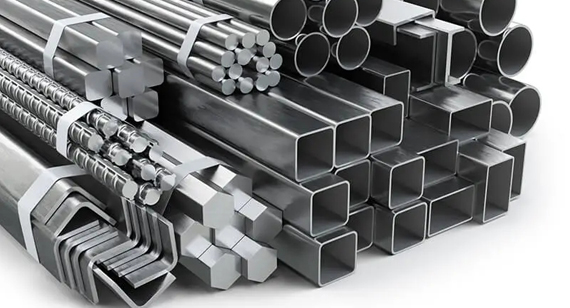
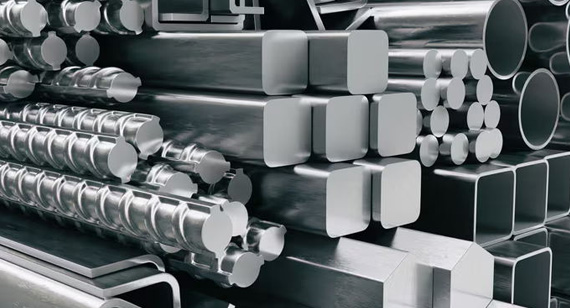
It is available in all standard industrial formats, including austenitic stainless steel strip, austenitic stainless steel pipe, austenitic stainless steel bar, and austenitic stainless steel coil.
What is the history of austenitic stainless steel?
It was discovered in 1912 by Benno Strauss and Eduard Maurer at Krupp in Germany while experimenting with high-nickel alloys. This discovery introduced the famous "18/8" (Chromium/Nickel) composition, which revolutionized the chemical and food industries by providing a material that was both highly formable and exceptionally rust-resistant.
What is the color of austenitic stainless steel?
Austenitic stainless steel has a bright, silvery-white hue with a "cool" metallic tone that is more lustrous than the duller grey of carbon steel. This distinctive appearance is primarily due to its high nickel and chromium content, which allows the surface to be polished to a mirror-like finish or brushed for a sleek, modern architectural look.


 +86 15099911516




 Read more