16 years one-stop China custom CNC machining parts factory

Hey there I’m VMT Sam!
With 25 years of CNC machining experience we are committed to helping clients overcome 10000 complex part-processing challenges all to contribute to a better life through intelligent manufacturing. Contact us now
 188 |
Published by VMT at Apr 07 2026 | Reading Time:About 2 minutes
188 |
Published by VMT at Apr 07 2026 | Reading Time:About 2 minutes


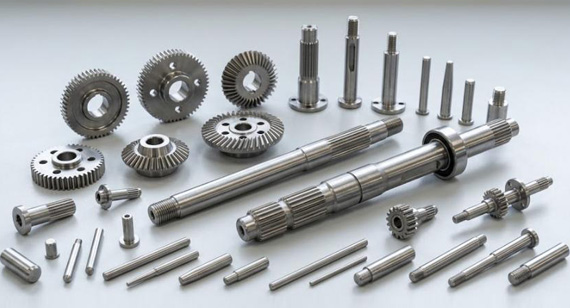
As you have learned, 431 SS is famous for:
But if you are also seeking 431 SS and hesitating over whether it is the right steel for your project or not—you could be confusing it with other stainless steels because:
These are what this blog will focus on, and you will finally figure out 431 SS properties at what level among these steels.
These three stainless steels have a martensitic structure, meaning they all can be strengthened by quenching and tempering and are also naturally strongly magnetic (while austenitic steels can’t do this, or you can refer to our previous blog: austenitic-vs-martensitic-stainless-steel).
Although they can all be made into precision parts like gears, shafts, and pins, their biggest differences are:
| Feature |
416SS |
420SS |
431SS |
| Relative Cost |
Low (Most economical) | Medium | High |
| Corrosion Resistance |
Fair | Moderate | Good (Best in Martensitic) |
| Density (g/cm³) |
7.75 | 7.75 | 7.70 |
| Melting Point (°C) |
1480 – 1530 | 1450 – 1510 | 1420 – 1480 |
| Thermal Conductivity (W/m·K) |
24.9 | 24.9 | 20.2 |
| Tensile Strength - Annealed (MPa) |
517 | 655 | 862 |
| Tensile Strength - Hardened (MPa) |
760 – 1300 | 1600 – 1900 | 850 – 1400 |
| Yield Strength - Annealed (MPa) |
275 | 345 | 655 |
| Modulus of Elasticity (GPa) |
200 | 200 | 215 |
| Heat Resistance (°C) |
Up to 650 | Up to 650 | Up to 700 |
| Weldability |
Poor (Free-machining) | Poor | Fair (Requires pre/post-heat) |
| Machinability Rating |
85% (Excellent) | 45% (Moderate) | 35% (Difficult) |
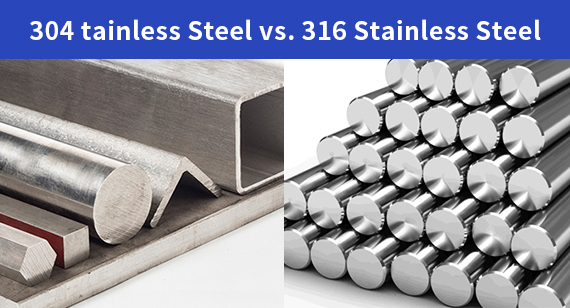
These three stainless steels represent a choice between "strength" and "better corrosion resistance."
SS 304 and 316 are austenitic steels, which means they are non-magnetic in their annealed state and cannot be hardened by heat treatment (they can only be hardened by cold working). For strength and hardness comparisons, SS 431 is far superior.
For SS 431, while its corrosion resistance is top tier for a martensitic steel, it still ranks below 304 and 316 in salty or acidic environments.
Another major difference is that while these three have similar machinability ratings, they behave differently during CNC machining. In practice, SS 431 is easier to cut, drill, turn, and mill, mainly because it isn’t as "gummy" as the austenitic grades (FCC structure) like SS 304 and SS 316.
| Feature |
304 Stainless |
316 Stainless |
431 Stainless |
| Tensile Strength - Annealed (MPa) |
515 | 515 | 862 |
| Tensile Strength - Hardened (MPa) |
600 – 1000 (By Cold Work Only) | 600 – 1000 (By Cold Work Only) | 850 – 1400 (By Heat Treatment) |
| Yield Strength - Annealed (MPa) |
205 | 205 | 655 |
| Yield Strength - Hardened (MPa) |
310 – 800 (By Cold Work Only) | 310 – 800 (By Cold Work Only) | 650 – 1100 (By Heat Treatment) |
| Hardness - Annealed (HB) |
170 Max | 170 Max | 285 Max |
| Hardness - Hardened (HB) |
Up to ~300 (By Cold Work) | Up to ~300 (By Cold Work) | 285 – 450 (By Heat Treatment) |
| Relative Cost |
High | Highest | Medium (material is high but machining cost is good) |
| Corrosion Resistance |
The Better | The Best | Good |
| Magnetism |
Non-magnetic | Non-magnetic | Strongly Magnetic |
| Machinability |
45% (Gummy) | 35% (Gummy) | 35% (Better Chips) |
| Application |
Kitchenware, Food processing, Medical Uses, decorative parts, housings | Chemical tanks, Coastal hardware, Medical Uses | Gears, shafts, Valve parts |
Choosing between 431, 416, 420, 304, and 316 depends entirely on your project’s environment and mechanical requirements:
Are you still unsure which stainless steel grade is best for your specific application? Or do you already have a design ready for production?
At VMT, we specialize in precision CNC machining services for a wide range of stainless steel grades, including the high-toughness 431 SS. With our advanced equipment and decades of expertise, we manage the challenges of "gummy" austenitic steels and the high-hardness requirements of martensitic steels with ease.
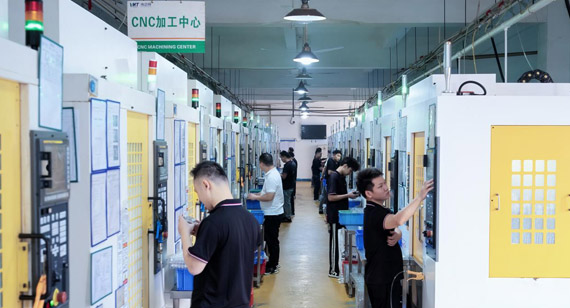
Why partner with VMT?
Contact us for a free technical consultation and a competitive quote!

Is 431 stainless steel magnetic?
Yes, 431 stainless steel has a martensitic structure, making it strongly magnetic in all conditions. Unlike 300-series austenitic steels, which are non-magnetic, 431 retains its magnetism even after heat treatment.
Can 431 stainless steel be used in marine environments?
Yes, 431 is the best performer among martensitic grades for marine use. It is widely used for outboard engine drive shafts and pump components. However, for stagnant seawater or extreme chemical exposure, austenitic Grade 316 is still preferred due to its higher Molybdenum content.
What is the equivalent of 431 stainless steel in other standards?
431 SS is commonly known as 1.4057 under the EN/DIN standard and SUS431 in the Japanese JIS standard. These grades share similar chemical compositions, featuring high Chromium and low Nickel.
Beyond these, it is also designated as UNS S43100 in the Unified Numbering System, BS 970 431S29 in British Standards, and AFNOR Z15CN16-02 in the French system. It is also frequently referred to by the aerospace grade AMS 5628, which specifies the material for high-strength applications like aircraft components.
Why is 431 stainless steel harder to machine than 416?
416 stainless steel is a "free-machining" grade because it contains added sulfur, which acts as a lubricant and breaks chips easily. 431 lacks this sulfur but offers much higher toughness and corrosion resistance, which makes the CNC machining process more demanding on cutting tools.
Does 431 stainless steel require pre-heating before welding?
Yes. Due to its high carbon content and hardenability, 431 stainless steel is prone to cracking if welded cold. It generally requires pre-heating to 200-300°C and post-weld annealing to restore ductility.
What is the typical hardness of 431 SS after quenching and tempering?
After proper heat treatment (quenching and tempering), 431 stainless steel typically reaches a hardness range of 30 to 45 HRC (approx. 285-450 HB). This makes it ideal for components requiring a balance of high tensile strength and impact resistance.


 +86 15099911516




 Read more