16 years one-stop China custom CNC machining parts factory

Hey there I’m VMT Sam!
With 25 years of CNC machining experience we are committed to helping clients overcome 10000 complex part-processing challenges all to contribute to a better life through intelligent manufacturing. Contact us now
 173 |
Published by VMT at Mar 18 2026 | Reading Time:About 2 minutes
173 |
Published by VMT at Mar 18 2026 | Reading Time:About 2 minutes


Martensitic Stainless Steel stands out in the stainless steel family as the only class that can be significantly hardened and strengthened through heat treatment (quenching and tempering). Renowned for its exceptional hardness, high tensile strength, and superior wear resistance, it is the "go-to" material for precision bearings, valve components, and high-end cutlery. At VMT CNC Machining Factory, our clients typically specify martensitic grades when their project demands a perfect balance of structural rigidity and post-heat-treatment toughness. However, if your application prioritizes extreme corrosion resistance or weldability, a closer look at the trade-offs is required.
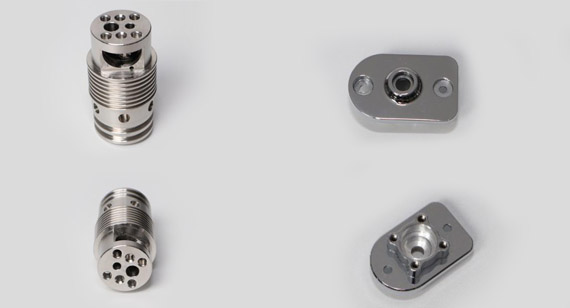
Martensitic stainless steels are chromium-based alloys characterized by a Body-Centered Cubic (BCC) or Body-Centered Tetragonal (BCT) crystalline structure.
Not all martensitic steels are created equal. By fine-tuning the alloy composition and tempering cycles, the material can be tailored to your specific cost and performance requirements. Here are the common grades of martensitic stainless steel for your quick reference:
Table 1: Common Martensitic Stainless Steel Grades
| Grade |
Key Characteristics |
Typical Applications |
Machining Insights |
| 410 |
The "General Purpose" grade; cost-effective. | Pump components, bolts, fasteners. | Highly machinable; moderate hardness after quenching. |
| 416 |
Free-Machining variant (added Sulfur). | High-volume turned parts for auto-lathes. | Fastest cycle times; slightly lower corrosion resistance. |
| 420 |
"Cutlery Grade" with high polishability. | Surgical instruments, valve cores, plastic molds. | Ideal for parts requiring a mirror-like surface finish. |
| 431 |
Highest Corrosion Resistance in its class. | Aerospace fasteners, marine drive shafts. | High toughness; requires optimized chip-breaking. |
| 440C |
Ultra-High Hardness (58-62 HRC). | Precision ball bearings, nozzles, gauge blocks. | High abrasive wear; requires CBN tooling for finishing. |
| 17-4 PH |
Precipitation Hardening (Hybrid grade). | Aerospace components, chemical valves. | Superior dimensional stability with minimal distortion. |
| 420J2 |
Economic, mid-range hardness. | Consumer knives, low-load bushings. | Perfect for cost-sensitive commercial projects. |
Below is the typical chemical makeup of martensitic alloys. Note that Sulfur and Phosphorus are generally kept under 0.03% as impurities. For specialized grades like 431 and 17-4 PH add Nickel (up to 2.5%) for improved toughness and corrosion resistance, while free-cutting grades (416/420F) utilize higher Sulfur content (0.15%+) to enhance high-speed machining performance.
Table 2: Primary Alloying Elements of Martensitic Stainless Steel
| Element |
Typical Content |
Functional Role |
| Chromium (Cr) |
11.5% - 18% | Essential for forming the protective chromium-oxide "passive layer." |
| Carbon (C) |
0.1% - 1.2% | The Hardness Driver. Higher carbon facilitates higher peak hardness. |
| Molybdenum (Mo) |
0% - 1.0% | Enhances pitting resistance and stabilizes high-temp tempering. |
| Manganese (Mn) |
0% - 1.0% | Acts as a deoxidizer and contributes to overall tensile strength. |
| Iron (Fe) |
Balance | The base matrix metal. |
While physical constants remain stable, mechanical properties shift dramatically after heat treatment(after quenching and tempering). Use the following data as a reference range:
Table 3: Physical and Mechanical Properties of Martensitic Stainless Steel
| Category |
Property |
Unit |
Annealed (State) |
Hardened & Tempered |
| Physical |
Density | g/cm³ | 7.70 - 7.80 | 7.70 - 7.75 |
| Thermal Conductivity | W/m·K (@100°C) | 24.2 - 25.0 | 20.0 - 24.5 | |
| Coeff. of Expansion (CTE) | µm/m·°C | 9.9 - 11.0 | 10.1 - 11.5 | |
| Specific Heat | J/kg·K | 460 | 460 | |
| Mechanical |
Hardness | HRC / HBW | 180 - 230 HBW | 40 - 62 HRC |
| Tensile Strength | MPa | 510 - 750 | 1100 - 1950 | |
| Yield Strength | MPa | 275 - 450 | 900 - 1650 | |
| Elongation | % | 15 - 25 | 1 - 15 (Hardened < 2%) | |
| Elastic Modulus | GPa | 200 | 215 | |
| Fatigue Strength | MPa | 250 - 350 | 550 - 950 |
(Tip: For high-speed rotating components, the high fatigue limit of martensitic steel ensures long-term reliability over millions of cycles.)
Achieving dimensional stability is paramount, especially for precision components like CNC-machined bearing parts. Stability ensures that the part maintains its intended accuracy during machining and fits perfectly with other components during final assembly.
(Note: CNC machining is a subtractive manufacturing process where various tools cut and drill a solid block of material into the desired shape. This process is executed via computer programming: based on the part drawing, a program is designed to define the tool paths, which the machine follows to cut and drill the material into a finished part. This method ensures high-volume production, dimensional precision, and part-to-part consistency.)
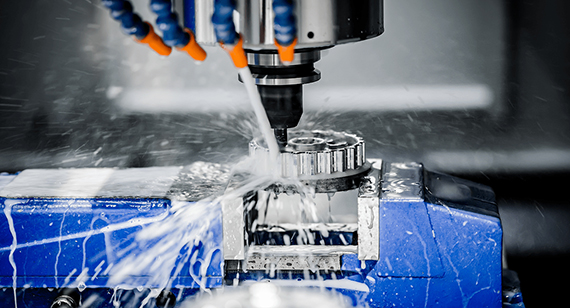
While Section 2 covered specific grades, here is a breakdown of martensitic stainless steel applications by industry:
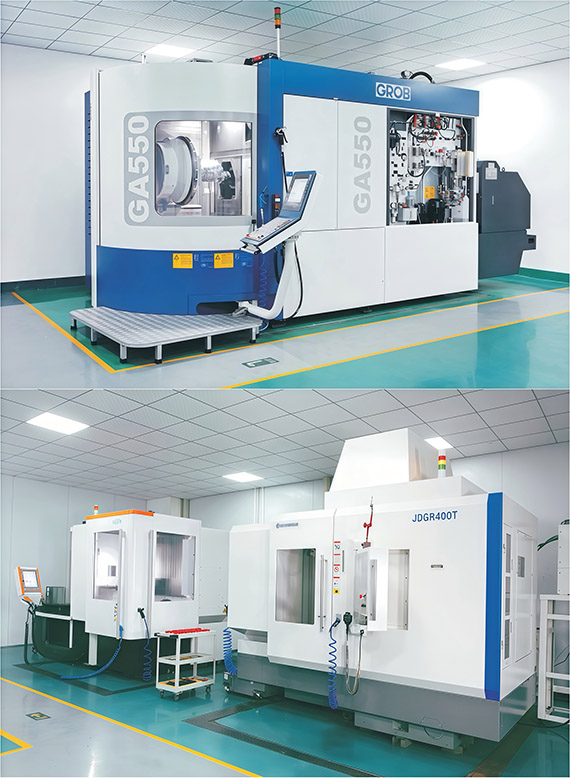
At VMT CNC Machining Factory, we specialize in solving the core challenges of machining martensitic stainless steel (such as 440C or 420). Our primary focus is——How do we achieve an extreme hardness of 58-62 HRC while ensuring the part remains free of micron-level dimensional distortion?
With over 17 years of precision manufacturing expertise, we provide one-stop solutions tailored for the bearing, medical, and aerospace sectors. From high-speed CNC milling in the annealed state to integrated Cryogenic Treatment for stress relief, and final CBN hard turning, we consistently deliver rigorous tolerances of ±0.01mm.
Don't let material hardness or potential distortion stall your design. Upload your CAD drawings today. Our senior engineers will provide a professional technical feasibility assessment and a competitive quote within 24 hours.
Q: Does martensitic stainless steel rust?
A: While it possesses inherent corrosion resistance, it does not perform as well as austenitic 304/316 in harsh salt spray environments. However, its rust resistance can be significantly enhanced through precision grinding and Passivation treatments.
Q: Can 440C be CNC machined after it has been hardened?
A: Yes. Modern CNC machines equipped with CBN (Cubic Boron Nitride) tools can perform "Hard Turning." This method is often more efficient than traditional grinding and guarantees an exceptional surface finish (Ra < 0.4μm).
Q: What is the difference between martensitic vs. austenitic stainless steel?
A: Martensitic steel is magnetic and can be heat-treated to achieve high hardness and strength. Austenitic steel (like 304/316) is non-magnetic and offers significantly superior corrosion resistance.
Q: Is martensitic stainless steel good for knives?
A: Yes. Its high carbon content allows it to reach high hardness levels through heat treatment, providing the excellent edge retention and wear resistance required for high-quality blades.
Q: Is 410 stainless steel martensitic?
A: Yes, 410 is a foundational martensitic grade widely utilized for its high strength and moderate resistance to atmospheric corrosion.
Q: Is 304 stainless steel austenitic or martensitic?
A: 304 stainless steel is a classic austenitic grade. Its high chromium and nickel content make it non-magnetic and highly resistant to rust and corrosion.


 +86 15099911516




 Read more