16 years one-stop China custom CNC machining parts factory

Hey there I’m VMT Sam!
With 25 years of CNC machining experience we are committed to helping clients overcome 10000 complex part-processing challenges all to contribute to a better life through intelligent manufacturing. Contact us now
 195 |
Published by VMT at Apr 01 2026 | Reading Time:About 2 minutes
195 |
Published by VMT at Apr 01 2026 | Reading Time:About 2 minutes


Austenitic vs martensitic are among stainless steel families with distinct microstructure and composition contributing to quite a few property differences—— especially austenitic stainless steel holds better corrosion resistance, while martensitic stainless steel gains much higher mechanical strength after heat treatment.
The success of your precision components is closely connected with their differences in properties, heat treatment impacts, performance when CNC machining, etc.
In this comprehensive guide, we will break down the fundamental differences in microstructure, chemical composition, and their manufacturing processes to help you determine which alloy is the right fit for your next high-performance project.
Microstructure is the fundamental factor that dictates the core properties of austenitic vs martensitic stainless steel. In short: Austenitic stainless steel is non-magnetic and cannot be strengthened or hardened through heat treatment; Martensitic stainless steel is strongly magnetic and can be significantly strengthened via heat treatment.
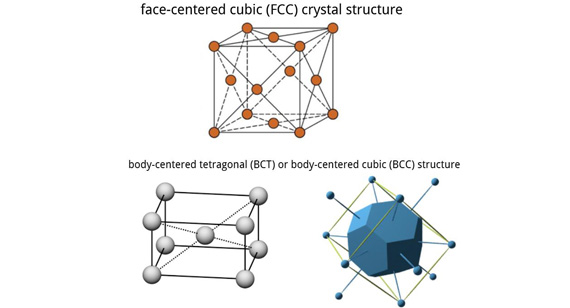
The table below highlights the key chemical composition differences between austenitic and martensitic materials:
| Element |
Austenitic (e.g., 304/316) |
Martensitic (e.g., 410/440C) |
Effect on Material Properties |
| Chromium (Cr) |
16% - 26% | 11.5% - 18% | Critical for forming the protective "passive layer." Austenitic grades have higher Cr content, providing superior corrosion resistance. |
| Nickel (Ni) |
8% - 22% (High) | 0% - 2.5% | The primary austenite stabilizer. Martensitic grades have little to no Nickel, making them naturally magnetic. |
| Carbon (C) |
< 0.15% (Low) | 0.1% - 1.2% (High) | The Key for Hardness: High carbon content in Martensitic steel allows it to achieve extreme hardness through quenching and tempering. |
| Molybdenum (Mo) |
2% - 3% (in 316) | 0% - 1.0% | Enhances resistance to localized pitting, particularly in chloride environments (salt spray). |
The table below highlights key physical and mechanical properties of austenitic vs martensitic, for more grades of their properties, you can check here: austenitic stainless steel and martensitic stainless steel.
| Property |
Austenitic (e.g., 304/316) |
Martensitic (e.g., 410/440C) |
Notes |
| Magnetism |
Non-Magnetic (Paramagnetic) | Strongly Magnetic (Ferromagnetic) | Essential for sensor applications or material sorting. |
| Hardness (HRC) |
Low (typically <25 ) | High (up to 50-60+ ) | Determines wear resistance and edge retention. |
| Tensile Strength(MPa) |
Moderate (approx. 515 MPa) | Very High (up to 1900 MPa) | Higher in Martensite after quenching and tempering. |
| Yield Strength(MPa) |
Low (approx. 205 MPa) | High (up to 1500+ MPa) | Martensite resists permanent deformation under load. |
| Ductility (Elongation) |
Excellent (40% - 60%) | Low to Moderate (2% - 15%) | Austenite is better for deep drawing and forming. |
| Elastic Modulus |
~193 GPa | ~200 GPa | Very similar; both offer high structural stiffness. |
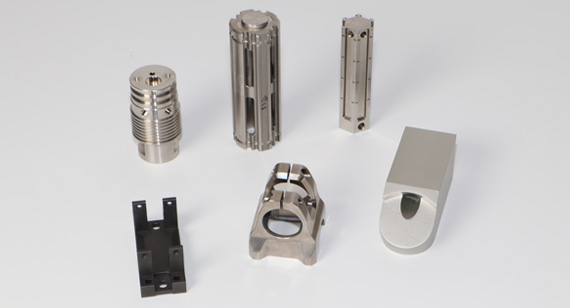
At our VMT CNC Machining Factory, we have dealt with many customed stainless steel parts manufacturing, also it includes austenitic and martensitic stainless steels.
These are made by the most widely used manufacturing method——CNC machining: through cutting, milling, turning, or drilling a bulk of stainless steel in a designed path, you can get the perfect precision parts with high tolerances’ repeatability and consistency.
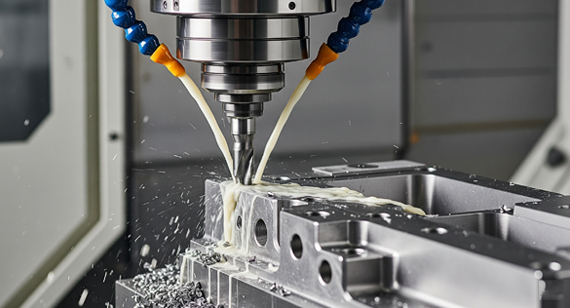
If you are gonging to CNC machining austenitic stainless steel (e.g., 304/316),
If you are gonging to CNC machining martensitic stainless steel (e.g., 410/440C)),
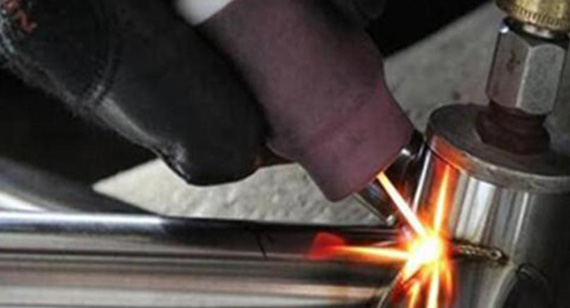
Choosing between austenitic vs martensitic involves budget consideration of raw material price, manufacturing cost, and maintenance cost:
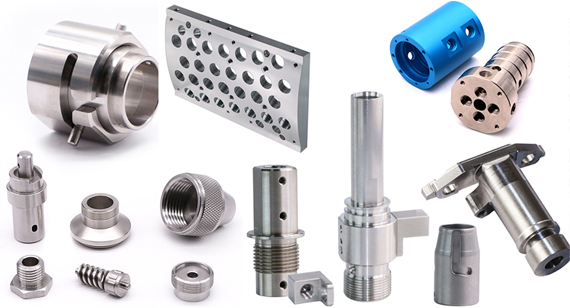
This list focuses on austenitic steel properties of better corrosion resistance, ductility, and weldability; Martensitic steel properties of better strength, hardness, and machinability.
| Application |
Austenitic |
Martensitic |
| Consumer Goods |
kitchen sinks high-end cutlery (forks/spoons), cookware electronic enclosures (phone/laptop frames) |
professional knives high-hardness scissors hair clippers multi-tools |
| Industrial Fluid Control |
water valves pipe flanges chemical storage tanks pump housings. |
high-pressure valve seats stems internal wear-resistant components |
| Automotive |
xterior trim exhaust system components decorative wheel covers |
internal gears transmission components heavy-duty structural pins |
| Heavy Equipment |
welded parts brackets protective shielding |
precision components for heavy machinery (operating in mild environments) |
| Hardware |
marine-grade bolts nuts corrosion-resistant washers |
high-strength self-tapping screws spring clips dowel pins |

Q: Is martensite stronger than austenite?
A: Yes. After undergoing quenching and tempering processes, martensitic stainless steel achieves significantly higher tensile strength and hardness compared to the austenitic class. Its rigid, distorted lattice structure makes it the ideal choice for high-strength, load-bearing components.
Q: Is 304 and 316 stainless steel austenitic or martensitic?
A: 304 and 316 are classic austenitic grades. Their high Nickel and Chromium content ensures they remain in the austenitic phase at room temperature, providing superior corrosion resistance and non-magnetic properties.
Q: Can martensite turn back into austenite?
A: Yes. This is a reversible phase transformation. By reheating the steel above its upper critical temperature (typically above 800°C - 950°C depending on the alloy), the martensite lattice will transform back into the austenite crystalline structure.
Q: What is the hardest microstructure of steel?
A: Martensite is widely recognized as the hardest microstructure achievable through standard heat treatment. Its body-centered tetragonal (BCT) structure traps carbon atoms, creating internal stress that results in extreme peak hardness (up to 62 HRC for grades like 440C).
Q: Why is martensitic steel magnetic?
A: The magnetism of martensitic steel is tied to its Body-Centered Cubic (BCC) or BCT crystal structure, which allows electron spins to align and create a magnetic moment. In contrast, the Face-Centered Cubic (FCC) structure of austenitic steel is paramagnetic (non-magnetic) in its annealed state.
Q: Is martensitic stainless steel good for knives?
A: Absolutely. High-carbon martensitic grades (such as 420 and 440C) are the gold standard for high-end cutlery and tactical blades. Their high hardness allows for exceptional edge retention, high wear resistance, and the ability to be sharpened to a razor-fine edge.


 +86 15099911516




 Read more