16 years one-stop China custom CNC machining parts factory

Hey there I’m VMT Sam!
With 25 years of CNC machining experience we are committed to helping clients overcome 10000 complex part-processing challenges all to contribute to a better life through intelligent manufacturing. Contact us now
 257 |
Published by VMT at Apr 05 2026 | Reading Time:About 2 minutes
257 |
Published by VMT at Apr 05 2026 | Reading Time:About 2 minutes


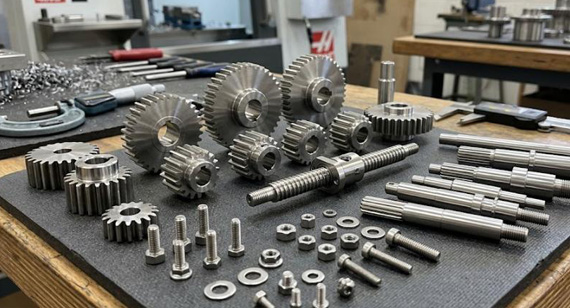
When it comes to high-speed manufacturing and precision engineering, 416 stainless steel stands out as a "free-cutting steel" among martensitic stainless steels. Often referred to as a "free-machining" grade, AISI 416 is specifically engineered for various CNC machined stainless steel parts, such as fasteners, gears, and shafts (used in automotive transmission components, robot precision rotary shafts, ball screws, and miniature gears).
Then, what can't 416 SS be used in? For applications like electronic housings or marine fasteners, you should not use 416 SS as it is strongly magnetic and has only fair corrosion resistance——these uses(can’t) are also connected with 416 stainless steel’s properties.
Whether you are designing intricate components or managing a large-scale production run, understanding the detailed properties of 416 stainless steel is crucial for making an informed decision.
Quick Table of 416 SS Physical Properties
Before diving into the specifics, here is a quick reference table of the fundamental physical constants for AISI 416. These values are essential for initial design calculations and material selection.
| Physical Property |
Typical Value (Metric) |
Typical Value (Imperial) |
| Density |
7.80 g/cm³ | 0.282 lb/in³ |
| Melting Range |
1480 – 1530 °C | 2700 – 2790 °F |
| Specific Heat |
460 J/kg·K (0-100°C) | 0.11 Btu/lb·°F |
| Thermal Conductivity |
24.9 W/m·K (at 100°C) | 172.8 BTU-in/hr-ft²-°F |
| Electrical Resistivity |
570 nΩ·m (at 20°C) | 34.3 μΩ·in |
| Magnetic Permeability |
700–1000 (Annealed) | -- |
Is 416 Stainless Steel Magnetic?
Surely it is strongly magnetic always whether it is annealed or strengthened after quenching and tempering due to it is martensitic stainless steel——the steel structure of BCT or BCC is naturally magnetic.
Advantage
Its magnetic nature allows you to easily sort it from non-magnetic 300-series steels as they look very similar——classic stainless-steel look of bright metallic luster. This also makes it compatible with magnetic chucks during grinding processes, simplifying workholding.
What to avoid
If your application involves sensitive electronic sensors or requires "non-magnetic" housing (common in medical imaging or high-end electronics), 416 is not the right choice.
Does 416 Stainless Steel Weigh Light?
Not actually, it has a density of 7.80 g/cm³, very similar to other stainless steels and carbon steels. When calculating shipping costs for high-volume orders of 416 precision parts, you can use this date, but for small parts design, this data counts for little—— and this metal is also not commonly used in aerospace applications.
How Does 416 SS Perform For Heat Dissipation?
416 stainless steel has a thermal conductivity of 24.9 W/m·K. While this is low compared to aluminum or copper, it is relatively high for a stainless steel.
Advantage
Better thermal conductivity helps dissipate heat away from the cutting edge during high-speed CNC turning or milling. This is a contributing factor to its 85% machinability rating, as it prevents the tools from overheating as quickly as they would with austenitic stainless steel 304 or 316(15-16.3 W/m·K) .
Tip for Design
You can use 416 SS in valve and pump applications(dry environment) where friction generates heat. 416’s ability to move heat away from the surface helps maintain the integrity of seals and lubricants.
Can You Use 416 SS For Solenoid Valves?
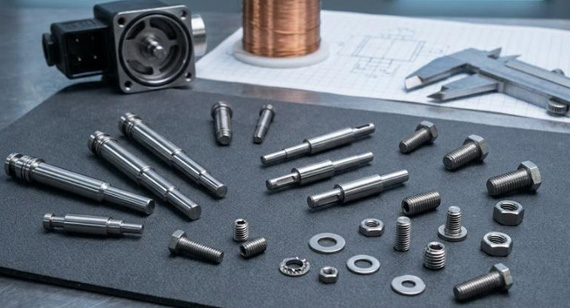
With an electrical resistivity of 570 nΩ·m, 416 is primarily used for structural rather than conductive purposes.
But you can use it for plunger, motor shafts, fasteners in the solenoid valves(only for internal precision parts), as it has relative good electrical resistivity among martensitic steel and naturally strongly magnetic——can respond to the magnetic field generated by the electromagnetic coil to achieve switching action.
Quick Table of 416 SS Mechanical Properties
416SS can be heat-treated to achieve higher levels of hardness and tensile strength (strengthened by quenching and tempering). This property is a major advantage for you designing load-bearing precision parts.
| Property |
Annealed (Softest) |
Condition T (Intermediate) |
Condition H (Hardest) |
| Process |
Not Hardened | Quenching+Tempering at 540°C - 650°C | Quenching+Tempering at 150°C - 400°C |
| Tensile Strength |
517 MPa (75 ksi) | 750 - 950 MPa | 1100+ MPa (160+ ksi) |
| Yield Strength (0.2%) |
275 MPa (40 ksi) | 550 MPa (min) | 1000+ MPa (145+ ksi) |
| Elongation (in 50mm) |
30% | 12% - 20% | ~10% or less |
| Hardness (Brinell) |
230 HB Max | 248 - 302 HB | 320 - 380+ HB |
| Hardness (Rockwell C) |
~20 HRC | 24 - 32 HRC | 35 - 42 HRC |
| Charpy V-Notch |
~30 - 60 J | ~20 - 45 J | ~10 - 25 J (Brittle) |
What Should Watch Out for 416 SS: About Its Mechanical Properties?
Tip 1: Avoid the "Temper Brittleness" Range
When heat treating to Condition T, be cautious of the tempering range between 400°C and 580°C (750°F - 1075°F). Tempering in this specific window can cause a significant drop in impact strength (Charpy V-Notch values) and reduced corrosion resistance. For maximum toughness, always aim for the higher end of the Condition T tempering range.
Tip 2: Condition H is for Wear, Not Impact
While Condition H offers impressive tensile strength (1100+ MPa) and hardness, it comes at the cost of ductility. If your part is subject to sudden shock loads or vibration—such as a heavy-duty fastener or a reciprocating valve stem—Condition H may be too brittle, leading to catastrophic fatigue failure. Use it primarily for static parts or components requiring high surface wear resistance.
Tip 3: The "Post-Machining" Hardening Strategy
Because 416 is a "free-machining" steel, many shops prefer to machine the part in its Annealed state to maximize tool life and speed, and then heat treat to Condition T or H afterward. However, be aware that heat treatment can cause slight dimensional changes (distortion). For high-precision parts, at our VMT CNC machining factory, we recommend a "rough machine -> heat treat -> final grind" workflow to ensure both strength and micron-level accuracy.
Tip 4: Rockwell C vs. Brinell in Quality Control
In your technical drawings, it is best to specify hardness in Rockwell C (HRC) for hardened states (Condition T & H), as it is the industry standard for CNC shops. For the Annealed state, use Brinell (HB). This clarity prevents confusion during the incoming quality inspection (IQC) and ensures you get exactly what you paid for.
As the martensitic stainless steel, its corrosion resistance is considered moderate among stainless steel families (structure and composition of less chromium decides) ——not to mention Sulfur is added to the 416 alloy.
This makes cutting easier but sacrifices the corrosion resistance of 416 steel. To improve its performance in humid environments, passivation or surface plating is highly recommended for 416 SS’ surface protection.
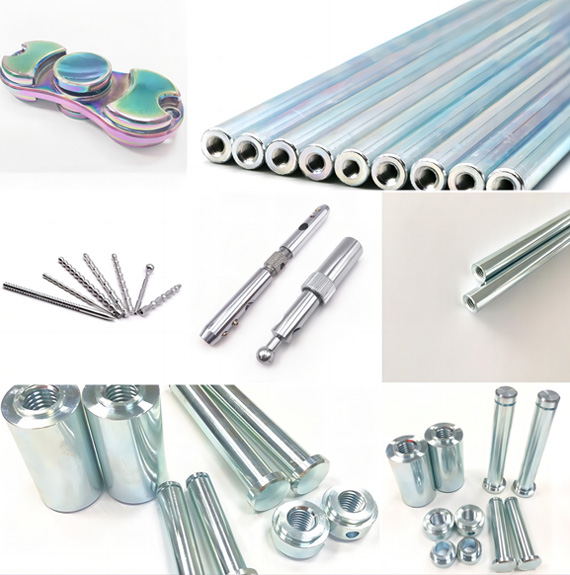
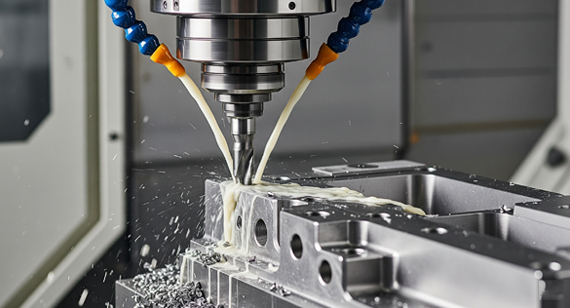
If your project requires high-volume CNC machining——a process helping you produce 416SS parts with your wanted shape, 416 is likely your best alloy as it has a machinability rating of 85%, using B1112 (free-cutting carbon steel) as the 100% benchmark.
Advantage
At VMT CNC Machining Factory, we have over 17 years of experience in processing precision 416 stainless steel parts. We understand the nuances of feed rates and cutting speeds to deliver parts that meet your exact specifications.
Need a technical consultation? We offer 24-hour responses for all professional inquiries.
Due to the high sulfur content (it creates low-melting-point compounds), 416 is generally considered to have poor weldability. If welding is unavoidable, pre-heating and the use of 410 low-hydrogen electrodes are necessary to prevent cracking.
How to Successfully Weld 416 (If You Must)
What is 416 stainless steel good for?
It is the ideal choice for high-volume, precision-machined parts that require high efficiency. Common applications include pump shafts, valve stems, bolts, and gears. Because of its excellent machinability, it allows for faster production cycles compared to other stainless grades.
What is the difference between 4140 and 416?
The main difference lies in their chemical composition and corrosion protection. 4140 is a low-alloy steel that offers high strength but requires plating or coating (like black oxide or chrome) to prevent rust. In contrast, 416 is a martensitic stainless steel with "built-in" corrosion resistance, though it is more moderate than other stainless grades.
Will 416 stainless steel rust?
Yes, it can. While it is a stainless steel, its high sulfur content (which makes it easy to machine) reduces its corrosion resistance. If exposed to harsh chemicals, high humidity, or salt water for long periods, it will rust significantly faster than 304 or 316 stainless steel.
Will a magnet stick to 416?
Yes. Unlike the 300 series (austenitic) stainless steels which are typically non-magnetic, 416 is a martensitic grade. This means it is strongly magnetic in all conditions, including after heat treatment.
Does 416 work harden?
Yes, but to a much lesser extent than the 300 series. The 300 series (like 304 or 316) work hardens rapidly, which can lead to tool wear and machining difficulties. 416’s lower work-hardening rate is one of the primary reasons it is so much easier to machine at high speeds.
Is 416 better than 316?
It depends on your priority. If your goal is machining speed and cost-effectiveness for complex parts, 416 is much better. However, if your project requires extreme corrosion resistance (especially in marine or medical environments), 316 is the superior choice.


 +86 15099911516




 Read more