16 years one-stop China custom CNC machining parts factory

Hey there I’m VMT Sam!
With 25 years of CNC machining experience we are committed to helping clients overcome 10000 complex part-processing challenges all to contribute to a better life through intelligent manufacturing. Contact us now
 72 |
Published by VMT at Jun 16 2026 | Reading Time:About 3 minutes
72 |
Published by VMT at Jun 16 2026 | Reading Time:About 3 minutes


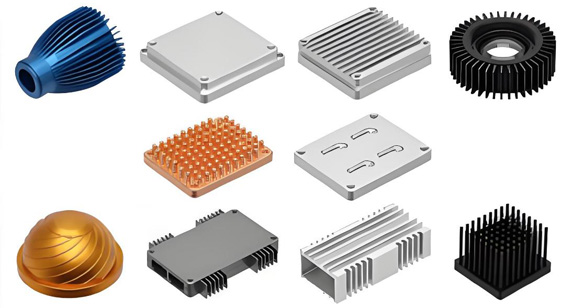
Modern lighting has moved far beyond basic illumination. High-end LED fixtures, architectural lighting systems, and commercial luminaires now demand micron-level precision, efficient heat dissipation, and finishes that complement interior and exterior design. These requirements sit at the intersection of optical engineering, thermal management, and visual aesthetics — and meeting all three consistently is what separates a premium lighting product from a commodity one.
CNC lighting parts are precision-machined components for LED fixtures and architectural luminaires. They deliver tight tolerances, custom thermal geometry, and finishes like anodizing or diamond-turned reflectors.
CNC machining is uniquely suited to this combination. It produces parts with tight tolerances, supports a wide range of surface finishes, and can carve complex thermal geometries directly into aluminum or copper billets. This means that if you need to develop a new lighting product or source custom fixture components, you can count on shorter development cycles, dependable repeatability, and the freedom to iterate on form factors without retooling.
In this guide, we walk through why CNC machining is the preferred method for lighting components, the materials most commonly used, the parts that benefit most from precision machining, and how a professional manufacturer supports projects from prototype to mass production. A real our factory’s case study closes the article.
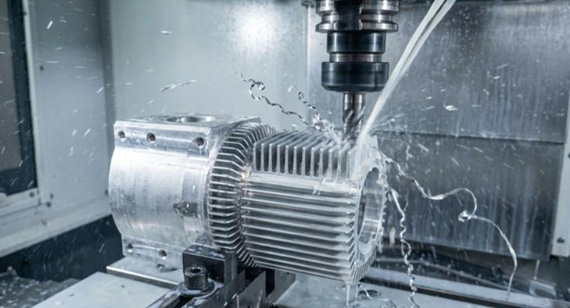
Before diving into the benefits, it is worth noting that CNC machining is a high-precision manufacturing process that uses automated software and various cutting tools to carve parts directly from solid metal blocks and the material removing is completed by milling, turning, or grinding. Below is why this technology is indispensable for modern lighting solutions:
1.High Precision and Intricate Designs
Lighting assemblies often rely on features that are invisible to the eye but critical to function: M2 or M3 thread forms for thermal interfaces, concentric tolerances on reflector seats, and press-fit bores that hold optical elements in alignment.
CNC machining delivers these features repeatably across thousands of parts, holding tolerances typically in the ±0.01–0.05 mm range. Geometric features such as undercuts, draft-free walls, and sharp internal corners — which are difficult or impossible to achieve with die casting — are machined directly from solid stock. For lighting products where every fraction of a millimeter affects beam angle, sealing integrity, or assembly fit, this level of precision is a strict technical requirement, not an optional upgrade.
2.Excellent Surface Finishing Options
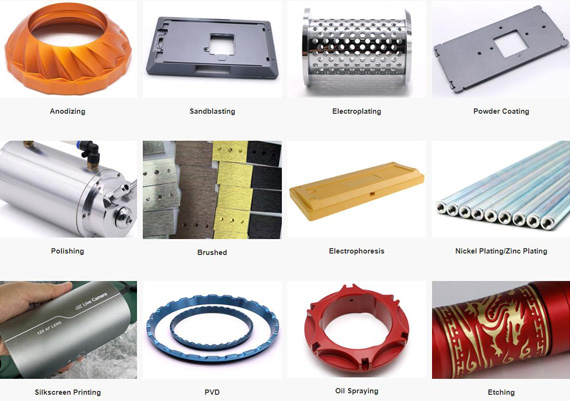
The aesthetic and functional expectations placed on lighting hardware are unusually high. Because these components are visible and often integrated into architecture or exposed to outdoor environments, they face UV radiation, humidity, and salt spray. CNC-machined substrates provide a flawless, porosity-free starting point for various surface treatments:
3.Superior Thermal Management
LED light sources convert roughly 30–40% of input power into light; the remainder becomes heat concentrated at the junction. If that heat is not conducted away efficiently, junction temperature rises, lumen output drops, color shifts, and lifespan shortens dramatically.
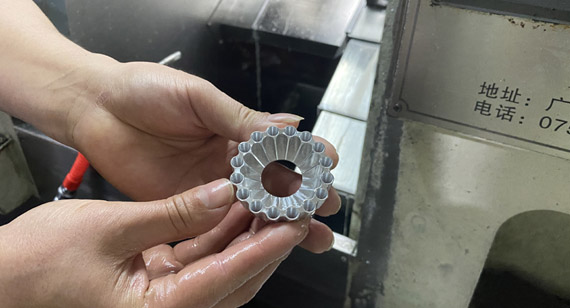
CNC machining addresses this directly: heatsink fins, pin arrays, and base plates are milled directly from aluminum billets, creating a continuous metal path from the LED mounting surface to the cooling fins. Compared with extruded heatsinks, CNC-machined versions can incorporate variable fin heights, tapered profiles, and integrated mounting features in a single piece — improving thermal performance while reducing assembly steps.
Material selection typically balances three factors: thermal conductivity, corrosion environment, and visual finish. Aluminum 6061 dominates LED heatsinks because it handles all three well at a competitive cost; brass appears in decorative trim where conductivity and appearance both matter; stainless steel is reserved for harsh environments; Plastics are used where the part must transmit or shape light rather than conduct heat away from it.
| Material |
Grades / Forms |
Why It Is Used in Lighting |
| Aluminum |
6061, 6063, 7075 | Lightweight, excellent thermal conductivity, accepts anodizing cleanly; 6061/6063 for housings and heatsinks, 7075 for high-strength brackets |
| Brass & Copper |
C360 brass, C110 copper | Premium decorative fixtures, vintage-style lighting, electrical contact components requiring high conductivity |
| Stainless Steel |
304, 316 | Outdoor, marine(316), and hazardous-location fixtures needing corrosion resistance and mechanical strength |
| Plastics |
PMMA (acrylic), PC (polycarbonate) | Optical prototyping, lenses, light guides, and translucent covers where light transmission is required |
For full CNC lighting component examples, visit CNC lighting parts.
CNC LED Heatsinks
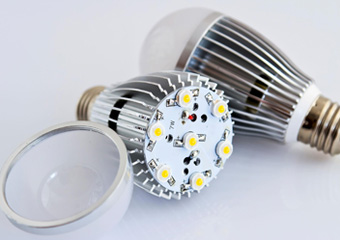
A precision-machined heatsink keeps the LED junction temperature within a required specified range, which directly determines lumen maintenance and service life. This is due to CNC machining allows fin geometry to be tuned for a specific fixture envelope — variable fin count, height, and thickness, with thin walls (down to ~1 mm) where space is tight. Direct mounting surfaces for LED modules, MCPCBs, or star boards are machined flat and parallel to ensure optimal thermal contact.
CNC Light Fixture Housings and Enclosures
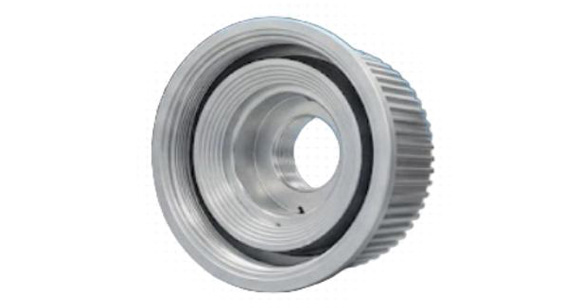
Architectural downlights, explosion-proof luminaires, and high-end track lights require housings that seal out dust and moisture while supporting thermal management. CNC-machined enclosures can integrate heat-dissipating fins, threaded cable entries, and mounting flanges in a single component, avoiding the leak paths and assembly tolerances introduced by multi-part sheet-metal designs.
CNC LED Reflectors and Optical Mounts
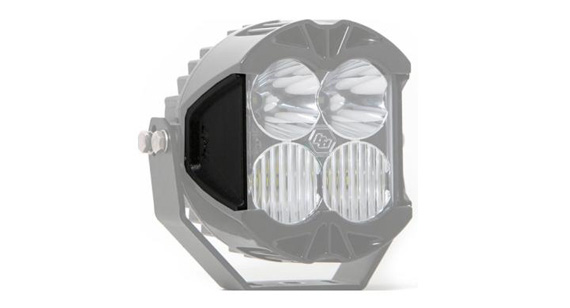
Reflectors and optical mounts are common in general lighting such as downlights, spotlights, and streetlights, and are also widely used in optical instruments, laser equipment, machine-vision illumination, and research-grade microscope lighting systems. Reflector performance depends on surface quality — diamond turning (SPDT) achieves optical-grade finishes on aluminum and copper substrates, producing the precise reflective surfaces required for high-CRI directional lighting. Optical mounts — the mechanical structures that hold lenses, filters, and reflectors in alignment — are CNC machined to hold positional tolerances that keep beam control consistent across a production run.
Custom Brackets and Connectors
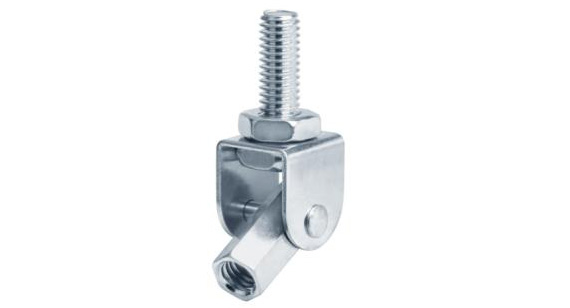
Track lights, studio lights, and stage fixtures rely on articulating brackets, swivel joints, and locking connectors. CNC machining produces these mechanisms with the strength and repeatability needed for frequent adjustment cycles, and allows custom geometries to be developed without the tooling investment of die casting or forging.
A typical lighting project moves through three production phases, and CNC machining supports all three without changing the underlying process:
Because the same manufacturer can run all three phases, design data, material certificates, and inspection records stay with the project — reducing risk when scaling from a single prototype to a full production run.
A reliable lighting parts manufacturer brings more than machine capacity. Key capabilities to evaluate include:
At VMT CNC machining factory, projects are supported end-to-end: DFM review on incoming drawings, in-process inspection at defined stages, and a final QA report covering dimensional, surface, and functional checks. The same engineer follows the project from quote to delivery, which keeps technical context intact across iterations.
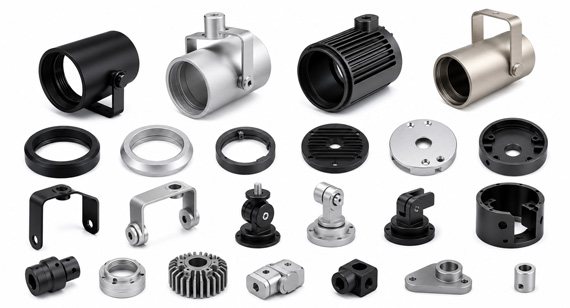
Background
A European lighting designer approached VMT with a custom adjustable track-light head. The design called for an integrated aluminum heatsink body, a swiveling joint with internal cable routing, and a black anodized matte finish. Initial samples from another supplier had failed thermal testing — the heatsink fins were too thick and the LED junction temperature exceeded the rated limit. The customer needed a partner who could diagnose the thermal problem at the geometry level.
Solution
Our engineering team reviewed the thermal simulation data and identified that fin height and spacing — not fin count — were the limiting factors. The team revised the geometry to thinner, taller fins with optimized spacing, machined from a single 6061-T6 billet to avoid the thermal resistance of an assembled joint. The swivel mechanism was redesigned as a precision-machined interface that maintained cable clearance without thinning the housing wall. The anodizing spec was upgraded to Type III hard coat with a controlled matte black dye, balancing the required appearance with outdoor-grade durability.
Result
First articles passed both thermal and mechanical testing on the first iteration, with the LED junction temperature running 18% below the rated limit at full drive current. The project moved into low-volume production within four weeks of the initial inquiry, and the customer has since extended the same housing platform to two additional fixture variants in the same product family.
CNC machining is not the only way to make a lighting part, but it is the most flexible way to make a good one. It supports the tight tolerances, complex geometries, and finish quality that modern lighting demands, and it scales from a single prototype to production volumes without forcing the design to change.
For anyone who cares about how a fixture performs as well as how it looks, working with a CNC manufacturer that understands lighting applications is usually the shortest path to a result that holds up in the field. VMT can bring your custom lighting concepts to life— send us your CAD files today!

Q1: What is the best material for LED light heatsinks?
A: Aluminum (especially 6061 and 6063) is the best choice. It offers excellent thermal conductivity, lightweight durability, and great anodizing capabilities at a highly cost-effective price.
Q2: Can CNC machining achieve a mirror-like finish for lighting reflectors?
A: Yes. By utilizing high-precision diamond turning (SPDT) or post-machining mirror polishing, we can achieve an ultra-smooth surface with optimal light reflectivity.
Q3: What is the typical turnaround time for CNC lighting prototypes?
A: Generally, rapid prototyping for custom lighting parts takes about 3 to 7 days, depending on the design complexity and required surface finishes.
Q4: Why is aluminum anodizing so important for outdoor lighting parts?
A: Anodizing (especially Type III hard coating) creates a durable oxide layer that provides superior corrosion resistance, UV protection, and various aesthetic color options for outdoor environments.
Q5: Can you handle low-volume production for custom architectural lighting?
A: Yes, we support orders from single-digit prototypes to low-volume production (100-1,000+ units), helping lighting designers scale up flexibly.
Q6: How do you ensure the thread accuracy for waterproof (IP-rated) light enclosures?
A: We use advanced 3-axis to 5-axis CNC machines and strict Go/No-Go gauge testing during inspection to guarantee perfect thread engagement and reliable waterproof sealing(Here is more about IEC IP-rating validation).
The technical information and manufacturing advice shared on the VMT website are for general guidance only. While we strive for accuracy, VMT does not guarantee that the processes, tolerances, or material properties mentioned are applicable to every specific project. Any reliance you place on such information is strictly at your own risk. It is the buyer's responsibility to provide definitive engineering specifications for any production orders. Final specifications and service terms shall be subject to the formal contract or quotation confirmed by both parties.


 +86 15099911516




 Read more