16 years one-stop China custom CNC machining parts factory

Hey there I’m VMT Sam!
With 25 years of CNC machining experience we are committed to helping clients overcome 10000 complex part-processing challenges all to contribute to a better life through intelligent manufacturing. Contact us now
 79 |
Published by VMT at Jul 02 2026 | Reading Time:About 3 minutes
79 |
Published by VMT at Jul 02 2026 | Reading Time:About 3 minutes


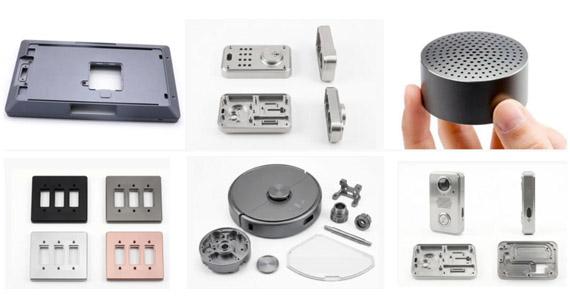
The smart home market has maintained an average annual growth rate of over 25% over the past five years. From smart door locks to robotic vacuums, and from smart speakers to video doorbells, the functional complexity and aesthetic design requirements of hardware devices continue to rise.
Parts that initially relied on injection molding or stamping are increasingly showing shortcomings in strength, precision, and shielding performance. Due to its wide material compatibility, high geometric freedom, and stable tolerance control, precision CNC machining is becoming the mainstream process for smart home components moving from prototype to mass production.
This blog will break down how CNC machining for smart home parts elevates design quality. At the end, we will also share a case study of how our factory solved a specific aesthetic texture and complex geometry production challenge for a client's high-end smart door lock aluminum alloy casing.
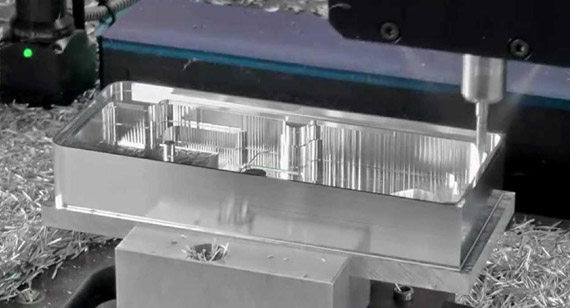
CNC machining for smart homes refers to the manufacturing process of using CNC machine tools to perform cutting, milling, turning, and drilling operations on metal or plastic parts based on the design blueprints of smart home devices. Because this process is controlled via computer programming, the precision of shapes and tolerances is guaranteed. Furthermore, since the programming can be modified, the cost of production during design iterations is kept under control. Finally, because the programs can be saved, high repeatability of precision in smart home part production can be achieved from prototyping all the way to mass production.
Smart home devices are composed of a large number of parts, such as the front panel, lock body, battery compartment, buttons, and sensor brackets of a smart door lock. If dimensional variances occur during the assembly of these components, it can lead to issues such as stuck buttons, uneven gaps between panels, poor battery contact, and abnormal sensor signals.
CNC machining can control critical dimensional accuracy to within ±0.02 mm to ±0.05 mm, making it a natural fit for the demands of tight tolerance smart home parts. For extremely critical sections, it can even achieve tolerances as tight as ±0.01 mm.
Specifically, the precision challenges for smart home components are concentrated in three main areas:
Through high-precision milling, reaming, and threading in CNC machining, these three critical areas can achieve highly stable consistency in mass production, thereby preventing quality risks caused by assembly variances.
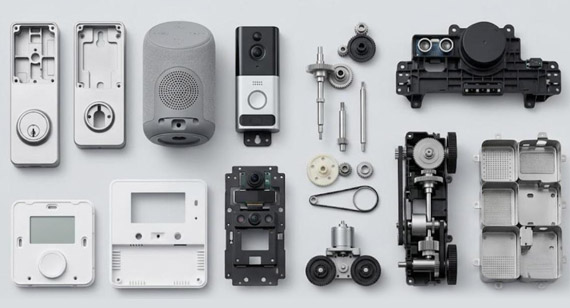
Smart home devices increasingly focus on streamlined aesthetics and ergonomic consumer handling. Consequently, many components feature complex curved surface designs, posing significant manufacturing challenges.
For instance, the curved transitions at the top of a smart speaker aluminum housing, the recessed lens area of video doorbell aluminum enclosures, and the mirrored edge trim of facial recognition device enclosures all constitute complex geometries that require multi-angle cutting within a single setup.
If these parts are machined using standard 3-axis machine tools, they require multiple setups and frequent repositioning of datums. Every new setup introduces new cumulative errors, making it difficult to guarantee surface continuity and the precision of assembly faces. The optimal solution is to utilize 5-axis simultaneous machining.
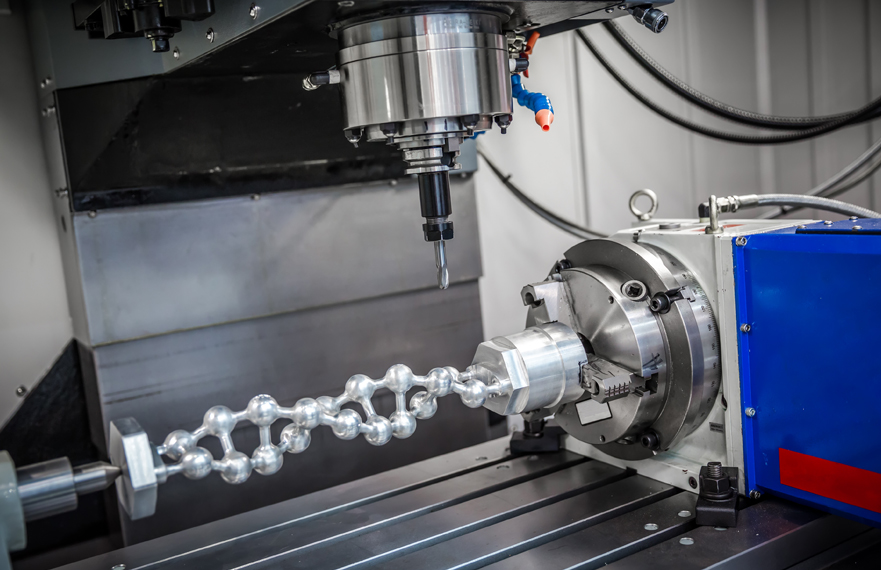
5-axis machining adds two rotational axes to the three linear axes (X, Y, and Z), allowing the cutting tool to perform multi-angle machining in a single setup. Its primary benefits include:
For products like the smart speaker aluminum housing, video doorbell aluminum enclosures, and facial recognition device enclosures, 5-axis simultaneous machining simultaneously resolves the dual challenges of surface continuity and assembly face precision. Therefore, 5-axis CNC machining for smart homes is currently the most preferred process path for high-end smart home enclosures, particularly those involving complex curved surfaces.
Once CNC machining is complete, the surface treatment applied to a part directly determines the user's first impression of the product's aesthetics and "premium feel." Furthermore, smart home hardware is exposed to home environments long-term and must withstand real-world conditions such as humidity, cleaning agents, fingerprints, and scratches.
Surface finishing for consumer electronics typically covers standard processes such as sandblasting, anodizing, and laser engraving. By selecting the right treatment for specific component locations, your smart home accessories can achieve distinct aesthetic and surface protection benefits.
A well-chosen surface treatment ensures that smart home hardware maintains its aesthetic consistency and stable tactile feel over long-term use, avoiding a cheap appearance or rapid aging.
While injection molding offers cost advantages for ultra-high-volume production (typically for plastic components), the specific core demands of smart home hardware ensure that CNC machining remains irreplaceable in many critical scenarios:
Smart home parts often experience increased machining costs due to issues such as uneven wall thickness, deep holes, excessively sharp corners, and complex internal cavities. A qualified manufacturing plant should immediately conduct a DFM (Design for Manufacturing) analysis upon receiving drawings, optimizing for the following aspects:
This is exactly how our VMT CNC machining factory operates in smart home component manufacturing. Welcome to contact us for a DFM evaluation of your custom smart home parts.
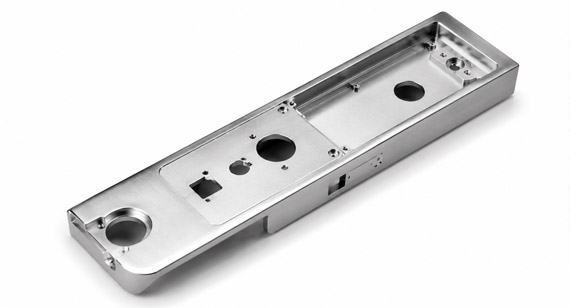
An overseas smart home brand planned to launch a high-end smart door lock featuring a one-piece aluminum alloy enclosure. The goal was to strike a balance between a premium metallic texture and complex geometry—maintaining a consistent metallic tactile feel across the entire housing while achieving a recessed transition for the camera lens area and precise etched characters in the keypad area. The marketing team needed 5 sets of prototypes within a tight 5-day window to validate the appearance and ergonomics before making a final mass production decision.
Challenges
Upon receiving the client's drawings, our engineering team immediately identified four critical risk areas:
Solutions
To mitigate these risks, our engineering team implemented four targeted optimizations:
Results
The optimized solution performed exceptionally well during the prototyping phase: 5 sets of samples were delivered within 5 days, and the aesthetics passed the client's review on the first attempt. The client’s industrial design team provided feedback that the rendering of the curved surface continuity "exceeded expectations."The mass production phase was equally successful, with a stable monthly delivery of 8,000 units and a 100% inspection yield rate of 99.4%. This enabled the client to roll out the product across the European market exactly on schedule. The successful execution of this project serves as a textbook roadmap for taking cnc machined smart home parts from prototype to mass production.
Precision CNC machining is the core technological backbone that allows smart home hardware designs to transition from concept to reality. Across four key dimensions—precision level, material compatibility, geometric freedom, and surface finishing maturity—it outperforms traditional injection molding and stamping paths. Furthermore, it enables the direct validation of aesthetics and ergonomics during the prototyping phase, eliminating the time and financial losses associated with modifying expensive hard tooling.
For smart home hardware teams, integrating CNC capabilities into product definitions during the early stages of smart home hardware prototyping ensures a shorter prototyping phase, a smoother mass production ramp-up, and highly controllable product textures.
Looking for a CNC machining partner for your smart home projects? Welcome to contact VMT to advance your smart home hardware initiatives. We can complete the initial drawing review and DFM feedback within 24 hours, deliver prototype samples within 5 days, and enter the mass production evaluation stage within 2 weeks. [2D drawing (PDF file), 3D drawing (IGS/STP/STEP file)]

Q1: Do CNC-machined smart home parts comply with environmental regulations such as RoHS and REACH?
A: Yes. All metal parts supplied by VMT, including aluminum alloys, stainless steel, and copper, fully comply with RoHS and REACH directives. Material compliance declarations and SVHC lists can be provided upon request. For plastic components, engineering grades such as ABS, PC, and PEEK that meet strict environmental regulations are available.
Q2: Which aluminum alloy materials are most commonly used for smart home CNC machining?
A: The most frequently used grades are 6061-T6 (excellent comprehensive properties, highly suitable for anodizing), 6063 (superior extrudability and surface quality, ideal for enclosures), and 7075 (high strength, typically used for structural components).
Q3: What is the typical tolerance level for CNC-machined smart home parts?
A: The standard milling tolerance is ±0.05 mm, while tight-tolerance sections (such as positioning datums, assembly holes, and sensor mating faces) can achieve ±0.02 mm or even ±0.01 mm.
Q4: What types of anodizing options are available for smart home enclosures?
A: This include Type II Anodizing (standard thickness of 5–25 μm, ideal for most enclosures and structural parts) and Type III Hard Anodizing (thickness of 50–75 μm, providing enhanced wear resistance for security control panels and high-touch areas). The surface color, gloss level, and roughness after anodizing are fully customizable.
Q5: Does VMT hold system certifications relevant to the smart home industry?
A: VMT is certified under the ISO 9001:2015 Quality Management System, and we also maintain AS9100 and IATF 16949 system compliance to support smart home projects with specialized regulatory or quality standards. All factory-released parts come with full batch records and 7-year traceability.
Q6: How long does it typically take from prototype to mass production in smart home CNC machining?
A: The prototyping phase generally delivers within 3–5 days, mass production evaluation takes 1–2 weeks, and production ramp-up typically takes 2–4 weeks depending on component complexity and order volume.
The technical information and manufacturing advice shared on the VMT website are for general guidance only. While we strive for accuracy, VMT does not guarantee that the processes, tolerances, or material properties mentioned are applicable to every specific project. Any reliance you place on such information is strictly at your own risk. It is the buyer's responsibility to provide definitive engineering specifications for any production orders. Final specifications and service terms shall be subject to the formal contract or quotation confirmed by both parties.


 +86 15099911516




 Read more